
Reviewed · PRIVATE
10 Day Private – The Ultimate Ancient Greece Tours Experience
This trip is interesting because it hits major ancient Greece sites while you are not spending every minute on planning and long-distance driving. You get a private vehicle and a professional English-speaking driver who can handle the transfers so you can focus on the ruins, the views, and the small-town stops.
I like how the itinerary mixes UNESCO anchors with scenic, human-scale places like Meteora villages, Monemvasia Castle, and the Argolic coastline. I also like the small, practical touches in the car, bottled water, refreshing wipes, and even fresh handmade Greek biscuits. The one drawback to consider is that it is mostly transfers plus guidance, not full in-site guiding, and entrance fees and your meals are not included.
Key things to know before you go
- Private driver logistics: you skip the stress of driving between sites and get history context as you move
- Meteora timing: you get a Meteora sunset chance, plus time for 1 to 2 monasteries, then the rest next morning
- Delphi in full flavor: you cover the archaeological site and then add the Delphi Archaeological Museum
- Peloponnese variety: Thermopylae and Delphi are just the start, then you swing to the Mani, Monemvasia, Nafplio, Mycenae, and Corinth
- Ancient sites with real mechanics: Epidaurus acoustics, Mycenae’s Lions Gate, Corinth’s Canal, Athens’ marble stadium, the stuff you feel in person
- Skip-the-line only on request: it can help, but you still need to budget for entrance fees
Price and what you truly get for $3,758.43 per person
This is not a budget tour, but it is also not buying a ticket to sit quietly on a coach. At $3,758.43 per person, you are paying for a fully private multi-day experience with hotel or port pickup and drop-off, travel by private luxury vehicle, and WiFi onboard. You also get bottled water, refreshing wipes, and fresh handmade Greek biscuits, the kind of small comfort that makes a long day feel shorter.
The value is in how much ground you cover with one decision-maker doing the driving and planning. You get professional drivers with in-depth knowledge of Greek history, and they are English speaking with multi-lingual capability. That matters because ancient sites are easier to enjoy when someone helps you connect what you are seeing to what it meant.
Just keep your expectations aligned with what is included. Entrance fees to sites are not included, and food and drinks are not included. Also, a licensed tour guide who walks you through sites and museums is only available as an additional cost on request. For me, that is the main thing to weigh: you will get a strong context from the driver, but you may want to add a licensed guide if you love museums and want deeper inside explanations.
A few more Athens days worth comparing
- Best of Athens Half Day Private Tour
★ 5.0 · 3,714 reviews - Athens Full Day Private Tour
★ 5.0 · 2,903 reviews - Athens Airport Private Arrival Transfer with Meet & Greet
★ 4.5 · 1,495 reviews
Day 1: Thermopylae battlefield, then Meteora sunset in the rocks
Your day starts at Thermopylae, tied to one of the most famous stand-offs in ancient Greek and Persian history. You will see the Battlefield of Thermopylae and then connect it to the hot sulphur springs and Greek mythology behind the Gates of Fire. The Thermopylae experience is not just dramatic storytelling, it is also physical, a narrow coastal passage that helps you understand why that location mattered.
One detail I would not rush is the monument to King Leonidas. It was erected in 1955 and created by sculptor Vasos Falireas, and the brass Spartan king statue with spear and shield is the kind of visual that sticks with you later. After that, there is time at the Thermopylae museum, and it is described as innovative, focused on the 480 BC battle’s impact on Greek history and western civilization.
Then you travel to Meteora and check into Kalambaka or Kastraki. The key payoff is the Meteora sunset, with monasteries perched in a way that is hard to summarize. Expect rocky views, village streets, and a slower pace for dinner at a traditional taverna.
Practical tip: Meteora timing is everything. Build in a bit of buffer for changing light, and do not plan to sprint from one photo spot to another.
Day 2: Meteora monastery circuits, then Delphi’s oracle world
Day 2 begins with breakfast at Meteora, then you tackle the remaining monasteries. The structure is simple: first day you do 1 to 2 monasteries, then next morning you visit the remaining ones. That split helps you avoid burnout because Meteora can be steep, uneven, and very stair-heavy depending on the monastery.
After lunch at a traditional taverna and time for coffee, you drive to Delphi and check into your chosen hotel. In the evening, there is free time, with an option for dinner in Arachova. Arachova is a common add-on area because it keeps the vibe festive without feeling rushed.
Delphi is a World Heritage site, and the idea here is that you get the full setting. You will visit the Delphi archaeological site with the Temple of Apollo, the Ancient Theater, the Stadium, the Athenian Treasury, the Gymnasium, and the Sanctuary of Athena Pronaia. Delphi’s oracle functions grew over centuries, and the sites connect to athletic games and cultural events as well as the religious core.
Then comes the Delphi Archaeological Museum. This is where the stories stop being abstract. You will see key artifacts from the excavations at Delphi, including elements like the frieze of the Treasury of Sifnia and the Naxian Sphinx, dated to 560 BC.
Possible drawback: Delphi deserves real time, and admissions are not included. If you are someone who wants to spend extra minutes in every corner, you might feel the schedule tighten. Still, the plan gives you both the outdoor site and the museum, which is a strong combination.
Day 3: Olympia for Zeus, Hera, and the Olympic flame connection
Breakfast takes you back into the classical world with Olympia. You will visit the archaeological site and focus on the big temples.
The Temple of Zeus is a Doric temple built in the second quarter of the 5th century BCE, and it is described as a model of the fully developed Doric order. It is easy to see why architects later loved it. Then you visit the Temple of Hera, called Heraion, dedicated to Hera and built around 590 BCE.
One detail to watch for is the Olympic flame connection. In modern times, the torch of the Olympic flame is lit in the ruins by Apollo, which turns these ancient stones into a living tradition. It is a neat bridge between then and now, and it gives you something more than a photo.
You will also see the Philippeion, a circular building within the Altis, dedicated to Zeus by Philip II of Macedon. If you like architecture, this is a good day to slow down and look at form, not just scale.
Practical tip: Olympia can feel big. A driver who explains the layout helps you avoid the common problem of wandering without a mental map.
Same corner of Greece, a different kind of day:
- Athens: Acropolis & up to 5 Archaeological Sites Combo Pass
★ 4.4 · 12,619 reviews - Athens: Acropolis, Parthenon & Acropolis Museum Guided Tour
★ 4.8 · 9,316 reviews - Athens: Cape Sounion & Poseidon Temple Sunset Half-Day Trip
★ 4.8 · 8,241 reviews - Athens: Acropolis and Parthenon Guided Walking Tour
★ 4.6 · 5,882 reviews
Day 4: Monemvasia Castle’s rock drama, Limeni by the sea
Day 4 shifts from famous mainland ruins to a medieval fortress mood. You travel to Monemvasia, with breakfast built into the flow, then explore the castle perched on what locals call The Rock.
The tone here is romantic and rugged, with walls, churches, and a strong sense of history. You will explore the Medieval castle and the Christos Elkomenos Church, noted for its heavily guarded icon of the Crucifixion. There is also the Ritsos family residence and a total of 40 churches, which gives you a sense of how dense this world is, religiously and socially.
You can also see St. Sofia and stop for refreshments at Vathysfero cafe while you look out toward the Myrtoan sea. Then lunch is in Matoulas, described as village style with panoramic views.
After that, you drive to Limeni in the Mani peninsula, check into a boutique hotel, and have dinner by the water. This is one of the days where the tour feels less like a checklist and more like a slow meal with scenery.
Possible drawback: Monemvasia is a big walking setting. Wear shoes that handle uneven streets and stone steps.
Day 5: Diros caves and Aeropoli, with Mani sea time in between
The next morning is back in Limeni. After breakfast, the focus shifts under the ground with Diros caves. Caves are a welcome contrast after days of sunlight and stones. You will also explore Aeropoli.
Then you get time for Limeni sea and sun at leisure. This is not filler time. I actually think this kind of free window is what makes a whirlwind ancient itinerary feel human. You get recovery time so the next driving days do not feel punishing.
Dinner is by the sea at an authentic fish taverna, and that is a great way to end a day that mixes nature and coastline.
Practical tip: If you are the kind of person who hates being on a schedule, this is your day. Use it to pick one long swim or one long walk, not five quick activities.
Day 6: Nafplio’s Palamidi fortress and the 999 steps
Day 6 brings you to Nafplio, which feels like a break from pure monument tourism. After breakfast or brunch in Limeni, you drive to Nafplio and check into your chosen hotel.
You will explore Palamidi Castle, a Venetian-built fortress on a 216 m hill with big views over the Argolic gulf. There are 999 steps to the top, which is so specific it feels like a dare. If you do the climb, you earn your panorama.
Then you visit Freedom Square with an obelisk thanking the French for their contribution in Greece’s War of Independence against the Ottomans, including French and Hellenic women depicted in the struggle for Liberty. You can also see Bourtzi, the water castle in the middle of the harbor.
The day continues with Constitution Square, described as Nafplion’s most important historic square. The idea is that you get both an overlook and a lived-in old town feel.
Day 7: Epidaurus for amphitheater acoustics, then Asclepius and Mycenae gold
Epidaurus is the kind of site that makes your brain pay attention. You will visit Epidaurus and Asclepius after breakfast in Nafplio.
At the Epidaurus amphitheatre, the main hook is acoustics. It is famous for classic Greek construction and for the way sound carries. The suggestion here is that you can drop a pin or coin on the stage and it will be heard even from the last seats. That is not just trivia, it is part of why you have to be there.
You will also visit the Epidaurus Archaeological Museum, known for reconstructions of temples and columns with inscriptions. Then you go to Asclepius, a sanctuary dedicated to the ancient Greek demi-god of medicine, described as an ancient medical retreat.
After that, you drive to Mycenae. Here the pacing shifts to Bronze Age power. Mycenae is rich in gold and tied to King Agamemnon’s mythic world. You will see Lions Gate, the main entrance of the citadel, erected in the 13th century BC.
You will also visit Grave Circles A and B, royal cemeteries, then Cyclopean walls made of huge limestone boulders. The Royal Palace is next, with domestic apartments and the layout of life inside a powerful citadel.
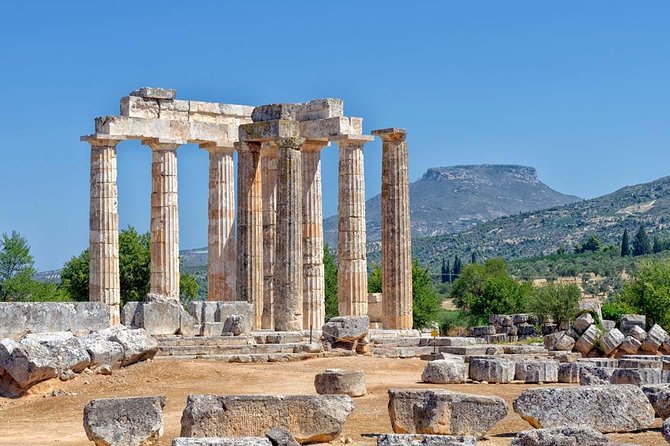
The same day also includes Ancient Nemea. This is the kind of stop many ancient itineraries shortcut, but it is a strong addition. It is described as soft hills with vineyards, and it can feel like a Napa Valley style wine region combined with Greek temples. You will see the Temple of Zeus, with three columns that have stood since the time of the original construction, plus the ancient baths and the Apodyterium in the athletic context of the Panhellenic sanctuary.
Possible drawback: This is a packed day. If you like slow museum time, you may want to prioritize. Otherwise you risk carrying fatigue into the next day.
Day 8: Acrocorinth, Ancient Corinth, then the Corinth Canal and back to Athens
Morning starts at Nafplio with a visit to Acrocorinth, the acropolis of ancient Corinth. It sits on a monolithic rock overlooking the ancient city of Corinth and is one of the dominant acropoleis of the Peloponnese.
You will walk through areas like the Gates, a system of three circuit walls reinforced by towers. Then you will see Peirene Spring within the walls and traces of the Temple of Aphrodite on the higher peak. If you like layers, Frankish Tower offers a different era, reinforced during Frankish times and leaving remains of churches, mosques, houses, fountains, and cisterns.
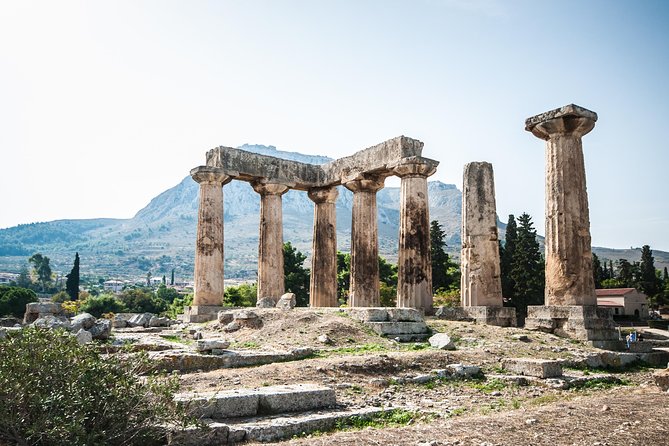
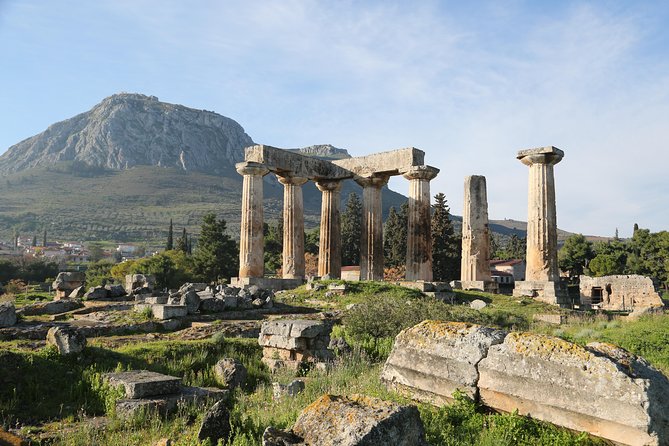
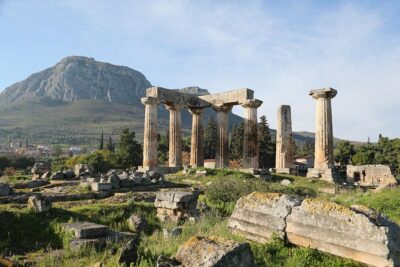
Then comes Ancient Corinth, where you will see Hadgimoustafa spring, built during the Ottoman empire, and the Ancient Corinth Archaeological Museum with artifacts from local and neighboring sites. You will also see the Temple of Apollo, one of the earliest Doric temples in the Peloponnese and Greek mainland, built around 560 BCE with monolithic columns.
In the Agora, look for the rectangular layout with shops, small temples, and altars, plus the famous Bema, from where Apostle Paul addressed the Corinthians in 52 AD. You will also see Roman buildings and the theatre and Odeon, plus the Asklepieion.
Next is a practical and memorable engineering moment: the Corinth Canal, described as a 19th century engineering masterpiece that played a role in Mediterranean trade. After that, you drive to Kechries Port tracing the footsteps of St Paul.
Lunch is by the Saronic sea at the Baths of Helen of Troy village, then you return to Athens and check into your hotel.
Day 9: Athens essentials, Kallimarmaro marble stadium, the Agora, and Acropolis
Day 9 is a full Athens day, and the order matters because it helps you manage crowd intensity and heat.
You start with pickup from your chosen hotel or apartment around a 10:00 am start time. You then drive by the Temple of Olympiad Zeus, a colossal temple. After that, you visit the Olympic Stadium Kallimarmaro, the only stadium in the world built entirely of marble.
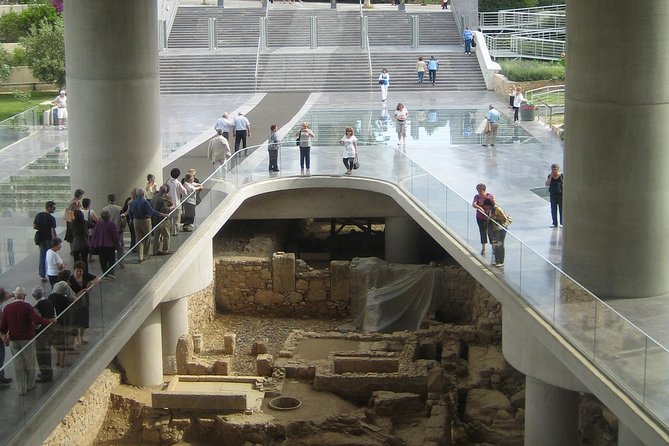
Next is Mount Lycabettus for panoramic views. Then you visit the National Archaeological Museum. This museum is highlighted as breathtaking and it houses some of the most important artifacts from around Greece.
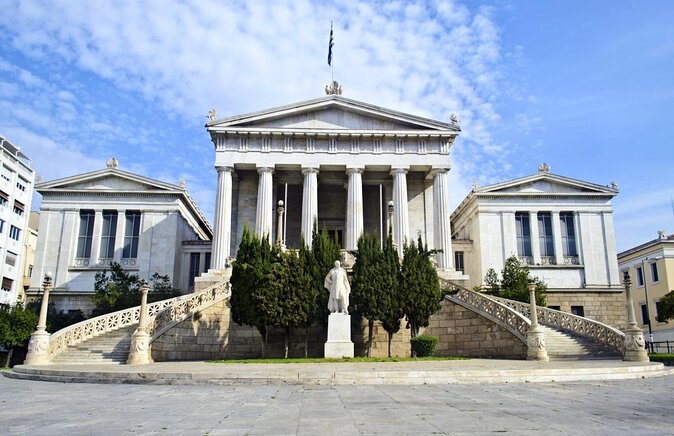
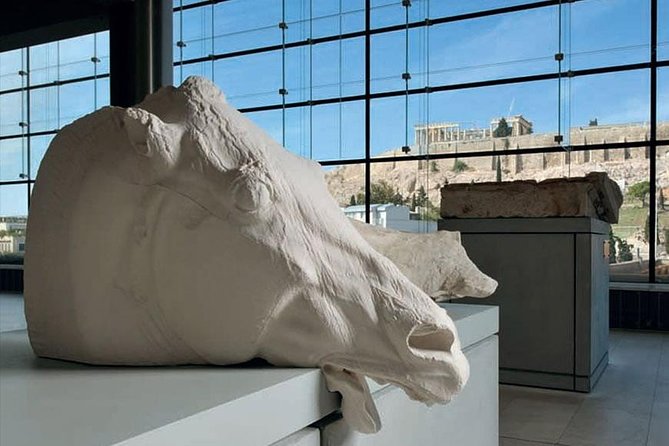
There is also an option to choose the Acropolis museum instead of or rather than the National Archaeological Museum, depending on what you prefer. You will also drive by the neoclassical Athens trilogy, the National library, Athens University, and the Academy of Athens, plus Stadiou street and the statue of Theodoros Kolokotronis.
You visit the Hellenic Parliament and Constitution Square and get the changing of the Royal Guards. Then you have time in Monastiraki for an authentic Greek lunch, plus shopping in Monastiraki flea market or Plaka.
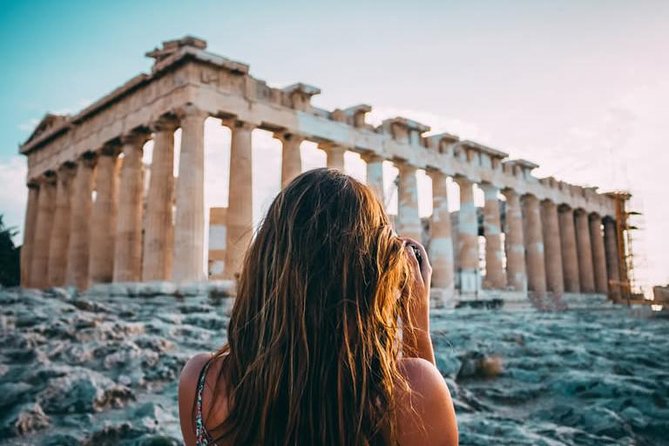
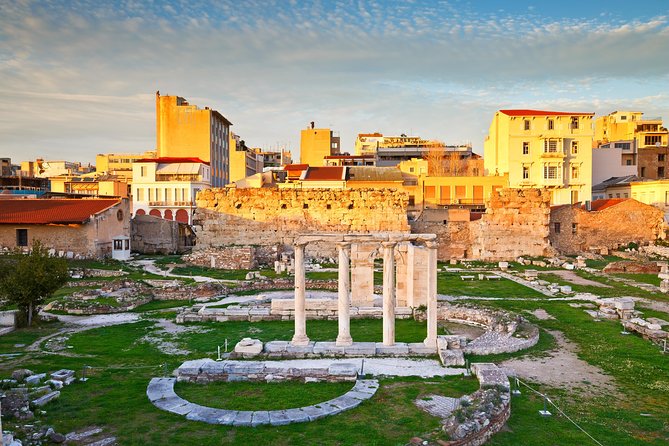
Ancient Agora comes next, described as the heart of ancient Athens for political, administrative, commercial, social, religious, cultural life, and justice. Finally, you reach the Acropolis with the Parthenon and the sacred rock setting.
Practical tip: This day is heavy on walking at multiple stops. You will enjoy it most if you treat it like a long day at a site, not a sprint across town.
Day 9 evening: Cape Sounion Temple of Poseidon and dinner on the Riviera
The tour keeps Athens energy going by heading to the coast. You drive by the Athens Riviera, then visit Cape Sounion and the Temple of Poseidon.
The Temple of Poseidon dates to 444 to 440 BC, and it is described as one of the major monuments of the Golden Age. The setting helps a lot, because the temple is not just a building, it is a viewpoint over the sea.
You finish with dinner at Megalo Kavouri by the Saronic sea. This is a good way to end a tour centered on stones and stories, because you finally add a bit of salt air and an easy meal.
Day 10: Airport transfer day with a low stress finish
On your final day, you keep it simple. You have breakfast in Athens and then take a private transfer to Athens International Airport.
This is one of the advantages of doing a private multi-day tour with the same transport setup. The last day stays predictable, so you are not scrambling to arrange rides or timing your departures around multiple tickets.
Who this tour fits best, and who should think twice
This is a great fit if you want big ancient highlights with a driver doing the navigation and providing history context. You will also like it if you are traveling with family or a small group and want a true private setup where your pace matters.
It is also ideal if you do not want to feel chained to a strict guided tour format. The plan lets you explore sites independently and at your own pace, with transfers handled for you.
You might want to think twice if you are the type who always wants a licensed guide inside every museum and every site. Since entrance tickets and licensed in-site guiding cost extra, you will have to either budget for that or accept that your main narrative is coming through the driver rather than a specialist guide at each stop.
Should you book this 10-day private Ancient Greece experience?
I would book this if your top goal is seeing a lot of Greece, including the high-impact stops like Meteora, Delphi, Epidaurus, Mycenae, Corinth, and Athens, without turning the trip into a logistics problem. The private driver, the private vehicle, WiFi onboard, and the added comfort items like bottled water and wipes make the long days feel manageable.
I would hesitate only if you expect fully guided museum-style tours at every location. For that, you may need to add a licensed guide on request and budget for entrances and meals.
If you want an efficient route with real scenery, castle towns, and ancient monuments connected into one smooth story, this private plan is strong value for your time.
FAQ
What is the duration and start time of the tour?
The tour runs for 10 days (approx.) and starts at 10:00 am. The exact flow is based on the daily stops listed.
Is pickup and drop-off included?
Yes. The tour includes hotel or port pick-up and drop-off service. There is also a private transfer to Athens International Airport on the final day.
Are skip-the-line tickets included?
Skip-the-line tickets are included on request, but they are not guaranteed as a standard inclusion. Entrance fees to the sites are not included.
Are site entrance fees and meals included?
Entrance fees to the sites are not included. Food and drinks are not included either.
Is a licensed tour guide included inside museums and sites?
A licensed tour guide to accompany guests into sites and museums is not included. It is available as an additional cost on request.
What does the car include for comfort during transfers?
The vehicle includes WiFi onboard, bottled water and refreshing wipes, and fresh handmade Greek biscuits. Transportation is by private luxury vehicle.
Can I bring a pet or service animal?
Animals or pets are allowed, and service animals are allowed. The tour also notes it is near public transportation and most travelers can participate. Cancellation follows the policy listed, with a full refund possible if canceled at least 6 days in advance.
Fresh options around Athens
- 3-Day Trip to Delphi and Meteora from Athens★ 4.0 · 53 reviews
- 3-Day Tour: Mycenae, Epidaurus, Nafplio, Delphi, Meteora With 4* Hotel Included★ 5.0 · 6 reviews
- 2 or 3-Day Private Tour: Ancient Olympia, Corinth, Mycenae, Epidaurus, Nafplion★ 5.0 · 11 reviews
- 4-Day Classical Tour Greece: Epidaurus, Mycenae, Olympia, Delphi, Meteora★ 4.5 · 4 reviews
- Hydra Island & Mythical Full Peloponnese Private 9-Day Tour★ 5.0 · 3 reviews
- 27 Day Grand Circle Tour of Mainland & Corfu, Mykonos, Santorini★ 5.0 · 4 reviews
- 20-Minutes Natural Pedicure with Exotic Fish★ 5.0 · 17 reviews
- 2 Day Delphi, Meteora Iconic Sites Private Tour With 4* Hotel Included★ 5.0 · 3 reviews
Private, compared.


Athens Airport Private Arrival Transfer with Meet & Greet
Read our review →
Athens Airport to Athens Hotels Private Arrival Transfer
Read our review →
Private Biblical Tour Ancient Corinth & Isthmus Canal from Athens
Read our review →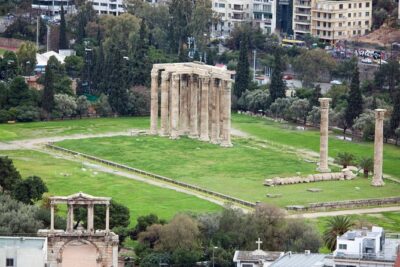
4 Hours – Athens & Acropolis Highlights Private Tour
Read our review →