
Reviewed · 5-DAY EXPERIENCES
5 Days Private Ancient Cities Tour of Greece from Athens
This experience works because it strings together major southern Greece highlights without making you play chauffeur, planner, and ticket agent at the same time. You get private transportation with pickup and drop-off in Athens, plus a route that hits big-name ruins and a few places that feel more like real life than a checklist.
Two things I like a lot: the chance to see the Byzantine ghost city of Mystras and the way the schedule pairs ruins with the museums that explain what you are actually looking at. One possible drawback: entrance fees are not included, and the driver is not a licensed guide inside sites, so if you want that extra level of explanation on-site, you may want to add a licensed guide.
Key Highlights Worth Noticing
- Door-to-door Athens pickup and drop-off plus private transit, so you spend less time wrangling logistics.
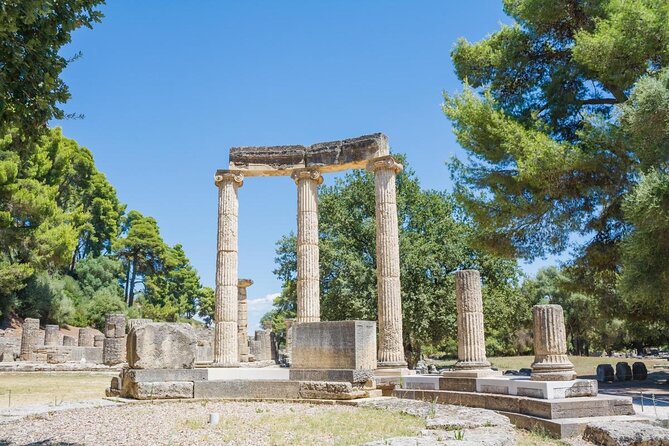
- Ancient Olympia + its Olympic-focused museums, including the Olympia site and museum time.
- Mystras, a real “ghost city” with monasteries still in use, not just abandoned stones.
- Monemvasia’s fortress town, a lived-in Byzantine maze on an island connected to the mainland.
- A smart mix of big icons and lesser-known stops, like Tiryns and the Treasury of Atreus.
- Flexible private format, with a planned route and the option to upgrade with a licensed guide.
Why This Athens-to-Peloponnese Route Works So Well
If your goal is ancient Greece in 5 days, this itinerary makes a strong case for staying focused. You cover a big geographic sweep of the Peloponnese and the Corinth area, and you do it with private transit, so you are not stuck coordinating public buses and connection times.
What also helps is how the route keeps returning to themes. Athletics at Olympia, fortresses and power centers at Mycenae and Tiryns, medicine at Asklepios, performance at Epidaurus, and religious history at Corinth. That pattern makes the ruins feel connected, not random stops.
Just be aware that the day structure is built around getting to multiple sites. That usually means walking and heat management, plus lots of moments to look closely, not lots of slow free time.
A few more Athens days worth comparing
- Best of Athens Half Day Private Tour
★ 5.0 · 3,714 reviews - Athens Full Day Private Tour
★ 5.0 · 2,903 reviews - Athens Airport Private Arrival Transfer with Meet & Greet
★ 4.5 · 1,495 reviews
How Private Driving Changes Your Ancient-Cities Days
This is a private tour, meaning only your group travels together. That is a real quality-of-life upgrade when you are hopping between places like Corinth Canal, Olympia, Sparta, Mystras, Monemvasia, Mycenae, and Epidaurus.
You also have the benefit of professional driving with history context. The team provides drivers with deep historical knowledge of the sites, but the driver is not licensed to accompany you inside museums and archaeological sites. In plain terms, you get great narration on the move and during walks where allowed, but if you want licensed, inside-the-site interpretation, you add it separately.
Finally, the practical stuff matters. Bottled water is included, you get a mobile ticket, and the experience includes hotel, AirBnb, or port pickup and drop-off in Athens.
Day 1: Corinth Canal, Ancient Olympia, and the Olympic Games Museums
Day 1 starts with a drive along the coast, with passing views of seaside villages and the island of Salamis, tied to a famous naval battle between Athenians and Persians. That quick context helps set the stage before you hit the modern engineering landmark.
Corinth Canal, a 19th-century shortcut with ancient echoes
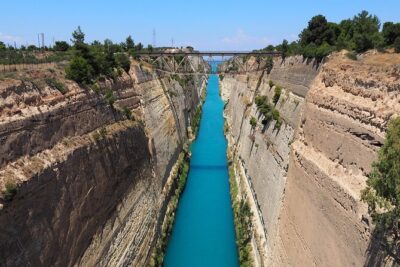
Your first stop is the Corinth Canal. It was opened in 1892 and it physically separates the Peloponnese peninsula from the rest of Greece, connecting the Saronic Gulf to the Corinthian Sea. You will have time to walk across on a pedestrian bridge to see the canal closer, and if you are feeling adventurous, some days there is also an option to do bungee jumping (not part of your guaranteed tour time, but worth knowing it exists).
This is the kind of stop that keeps you from feeling like you only travel from one ruin to the next. You get a quick reality check that Greece is not just ancient monuments, it is also active ports and modern transit.
Same corner of Greece, a different kind of day:
- Athens: Acropolis & up to 5 Archaeological Sites Combo Pass
★ 4.4 · 12,619 reviews - Athens: Acropolis, Parthenon & Acropolis Museum Guided Tour
★ 4.8 · 9,316 reviews - Athens: Cape Sounion & Poseidon Temple Sunset Half-Day Trip
★ 4.8 · 8,241 reviews - Athens: Acropolis and Parthenon Guided Walking Tour
★ 4.6 · 5,882 reviews
Ancient Olympia and the Stadium of the Games
Then you shift into full ancient mode at Olympia. This is one of the biggest archaeological sites in Greece and the birthplace of the Olympic Games, set within the Sanctuary of Olympian Zeus. You walk past major features like the Gymnasium, the Palaistra, and the workshop of Phidias, then move through the core sanctuaries toward the Temple of Zeus and the Stadium.
The Stadium is the natural closer for the visit because the whole layout was designed for athletic competition and honor tied to the cities. You can almost feel how the games would have changed the rhythm of life around Olympia every four years.
Olympia Museum time, including Hermes of Praxiteles
Olympia also includes museum time. The museum is known for the famous statue Hermes of Praxiteles, praised for its proportions and craftsmanship. The visit also connects back to Phidias, including references to tools associated with him and the gold-and-ivory Statue of Zeus, counted among the seven wonders of the ancient world.
You do want to know a simple truth: museum highlights can feel like they move faster than the outdoor stones. If you are the type who likes to pause for details, aim for a slower pace through the key pieces, and use the outdoor walk for your deeper visual reading.
Olympic Games Museum, from ancient to late antiquity
The Olympic Games Museum focuses on how the Games evolved across centuries. It includes 463 ancient works, spanning from the 2nd millennium BC to the 5th century AD, with thematic exhibits and visual materials that explain the long story of the Games.
If you care about how traditions survive, change, and get reinvented, this museum time is one of the most useful parts of the day. It turns Olympia from a single moment into an institution with a timeline.
Day 2: Mystras and Sparta, Two Very Different Power Centers
Day 2 takes you into the southern Peloponnese, and the drive itself helps. You move through mountainous countryside, and by the time you reach Mystras you understand why it feels dramatic, built on a steep stage of stone and church domes.
Mystras, the ghost city with monasteries still running
Mystras is often called a ghost city because it was a fortified citadel town, and today it still gives off that quiet, abandoned-in-places feeling. But it is not truly dead. The site preserves medieval churches, and also everyday houses, mansions, and palaces from the Byzantine Empire, with Frankish elements layered in.
Walking the upper citadel area gives you big views over the region. Then you head downhill to meet palaces and royal courtyards. One of the most moving parts is that monasteries are still in use, and monks can show you around their small society.
You also visit a key religious moment at the Chapel of St. Demetrios, where a plaque survives with a two-headed eagle symbol of Byzantium. The story connects to Konstantine Palaiologos, who kneeled there before being crowned the last emperor of Byzantium. It is the kind of detail that makes the stones feel human.
Sparta highlights, plus the Leonidas connection
After Mystras, the tour shifts toward Sparta. You get a stop at an Acropolis and ancient theater area (with admission free time noted), then you continue with key Sparta sights such as the Leonidas Monument marking the ending point of the Spartathlon race route from Athens to Sparta.
Sparta can feel like a mythology machine, but the visit works best if you treat it as a framework for thinking about ancient society. Sparta is presented as a military-focused culture, organized with two kings in its ancient period, and tied in myth and memory to figures like Leonidas and the Battle of Thermopylae.
Olive oil stop, a practical ending to a historic day
The day finishes with the Museum of Olive and Greek Olive Oil. It may not sound like a headline compared to citadels and temples, but it is actually a smart pairing because it grounds you back into what a place like the Peloponnese produces and lives by.
Day 3: Monemvasia Castle and Agia Sofia Church Above the Bay
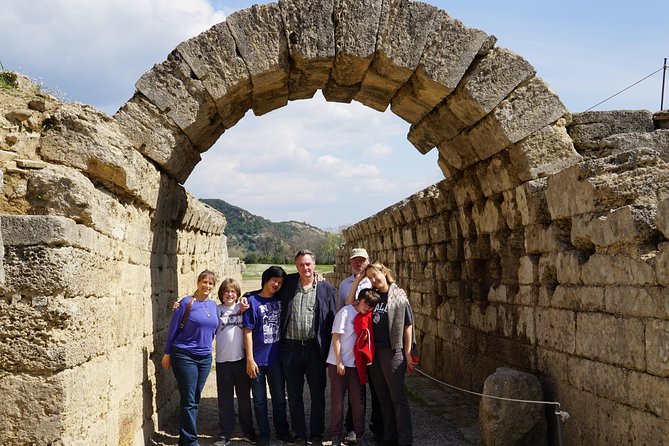
Monemvasia is the kind of stop that changes the mood of the trip. Instead of a ruin that once was, you get a lived-in fortress town.
Fortress town on an island, still connected by stone
Monemvasia developed on an island connected to the mainland. The name is tied to the idea of one entrance. The Byzantine fortress and prosperous city still survive, with narrow streets, mansions, small houses, churches, and the walls, gate, and citadel. Importantly, the city is still inhabited.
You spend about half the day here, which is a good compromise. It gives you enough time to wander and keep finding small turns, rather than rushing through only the main view. There is also time to have lunch by the sea upon the old wall, a very Peloponnese kind of lunch setting.
Agia Sofia Church, calm interiors with cliff views
Agia Sofia, also known as St Sophia’s Church, is in Monemvasia’s upper town. It is built right on the edge of a cliff, with vertiginous views of the bay below. The façade includes a Venetian loggia, and inside you find a calm, cool feeling with an impressive dome, finely sculpted marble capitals, and fragments of 13th-century frescoes.
If you have ever visited a church after climbing to it, you know the sensation. This one turns that ritual into something even more scenic.
Day 4: Nemea, Mycenae, Tiryns, and Overnight Nafplio
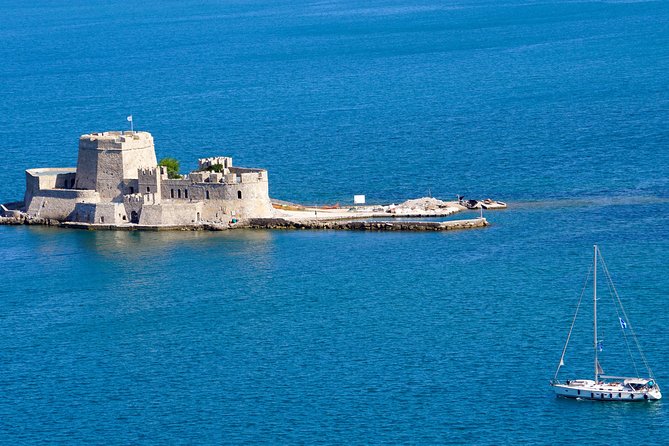
Day 4 is big. You hit multiple archaeological powerhouses plus a modern historic city that makes a great base for the night.
Nemea, Heracles and the Nemean Games
You start at Ancient Nemea. In Greek mythology, this is where Heracles overcame the Nemean Lion of Hera. In antiquity, the Nemean Games were held here in a structured cycle, and the site is also tied to Pindar’s Nemean odes.
A visit to the archaeological site and the museum is followed by focus on the stadium. Nemea’s stadium is one of the best preserved found so far, and it includes tunnels through which athletes entered the stadium. That detail matters because it reminds you the games were managed like events, not just spontaneous festivals.
The museum and sanctuary time also gets a practical angle. Nemea is known for vineyards, and the visit notes that grape growing has a tradition here since ancient times.
Mycenae, the UNESCO citadel of Achilles and Agamemnon
Next comes Mycenae, a UNESCO protected monument. This is the citadel associated with Achilles, Agamemnon, and Helen of Troy. On-site you see cyclopean walls, the burial circle A, and the remains of Agamemnon’s Palace.
Lion Gate follows, and it is described as the renowned Lions Gate, the oldest architectural sculpture in Europe. Even if you do not study architecture, gate sculptures like this are designed to communicate power, and Mycenae does that instantly.
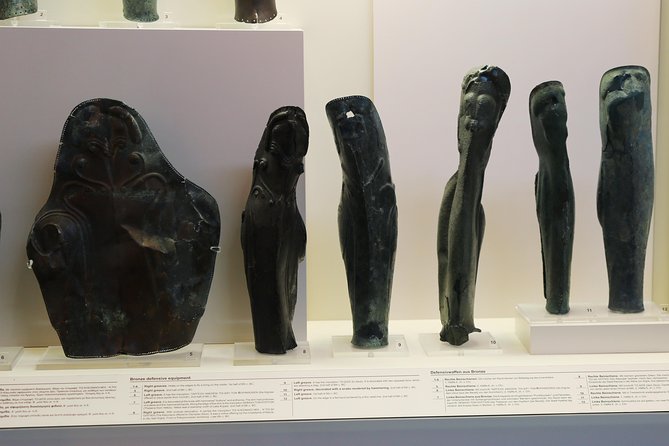
You also visit the museum of Ancient Mycenae, described as modern and focused on findings from the City of Gold.
Treasury of Atreus and Tiryns, short stops with big payoffs
You make a small stop at the Citadel and Treasury of Atreus, one of the best preserved tholos tombs and a strong example of Mycenaean architecture. After that, you go to Tiryns, tied to the myth of Heracles performing his 12 labors.
These short blocks work because you can keep moving through the “Mycenaean story,” from palace walls to funerary architecture to neighboring hero locations.
Nafplio overnight, fortresses, harbors, and a sea-view lunch
Then the tour shifts toward more recent Greek history in Nafplio. It is described as the most scenic city, and it served as the capital of Greece until 1834. You get fortresses and castles like Palamidi and Bourtzi, plus a big harbor open to the Aegean Sea.
You walk around the old city, where the architecture mixes Venetian, neoclassical, and oriental elements. Lunch is planned at a traditional tavern by the sea, and then you overnight in Nafplio, which is a smart pacing choice. Instead of trying to do a marathon and sleep on a bus, you get a real night in a city with atmosphere.
You also drive up to Acronauplia for panoramic views.
And you get a look at Bourtzi, a small islet with a fortress in the huge port. It is a quick scenic punctuation mark before you head toward Epidaurus the next day.
Day 5: Asklepios Sanctuary, Epidaurus Theatre, and Corinth’s Apollo Temple
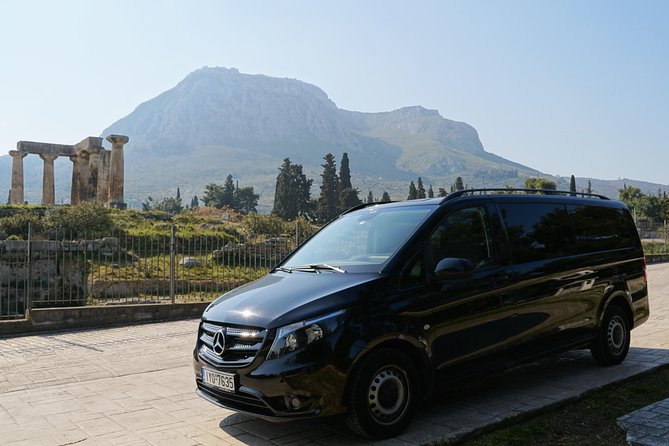
Day 5 is where the tour flexes on variety: healing cults, theater acoustics, and Corinth’s religious layers.
Sanctuary of Asklepios, healing in a hilly setting
You start at the Sanctuary of Asklepios, dedicated to the god of healing and medicine. The site is described as spread over a hilly area in an ideal environment. Even if you do not buy into ancient medicine, you can appreciate how people built sacred spaces that feel restorative.
Epidaurus, the ancient theater where acoustics matter
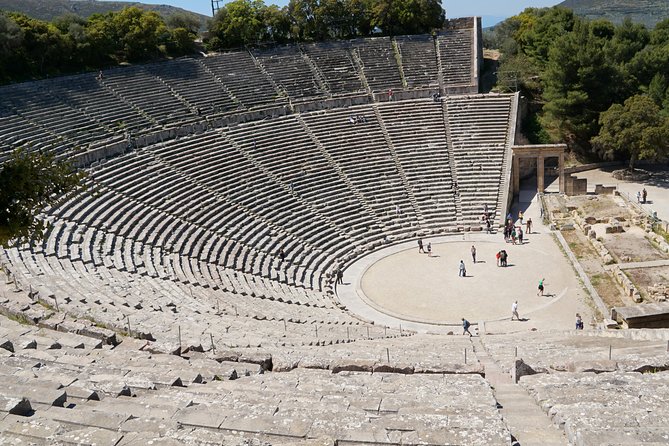
Then you visit the Ancient Theatre of Epidaurus. It is listed as the best preserved ancient Greek theater, dated to the 4th century BC. The big selling point is how you can test the acoustics, and you can climb to the upper seats for a feeling of being inside an ancient performance moment.
If you like sensory experiences, this is one of your best stops. It turns architecture into something you can hear, not just something you can look at.
Akrokorinthos and Corinth, from castle views to Paul’s city
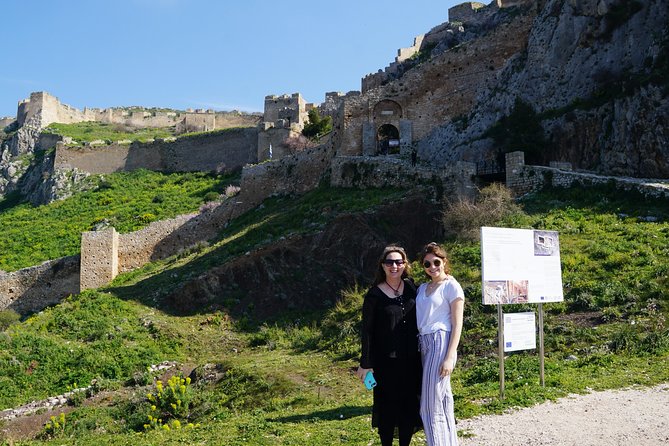
After Epidaurus, you connect back to the Corinth area. You stop at Akrokorinthos, the hill of Acrocorinth, described as the oldest and largest castle in southern Greece, with a breathtaking view for photos.
Then you visit Ancient Corinth, also called Archaia Korinthos, including the Roman Agora of Corinth, the Temple of God Apollo, and a small museum. Corinth also carries religious history in the story of Apostle Paul, who preached Christianity in the Agora and faced a tribunal, with the early church described as becoming organized there.
Finally, you visit the Temple of Apollo at Corinth, built around 560 BC. It is described as one of the earliest Doric temples in the Peloponnese, made of local monolithic limestone on top of a rocky hill to the north of Acrocorinth. That positioning is part of why it matters, it was meant to dominate the view and signal Corinth’s prosperity.
You wrap with the drive back to Athens.
Price and Logistics: Is 1,735.23 a Good Value?
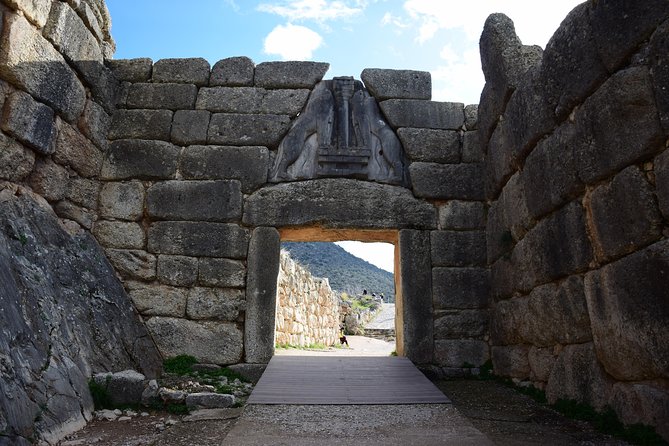
At $1,735.23 per person for about 5 days, the value comes from what you are buying: private transportation, pickup and drop-off, and a tightly packed route through multiple major sites without you doing the organizing.
You also have the practical perks that add up on real trips. Bottled water is included, and the tour is private, so you are not splitting attention or timing with strangers. The itinerary also includes museum and archaeological visits, not only driving photo stops.
Still, there are costs you should budget separately. Entrance fees are not included, and if you want a licensed tour guide inside museums and archaeological sites, that is an additional upgrade. If you love history narration and you like to ask questions while walking, budgeting for a licensed guide is often the difference between seeing places and really understanding what you are seeing.
One more thing to check when you reserve: the package wording lists accommodation and breakfast as included according to your booking. Because the details can vary by booking option, confirm what your exact version includes, especially since there is an overnight at Nafplio.
Who Should Book This Tour, and Who Might Want a Different Style
This tour fits well if you want a high-output ancient circuit with comfort and less planning stress. It is ideal for couples, small groups, and repeat Greece visitors who know they want more than a single day trip.
You might want to rethink it if you:
- hate long days and multiple-site pacing,
- want every single site explained by a licensed guide (you would need to add that),
- are allergic to ticket lines, because entrance fees are extra and most stops include timed admissions.
Book or Skip: My Decision Guide
I would book this if you want a private, structured 5-day plan that covers Olympia, Mystras, Mycenae, Epidaurus, and Corinth, with enough museum time to make the ruins make sense. The best part is the way the route mixes iconic monuments with places that still feel inhabited, like Monemvasia.
I would not book it if you plan to rely on the driver for all on-site interpretation. Since drivers are not licensed inside museums and sites, you should decide in advance whether you will upgrade with a licensed guide.
If you do book, one smart move is to bring a short list of what you care about most, sports, Byzantine culture, Mycenaean architecture, theater, or religion. Then you can ask for deeper focus when a licensed guide is added.
FAQ
What time does the tour start?
It starts at 8:00 am.
How long is the tour?
It’s approximately 5 days. Exact timing depends on the day’s schedule and traffic conditions.
Is pickup in Athens included?
Yes. Hotel or AirBnb pickup, and port pick-up and drop-off, are included.
Is this a private tour?
Yes. It is private, and only your group participates.
Are entrance fees included?
No. Entrance fees are listed as not included.
Do I get a licensed tour guide?
A licensed tour guide is available on request for an additional cost. The drivers are not licensed to accompany you inside sites or museums.
What is included in the price?
Private transportation, professional drivers, bottled water, pickup and drop-off, and accommodation and breakfast according to your booking are listed as included.
Is there a mobile ticket?
Yes. The tour includes a mobile ticket.
What is the cancellation policy for a full refund?
You can cancel up to 3 days in advance of the start time for a full refund. If you cancel less than 3 days before, the amount paid is not refunded.
Fresh options around Athens
- Classical Greece 3-Day Tour: Epidaurus, Mycenae, Olympia and Delphi from Athens★ 4.5 · 15 reviews
- 8-Day Classic Greece Tour: Athens, Epidaurus, Mycenae, Olympia, Delphi & Meteora★ 4.0 · 4 reviews
- 3-Hour Small Group Coasteering in Sounio★ 5.0 · 12 reviews
- Get Lost in Athens with an Insider★ 4.5 · 28 reviews
- Christmas food and walking tour in Athens★ 5.0 · 6 reviews
- Electric Trikke Bike Athens Complete Tour★ 5.0 · 35 reviews
- Athens City Game: The Journey through Time★ 5.0 · 9 reviews
- Cruise into Athens?! Best of Athens Tour from Piraeus Cruise Port★ 4.5 · 5 reviews
5-Day Experiences, compared.
5-Day Ancient Greece & Zakynthos Turtle Island Tour
Read our review →

5 Day Tour in Delphi, Meteora, Santorini, Mykonos and Delos
Read our review →
5-Day Best of: Nafplio Mycenae Epidaurus Olympia Zakynthos island Delphi Meteora
Read our review →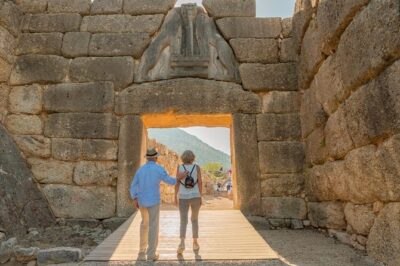
BEST 5-Day CLASSICAL GREECE Corinth Olympia Delphi Meteora & More
Read our review →Browse the lists this tour appears in