

Reviewed · WALKING TOURS
Athens: Guided Street Art Walking Tour
Athens street art is interesting because it is not just decoration. It is a running conversation about identity, struggle, and creativity, painted right onto everyday streets. I especially love how the guide helps you read the messages and symbols behind works by artists like WD, iNO, and Moralez, so you stop seeing random tags and start seeing stories (street artist guide).
You also get to walk through three central neighborhoods, Psyri, Gazi, and Monastiraki, and that matters because the city changes block by block. Along the way, you connect what you see to the wider picture of Greece’s economic and social crisis, through art that comments on real life instead of staying polite. One thing to think about before you go: it is a walking tour, and the pace is real, so bring comfortable shoes and plan for steady steps.
Key Points Before You Go

- A guide who is an active street artist helps you interpret what you are seeing, not just point at it.
- Three neighborhoods (Psyri, Gazi, Monastiraki) give you the change-in-views Athens you miss when you only stick to the big sights.
- Economic and social crisis themes show up in murals, letting you understand modern Athens through the street-level lens.
- Artists like WD, iNO, Moralez and others come with explanations that make the styles click.
- Small-group vibes show up often, based on past groups that loved asking questions and talking.
- A coffee stop may happen, and it is a nice break in local rhythm, not a tourist trap.
Street Art in Athens, How to Read It Like a Local

Athens has graffiti everywhere, but most visitors see it as background noise. This tour flips that. Instead of treating street art as random coolness, you learn a way to read it: symbols, styles, references, and the reasons something gets painted in one spot instead of another.
I like that the tour starts with definitions and context, because once you have a framework, the city starts making sense fast. You begin to notice recurring visual themes, how artists build their signatures, and how messages can feel like coded letters to people who already live with the issues being referenced.
The biggest payoff is how the guide connects art to Athens life. In these neighborhoods, street art often functions like a community bulletin board, but with attitude. You see how humor, anger, and hope all share the same wall.
More walking tours in Athens:
- Athens: Acropolis and Parthenon Guided Walking Tour
★ 4.6 · 5,882 reviews - Greek Food Walking Tour in Athens
★ 5.0 · 4,740 reviews - Acropolis: Acropolis and Parthenon Guided Walking Tour
★ 4.7 · 3,442 reviews
Getting There at the Association of Greek Archaeologists (and Finding Your Start Point)
You meet in front of the Association of Greek Archaeologists. It is easy to reach by metro, and that keeps the start stress-free.
If you are using the green line, aim for Thissio and walk over. If you are using the blue line, go to Monastiraki Metro Station and walk along Adrianou Street. This matters because you will be starting early enough to walk neighborhoods efficiently, without wasting time hunting for the group.
One more practical note: the tour lists starting options in areas like Thiseio, Psyri, Gazi, and Monastiraki. On your specific date, you may start near one of these corners, but in all cases you should be able to find the gathering spot around the archaeologists association area.
Psyri: The Street-Art Window Into Contemporary Athens
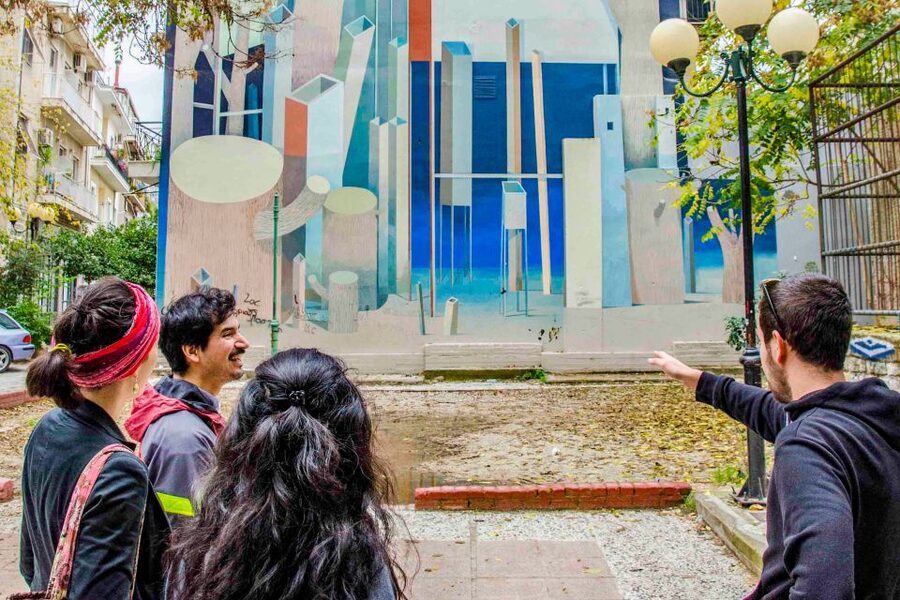
Psyri is where you start to feel how the city thinks now. This neighborhood tends to pull in people who want to be close to culture without waiting for official schedules. On the walk, Psyri gives you that “right now” energy, with walls that act like message boards.
What you can expect is a guided look at art you might otherwise walk past. You will learn why certain works use specific visuals, and how artists communicate without writing a caption the way a museum label would. This is also where you start seeing the social angle more clearly, because the tour’s theme often comes through in what is being referenced.
Also, Psyri is a neighborhood that helps you learn the city layout. Even if you already know the ancient sights, walking Psyri helps you understand how modern Athens flows around them, not just beside them.
Gazi: Industrial Edges, Creative Voices

Gazi is a shift in feel. You get a different Athens texture here, and it helps explain why street art has space to grow. When you walk these streets, you start noticing how walls, alleys, and older building edges become canvases, especially in areas that have their own identity beyond the postcard route.
This is a great stop if you want to understand how style can signal intention. The tour focuses on interpretation, so you are not just told what piece is where. You learn what to look for, like how artists build recognizable traits and how different creators can use similar techniques to express very different viewpoints.
From past groups, I also think this is where you may feel the “lived-in” part most strongly. The guide often speaks like a local friend who cares about the scene. In particular, guides named Nikos Rude, Nico, and Nikos have been described as easy going, full of context, and especially good at explaining the meaning behind what you see.
A few more Athens days worth comparing
- Athens Street Art Walk
★ 5.0 · 309 reviews - Awesome Street Art Tour in Athens with a Local Expert Small-Group
★ 5.0 · 150 reviews - Athens Urban Street Art Tour
★ 5.0 · 98 reviews - Athens: Street Art Walking Tour
★ 4.7 · 23 reviews
Monastiraki: Reading the Messages Without Getting Lost

Monastiraki can be crowded when you arrive on your own, and that crowd energy can hide what is actually happening on the walls. This tour helps you slow down enough to see meaning in the details.
In this part of the walk, you will likely notice how street art does not treat history like something locked away. Instead, it uses the present day as the punchline or the warning. Greece’s economic and social crisis shows up here in the way art frames struggle, frustration, and resistance, so the neighborhood becomes more than a place to pass through.
The practical value of Monastiraki is navigation and perspective. You finish this section with a better sense of where the city’s current identity sits, relative to the big landmarks you may already have in your mind. You stop thinking of Athens as just ancient, and start seeing it as layered, with contemporary voices pushing up through everyday surfaces.
The Artists and Styles That Make the Tour Worth the Time
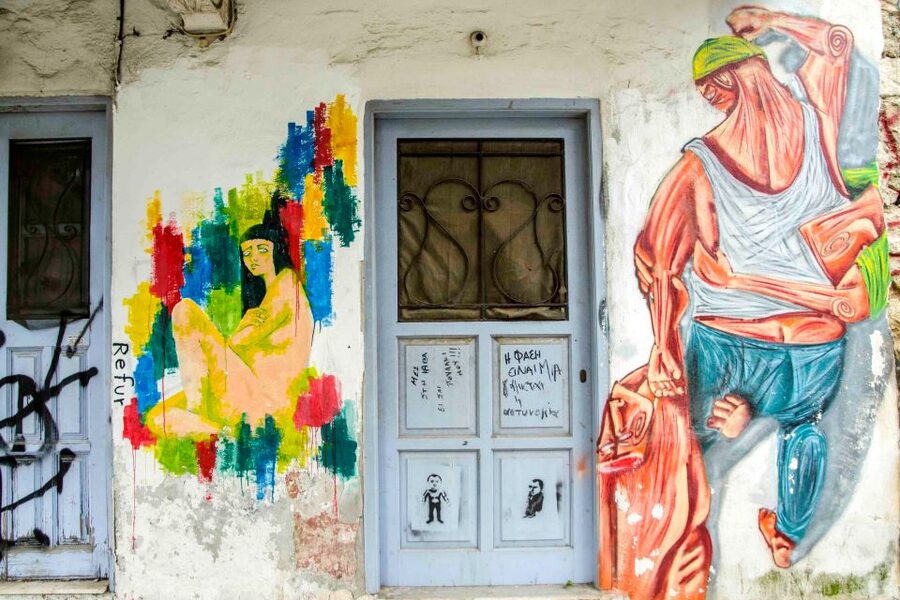
The tour is built around seeing specific artists and learning how their approaches connect to the messages. Based on what the tour highlights, you should expect names like WD, iNO, Moralez, and more, paired with explanations you can use right away.
I like that this is not “street art 101” only. It is interpretation in the real world. When you stand in front of a piece, the guide can explain how the style works, why a symbol might matter, and how the artist’s choices can connect to wider social themes.
In past groups, guides including Nikos Rude and others like Pavlina and Elisabeth have been praised for being sensitive to the group, sharing context with real care, and giving a good pace. One guest even noted that having an artist guide makes the meaning feel more direct, because it comes from someone who understands the process.
If you are worried you will be bored because you are not an art person, do not. The tour is set up so you learn how to see. If you can read a headline, you can read street art with the guide’s help.
How the Greek Crisis Shows Up on Walls

One of the strongest parts of this experience is how the tour connects street art to Greece’s economic and social crisis in recent decades. You will see how the wall becomes a place to process anger, powerlessness, and survival.
This does not mean the tour is only heavy. It is more like reality in paint. You get references that can feel political, but also deeply human, because they are tied to day-to-day life.
You learn that street art can be commentary, protest, and sometimes a kind of coping. That makes Athens feel closer. Instead of treating history as a closed chapter, you understand it as something that still affects people’s choices, moods, and public language.
Pace, Footwear, and Who This Tour Suits Best

This is a 3-hour walking tour, and the success of it depends on your comfort on foot. Bring comfortable shoes and expect you will cover enough ground to feel it in your legs by the end.
It is not suitable for people with mobility impairments or wheelchair users, because it is a walking route through central neighborhoods.
If you fit this walking requirement, the tour is a strong match for:
- people who want Athens beyond the ancient sites
- anyone who likes graffiti or street art but needs help understanding it
- couples, art students, and even teens, if they can handle a few hours of walking and discussion
If you are the type who likes to ask questions, you will do well. Past groups loved being able to talk, share opinions, and get specific explanations instead of just listening politely.
Value: Why $57 for 3 Hours Can Actually Feel Like a Bargain

At $57 per person for a 3-hour guided street art experience, you are paying for more than footsteps and background talk. You are paying for interpretation by a street artist guide, plus access to neighborhoods many visitors never choose because they are not on the classic sightseeing checklist.
Also, the tour is intentionally positioned as an alternative to pure museum time. That makes it a good value if your Athens days are packed with ancient sights already. Think of it as a different lens that helps you understand the city’s present.
One more detail that affects value: the tour is described as a walking experience with no transportation included. That is fine because the central neighborhoods are close enough to stitch together, but it means you should budget your own metro time. You get a clear, guided route instead of relying on transit during the experience.
Should You Book This Athens Street Art Walking Tour?
If you want Athens to feel current, human, and a little bit rebellious, book it. This is one of the best ways to understand the city without pretending only the ancient parts matter. You will leave with names, styles, and context you can actually carry into the next day’s wandering.
Skip it only if you hate walking, do not want any discussion at all, or you are looking for a quiet photo-only tour. If you can handle a few hours on foot and you are curious about what the city is saying on its walls, you will have a strong time.
Fresh options around Athens
- 3-Day Trip to Delphi and Meteora from Athens★ 4.0 · 53 reviews
- 3-Day Tour: Mycenae, Epidaurus, Nafplio, Delphi, Meteora With 4* Hotel Included★ 5.0 · 6 reviews
- 2 or 3-Day Private Tour: Ancient Olympia, Corinth, Mycenae, Epidaurus, Nafplion★ 5.0 · 11 reviews
- 4-Day Classical Tour Greece: Epidaurus, Mycenae, Olympia, Delphi, Meteora★ 4.5 · 4 reviews
- Hydra Island & Mythical Full Peloponnese Private 9-Day Tour★ 5.0 · 3 reviews
- 27 Day Grand Circle Tour of Mainland & Corfu, Mykonos, Santorini★ 5.0 · 4 reviews
- 20-Minutes Natural Pedicure with Exotic Fish★ 5.0 · 17 reviews
- 2 Day Delphi, Meteora Iconic Sites Private Tour With 4* Hotel Included★ 5.0 · 3 reviews
Walking Tours, compared.


Acropolis: Acropolis and Parthenon Guided Walking Tour
Read our review →
Acropolis monuments & Parthenon Walking Tour with Optional Acropolis Museum
Read our review →

Athens Authentic Greek Food Walking Tour (Small Group)
Read our review →
Early Morning Acropolis & Old Athens Guided Walking Tour
Read our review →
Browse the lists this tour appears in