
Reviewed · ACROPOLIS MUSEUM TOURS
Acropolis & Acropolis Museum PRIVATE Expert led Guided Tour
The Acropolis is the kind of place that can feel like a blur of stone unless someone guides you. This private walking tour helps it click, because you get real context for what you’re looking at, plus the nearby museum pieces that explain the story behind the myths. Guides such as Aleksandra and Vicky are often praised for making the details feel clear and human.
I especially like how the tour blends big monuments with the lived-in world around them. You’ll stand where plays began at the Theatre of Dionysus, then connect that drama to the political and religious power of the Parthenon era. I also like that you finish at the museum, where the finds and reconstructions help you understand what you saw outside, not just admire it.
One consideration: admission tickets are not included, and you’ll still be doing a fair amount of walking and stairs on the hill. The tour is also not suitable for wheelchair users, so if mobility is a factor, plan around the terrain and pace.
Key highlights you will feel right away
- State-accredited licensed archaeological guide leading your private group, with space for questions
- Acropolis + Acropolis Museum in about 1.5 to 3 hours, so you get both outdoors and the artifacts that explain it
- Short, focused stops at key monuments such as the Parthenon, Erechtheion, and Temple of Athena Nike
- Theatre of Dionysus context, including how famous plays connect to the space you’re standing in
- Odeon of Herodes Atticus viewpoint, including why it still matters today in summer
- Finish near the Ancient Agora, so you can keep exploring without backtracking
Why this private Acropolis and Museum tour is worth your time
The Acropolis is not one thing. It’s a whole cluster of places that served religion, politics, and public life, all stacked on a rock above Athens. If you wander on your own, you can end up with great photos and vague understanding. If you go with an expert, the same stones start telling you who built them, why they mattered, and what people believed in.
What makes this tour stand out is the combination of outdoor monuments and the Acropolis Museum close by. You don’t just look at the Parthenon and hope the story lands. You see the buildings first, then you step into the museum where models, videos, and interactive displays help connect the dots.
It’s also genuinely practical that it’s private. The tour format keeps moving, but you’re not stuck watching a large group shuffle along. That matters at the Acropolis, where crowds can distort your sense of time. You can ask the question you’re thinking, not the one your timing line forces.
More Acropolis Museum tours in Acropolis Museum:
- Athens: Acropolis, Parthenon & Acropolis Museum Guided Tour
★ 4.8 · 9,316 reviews - Athens: Acropolis, Parthenon & Acropolis Museum Guided Tour
★ 4.8 · 3,579 reviews - Acropolis monuments & Parthenon Walking Tour with Optional Acropolis Museum
★ 5.0 · 2,678 reviews
Meeting at Makrigianni 7, then getting oriented fast
The meeting point is Makrigianni 7 (near the Acropolis Museum), and your guide carries a sign with your name. That’s a big deal in Athens, where “near” can still mean a long walk if you’re turned around.
You should expect a clean flow from the start. The tour begins on the Acropolis itself, then moves through major points on the hill, and finally heads down toward the museum. The last stop can finish near the Ancient Agora, which is useful if you want to keep exploring afterward.
One small but smart note: the guide may end inside the Acropolis to give you more time for views and photos. That’s not guaranteed every time, but it’s a good sign of a tour designed for your experience rather than clock-punching.
Acropolis walking time: how you get more than a highlight circuit
The core outdoor portion is built for depth without feeling heavy. You get about 1.5 hours on the Acropolis site, then shorter targeted moments at standout areas.
Here’s what I love about the approach: it doesn’t treat the Acropolis like a single viewpoint. It treats it like a timeline and a system. Your guide helps you notice things you might otherwise gloss over, like how defense features and later religious structures tell you Athens kept reinventing itself.
You’ll hear about major themes that make the monuments easier to interpret:
- the cultural power of the Golden Age
- how myth and religion shaped daily civic life
- what architects and sculptors were trying to communicate through form and placement
If you’ve been to Athens before, this kind of structure can still surprise you, because it turns signage-level facts into something you can actually picture.
Theatre of Dionysus: where you connect drama to the stones
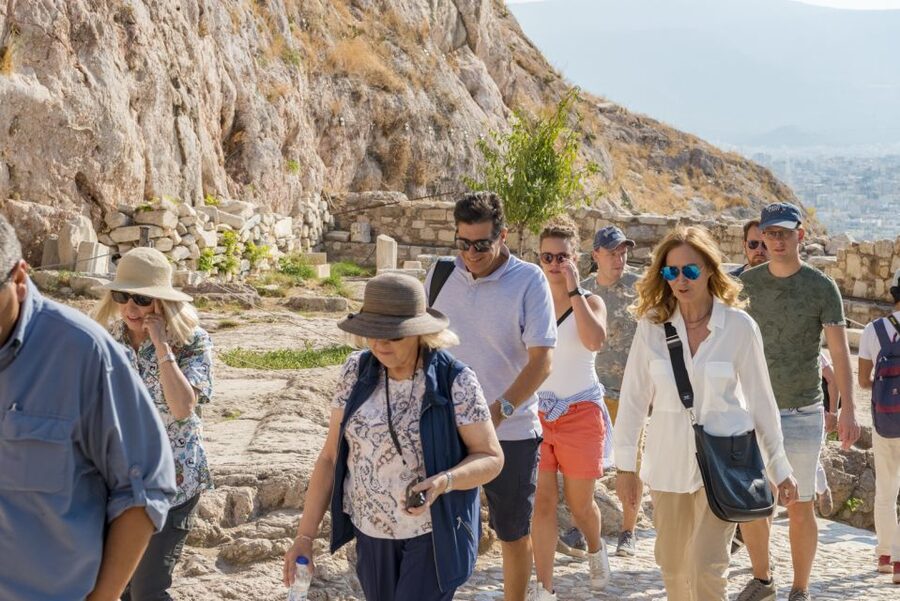
One of the best stops on the hill is the Theatre of Dionysus. You’ll spend a short time there, but it’s not just a photo stop.
This is where your guide can explain why the space matters historically, including the fact that it’s considered the world’s oldest theater. The key payoff is the connection: some of ancient Greece’s famous plays were first performed here roughly 3,000 years before.
Even if you do not know much about Greek drama, you’ll likely feel the difference. Standing in the theater zone with a guide’s context changes what you notice. Suddenly, the architecture is not just ancient, it’s functional. It’s built for an audience, for performance, for public identity.
Potential drawback to keep in mind: in hot months, even a short theater stop can feel long if you’re exposed to sun. If you run heat-prone, ask your guide about shade moments and pacing early on.
More Acropolis tours in Acropolis Museum:
- Athens: Acropolis Museum Ticket with optional Audio Guide
★ 4.4 · 2,652 reviews - Parthenon & Acropolis Museum with Audio or Live Tour Option
★ 4.1 · 2,446 reviews - Athens: Acropolis, Parthenon and Acropolis Museum Guided Tour
★ 5.0 · 1,778 reviews - Acropolis of Athens and Acropolis Museum Tour
★ 4.5 · 944 reviews
Propylaea and Temple of Athena Nike: the hill becomes a story
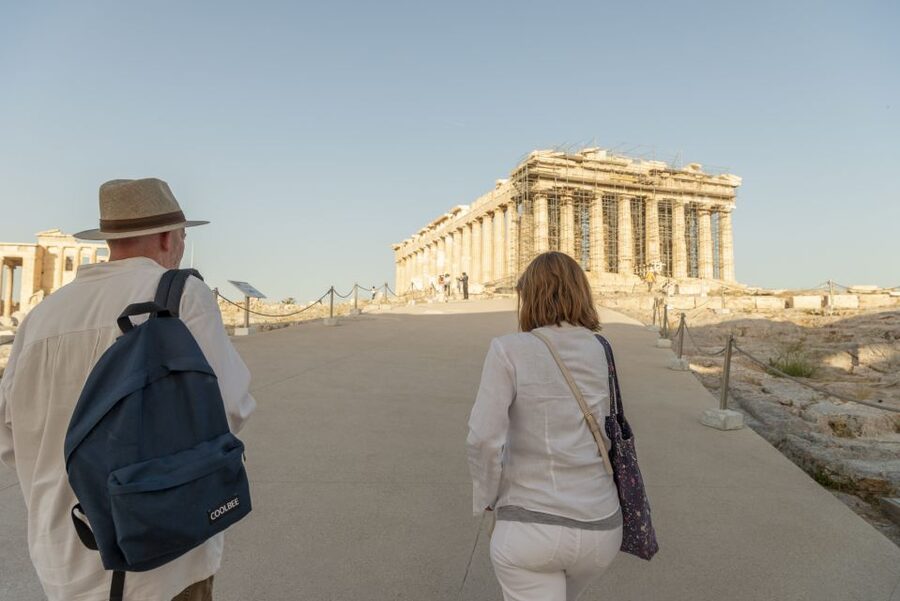
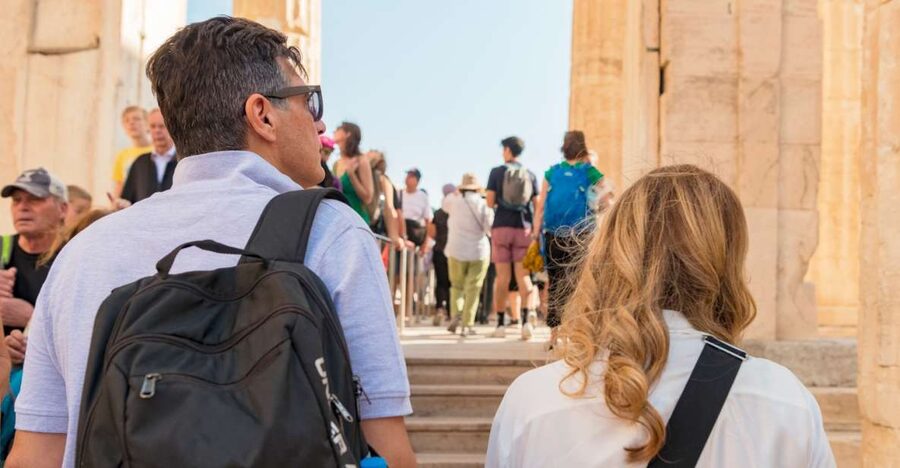
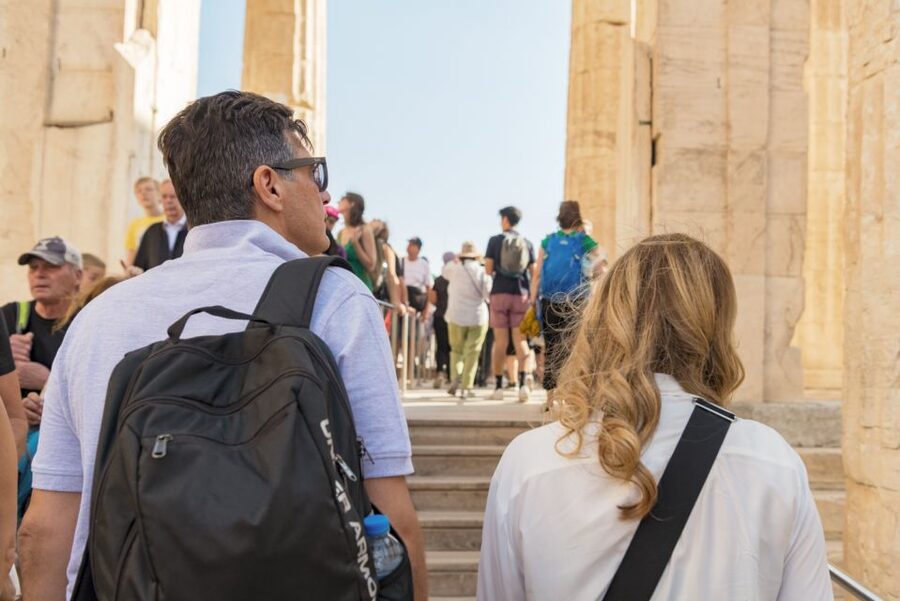
Next comes the Propylaea, the monumental gateway. This is one of those spots where people rush, because it looks like an entrance. With an expert guide, it becomes a symbol with a setting.
You’ll learn how the light would have played on bronze elements that once stood there, including the idea of sunlight glinting off Athena’s spear tip. That’s the kind of detail that turns the site from static into plausible, lived-in reality.
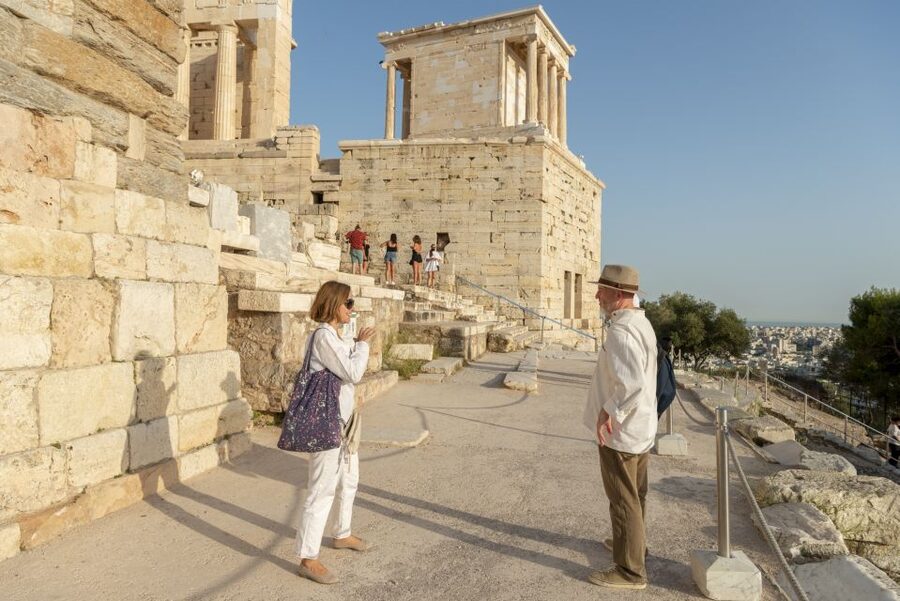
Then the tour moves to the Temple of Athena Nike. The guide will connect it to mythology and religious meaning, so you’re not just looking at a small temple perched above the city view. You’ll also hear about how these spaces relate to the bigger story of Athena in civic life.
If you like architecture and storytelling, this pairing is strong. It takes you from the “arrival moment” of the Propylaea to the “belief moment” of Athena Nike, with the Parthenon looming as the payoff you’re working toward.
Parthenon: the masterpiece, explained in human terms
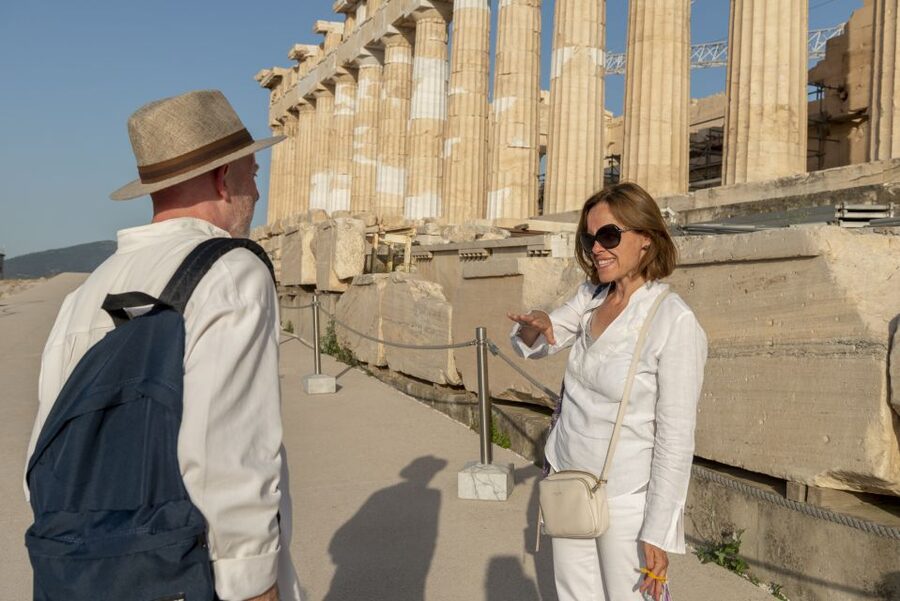
The Parthenon is what most people come for, but the experience depends on what you do with it once you’re there. On this tour, the Parthenon becomes the centerpiece of the mythology and design narrative, not just the tallest ruin.
Your guide will give you architecture and art context that helps you see why it was built the way it was. You’ll spend time here, including time to take in the scale and proportions from the right angles.
This is also where listening for myth pays off. The guide will tie the Parthenon story to the broader religious power of the Acropolis, so you understand the site as a system, not separate monuments.
If you care about photographs, you will likely appreciate that the tour is structured to guide you toward good viewing spots rather than leaving you to guess where to stand in the crowd. The private setup makes that easier.
Erechtheion and the Poseidon versus Athena myth
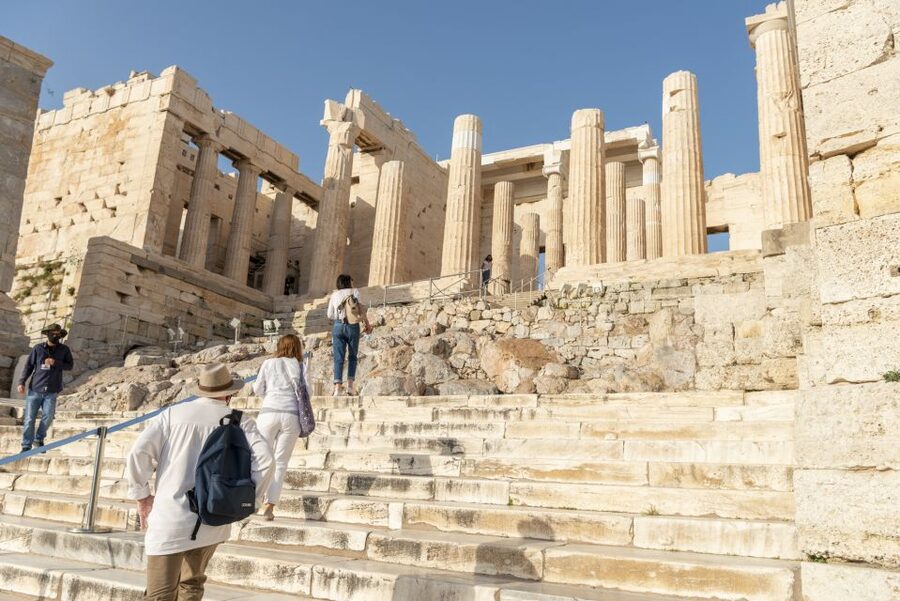
The Erechtheion is where the Acropolis stops feeling like a museum of perfect geometry and starts feeling like a place of competing forces and sacred claims.
You’ll learn about mythology connected to the temple area, including the struggle between Poseidon and Athena. The payoff is that the myth is not random folklore. It connects to why particular worship spaces were considered legitimate, powerful, and worth building.
This stop is often a turning point for people who think they only came for the big-name structures. The Erechtheion can feel more intimate, more layered, and more dramatic once you understand what it represented to Athenians.
And yes, it’s still beautiful to look at even if you only half absorb the story. But with the guide, you get more than beauty. You get meaning.
Odeon of Herodes Atticus: ancient space that still performs
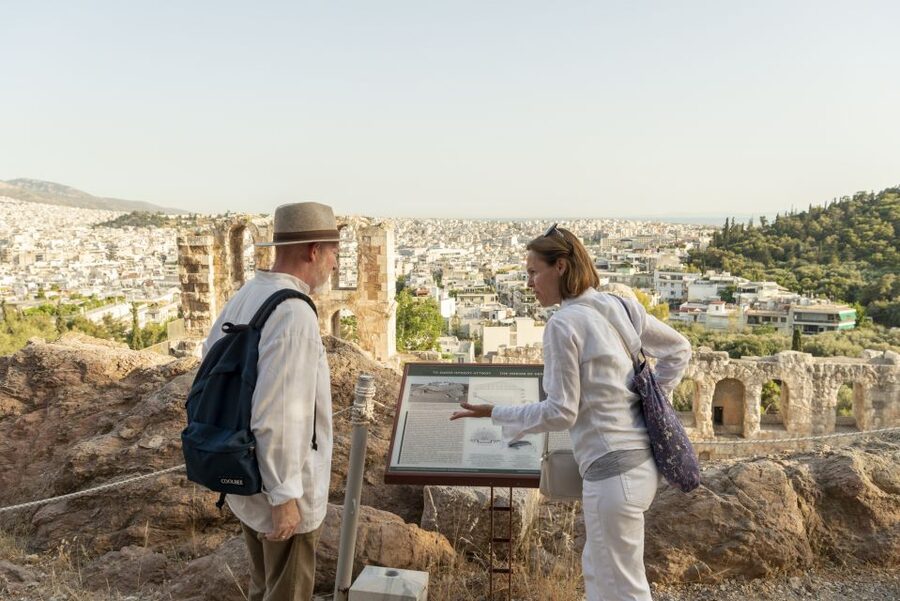
After the main hill highlights, the tour continues toward the Odeon of Herodes Atticus Theater. You’ll get time there as you head down through the olive trees.
This stop is short, but it carries a strong message: this theater is still used each summer. That simple fact makes it harder to think of the Acropolis as dead and finished. You’re standing near a space that continued in some form, long after the original builders were gone.
Your guide will help you connect the outdoor theater experience to what you saw earlier at the Theatre of Dionysus. The contrast is fascinating: ancient Athens built public stages for specific purposes, and different eras left their own layers.
Acropolis Museum: where the outdoor story becomes real objects
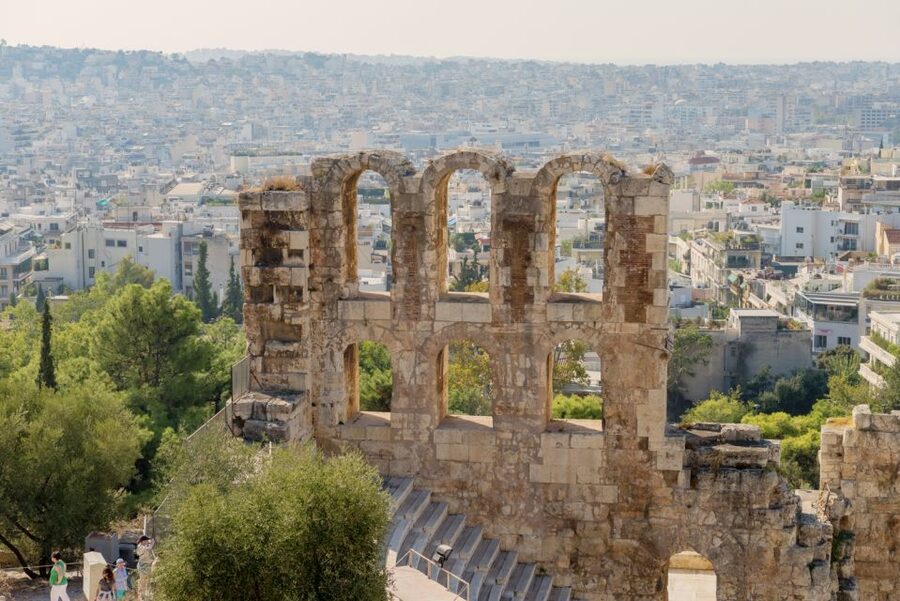
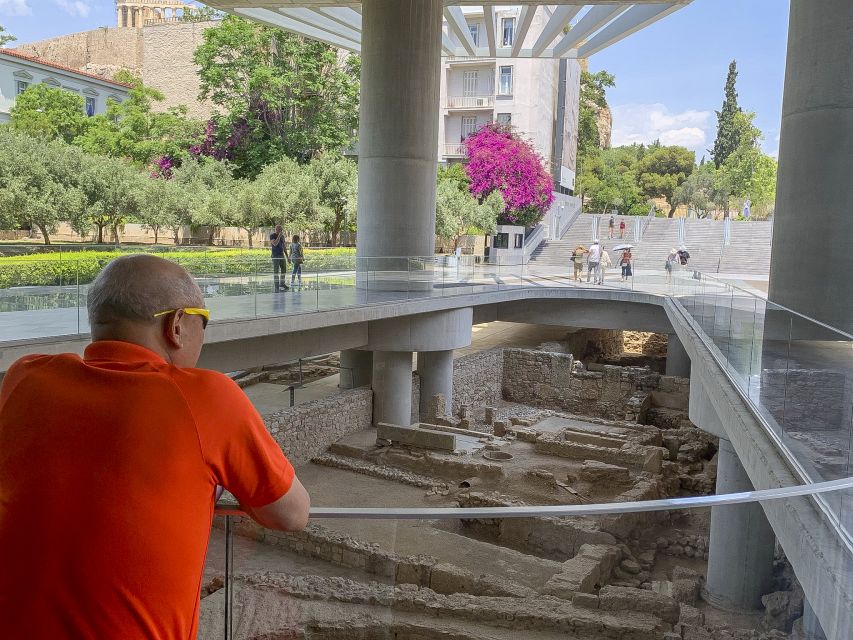
The museum visit is where many people’s understanding finally snaps into place. The Acropolis Museum was designed to preserve and present significant finds from the Acropolis, but it’s also set up to explain the site through reconstructions and interpretation tools.
You’ll spend about 1.5 hours here with your guide. That’s enough time to hit the must-see highlights while still absorbing the connections to what you just walked through.
What you can expect inside:
- models and videos that clarify how buildings and spaces may have looked
- interactive installations that help you understand the Golden Age era in context
- an emphasis on the story behind masterpieces and artifacts, not just labels
This is also where your guide’s explanations can feel especially valuable. They help you link particular museum pieces to specific spots on the Acropolis. Without that link, it’s easy to see art and still miss why it matters.
If you want maximum value, let the museum do its job. Resist the urge to sprint to the “top items.” Instead, pause where your guide points, and let the outdoor-to-indoor connections build.
Finishing near the Ancient Agora: keep the momentum
Depending on the option you choose, you may finish at the Ancient Agora area. This can be a great choice because it extends the Athens story beyond temples.
The Agora connects to other big themes you’ll care about if you want a fuller Ancient Athens picture, including philosophers, and the civic development that grew around public life. Finishing there can make your day feel connected rather than chopped into unrelated sightseeing blocks.
If you’re tired, don’t fight it. Use the finish location to choose your next step based on energy. The key value is that you’re positioned for follow-up exploring without needing to retrace your path.
Price and what you actually get for $163
At $163 per person, this isn’t a budget “walk-and-read” experience. But private, state-accredited expert guiding costs money, and you’re also buying time efficiency.
What you’re paying for, in practical terms:
- skip-the-line entry support (with admission tickets still handled separately)
- a private guide who can answer your questions on the spot
- a tight route that hits the major Acropolis highlights and then uses the museum to explain them
If you’re going as a pair, it can feel more reasonable because you split the cost of expert time across two people. If you’re a solo traveler who hates crowds and loves getting clear explanations, it can still be worthwhile because the guide tailors pacing and attention to you.
The main financial caution is admissions. Admission is not included, and you’ll need to buy tickets separately. The tour operator may ask for your needs after booking so your guide has skip-the-line tickets ready, but you still have to confirm timing and ticket setup.
Who this tour suits best, and who should rethink it
This tour is a great fit for you if you:
- want myth and architecture connected in a clear way
- prefer a private setting where you can ask questions without feeling rushed
- care about understanding artifacts, not just seeing famous monuments
- want a structured day without spending hours researching meeting points and routes
It might be less ideal if you:
- need a wheelchair-friendly route (it is not suitable for wheelchair users)
- have very limited mobility or stamina, because you are on the hill and moving between several key stops
- travel with pets, since pets are not allowed
FAQ
FAQ
Are admission tickets included in the tour price?
No. Ticket costs and admission fees are not included. The provider may contact you after booking to ask if you want help purchasing skip-the-line tickets, so your guide has them ready.
How long does the private tour take?
The duration is about 1.5 to 3 hours, depending on the option you choose and the timing you book.
Where do I meet the guide?
Meet at Makrigianni 7, Athina 117 42, close to the Acropolis Museum. Your guide will have a sign with your name.
Is this tour private or shared with others?
It is private and exclusive to your group.
Which languages are available?
The live tour guide is available in English, German, Italian, and Greek.
Does the tour include the Acropolis Museum?
Yes, the experience described combines the Acropolis with the Acropolis Museum, with about 1.5 hours at the museum.
Is the tour wheelchair accessible?
No. It is not suitable for wheelchair users.
Should you book the Acropolis and Acropolis Museum private expert tour?
If you want the Acropolis to make sense, I think this is an easy yes. The private expert guiding, the mix of major hill stops, and the time in the museum are exactly the combo that turns impressive ruins into a story you can actually repeat.
Book it if you love explanations, hate crowd chaos, and want your time to feel efficient. Skip it or consider another approach if you are strictly budget-driven or if mobility limits make the hill too hard. For most people, the value is not just the $163 price tag. It’s the fact that you walk away with clarity, context, and details you cannot get from looking alone.
More Museums in Acropolis Museum
- Athens: Acropolis Museum Ticket with Audio Guide
★ 4.1 · 835 reviews - Athens: Acropolis & Acropolis Museum Ticket with Audio Guide
★ 4.1 · 556 reviews - Athens: Acropolis, Parthenon & Acropolis Museum Guided Tour
★ 4.7 · 484 reviews - Acropolis and Acropolis Museum Private Tour with Licensed Expert
★ 5.0 · 445 reviews
Fresh options around Acropolis Museum
- Private Guided Tour: Athens, Acropolis and Acropolis Museum★ 4.9 · 62 reviews
- Athens: Half-Day Sightseeing Tour with Acropolis Museum★ 3.6 · 17 reviews
- Athens: The Acropolis and Acropolis Museum Tour in German★ 5.0 · 28 reviews
- Athens: The Acropolis and Acropolis Museum Tour in Dutch★ 5.0 · 3 reviews
- Athens Private Tours: Acropolis and Acropolis Museum★ 5.0 · 5 reviews
- Athens: Private Acropolis, Acropolis Museum, and City Tour★ 5.0 · 3 reviews
- Acropolis and Acropolis museum Friday afternoon visit★ 5.0 · 5 reviews
- From Cruise Port: Athens City, Acropolis & Acropolis Museum★ 4.4 · 27 reviews
Acropolis Museum Tours, compared.
Acropolis, Parthenon & Acropolis Museum Guided Tour
Read our review →Acropolis, Parthenon & Acropolis Museum Guided Tour
Read our review →
Acropolis monuments & Parthenon Walking Tour with Optional Acropolis Museum
Read our review →
Acropolis Museum Ticket with optional Audio Guide
Read our review →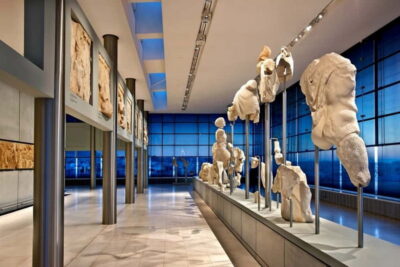
Parthenon & Acropolis Museum with Audio or Live Tour Option
Read our review →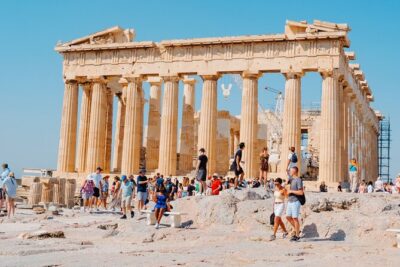
Acropolis, Parthenon and Acropolis Museum Guided Tour
Read our review →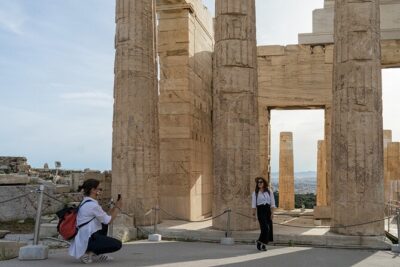

Browse the lists this tour appears in