Reviewed · TICKETS
Athens: Agora and Hephaistos Temple Entrance Ticket
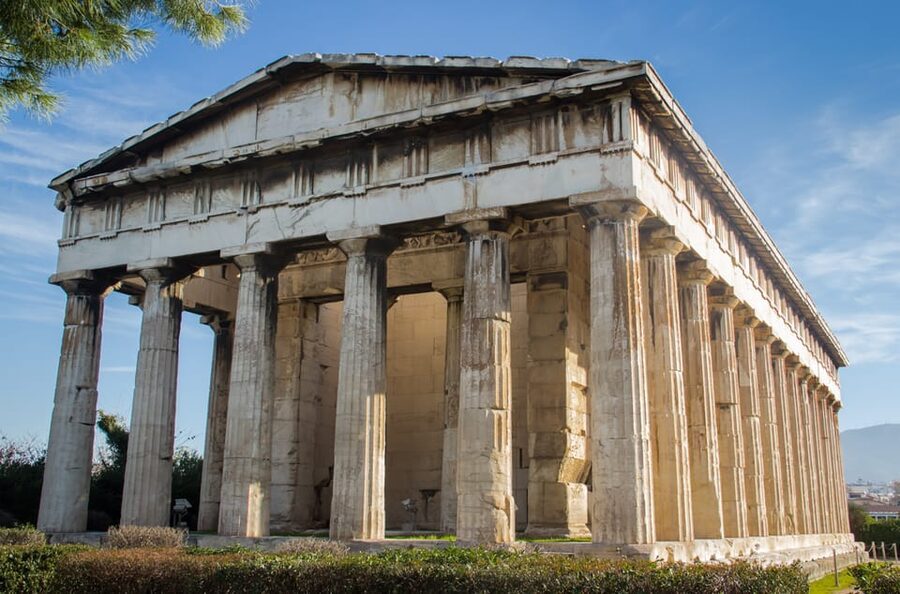
What makes this ticket so interesting is that it takes you straight into two layers of Athens in one visit, ancient sacred architecture and a later church tied to St. Paul. I especially like the fact that the Temple of Hephaistos is so well preserved, and you also get to stand in the Church of the Holy Apostles with the feeling that early Christianity really had a pulse here. One drawback to plan around is that the site uses time slots, and entrance routing has changed, so it pays to check the entrance area carefully before you arrive.
You’ll walk through the ancient Agora at your own pace, scanning in for your chosen entry window and then using a self-guided audio tour if you select it. The audio is meant to help you make sense of what you’re seeing as you travel uphill through ruins, from foundations to the standout temple. The main consideration is that audio guidance is not always easy to follow in real time, especially if signs or maps point you toward a closed or older entrance.
Key things to know before you go
- Time-slot entry keeps crowds down, but you must enter only during your window (plus 15 minutes).
- Temple of Hephaistos is the star for many visitors, often called the world’s best-preserved Doric temple.
- Church of the Holy Apostles connects directly to St. Paul’s preaching, giving the Agora a spiritual storyline.
- Audio guide languages include English, German, Spanish, Italian, and French.
- Entrance location has shifted to Thissio Square (Jacqueline de Romilly Square) on the pedestrian street of Apostolou Pavlou until the end of 2025.
- Wear good shoes and expect sun exposure, since there is limited shade in parts of the route.
Temple of Hephaistos: the Doric temple you came for
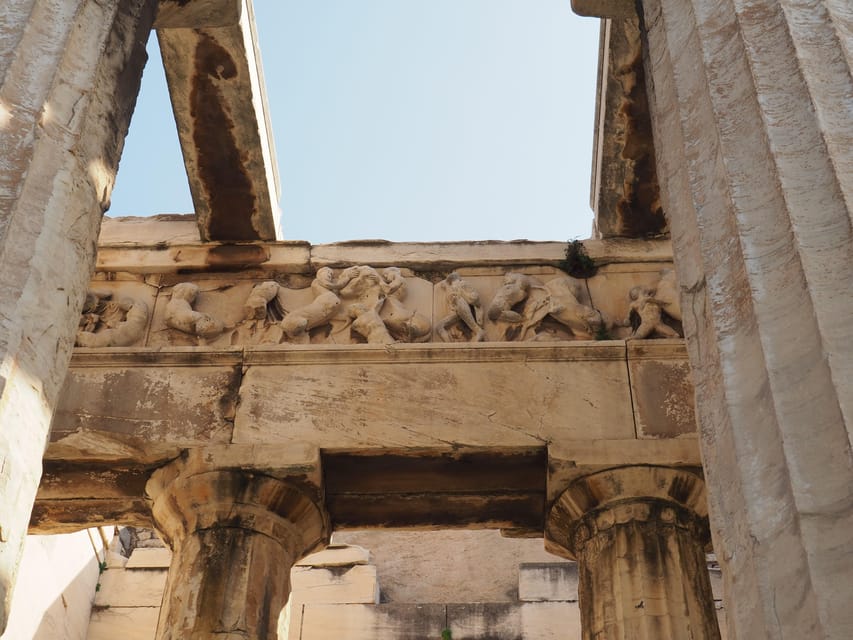
If you want one “I get it now” moment in Athens, this is it. The Temple of Hephaistos is a Doric temple that remains strikingly intact, which is exactly why it’s so satisfying to see in person. Even if ruins usually blur together, this temple has clear shape, strong lines, and enough preserved detail to help your brain reconstruct what it must have looked like in use.
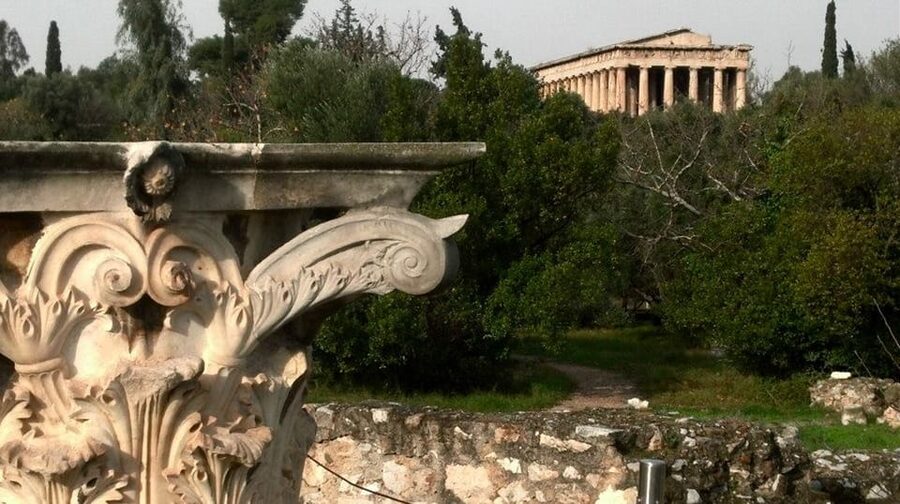
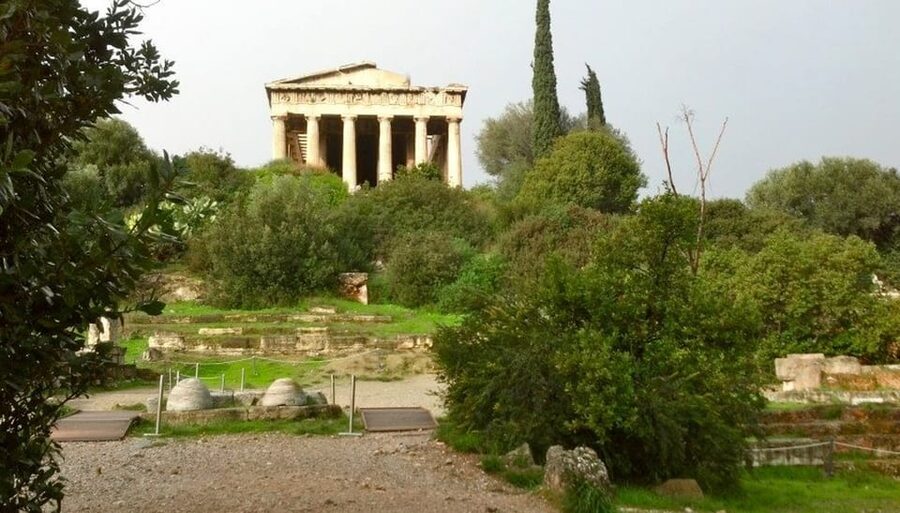
The entrance to this part of the site is included with your ticket, so you can focus on the walk rather than chasing extra admissions. Once you’re inside, take a slow approach before you start speeding toward the highest points. I like spending a few minutes first, just looking at how the temple sits within the ancient layout, because the surrounding Agora buildings and open spaces start to make more sense after that.
You’ll also find yourself thinking in practical terms, where people moved and gathered, where sightlines mattered, and how sacred spaces functioned next to everyday commerce. The Agora wasn’t a museum street. It was a working part of the city, and the temple’s preservation makes that contrast feel real.
A few more Athens days worth comparing
- Athens: Acropolis Ticket with Audio Guide
★ 4.0 · 3,575 reviews - Athens All Included: Acropolis and Museum Guided Tour with Ticket
★ 4.5 · 2,673 reviews - Athens: Acropolis Museum Ticket with optional Audio Guide
★ 4.4 · 2,652 reviews
St. Paul’s Church stop: why the Agora feels alive in layers
The Church of the Holy Apostles is a smaller, later chapter of the same setting, and it’s what keeps this visit from feeling like only one time period. The church is noted as the place where St. Paul used to preach, which gives you a direct connection between the ancient Agora and early Christian storytelling.
This matters because it changes how you walk. Instead of treating the site as a flat layer of stones, you start thinking about how the area kept getting reused, reinterpreted, and reimagined over time. Standing where preaching is associated can make the ruins feel more like a backdrop to human events, not just a static set of remains.
The ticket includes admission to this church, so you don’t need to decide on the spot whether it’s “worth it.” If you’re the type who likes the “what happened here next” thread, this second stop adds a satisfying emotional turn after the temple.
Using the self-guided audio tour without getting frustrated
The audio option is a big part of the value here. If you choose it, you’ll receive access to a self-guided audio tour tied to the time slot you booked, then use your headphones as you walk around. The idea is to let licensed guides and experts give you storytelling that matches the route you’re taking, rather than reading labels alone.
Still, I’d be honest: audio tours can be hit or miss depending on how clearly they sync with what you see. Some people have found the included narration hard to follow in real time, and a few noted the audio guidance seemed to start from a now-unused entrance farther away than where they needed to go. In other words, don’t blindly trust a map pin if it looks outdated.
My advice is to treat the audio as a helpful layer, not your only compass. If you’re confused, pause, orient yourself visually, and then continue. I also recommend saving your photo time for when you’re not actively listening, because switching attention helps you avoid missing key turns.
If you like information you can process while walking uphill, the audio approach works well. If you prefer reading and quick reference, you might find it easier to rely on on-site signage for parts of the route.
Entrance routing and time slots: the part that can make or break your day
This is where you should pay the most attention. Your ticket is valid for a specific time slot, and you must enter within that window. You’re allowed entry only at the selected time slot or up to 15 minutes before or after. Also, your entry time cannot be amended for any reason, so plan your arrival with buffer time.
The entrance setup has changed. Visitors now enter and exit from Thissio Square (Jacqueline de Romilly Square), on the pedestrian street of Apostolou Pavlou, and this will remain in place until the end of 2025. That’s important because older directions you might see online, or app-based “meeting points,” can lead you toward a closed gate.
A few real-world tips can save stress:
- When you arrive, go straight to Thissio Square first, then follow clear directions to the archaeological-site entrance.
- Don’t trust a GPS marker that seems to point to a previously used entrance.
- If you show up right before your window, give yourself a little time to find the correct gate, then scan at the ticket-validating machines.
Once you scan in, you can wander at your own pace. The site layout encourages walking, and you’ll likely spend time moving uphill, which brings us to comfort planning.
Same corner of Greece, a different kind of day:
- Athens: Acropolis & up to 5 Archaeological Sites Combo Pass
★ 4.4 · 12,619 reviews - Athens: Acropolis, Parthenon & Acropolis Museum Guided Tour
★ 4.8 · 9,316 reviews - Athens: Cape Sounion & Poseidon Temple Sunset Half-Day Trip
★ 4.8 · 8,241 reviews - Athens: Acropolis and Parthenon Guided Walking Tour
★ 4.6 · 5,882 reviews
What the 1-day visit feels like on the ground
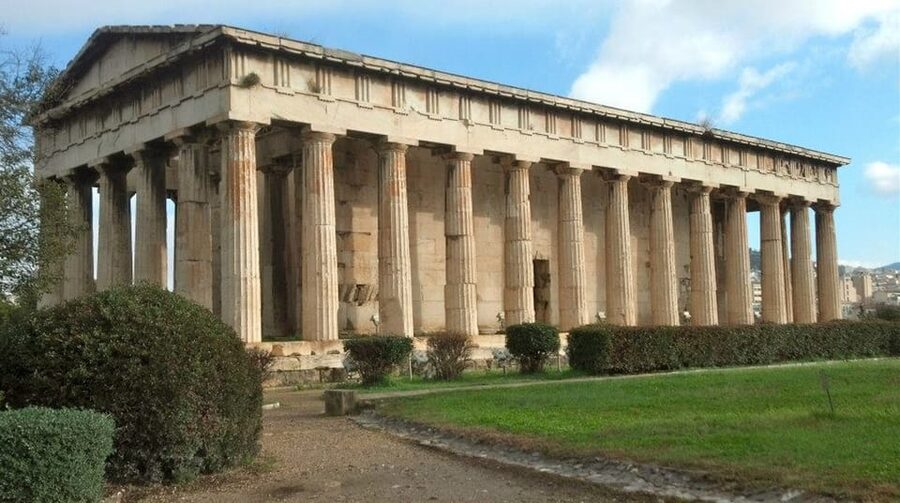
Even though this is sold as a 1-day experience, it’s less about rushing and more about getting the route rhythm right. The natural flow is: get in, walk the Agora area, focus on Hephaistos Temple, then continue to the Church of the Holy Apostles. It’s a walk that gradually asks you to pay attention to both open space and stone detail.
Because the route includes uphill stretches, your pace matters. I like taking short breaks, especially if the sun is strong. Some visitors have flagged limited shade and feeling overheated, so this is not a “wander casually in summer with no plan” situation.
Once you’re moving, you’ll start to notice how the Agora functioned. People gathered in a marketplace and also acted out politics in the same general area. You can feel that blend in the way ruins and foundations outline where structures once stood, even when only fragments remain.
Also, there can be an on-site museum component you might want to check depending on what’s open during your visit. One highlight from recent experiences is the original Spartan bronze shield, which many found memorable if it’s on display during your visit.
If you want views, keep an eye out as you climb. Some visitors mention enjoying the perspective toward the Acropolis area from the wider route.
Planning your timing: best use of the time slot
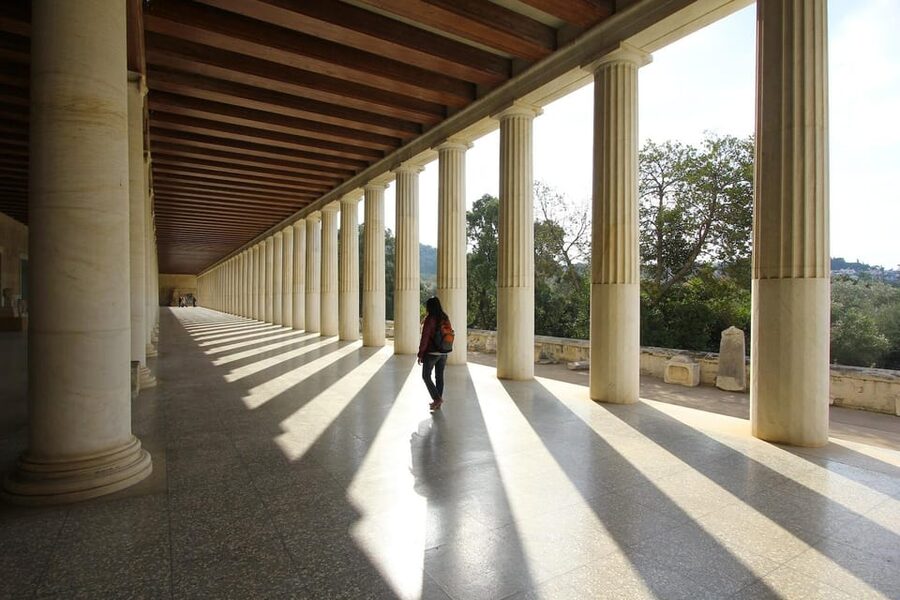
A time slot works in your favor if you treat it like a scheduling tool, not just paperwork. The benefit is that you can often move through ticket scanning faster than walk-up lines, and the site typically feels more manageable than the major headline monuments. One person specifically noted that pre-ordering helped them bypass long lines, which is exactly the practical advantage of timed entry.
Your goal is simple: arrive early enough to find the correct entrance, but not so early that you’re standing around in heat. Since the time slot cannot be changed, I’d aim for arriving with enough buffer to locate Thissio Square and the pedestrian entry area on Apostolou Pavlou.
If you’re using the audio guide, think about how long you want to spend listening. If you want quick context and then independent exploration, you can switch between audio segments and on-site reading. If you want the storytelling route as your backbone, plan for a calmer pace, with extra time for stops at the temple and church.
Practical tips: what to bring and how to stay comfortable
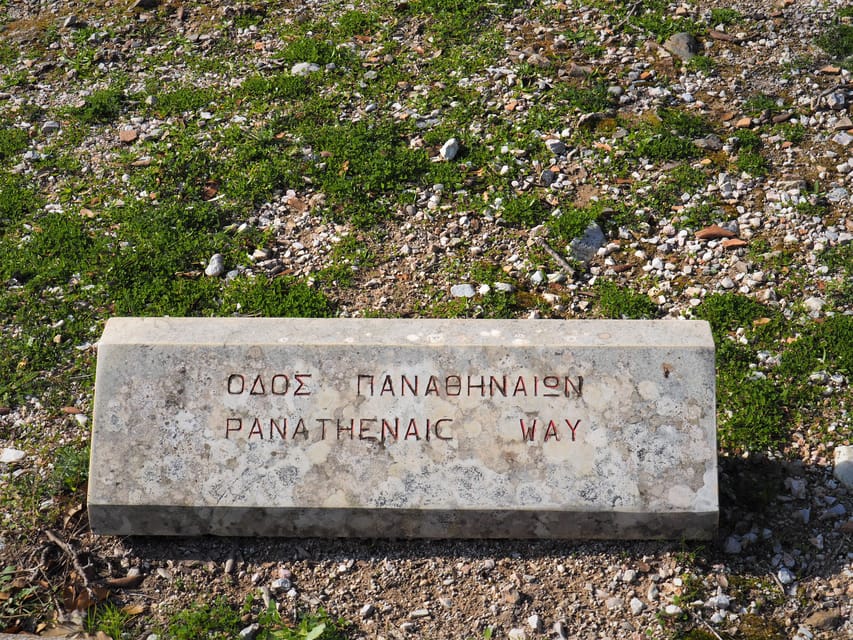
For this visit, comfort gear really matters more than usual. The basics are straightforward: comfortable shoes, a hat, sunscreen, water, and your camera. The uphill walking and sun exposure make these non-negotiable in warm months.
A few comfort habits make the day smoother:
- Bring more water than you think you need, since there isn’t much shade in parts of the route.
- Wear shoes with grip, because stone surfaces and pathways can be uneven.
- Keep your camera ready, but don’t feel like you need to shoot everything. The temple is the “anchor” photo, and the church is the emotional follow-up.
If you’re trying to decide on the audio guide, here’s my balanced view. I think the audio is best if you want guided interpretation while walking uphill. If you hate feeling tied to a narrator or you tend to read signs quickly, you might find the signage alone is enough. In one experience, someone noted that signage and information felt easier to follow than the audio, so you’re not committing to the audio being the only good way.
Price and value: is this ticket worth $30 per group?
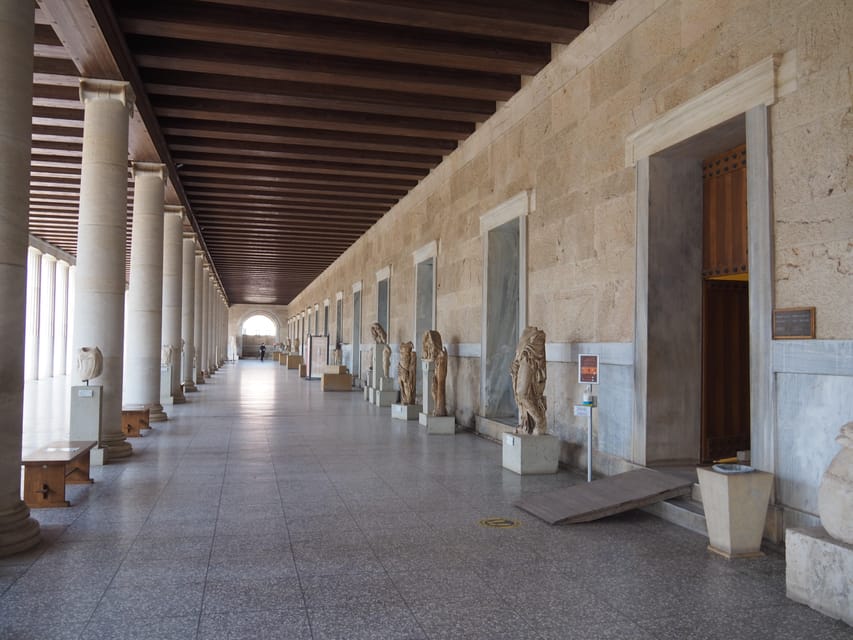
This ticket is priced at $30 per group up to 1 and includes entry to the Temple of Hephaistos and the Church of the Holy Apostles, with an optional self-guided audio tour if you select it. That’s good value because you’re paying for access to two distinct landmarks tied to the Agora story, not just one building.
The big value lever is that the ticket also includes a planned entry window. Timed entry can reduce wasted time, and you get to spend your limited sightseeing energy actually walking the site rather than standing in lines.
What you don’t get is a live guided tour. If you want a human guide doing Q and A, pointing out details, and adapting to your questions, you’d need a different style of tour. But for many independent travelers, this ticket hits the sweet spot: structured entry, major sights included, and optional audio support.
Also note the non-refundable nature of the ticket. If your schedule is shaky, you’ll want a stable plan before you lock in your time slot.
Who this Agora and Hephaistos visit suits best
This ticket is a strong match if you:
- Want one of Athens’ best-preserved ancient temples without a long planning headache.
- Prefer self-guided exploration with optional audio narration.
- Like historical “place connection,” from ancient Agora daily life to St. Paul’s preaching association.
It’s also a decent fit if you’re combining this with other Acropolis-area sightseeing. The Agora area sits close enough that many people treat it as an easy add-on, and the short, walkable connection can help you feel like you’re seeing Athens in one coherent loop.
If you dislike walking uphill, or if you know you get overheated in sun, consider going earlier in the day. And if you hate audio tours or have trouble syncing them to what you see, go in ready to rely on signs and your own pace.
Should you book this Agora and Hephaistos entrance ticket?
I’d book it if you want Hephaistos Temple plus the Church of the Holy Apostles in one straightforward visit, with the option of an audio guide to help you connect the dots while walking. The price-to-access ratio is solid, and timed entry can save real time at the gate.
I would hesitate or at least plan more carefully if entrance finding is likely to stress you out. The entrance has shifted to Thissio Square and Apostolou Pavlou, and some mapping directions can still point you to the wrong spot. If you’re the type who hates rerouting, do a quick entrance check before you head out, so you walk in with confidence.
FAQ
What sites are included with the Athens Agora and Hephaistos ticket?
Your ticket includes entrance to the Temple of Hephaistos and the Church of The Holy Apostles. If you select the audio option, you also get a self-guided audio tour.
How does the self-guided audio tour work, and what languages are available?
After you book and receive your ticket for your time slot, you can use the self-guided audio tour with headphones as you walk the site. Audio is available in English, German, Spanish, Italian, and French.
Do I need to enter at a specific time slot?
Yes. Entrance is permitted only at the selected time slot, or up to 15 minutes before or after. Your entry time slot cannot be amended for any reason.
Where do I enter and exit the archaeological site?
Visitors enter and exit from the entrance on Thissio Square (Jacqueline de Romilly Square) on the pedestrian street of Apostolou Pavlou. This arrangement is set to remain in place until the end of 2025.
Is the ticket refundable?
No. This activity is non-refundable.
Is the site wheelchair accessible, and are there any free-admission rules?
The experience is wheelchair accessible. Also, EU citizens under 25 and non-EU citizens under 18 can receive free admission upon providing their ID at the ticket booth (starting April 1st, 2025). Visitors with disabilities can receive free admission with a Disability Certificate at the ticket booth.
Fresh options around Athens
- 3-Day Trip to Delphi and Meteora from Athens★ 4.0 · 53 reviews
- 3-Day Tour: Mycenae, Epidaurus, Nafplio, Delphi, Meteora With 4* Hotel Included★ 5.0 · 6 reviews
- 2 or 3-Day Private Tour: Ancient Olympia, Corinth, Mycenae, Epidaurus, Nafplion★ 5.0 · 11 reviews
- 4-Day Classical Tour Greece: Epidaurus, Mycenae, Olympia, Delphi, Meteora★ 4.5 · 4 reviews
- Hydra Island & Mythical Full Peloponnese Private 9-Day Tour★ 5.0 · 3 reviews
- 27 Day Grand Circle Tour of Mainland & Corfu, Mykonos, Santorini★ 5.0 · 4 reviews
- 20-Minutes Natural Pedicure with Exotic Fish★ 5.0 · 17 reviews
- 2 Day Delphi, Meteora Iconic Sites Private Tour With 4* Hotel Included★ 5.0 · 3 reviews
Tickets, compared.

Acropolis Ticket with Optional Audio or Live Guide
Read our review →
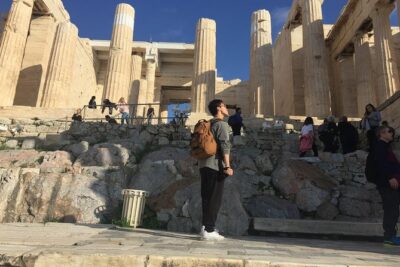
Athens All Included: Acropolis and Museum Guided Tour with Ticket
Read our review →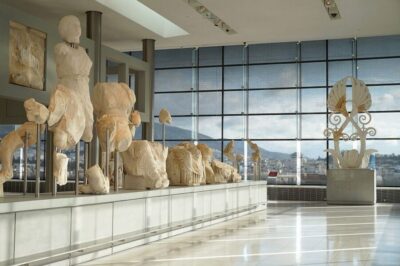
Acropolis Museum Ticket with optional Audio Guide
Read our review →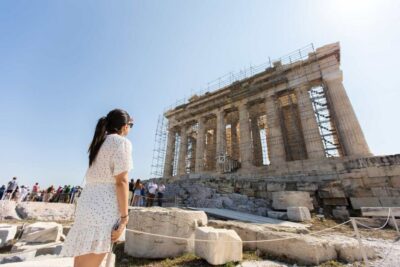
Acropolis Ticket & Optional Self-Guided Audio Tours
Read our review →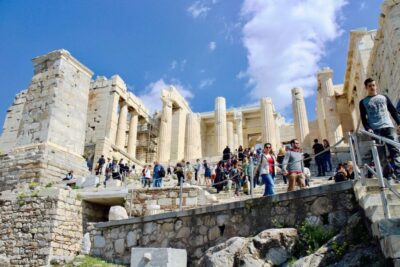
Guided Tour of Acropolis & Parthenon with Tickets
Read our review →
Athens Half-Day Sightseeing Tour with Tickets of Acropolis
Read our review →