

Reviewed · WALKING TOURS
Walk through the history of Athens
Athens can feel like two cities at once: the ancient cliffs everyone photographs, and the grand modern capital that grew up around them. This walk is interesting because it strings those worlds together in one smooth, guided route, from Panepistimiou Avenue’s neoclassical facades to an easy handoff near the Acropolis.
I especially like the focus on architecture and city design, not just big monument names. I also like that you get short, well-placed stops with time to look, then keep moving toward better viewpoints, ending at Acropolis Metro where you can choose your next step.
One consideration: Acropolis archaeological site entry is not included, and a few other stops can involve optional paid admissions. This tour is built for seeing and understanding, not spending long hours inside major sites.
Key points before you go

- Neoclassical Athens plus ancient Athens, tied together by a single walking route
- Good marble and Olympic roots at Kallimármaro, with the stadium’s famous white-marble identity
- Syntagma Square in action, including time to watch the changing of the guard
- Temple of Olympian Zeus context, with Hadrian and the Zeus statue details explained
- Small group size (max 14) that makes it easier to ask questions and hear the guide
- End near Acropolis Metro, so you can keep going fast toward Plaka or the Acropolis
A 2.5-hour Athens history walk that connects eras fast

This is a compact, 2 hours 30 minutes style tour that helps you read Athens like a map. You start on Panepistimiou Avenue, where the city’s 19th-century neoclassical ambitions show up in grand stone fronts. Then you walk into the political heart at Syntagma Square, slide past the Olympic-era landmarks, and finish where the Acropolis suddenly becomes the obvious centerpiece.
Because the stops are timed (think brief looks and photo moments), you come away with a strong overview without getting stuck in a single line for hours. If you like history that explains how the city grew, this structure works. If you want a slow, in-depth museum day, you’ll likely want extra time on your own.
More walking tours in Athens:
- Athens: Acropolis and Parthenon Guided Walking Tour
★ 4.6 · 5,882 reviews - Greek Food Walking Tour in Athens
★ 5.0 · 4,740 reviews - Acropolis: Acropolis and Parthenon Guided Walking Tour
★ 4.7 · 3,442 reviews
Getting oriented near Titania and Panepistimiou Avenue
Your starting point is the Titania Hotel Athens on Panepistimiou 52. That’s a practical choice because this area sits in the middle of key viewpoints and transport options, so it’s easier to arrive, meet up, and later continue without fighting for directions.
The first big theme here is neoclassical Athens. Right away, you’ll see buildings that look like they were designed to project stability and civic pride. The guide’s framing matters: you’re not just walking past pretty facades, you’re learning how these grand facades fit into Athens’ modern identity alongside its ancient backdrop.
Stop 1: Numismatic Museum area and the story behind the façades

At the Numismatic Museum stop, you’ll admire a cluster of prominent buildings along Panepistimiou Avenue, including the Numismatic Museum itself and other well-known institutional structures nearby. This is one of the most “readable” stretches for architecture lovers because the buildings share a similar language of form and detail.
The tradeoff is time. You’ll have about 10 minutes here, and the Numismatic Museum admission ticket is not included. So plan for exterior viewing and context, not a museum deep dive unless you decide to return later on your own.
If you want to get the most out of this part, do one simple thing: watch how the street layout and building scale prepare you for what comes next. This area is the bridge between today’s Athens and the older stories you’ll be hearing all morning.
Stop 2: Syntagma Square and the changing of the guard
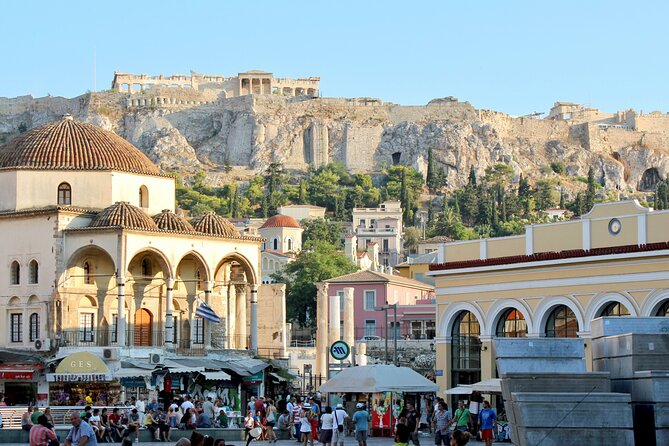
Then you reach Syntagma Square, the home of the Hellenic Parliament. This is a shift in energy. The neoclassical buildings give you civic framing, but Syntagma gives you motion, people, and a living sense of the capital.
You also get a short window to watch the changing of the guard with traditional soldiers. Even if you’ve seen ceremonial guard moments elsewhere, this one lands because it is tied to Athens’ central political space, not a staged tourist setting.
Quick heads up: you’ll have around 10 minutes here. If the schedule is off or the crowds are thick, you might need patience. I’d treat this stop as a flexible photo-and-observe moment rather than a guaranteed “front-row” show.
A few more Athens days worth comparing
- Historical Delphi One Day Tour with Arachova Stop & Expert Guide
★ 4.5 · 1,247 reviews - Historic Athens: Small Group Electric Bike Tour
★ 4.9 · 740 reviews - The History of Athens: Greek Mythology Private Tour
★ 5.0 · 138 reviews - Athens Highlights by E-Bike: Small-Group Historic Tour
★ 5.0 · 131 reviews
Stop 3: Kallimármaro Stadium and the meaning of white marble
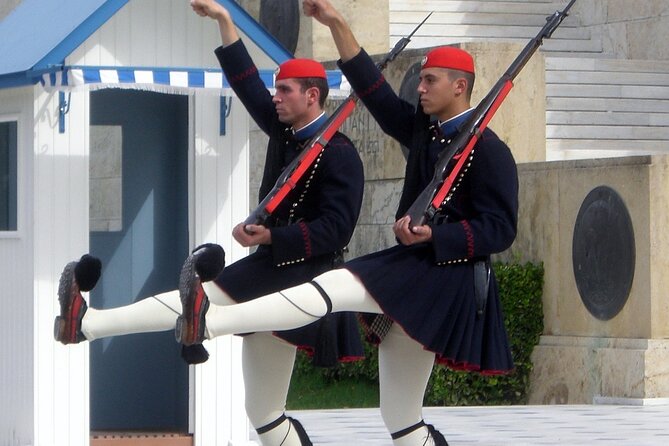
From Syntagma, the walk turns toward the Olympic story of Athens at Kallimármaro, often called the good marble. This is where Athens becomes physical in a new way. You’re looking at a stadium tied to the first edition of the Modern Olympic Games, and the stadium is known as the only stadium in the world built entirely in white marble.
This stop is free for the viewing portion. You’re not going inside for a long session, but the panoramic perspective helps you connect the stadium to its surroundings. It also gives you a nice contrast with the ancient sites that follow, because you start seeing how Athens reuses old ideas of greatness in modern form.
If you’re traveling with family or friends who need a break from monuments, this is a great “breather stop” that still feels meaningful. And if you care about design and materials, the white-marble detail is the kind of fact you’ll remember later when you see other historic stonework around town.
Stop 4: Zappeion and Olympic-era civic space

Next comes Zappeion, described as the first building built specifically for the modern Olympic Games. Today it’s used for official and private ceremonies and meetings, which means it’s not just a historical artifact. It’s a working piece of Athens.
This is another 10-minute stop, and the viewing here is free. In that short time, you’ll want to focus on the idea that Athens keeps layers alive: the modern Olympics story didn’t just happen and fade. It left behind architecture that still has a role in the city.
One nice aspect of Zappeion is that it helps you understand why Athens is such a magnet for large events. Even when you’re not attending anything, you can feel how the city built spaces meant for big moments.
Stop 5: Temple of Olympian Zeus, Hadrian, and the 13-meter Zeus
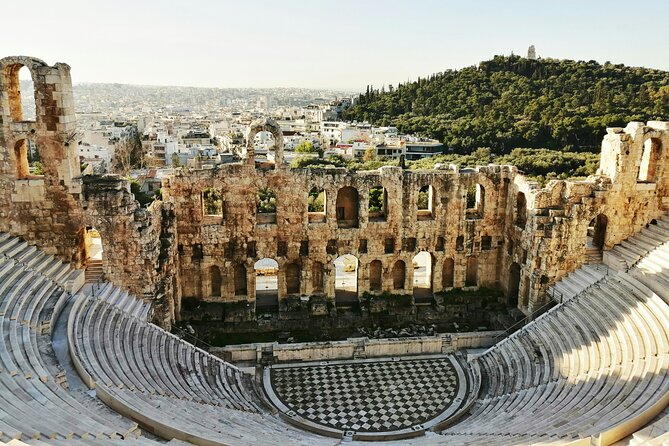
Approaching the Temple of Olympian Zeus is one of the tour’s biggest “aha” moments, even when you’re not going deep into the site itself. The Temple is tied to Roman-era Athens, and the guide’s explanation brings those connections into focus.
You’ll pass by where Roman Emperor Hadrian had a statue of himself erected next to the monumental 13-meter-high statue of Zeus. The Zeus statue is described as decorated with gold and ivory, in the image of the Zeus sculpted by Phidias. That combination of scale, material, and artistic lineage helps the area make more sense.
Temple of Olympian Zeus admission tickets are not included, so again, think exterior viewing with context. This works well if you’re planning to decide later whether the Acropolis archaeological site is the one you want to enter.
If you’re the type who likes to know why a ruin is famous before you see it up close, this stop sets you up perfectly for whatever you choose after the tour.
Stop 6: Ending at Acropoli Metro for an Acropolis-first next step

The tour finishes at Acropoli Metro Station, near the pedestrian street of Dionysiou Areopagitou. This ending point is practical because it puts you close to two major choices: you can head toward the Acropolis and its museum, or you can drift down into Plaka for lunch and browsing.
The guide’s final viewpoint moment is the Acropolis crowned by the Partenón. Even if it’s already on your postcard list, seeing it from this angle gives you a sense of scale that pictures often flatten.
Plan for your “after the tour” time. This tour itself doesn’t include Acropolis entry tickets, so you’ll want to buy those separately if you want the full archaeological experience. If you’d rather move slower, Plaka is an easy next step, with tabernas for lunch and lots of typical shops for small gifts.
Price and logistics: what $31.13 really buys you
At $31.13 per person, this tour is priced like a smart orientation walk rather than a ticket-heavy day. That makes sense because several key admissions are not included, including Acropolis site entry.
You’re paying for three things:
- A guided route that connects major areas quickly
- A structured way to understand what you’re seeing (especially the architecture and how it ties to Athens’ identity)
- A small group experience capped at 14 travelers, which usually means you can actually hear the guide and keep up without feeling herded
You also get a mobile ticket and group discounts. If you’re traveling with friends or family, that can be a real value boost.
One more planning detail: the average booking lead time is 88 days. That’s a clue to book early if your dates are fixed, especially during peak periods when walking tours fill up.
Group size, languages, and how to make it smooth
This is a group tour with an assistant in Spanish or English, based on what you select. That language choice matters because the value here is interpretation, not just sightseeing.
The group size maxes at 14. In practice, that size helps with pacing. You don’t usually get stuck behind a wall of people, and the guide can explain details without shouting over a crowd.
For a smooth start at the Titania Hotel, I’d show up a few minutes early and keep an eye on your phone. A historical walk that begins at a precise meeting point is a lot easier when everyone is present on time.
What makes this tour feel rewarding, stop by stop
This tour rewards you most if you like the “why” behind famous places. Here’s how that plays out across the route:
- Numismatic Museum area: you learn the neoclassical identity of the capital, not just the museum name.
- Syntagma Square: you connect politics to a real central square, plus the changing of the guard moment.
- Kallimármaro: you get the material story of white marble and the modern Olympic origin link.
- Zappeion: you see how Olympic-era buildings stayed in use and stayed relevant.
- Temple of Olympian Zeus: you get scale and artistic lineage explained with the Hadrian and Phidias connections.
- Acropolis Metro finish: you leave positioned to act on your preferences, enter the Acropolis or shift to Plaka.
If you want history with structure, this is a good fit. If you want only ancient stones, you might feel the neoclassical segments are a detour. But even then, they help you understand how Athens frames its own story.
Guides and storytelling: what to look for
Some of the strongest praise in the guidance style is about clear history and lively storytelling. In particular, names like Magdalene and Jenni are associated with explanations that made details feel vivid and helped people understand the city beyond the obvious monuments.
You can’t control who you’ll get, but you can control how you prepare. If you want to get more out of the walk, come with two or three questions, like:
- Why does this building look the way it does?
- How did the modern city decide what to emphasize?
- What should I prioritize next, Acropolis entry or Plaka time?
A good guide answers questions like that naturally, and this tour’s format is built for conversation.
Who should book this Athens walk (and who should not)
This works especially well for:
- First-time visitors who want a big-picture Athens overview in one morning-style block
- People who care about architecture and city planning as much as ancient monuments
- Travelers who want an easy handoff near Acropolis Metro instead of ending far away
You might want a different option if:
- You want long museum time inside major sites, because admission is not included for some stops and the visits are brief
- You’re planning a full-day Acropolis deep dive and want a schedule that gives you hours inside the archaeological areas
Should you book this Athens by-history walk?
I think you should book if you want a well-paced introduction to Athens that connects the neoclassical city to the ancient and Olympic layers. The price feels fair for what you get, especially with a small group (max 14) and a route that ends right where you can continue.
Don’t book it expecting a ticket-heavy day. If Acropolis entry is your top priority, plan to buy those tickets separately and treat this tour as the guided “setup” that makes your time at the top feel more meaningful.
If you’d like, tell me your travel dates and whether you want to enter the Acropolis. I can suggest a simple plan for the hours before and after this walk so you don’t waste time.
FAQ
How long is the Athens history walk?
It’s listed as about 2 hours 30 minutes.
What does the tour cost?
The price is $31.13 per person.
Is the tour offered in English or Spanish?
Yes. The assistant language is Spanish or English based on your selection.
What tickets are included?
Tickets are not included for the Numismatic Museum area and the Temple of Olympian Zeus, and Acropolis archaeological site entry is not included. Some stops are free.
Are there free stops on the walk?
Yes. Syntagma Square, Kalimármaro Stadium, and Zappeion are listed as free.
Where does the tour start and end?
It starts at Titania Hotel Athens (Panepistimiou 52) and ends near Acropoli Metro Station.
How large is the group?
The tour has a maximum of 14 travelers.
Is the tour suitable for most people?
It says most travelers can participate.
Does the tour run in all weather?
It requires good weather. If canceled due to poor weather, you’ll be offered a different date or a full refund.
Can I cancel for a refund?
Yes. You can cancel up to 24 hours before the experience for a full refund.
Fresh options around Athens
- Classical Greece 3-Day Tour: Epidaurus, Mycenae, Olympia and Delphi from Athens★ 4.5 · 15 reviews
- 8-Day Classic Greece Tour: Athens, Epidaurus, Mycenae, Olympia, Delphi & Meteora★ 4.0 · 4 reviews
- 3-Hour Small Group Coasteering in Sounio★ 5.0 · 12 reviews
- Get Lost in Athens with an Insider★ 4.5 · 28 reviews
- Christmas food and walking tour in Athens★ 5.0 · 6 reviews
- Electric Trikke Bike Athens Complete Tour★ 5.0 · 35 reviews
- Athens City Game: The Journey through Time★ 5.0 · 9 reviews
- Cruise into Athens?! Best of Athens Tour from Piraeus Cruise Port★ 4.5 · 5 reviews
Walking Tours, compared.
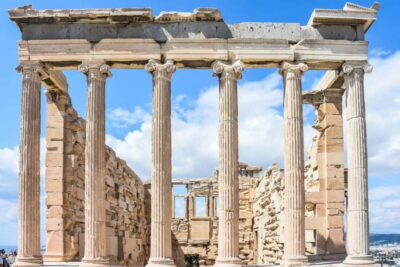


Acropolis: Acropolis and Parthenon Guided Walking Tour
Read our review →
Acropolis monuments & Parthenon Walking Tour with Optional Acropolis Museum
Read our review →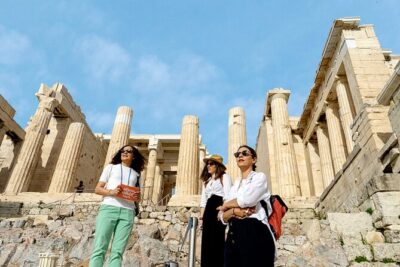

Athens Authentic Greek Food Walking Tour (Small Group)
Read our review →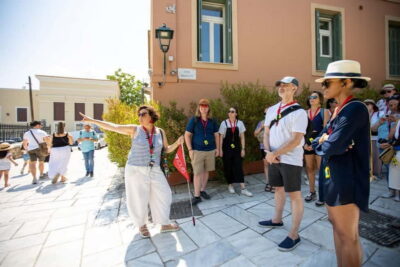
Early Morning Acropolis & Old Athens Guided Walking Tour
Read our review →
Browse the lists this tour appears in