
Reviewed · WALKING TOURS
Athens: Exarcheia Walking Tour
This tour is interesting because it trades ancient monuments for real street life, with politics, poetry, and everyday people in the foreground. I love how it’s anchored in specific places like Klafthmonos Square and Exarchia Square, not vague “neighborhood vibes.” I also like the small-group size, which makes it feel like you are walking with someone who actually knows the area.
One possible drawback to plan for: it covers heavy, activist themes and it involves walking on uneven surfaces, so it is not for everyone. And since it is not a formal, licensed tour in the usual museum-guide sense, you should expect a personal storytelling style rather than a polished script.
If you want Athens beyond the postcard route, this is a strong pick. You get the map in your head fast, plus a cleaner sense of why Exarchia has kept its edge even as the city changes.
Key highlights I’d plan around
- Klafthmonos Square starting point, where the tour connects government-era grief with the streets that formed a counter-movement
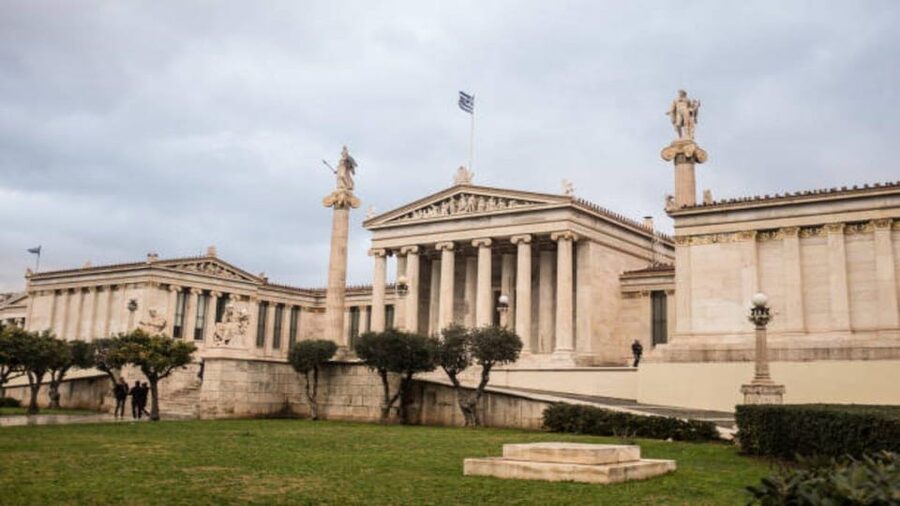
- Academy of Athens and nearby library area, a guided walk that reframes “culture” as something lived and argued over
- Exarchia Square behind metal fences, where the point is less sightseeing and more understanding what residents keep protecting
- Kallidromiou farmers market stop, a chance to blend the political stories with the daily rhythm of food stalls and shopping
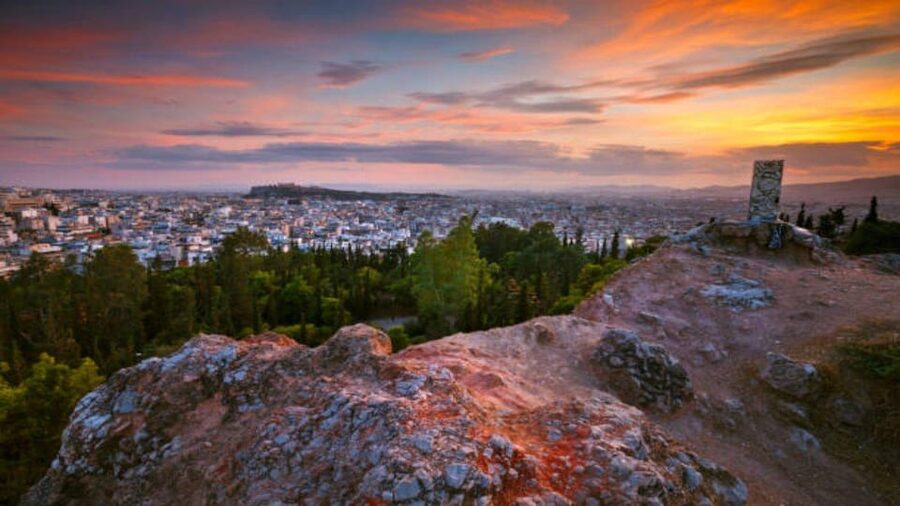
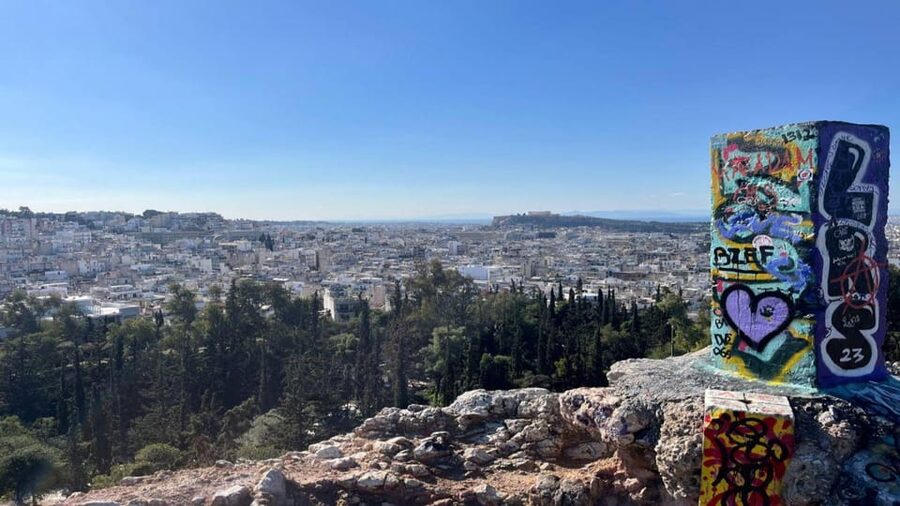
- Strefi Hill panoramic finish, plus live music on the tiny bouzouki, the baglamas
Why Exarchia feels different from the Acropolis

Athens has two modes. One mode is marble and long sight lines. The other mode is people moving fast, music spilling out, walls carrying messages, and history happening in real time.
This walk sits firmly in the second mode. You start downtown at Πλατεία Κλαυθμώνος (Plateia Klavthmonos) and move toward Exarchia, a neighborhood known for anarchist roots, street art, and political expression. The tour does not try to polish that edge into something safe. It treats the streets like a living archive.
I like that the experience is guided by someone who grew up there. In at least one recent tour, the guide was Savvas, and that matters because it changes the tone from “explaining Athens” to “showing Athens.” He ties events to everyday details, then connects those details to what people still care about today.
More walking tours in Athens:
- Athens: Acropolis and Parthenon Guided Walking Tour
★ 4.6 · 5,882 reviews - Greek Food Walking Tour in Athens
★ 5.0 · 4,740 reviews - Acropolis: Acropolis and Parthenon Guided Walking Tour
★ 4.7 · 3,442 reviews
Meeting at Πλατεία Κλαυθμώνος and getting the walk rhythm
The meeting point is central, at Πλατεία Κλαυθμώνος. You’ll want to arrive with enough time to find the group and get comfortable, because once you start moving, you are on a walking pace.
The tour runs about 1.5 hours, and it is built around short stops plus storytelling while you walk. That pacing is part of the style. It helps you get your bearings fast, and it keeps the group from turning into a slow-moving museum line.
Bring comfortable shoes and a water bottle, since you’ll be covering a few blocks and parts of the route can be uneven. A sun hat helps too, especially if you go in warmer months. If you hate walking between viewpoints, this will feel like a lot. If you like moving through neighborhoods, you’ll probably enjoy it.
Also, keep in mind the group is limited to 8 participants. That small size is a big part of why the stories land. You get room for questions, and you are less likely to get stuck behind someone taller.
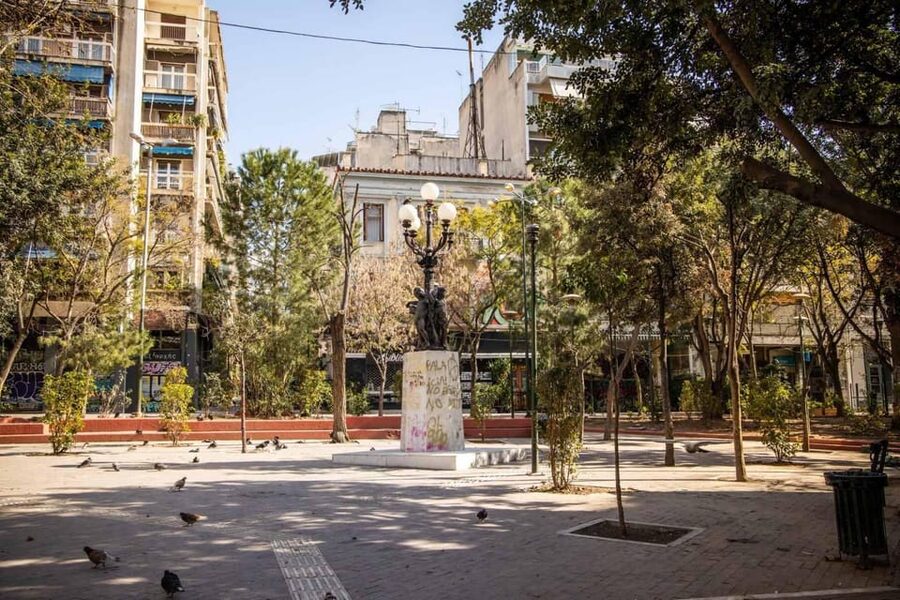
Klafthmonos Square, where civic power meets street grief
Klafthmonos Square shows up early, and it is not a random start. The tour frames the square as a place where civil servants cried where no one expects salvation. That theme is key to understanding Exarchia: people don’t just react to politics, they live with it.
This is where the tour starts to set expectations. You are not here for statues. You are here for meaning, including the uncomfortable kind. You will learn how streets can become a counter voice, and how small communities keep pushing back against the official story.
If you prefer strictly neutral topics, you might find this section intense. But if you want a deeper sense of modern Athens, this kind of framing makes everything you see after feel more connected.
Academy and the library zone: learning to read culture differently
The route includes the Academy of Athens area, with a break and a photo stop. There’s also a guided component that lasts about an hour in this broader phase of the walk.
At first glance, it is easy to think of this as another “important building” stop. The tour instead uses it to point you toward a different idea of culture, one tied to freedom and truth in the streets. That is a smart contrast. You’re moving from the civic and cultural institutions of the city into the neighborhood that often challenges those institutions.
Practically, this section is a good time to look at how people use the sidewalks and plazas around these landmarks. You get a feel for the transition from formal Athens to street Athens, and you can spot how the vibe changes as you walk.
Same corner of Greece, a different kind of day:
- Athens: Acropolis & up to 5 Archaeological Sites Combo Pass
★ 4.4 · 12,619 reviews - Athens: Acropolis, Parthenon & Acropolis Museum Guided Tour
★ 4.8 · 9,316 reviews - Athens: Cape Sounion & Poseidon Temple Sunset Half-Day Trip
★ 4.8 · 8,241 reviews - All Day Cruise -3 Islands to Agistri,Moni, Aegina with lunch and drinks included
★ 5.0 · 4,958 reviews
Memorial stories and named counterculture heroes

As you head into Exarchia, the tour centers stories around specific figures. One anchor is the memorial connected to Alexandros Grigoropoulos.
The guide also brings in local icons of Greek counterculture, including Nikolas Asimos, Panos Sidiropoulos, and Katerina Gogou. The point is not just name-dropping. These names help you connect events that may feel distant in a textbook to why people still care in daily life.
For me, the value here is clarity. Athens can be heavy with ancient history, and it is easy to think modern Greek politics is separate. This tour treats modern resistance as part of the same long continuity of civic struggle, even if the symbols and methods look different.
If you want to get more out of the memorial stop, I suggest you let it sit in your mind for a minute, even if you are only there briefly. Read what you can, then follow the next street story with that context in place.
Exarchia Square: people over monuments
In Exarchia Square, the tour mood shifts again. The emphasis is on the lived reality of the neighborhood, not on a checklist of sights. The tour describes it as a place where there are no tour guides, there are people.
You’ll also see that some areas are partially blocked off, with metal fences mentioned as part of how the square is viewed now. That detail matters. It signals that this is not a theme park version of rebellion. The neighborhood has real boundaries, real tensions, and real reasons people protect spaces.
This stop is a good example of how the tour is designed. You don’t just learn the headlines. You notice the physical environment and let it explain the story. That makes your photos better too, because you’re photographing context, not just walls.
Kallidromiou farmers market: politics meets lunch instincts
Next comes Kallidromiou, with a farmers’ market stop. Expect a photo stop, then time to visit, shop, walk through the market area, and get a food-market look.
This is where the tour feels most human in an everyday way. You’re not only hearing about resistance and underground culture. You’re also seeing the normal rhythms that keep a neighborhood alive.
One practical note: food and drinks are not included, so come prepared to buy snacks if you want them. You might want to bring a small amount of cash for market items, or plan to grab something light after the tour if you are on a tight schedule.
Even if you skip buying anything, the market stop adds value because it changes your brain from theory mode to street mode. It helps you see Exarchia as a place where people live, eat, work, and argue, not just a place you visit.
Strefi Indoor Stadium and Strefi Hill: music, then the view
The walk ends with a finish at Λόφος Στρέφη (Strefi Hill). Along the way, there’s a Strefi Indoor Stadium photo stop and sightseeing.
This section is partly about energy. The tour includes live performance of a traditional song, and it also mentions music from a baglamas, the tiny Greek bouzouki that carries centuries of rebellion and soul. Even if you are not a music nerd, this is one of the strongest “why this tour is worth it” features, because it turns the neighborhood’s stories into sound you can feel in the air.
When you reach Strefi Hill, you get the panoramic view that wraps the whole walk into one mental picture. From that height, the streets you just walked start to make sense. You can see how Exarchia connects to the rest of Athens without needing to be in a museum or on a bus.
This is also a good place to catch your breath. If your legs get tired, plan a slower pace on the last stretch, since the route involves uneven surfaces.
The 70-dollar value question for 1.5 hours
At $70 per person for 1.5 hours, you’re paying for three things more than distance.
First, you’re paying for a small group (up to 8), which keeps the experience personal. Second, you’re paying for local storytelling anchored to named people, memorials, and specific street corners. Third, you’re paying for extras that are hard to manufacture on your own: live song performance and the baglamas music moment.
You are not paying for admission tickets, because the tour is built around walking, street context, and guided discussion. You also are not getting a big meal included, since food and drinks are not included.
So the real question is simple: do you want Athens explained through street culture and counterculture, with music and named local stories? If yes, this price is reasonable for what you actually receive. If you want classic sightseeing with monuments only, you’ll probably feel like you could spend the money elsewhere.
Who this walking tour suits best
This tour fits you best if you like to travel with questions in your head, not just a camera in your hand. I especially think it works well for people who feel restless after ancient-site tours and want modern Athens with a point of view.
It also suits solo travelers and couples who like small groups. With a group cap of 8, you are less likely to feel swallowed by the crowd.
On the other hand, it is not suitable for people with mobility impairments or wheelchair users, and you should avoid it if uneven ground would make you miserable. It’s also not aimed at anyone who wants a purely neutral, non-political “city overview.”
A quick reality check on the guide style
The tour is described as not an official guided tour, and the provider notes they are not a licensed tour guide. That doesn’t automatically mean it is bad. It does mean you should expect a personal walk-and-storytelling approach rather than a formal lecture.
In the strongest experiences, the guide energy is a big part of the payoff. In one recent tour with Savvas, the feeling was that he brought Exarchia to life with deep knowledge, passion, and a personal view of the neighborhood’s future. That kind of authenticity is what you should look for when you sign up.
If you care about sound quality, there is one practical consideration: since the guide talks while walking, it can be hard to hear if you are standing behind people. If you want the clearest audio, try to position yourself where you can follow without craning.
Should you book the Athens Exarchia Walking Tour?
Book it if you want Athens that feels present tense, not just past tense. You’ll get a tight route through major Exarchia reference points, plus named stories tied to real memorials and local counterculture figures. The small group and music moments also make it feel like more than a lecture.
Skip it if you want monument-heavy sightseeing, or if politics in the streets would make you uncomfortable. Also skip if your mobility needs make uneven walking a problem.
If you are torn, here’s how I’d decide fast: if you are already planning to see classical Greece, this is a smart counterweight. It gives you the modern Athens that helps the ancient sites make more sense, because it shows you how people live with ideas here, not just how they admire them.
Fresh options around Athens
- 3-Day Trip to Delphi and Meteora from Athens★ 4.0 · 53 reviews
- 3-Day Tour: Mycenae, Epidaurus, Nafplio, Delphi, Meteora With 4* Hotel Included★ 5.0 · 6 reviews
- Hydra Island & Mythical Full Peloponnese Private 9-Day Tour★ 5.0 · 3 reviews
- 2 or 3-Day Private Tour: Ancient Olympia, Corinth, Mycenae, Epidaurus, Nafplion★ 5.0 · 11 reviews
- 4-Day Classical Tour Greece: Epidaurus, Mycenae, Olympia, Delphi, Meteora★ 4.5 · 4 reviews
- 27 Day Grand Circle Tour of Mainland & Corfu, Mykonos, Santorini★ 5.0 · 4 reviews
- 20-Minutes Natural Pedicure with Exotic Fish★ 5.0 · 17 reviews
- 2 Day Delphi, Meteora Iconic Sites Private Tour With 4* Hotel Included★ 5.0 · 3 reviews
Walking Tours, compared.
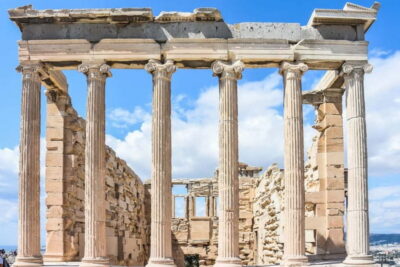


Acropolis: Acropolis and Parthenon Guided Walking Tour
Read our review →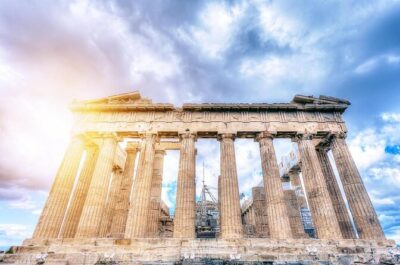
Acropolis monuments & Parthenon Walking Tour with Optional Acropolis Museum
Read our review →

Athens Authentic Greek Food Walking Tour (Small Group)
Read our review →
Early Morning Acropolis & Old Athens Guided Walking Tour
Read our review →
Browse the lists this tour appears in