Reviewed · MUSEUMS
Athens: Kotsanas Ancient Greek Technology Museum Guided Tour
If you like the wow factor that comes from seeing old tech work in real life, this guided visit to the Museum of Ancient Greek Technology is a great use of time in Athens. You get close to mechanisms you normally only see in books, plus a guide who can explain how they think and build, whether you get an engineer or a historian.
I especially love how much is hands-on and interactive, so it is not just looking at cases. And I really like the way the tour connects devices that feel surprisingly modern to makers you associate with ancient Greece, like the Antikythera calculating mechanism and the oldest analog computer in the world.
One possible drawback: it is not set up for everyone with mobility impairments, so if that applies to you, it is worth checking before you go.
What You’ll Actually Do Inside, With Real People Like Vasilis
This museum is housed in a historic Art Nouveau building, about 700 square meters, and the collection gives you a tour-sized slice through roughly 300 ancient technology artifacts. The private 1-hour format helps a lot. You can ask questions, and you are not stuck trying to interpret diagrams alone.
In at least some tours, guides are named in the experience record. One guide, Vasilis, comes up with very positive feedback, and other guides like Irina and Maria are also mentioned for making the inventions easy to understand.
Quick Reality Check Before You Book
Plan on a focused hour. You will have time to explore further, but this is still a guided museum visit, not a wandering, self-paced day. Also note the museum rules: food and drinks are not allowed.
A few more Athens days worth comparing
- Athens: Acropolis, Parthenon & Acropolis Museum Guided Tour
★ 4.8 · 9,316 reviews - Athens: Mythology of Delphi, Museum and Arachova Guided Tour
★ 4.6 · 4,008 reviews - Athens: Acropolis, Parthenon & Acropolis Museum Guided Tour
★ 4.8 · 3,579 reviews
Key Things That Make This Guided Tour Worth Your Hour
- Private tour with an engineer or historian: you get explanation matched to the exhibits, not generic history talk.
- Interactive exhibits and try-it-yourself models: you learn by watching mechanisms move and then testing the experience for yourself.
- Big-name mechanisms in context: highlights like the oldest analog computer in the world and the Antikythera calculating mechanism help you anchor the whole visit.
- A 700-square-meter Art Nouveau museum: the building itself is part of the atmosphere as you move through sections of the collection.
- Audio-visual support in Greek and English: labels, diagrams, photos, and video stations reduce guesswork when you do not speak ancient-technology fluently.
- Strong English-language delivery: the live guide language is English, so you can focus on the tech without translation friction.
Getting to the Meeting Point Near Syntagma Metro
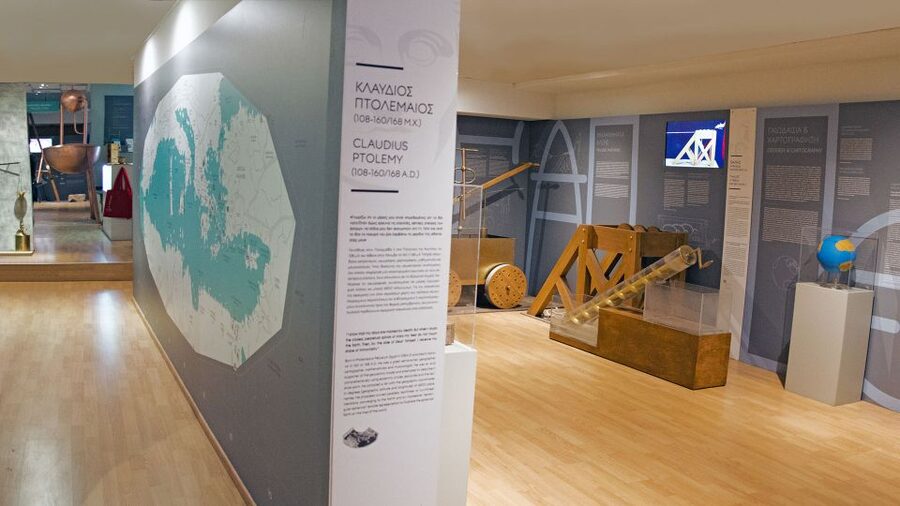
This tour starts at Pindarou 6, Athina 106 71. The good news is the location is easy to reach. The museum is about a 5-minute walk from Syntagma Metro Station, so you can pair it with other sights without a complicated detour.
Why this matters: a 1-hour experience is only as good as the logistics around it. When a museum visit is simple to plug into your day, you spend less time losing momentum and more time actually seeing things. If you are doing a first trip to Athens, Syntagma is already a natural anchor point, so this works cleanly.
If you are walking over from central areas, I suggest doing a quick street scan first. Athens streets can feel like a maze at first, even when you know the general zone. Once you lock onto Pindarou, you are set.
Inside the Kotsanas Museum: Art Nouveau Meets Ancient Mechanisms
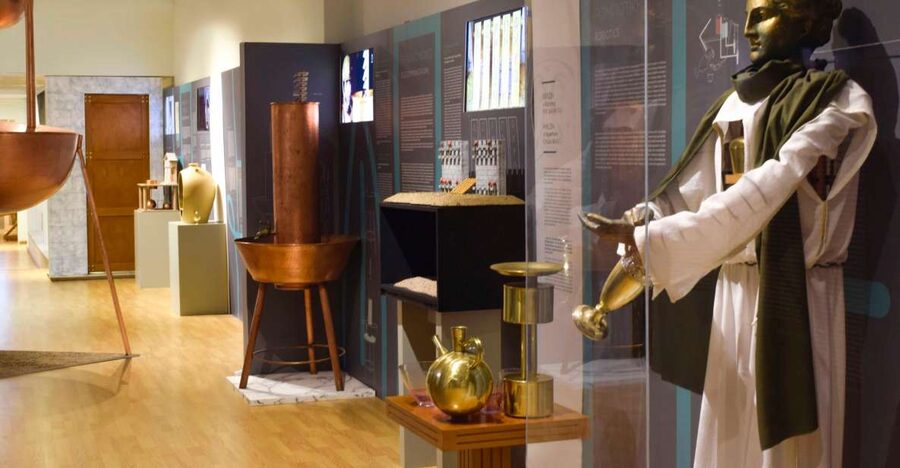
The Kotsanas Museum of Ancient Greek Technology is in a historic Art Nouveau building, and the space is about 700 square meters. That combination does two things for you. One, it makes the visit feel like more than a standard museum box. Two, it gives the curators room to show mechanisms at a scale you can actually understand.
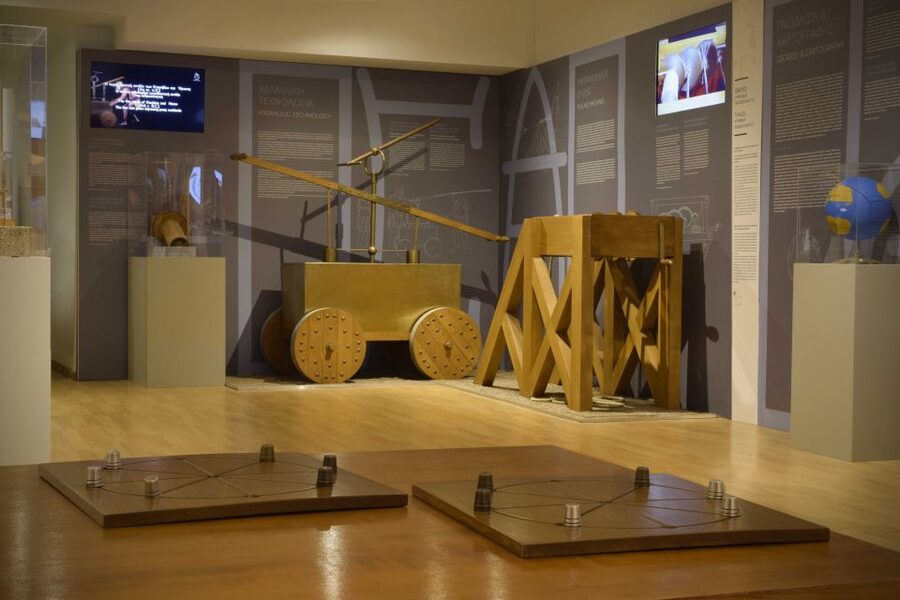
The exhibit approach is not subtle. You will find explanatory labels and giant poster-style displays with diagrams, photos, and bibliographical references. In other words, the museum does not assume you will only be impressed. It also wants you to follow how the mechanisms work.
And yes, a lot of the displays are interactive. That is a big deal for learning. When you can test how something behaves, you stop treating it like a relic and start treating it like a working system.
Same corner of Greece, a different kind of day:
- Athens: Acropolis & up to 5 Archaeological Sites Combo Pass
★ 4.4 · 12,619 reviews - Athens: Cape Sounion & Poseidon Temple Sunset Half-Day Trip
★ 4.8 · 8,241 reviews - Athens: Acropolis and Parthenon Guided Walking Tour
★ 4.6 · 5,882 reviews - All Day Cruise -3 Islands to Agistri,Moni, Aegina with lunch and drinks included
★ 5.0 · 4,958 reviews
What the Guided Tour Adds Versus Self-Reading
You can visit and explore on your own, but the guided part is what makes this different. The private format means the guide can point out what to focus on in each section, then connect it to the big theme of the museum, which is how close ancient Greek invention can feel to early modern and even familiar technology.
When you have an engineer or a historian in the room, the pacing changes. You are not just scanning displays. You are getting interpretation for what you are seeing, especially when a mechanism looks complex at first glance.
The 1-Hour Flow: How the Tour Feels Like a Smart Guided Walk
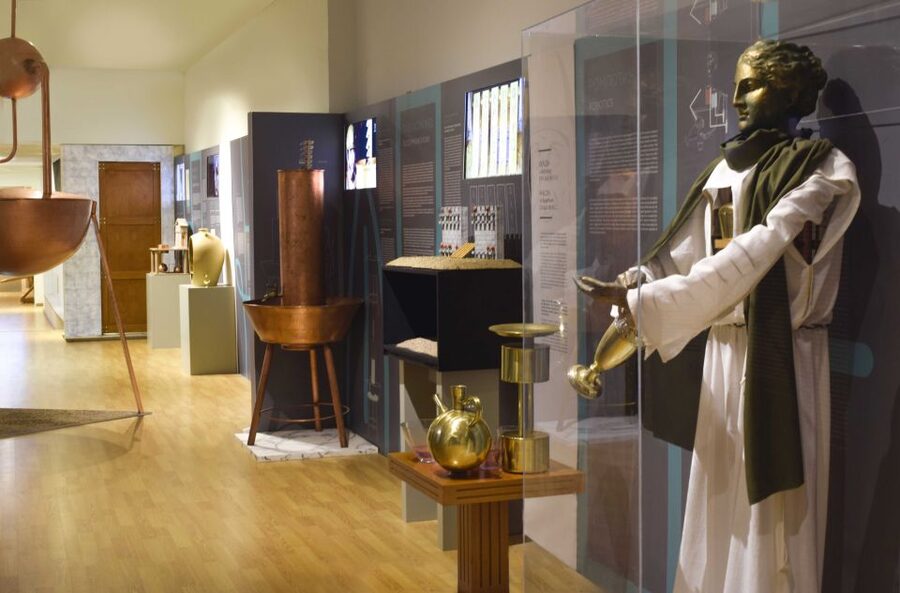
This experience is designed as a tight 1-hour visit. It is long enough to cover multiple highlights without turning into museum fatigue.
Here is how it feels in practice.
Start by Getting Your Bearings
Right away, your guide helps you orient yourself. Instead of treating the museum like a warehouse of objects, you quickly learn the logic of the collection, which makes the later stops click. You also get a sense of the exhibit style: interactive mechanisms, diagram-heavy explanations, and audio-visual stations.
This early context matters because many of these devices look like a mix of art, math, and engineering. Without a guide, you may enjoy the spectacle but miss the structure.
Then Move Through the Technology Highlights
The tour focuses on the museum’s theme and key inventions. Expect to see operating models tied to famous ideas, including:
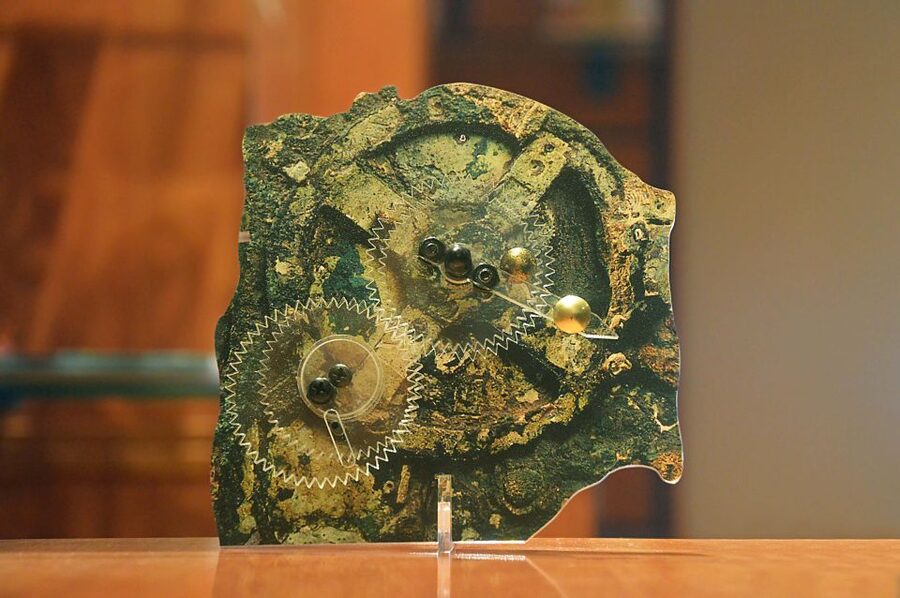
- the oldest analog computer in the world
- the Antikythera calculating mechanism
- the robot-servant
- the cinema of Philon
- the automotive-puppet show of Heron
- the hydraulic clock of Ktesibios
Those names sound like museum labels, but they become real when you see operating models and interactive displays. Even if you are not an engineer, you can follow the visual cues: gears, linkages, and mechanism-based thinking that echoes what you might see later in industrial-era inventions.
Use the Audio-Visual Stations Without Feeling Lost
In the museum, there are projecting stations with video and animation, plus documentaries where the exhibitor explains function and use. Some of this content is in Greek and English.
I like having this layer because it gives you options. If a guide explanation is moving fast, you can slow down with the stations. If a station raises a question, your guide can address it live.
The goal is simple: you leave with more than a vague sense of fascination. You walk out with concrete mental images of how different ancient technologies were built and presented.
Interactive Exhibits: Where Learning Gets Fun
One of the most praised parts of the experience is the combination of interactive exhibits and a guided explanation. This is not a passive museum tour where you stand still and nod.
As you move through the collection, you get multiple opportunities to engage. The museum includes interactive models, and the guided experience often encourages you to try things yourself. That approach can turn a complicated concept into a clear physical experience.
I also appreciate how the museum uses multiple formats at once. You get visual diagrams, written labels with lots of information, and audio-visual components that show motion and function. When you have all three, you are not stuck with just one learning style.
And for families, the interaction level is a real advantage. One guide-focused mention from the experience record specifically highlights that kids can enjoy this place as a must-see. If you travel with young people, this is one of those rare museum visits where attention can stay on track.
Who This Tour Suits Best (And Who Might Want to Adjust Expectations)
This guided tour hits best if you want more than a quick history stamp.
You will probably love it if:
- you enjoy seeing how mechanisms work, not just hearing that they existed
- you like asking questions and getting answers in real time
- you prefer a structured 1-hour experience over a full, self-guided marathon
- you want English explanations in a museum that already includes diagrams and audio-visual support
You might want to think twice if:
- you expect a lot of time outdoors or in multiple locations, because this is centered on one museum visit
- you need accessibility accommodations, since the experience is not suitable for people with mobility impairments
Price and Value: Is $54 Per Group Up to 4 a Good Deal?
The price is listed as $54 per group up to 4, for a duration of 1 hour. That is a key detail, because it changes how you should think about value.
For couples, friends, or small families, private tours can work out well compared with per-person tours, since you are essentially paying for a guide plus museum entry for a small group. And because the experience includes guided time plus free time to explore further, you are buying both instruction and room to react.
Is it worth it? For me, this is one of those “yes, if you care about learning” museum experiences. The fee makes sense because the guide is doing the hard part for you: translating a complex topic into a guided path that actually connects the major artifacts. If you are the kind of traveler who likes to understand what you are looking at, the time with an engineer or historian is where the money goes.
If you are only interested in a quick glance at famous objects, you might feel less payoff. But if you want to walk out with a clearer understanding of ancient technology and why it can feel eerily familiar, the value is strong.
Practical Tips So You Enjoy It More
A few small moves can help this tour land better.
- Wear comfortable shoes. You will be walking inside and moving between interactive displays.
- Go in willing to ask questions. This type of museum rewards curiosity, especially when the guide is either engineering-minded or historically focused.
- Give yourself mental permission to be impressed, but also to slow down. The museum uses diagrams, labels, and audio-visual material for a reason.
Also, remember that food and drinks are not allowed. If you need a snack break, plan it before or after your museum time.
Should You Book the Athens Kotsanas Ancient Greek Technology Guided Tour?
Book it if you want a guided museum hour that feels genuinely useful. This is not just a collection of interesting objects. It is an interactive, mechanism-forward way to understand how ancient Greek technology can echo modern thinking.
I would skip it only if you prefer purely self-guided sightseeing or you need accessibility support not covered here. Otherwise, this is a smart pick for first-time Athens visitors who want something different from the usual temple-and-plaza routine.
If your group is small and you like hands-on learning with a real guide, this is one of the simplest “worth the time” options in central Athens. And if you leave thinking that ancient Greeks were more tech-savvy than many people assume, you will not be alone.
Fresh options around Athens
- 3-Day Trip to Delphi and Meteora from Athens★ 4.0 · 53 reviews
- 3-Day Tour: Mycenae, Epidaurus, Nafplio, Delphi, Meteora With 4* Hotel Included★ 5.0 · 6 reviews
- 2 or 3-Day Private Tour: Ancient Olympia, Corinth, Mycenae, Epidaurus, Nafplion★ 5.0 · 11 reviews
- 4-Day Classical Tour Greece: Epidaurus, Mycenae, Olympia, Delphi, Meteora★ 4.5 · 4 reviews
- Hydra Island & Mythical Full Peloponnese Private 9-Day Tour★ 5.0 · 3 reviews
- 27 Day Grand Circle Tour of Mainland & Corfu, Mykonos, Santorini★ 5.0 · 4 reviews
- 20-Minutes Natural Pedicure with Exotic Fish★ 5.0 · 17 reviews
- 2 Day Delphi, Meteora Iconic Sites Private Tour With 4* Hotel Included★ 5.0 · 3 reviews
Museums, compared.

Acropolis, Parthenon & Acropolis Museum Guided Tour
Read our review →
Mythology of Delphi, Museum and Arachova Guided Tour
Read our review →Acropolis, Parthenon & Acropolis Museum Guided Tour
Read our review →
Acropolis monuments & Parthenon Walking Tour with Optional Acropolis Museum
Read our review →
Athens All Included: Acropolis and Museum Guided Tour with Ticket
Read our review →
Acropolis Museum Ticket with optional Audio Guide
Read our review →
Small-Group Delphi, Museum & Arachova Day Trip
Read our review →