
Reviewed · ATHENS
“A Day in Ancient Olympia:The Cradle of the Olympics Games”
Ancient Olympia is the place where the Olympic idea took physical form, stadium stone to altar flame, and it still feels oddly direct. I like the round-trip pickup from Athens or Port Piraeus, and I like the air-conditioned Mercedes with Wi-Fi and chargers, so your day starts comfortable even before you see a single ruin.
One thing to plan for is costs on site. Admission for the Olympia archaeological area is not included, and museum entry fees are also not included, so budget extra on top of the tour price.
Key Highlights You’ll Actually Care About
- Two stops in one day without the hassle: You get both the Isthmus of Corinth area and Ancient Olympia sites, with private transport to keep time in your favor.
- Comfort for a long day: Air-conditioning, Wi-Fi onboard, bottled water, and mobile chargers help a lot over 8 to 10 hours.
- Olympia’s top landmarks in a tight visit: The route focuses on the stadium, Temple of Zeus, the Hera altar (Olympic flame setting), and key buildings like the Philippieion.
- Museum time that turns ruins into context: The Archaeological Museum and the Museum of the Olympic Games are built for understanding what you just walked through.
- Skip-the-line help: You get assistance for tickets so you spend less time at counters, even though you still pay the admission cost.
- Driver is not a licensed site guide: You’ll get help and historical context, but you may want extra site guidance if you crave deep commentary.
Why Ancient Olympia Still Feels Like the Main Event
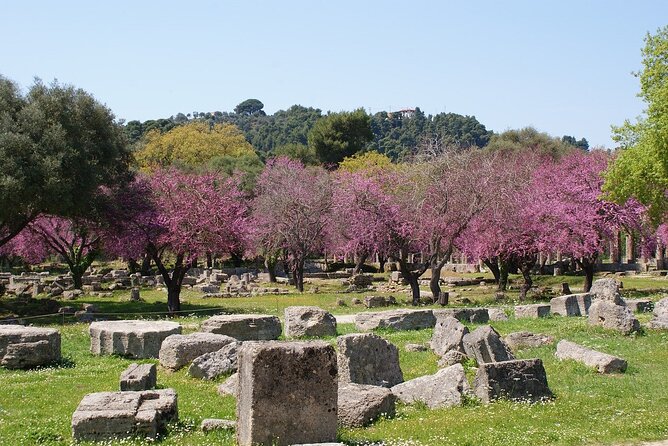
If you’ve ever watched the Olympics on TV and wondered where the whole idea began, Ancient Olympia is where that question lands. This sanctuary was one of the major religious and athletic centers of ancient Greece, with the Olympic Games held every four years for centuries.
What I love about doing it as a full day trip is that you are not just seeing random ruins. You’re walking through a complex designed for ceremonies, training, competition, and worship, and the layout helps you understand the big picture even in limited time.
This trip also pairs nicely with the Isthmus of Corinth stop. It gives you a quick “before Olympia” sense of how strategic geography shaped Greek history, which makes the later sanctuary feel even more meaningful.
More of Athens worth an open tab:
- Athens: Acropolis & up to 5 Archaeological Sites Combo Pass
★ 4.4 · 12,619 reviews - Athens: Acropolis, Parthenon & Acropolis Museum Guided Tour
★ 4.8 · 9,316 reviews - Athens: Cape Sounion & Poseidon Temple Sunset Half-Day Trip
★ 4.8 · 8,241 reviews
Price and Value: What $327.43 Per Person Really Covers
At $327.43 per person, you’re mainly paying for private transportation and time management, not for admissions and lunch. The included transfer covers round-trip pickup and drop-off from your Athens accommodation or Port Piraeus, plus a comfortable Mercedes-Benz vehicle with A/C, Wi-Fi, bottled water, and chargers.
You also get help with skip-the-line ticket purchasing, which matters when you’re trying to fit multiple sites into an 8 to 10 hour day. The support is practical: someone helps you get set up for entry, but you still cover the ticket costs yourself.
The biggest “value check” is this: admission fees are not included. The Archaeological Site of Olympia is listed at €20 per person, and both museum visits are also not included. If you want a licensed guide inside the museums or throughout the sites, that is only available depending on availability and request, and it is not guaranteed.
Getting From Athens to the Peloponnese Without Losing Your Day
The ride is part of the experience here because it controls whether your day feels rushed or relaxed. You’ll travel in an air-conditioned Mercedes-Benz with Wi-Fi, bottled water, and mobile chargers, which is a big deal when you are committing to a long outing.
Pickup is also flexible. You can provide an exact address or meeting point, and the driver meets you at your hotel reception, at your Airbnb, at a metro or bus station, or right outside your cruise ship at Port Piraeus with a sign showing your name.
One practical note: the driver is English-speaking and has history knowledge, but they are not licensed to accompany you inside the sites and museums. So treat the day as driver-led logistics and orientation, with on-site interpretation coming from signs, museum exhibits, and whatever extra guidance you decide to arrange.
Also, keep your phone charged. You’ll have mobile chargers onboard, and the operator shares full driver contact details the day before, which reduces stress if you need to find each other quickly.
Isthmus of Corinth Stop: A 15-Minute History Jolt
Before you reach Olympia, you stop at the Isthmus of Corinth, a narrow strip that connects central Greece with the Peloponnese. Even in a short visit, it works because it’s a concentrated story told through geography and engineering.
The Corinth Canal runs through this area, linking the Saronic Gulf with the Gulf of Corinth. The canal opened after major construction from 1880 to 1893, and it cut right across the narrow land that has been strategically important for centuries.
What I find especially interesting here is the older layer of defense. A wall called the Hexamilion was built at the end of the 5th century BC, and it lasted into Byzantine times. In other words, this is a place where the same chokepoint has mattered again and again.
The stop is about 15 minutes and admission here is free, so don’t expect deep museum-style interpretation. Treat it like a quick reset for your eyes and your sense of place before you jump into ancient Olympia.
Same corner of Greece, a different kind of day:
- Athens: Acropolis and Parthenon Guided Walking Tour
★ 4.6 · 5,882 reviews - All Day Cruise -3 Islands to Agistri,Moni, Aegina with lunch and drinks included
★ 5.0 · 4,958 reviews - Athens, Piraeus, and Coastline: Blue Hop-On Hop-Off Bus
★ 3.9 · 4,849 reviews - Greek Food Walking Tour in Athens
★ 5.0 · 4,740 reviews
Ancient Olympia: Stadium, Zeus, Hera, and the Places That Mattered
This is the heart of the day. Your time at the Ancient Olympia archaeological area is about 1 hour, so you’ll be moving through the highlights rather than strolling slowly through every corner.
The sanctuary sits in the western Peloponnese valley near the Alpheios River area, and it was dedicated to Zeus. Olympia became the major center for religious ceremonies and for athletics, and that combination is what makes it more than a sports theme park of the past.
The Stadium and the Race Track
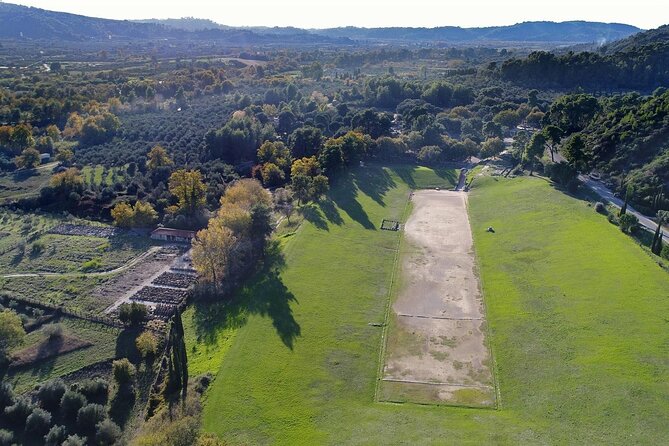
One of your first anchors is the stadium, where many Olympic competitions took place in antiquity. The racetrack is over 200 meters long and about 30 to 34 meters wide.
Even if you don’t fully imagine the crowds, you can feel why this mattered. Ancient athletic contests needed a defined space for fairness, measurement, and spectacle, and the stadium’s scale tells you it was built for real competition.
Temple of Zeus: Marble, Limestone, and the Zeus Cult
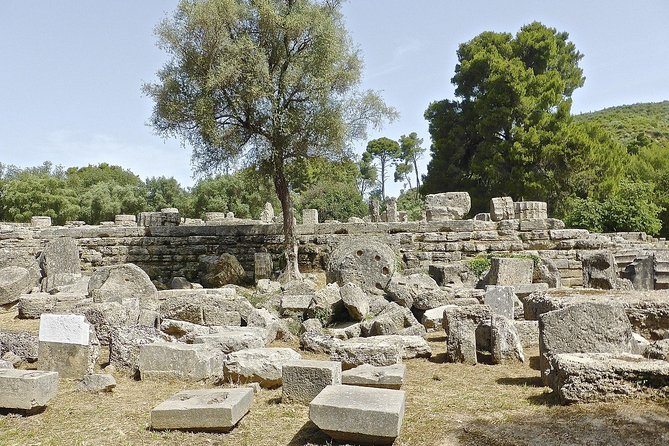
Next is the massive Temple of Zeus, built in the 5th century BC by a local architect. It used limestone and marble, and the historical records linked to this temple describe a famous statue of Zeus that was housed inside.
If you like architecture, this is one of the best ways to understand why Olympia drew people. It wasn’t just games and training, it was worship and ceremony tied to a specific divine center.
Hera Altar: Where the Olympic Flame is Lit
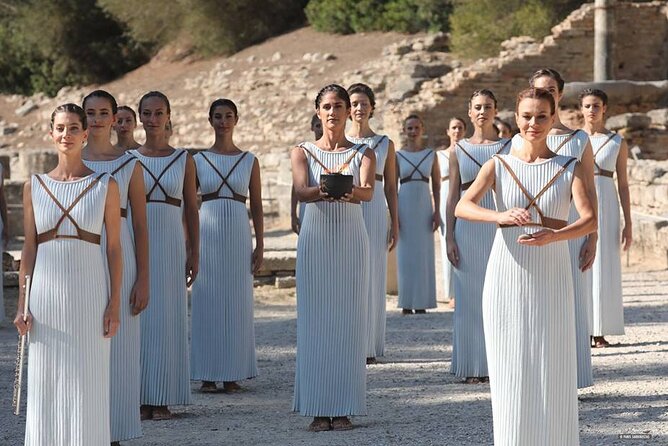
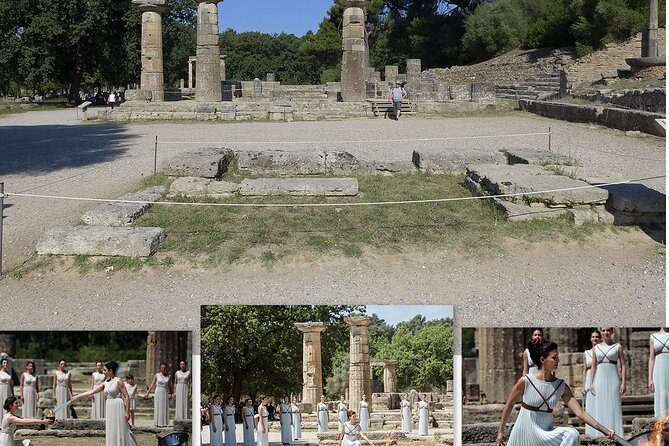
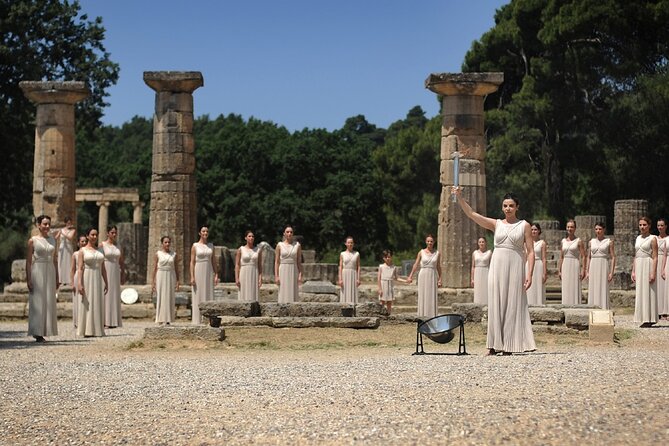
Near the stadium, you’ll also come to the altar of Hera, described as one of the oldest temples in Greece, built in the 7th century BC in the Dorian style. Today, this is the spot where the Olympic flame is lit before the games.
That modern tradition is what makes this part feel extra emotional. You’re watching an ancient space serve a contemporary symbol of international competition.
Philippieion and the Palaestra: Power, Practice, and Purpose
The Philippieion is a circular building inside the Altis, dedicated to Zeus by Philip II of Macedon. The palaestra is west of the Altis enclosure, near the Kladeos River, and it was built as part of the gymnasium complex around the 3rd century BC.
The palaestra area gives you the practical side of the story. This is where training happened, including boxing, wrestling, and jumping. Seeing these spaces helps you understand that the Olympic Games weren’t just the final event, they depended on preparation happening in the same sacred precinct.
Because your site time is limited, I recommend you decide what you want most before you arrive. If you care most about the games theme, focus on the stadium plus altar. If you care most about religion and architecture, prioritize the Temple of Zeus and key Altis buildings.
Museums at Olympia: How You Turn Stone Into Meaning
After the outdoor sites, your day shifts into interpretation mode. You’ll visit two museums, and both are designed to make the ancient games easier to understand.
Archaeological Museum of Olympia (About 1 Hour)
The Archaeological Museum is considered one of the best museums in Greece, and it’s built for learning. Exhibits come from the ancient site and other excavations in the area, and the displays are well labeled with multiple rooms.
Two exhibit highlights are specifically mentioned: the statues of Hermes of Praxiteles and Nike Paionios. Even if you don’t know the artists, seeing sculptural details in a museum setting changes how you interpret what you saw outside.
With only about 1 hour, you don’t have time to read everything. My strategy is to pick 2 or 3 rooms with the most items that match what you just toured outdoors.
Museum of the Olympic Games (About 45 Minutes)
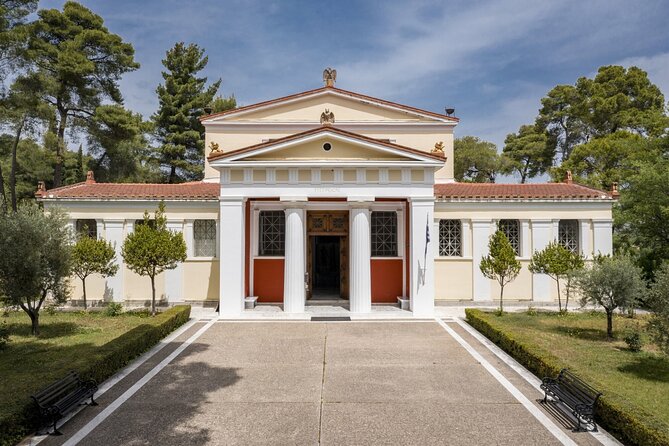
The Museum of the History of the Olympic Games is housed in the old archaeological museum in Ancient Olympia. It focuses on findings related directly to the Games, pulling together the theme in a more focused way than the general archaeology museum.
Forty-five minutes is enough to get the storyline without feeling trapped inside. If you’re the type who likes chronology, this is a good place to build a mental timeline of what the Games meant in ancient Greek society.
Transportation Details That Make the Difference
This is a private tour, meaning it’s only your group. That matters because you’re not negotiating a shared schedule with strangers, and it can make the day feel more controllable, especially if your timing is tied to a cruise departure.
The vehicle setup is also practical:
- Mercedes-Benz vehicle with A/C
- Wi-Fi onboard
- bottled water
- mobile chargers
- child seats available
The driver is English-speaking with history knowledge, but they are not licensed to accompany you in museums and sites. So you should treat the driver as your logistics plus orientation person, not as a substitute for a licensed guide inside the buildings.
One more real-world tip: technology can fail anywhere. On at least one occasion, an onboard electronics issue came up and the driver handled it without affecting the overall trip. It’s a good sign that the operator focuses on keeping the day moving even when small problems pop up.
Who This Day Trip Suits Best
This tour fits best if you want an efficient, high-impact Olympia day with minimal friction. It’s ideal for:
- people short on time in Athens, but determined to see Olympia
- cruise passengers starting or ending at Port Piraeus
- couples or small groups who prefer private transport over long group bus rides
- travelers who want museum time and site highlights in one outing
If you are an obsessive about every inscription and every architectural fragment, this may feel too fast because the Olympia archaeological area is only about 1 hour. You can still get a lot, but you’ll want to bring your own curiosity and decide your must-sees.
If you want a licensed expert guiding you inside each site and museum, plan for that request ahead of time. The driver is helpful, but not licensed to act as a site guide.
Quick Practical Tips Before You Go
Here’s how to get the most from a long day without overthinking it.
First, budget for admissions on top of the tour price. The Olympia archaeological site is €20 per person, and museum tickets are not included.
Second, wear shoes you can walk in on uneven ancient ground. Even if your time is limited, you’ll still cover multiple areas inside Olympia, plus the outdoor museum grounds.
Third, think in layers. In one day you’ll go from the Isthmus of Corinth (strategic geography) to Olympia (sacred precinct and athletics) and then into museums (context and artifacts). If you treat it as one storyline, it becomes easier to remember.
Fourth, plan your priorities for the Olympia hour. You may not have time for everything, so pick your top 3: stadium, Temple of Zeus, altar of Hera, plus either Philippieion or palaestra.
Should You Book This Ancient Olympia Day Trip?
I’d book it if your goal is a well-paced, private day that gets you from Athens or Port Piraeus to the key parts of Ancient Olympia, plus museum time, without forcing you to coordinate trains or shared buses.
I would hold off if you hate budgeting for extra on-site tickets and museum entries, or if you want a fully licensed, in-depth guide at each site. In that case, you might want a different format that includes guided interpretation throughout.
If your time is limited and you want the big Olympia hits plus meaningful museum stops, this is a strong value for the transportation and scheduling alone. Just go in ready to pay admissions, pick your must-sees for the one-hour archaeological visit, and you’ll come away with a day that feels connected, not scattered.
FAQ
How long is the tour?
It runs about 8 to 10 hours.
Where does pickup happen?
Pickup is offered from your Athens accommodation or from Port Piraeus, and the driver can meet you at locations like a hotel reception, Airbnb, or a metro or bus station.
Is this tour private?
Yes. It is private, and only your group participates.
What language is offered?
The experience is offered in English.
What is included in the vehicle?
You get an air-conditioned Mercedes-Benz with Wi-Fi, bottled water, and mobile chargers. Child seats are available.
Are admission tickets included?
No. Admission fees for the Archaeological Site of Olympia are not included (listed as €20 per person), and museum tickets are also not included.
Does the tour include skip-the-line support?
You get assistance with purchasing skip-the-line tickets, but you still pay the ticket cost yourself.
Is lunch included?
No, lunch is not included.
Is there a licensed tour guide at sites and museums?
The driver is not a licensed tour guide and is not allowed to accompany you in sites or museums. A licensed guide may be available upon request depending on availability.
Can I bring a service animal?
Yes, service animals are allowed.
Fresh options around Athens
- Classical Greece 3-Day Tour: Epidaurus, Mycenae, Olympia and Delphi from Athens★ 4.5 · 15 reviews
- 8-Day Classic Greece Tour: Athens, Epidaurus, Mycenae, Olympia, Delphi & Meteora★ 4.0 · 4 reviews
- 3-Hour Small Group Coasteering in Sounio★ 5.0 · 12 reviews
- Get Lost in Athens with an Insider★ 4.5 · 28 reviews
- Christmas food and walking tour in Athens★ 5.0 · 6 reviews
- Electric Trikke Bike Athens Complete Tour★ 5.0 · 35 reviews
- Athens City Game: The Journey through Time★ 5.0 · 9 reviews
- Cruise into Athens?! Best of Athens Tour from Piraeus Cruise Port★ 4.5 · 5 reviews