

Reviewed · ACROPOLIS TOURS
Acropolis & Agora: The Rise & Fall of Democracy
This experience is interesting because it does not stop at pretty ruins. It connects the Acropolis to the first big political experiment we still talk about today. You leave with a clearer picture of how democracy was supposed to work, what it offered Athenians, and why it fell apart.
I especially like the way the tour turns famous monuments into political evidence, not just a background for photos. I also like the balance of “then and now” thinking, where the ideas of ancient Athens are compared to modern democracy. One possible drawback: it is a walking-focused tour, with no strollers, no big bags, and steady movement on uneven ground.
Key highlights and what to plan for
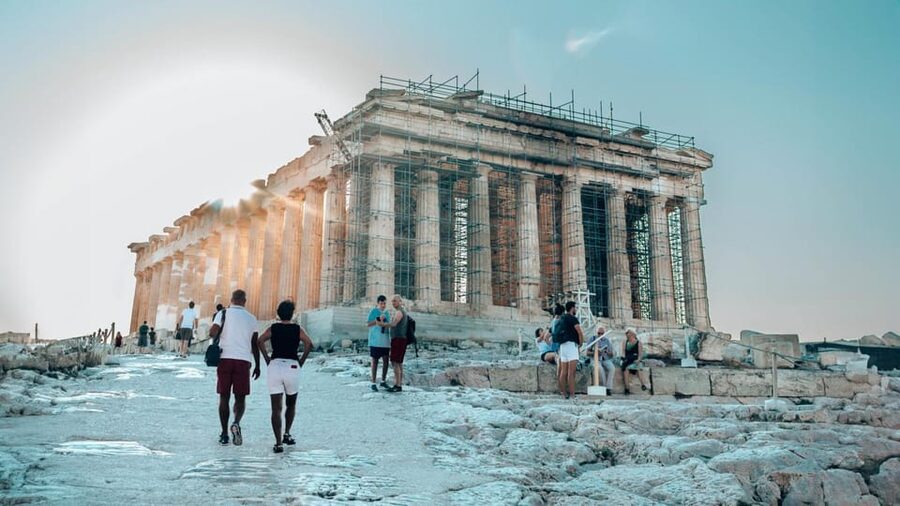
- Acropolis guided time designed for meaning, not just sightseeing
- Ancient Agora stops where politics, daily life, and commerce meet
- A clear rise-and-fall story of Athenian democracy, including why it was seen as radical
- A “then vs now” comparison, so you can measure what still holds up
- Bilingual guides in English and French, with extra time for questions and photos when possible
Acropolis and Agora as a democracy story, not a postcard loop

The Acropolis is one of those places you already feel in your bones, even before the first step. From up on the rock, Athens looks like a city with layers, because it literally is one. What makes this tour different is that it treats the stones like arguments.
Instead of only talking art and architecture, your guide frames the Acropolis as a political stage. You learn how it functioned as propaganda for ancient Athens, and why that mattered to how power was presented to the public. That sets you up for the second half, where you move from “political display” to the everyday machine that tried to run a state.
The Ancient Agora is where the conversation changes. This area is described as the heart of ancient Athens for politics, business, and administration. That matters because democracy was not only speeches and votes. It was also courts, debates, and the messy work of governing real people in real circumstances.
More Acropolis tours in Athens:
- Athens: Acropolis & up to 5 Archaeological Sites Combo Pass
★ 4.4 · 12,619 reviews - Athens: Acropolis, Parthenon & Acropolis Museum Guided Tour
★ 4.8 · 9,316 reviews - Athens: Acropolis and Parthenon Guided Walking Tour
★ 4.6 · 5,882 reviews
How the small-group walking format helps (and who should expect it)
This is a walking small group tour with a certified guide. That format is the whole point, because the tour’s theme depends on context, not just checking boxes. You also get a guided pace that stays focused, including several shorter stops and one longer one where ideas can land.
Still, consider what a 3-hour walking route means for your comfort. You need comfortable shoes and comfortable clothes, and you should expect to keep moving. Strollers are not allowed, pets are not allowed, and big bags are not allowed. If you carry a backpack, you should rethink it, since backpacks are listed as not allowed.
If you want a museum-style, sit-and-read experience, you might be disappointed. This tour is more like guided street theater for your brain: you walk, you look, and your guide connects each stop to the bigger story.
Starting near Dionysiou Areopagitou, then heading straight into the action
The meeting point can vary depending on the option you book. One listed starting area is along Dionysiou Areopagitou 45, so it is a good idea to confirm the exact pickup spot you will get when you reserve. This matters because the route is timed around walking and guided stops, so arriving late can throw the rhythm off.
The good news is that the start is not complicated. Once the group is together, you are guided right into the Acropolis approach and begin the story there.
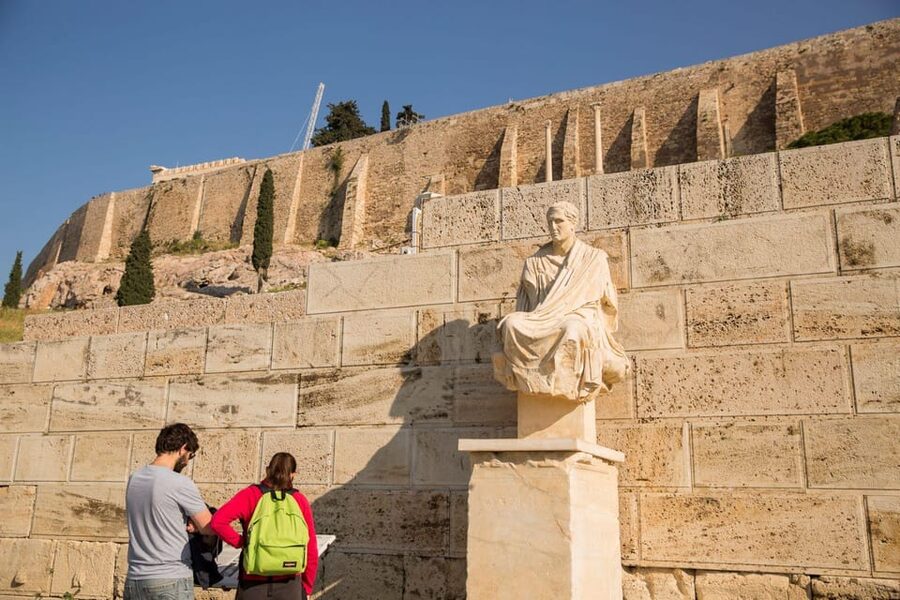
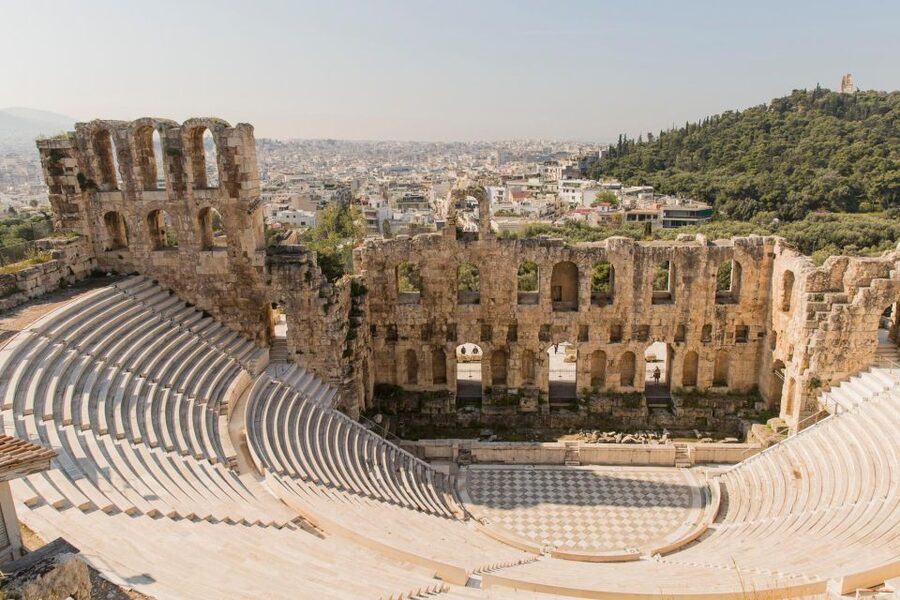
Odeon of Herodes Atticus to the Propylaea: seeing the approach as politics

One thing I like about this tour is how it uses “in-between” stops. After you reach the Acropolis area, you spend guided time at the Odeon of Herodes Atticus (about 15 minutes). It is long enough to set the scene, but not long enough to drag.
Next comes the Propylaea (about 15 minutes). You are not only looking at a gateway. You are learning to read it as a transition, from the everyday city into a carefully staged world. That matters because the tour’s big idea is that democracy and power are always connected to how a place is organized and presented.
These shorter guided segments are also useful if you like your history with structure. You get multiple anchor points instead of one long lecture.
Same corner of Greece, a different kind of day:
- Athens: Cape Sounion & Poseidon Temple Sunset Half-Day Trip
★ 4.8 · 8,241 reviews - All Day Cruise -3 Islands to Agistri,Moni, Aegina with lunch and drinks included
★ 5.0 · 4,958 reviews - Athens, Piraeus, and Coastline: Blue Hop-On Hop-Off Bus
★ 3.9 · 4,849 reviews - Greek Food Walking Tour in Athens
★ 5.0 · 4,740 reviews
Erechtheion and Temple of Athena Nike: details with a purpose
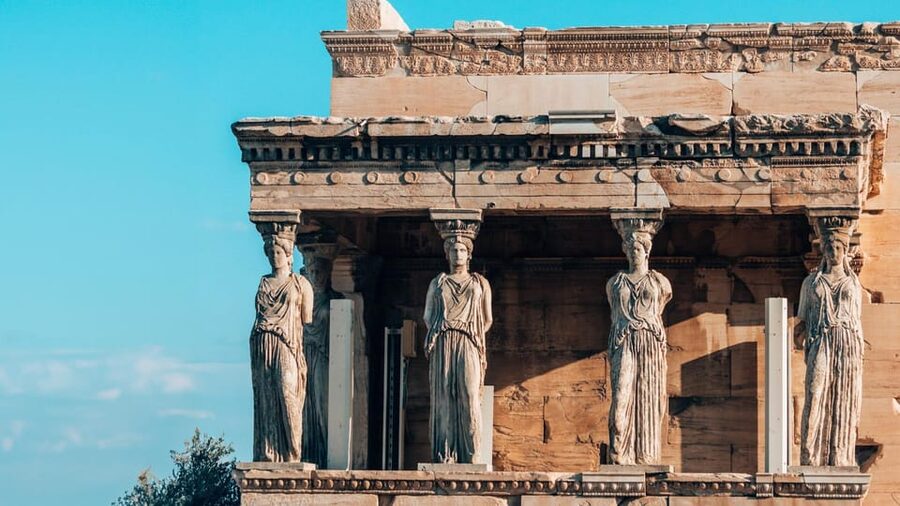
You then move through more guided stops on the Acropolis side, including the Erechtheion (about 15 minutes) and the Temple of Athena Nike (about 15 minutes). The time spent at each location is short, but it is intentional.
Here is what I think you will appreciate: your guide uses these stops to keep the story moving and to build a sense that the Acropolis was not random. Even if you love photos, you also get time to understand why people cared about what they saw. That turns the visit from scenic to meaningful.
If you tend to get museum fatigue, this pacing helps. If you love deep, long explanations at every building, you might wish for more time at each site. But you are choosing a 3-hour “story arc,” not a slow archaeology marathon.
Parthenon time (about 1 hour): where the ideas get their main stage

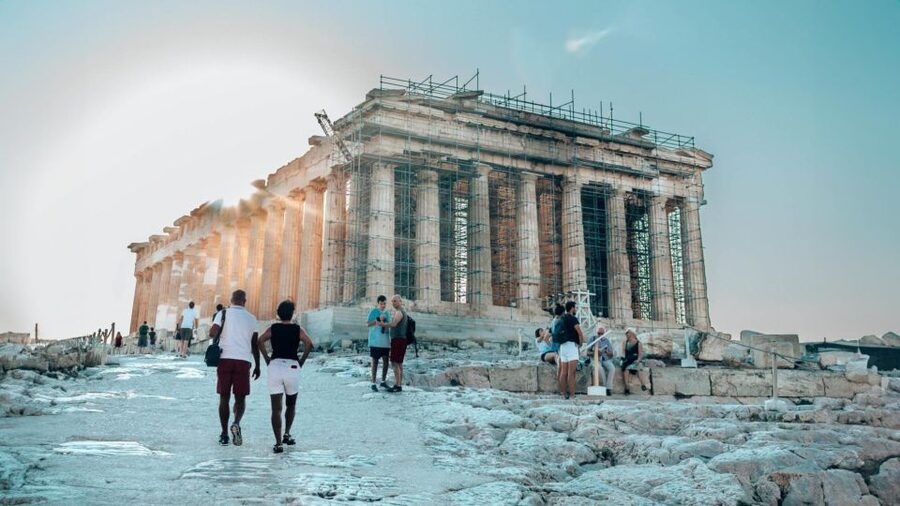
The Parthenon is the main guided stop, with about 1 hour set aside. That is plenty of time to go beyond the iconic view and focus on what the site represents within the tour theme.
I like that the tour does not treat the Parthenon like a final boss you defeat and then rush past. You spend real time here, and your guide helps you see the connection between public power, symbolism, and civic identity. If you came to Athens mainly for the big sights, you will still get them. If you came for how Athens worked, you will also get what you came for.
Also pay attention to the guide quality. The standout praise you see around this tour often includes guides who explain in a clear, bilingual way and manage the group so you have a fair shot at photos and questions. Guides such as Maria and Anastasia are specifically known for making the time feel well paced and for answering questions instead of rushing them away.
Ancient Agora of Athens: where democracy first had to function
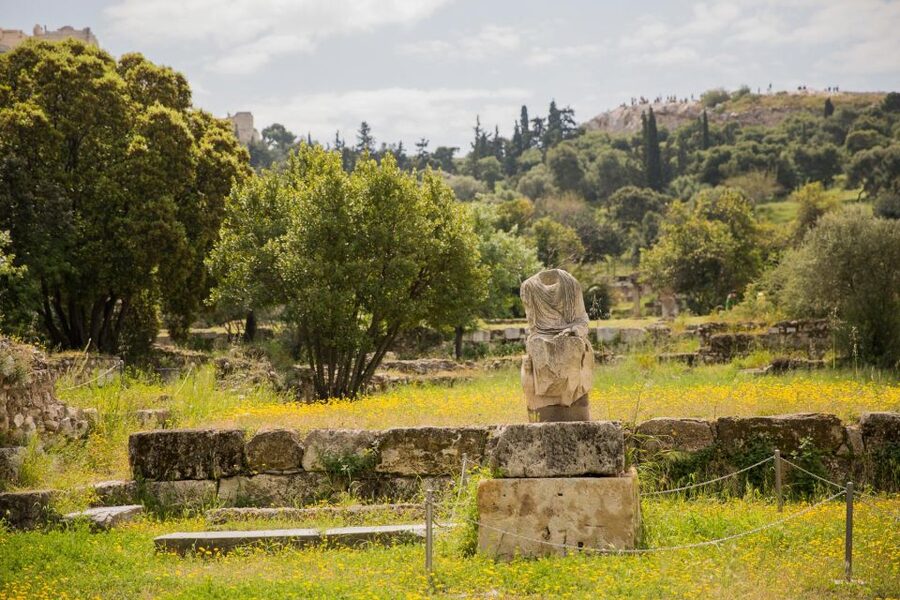
After the Acropolis, you switch gears and head to the Ancient Agora, where you get about 30 minutes of guided time. This is the part that makes the tour feel like more than a viewpoint crawl.
The Agora is described as the political, commercial, and administrative center of ancient Athens. That is crucial for understanding democracy as an experiment. A system based on people-power does not work as an abstract idea. It has to run inside a real city, with real schedules, real disputes, and real commerce all happening at once.
You also get guided time connected to the Ancient Agora area, including an emphasis on focal points in the museum area there. That is a smart way to use your time. You get both outdoor “place” and indoor “evidence,” so the story does not float in the air.
You finish at the Ancient Agora, which is convenient. You do not end the tour alone at the far side of nowhere. You end in the same zone you will likely want to explore on your own next.
Temple of Hephaestus (about 30 minutes): a wrap-up stop that ties the city together
Your guided time also includes the Temple of Hephaestus for about 30 minutes. Even though the tour theme is democracy’s rise and fall, you still get a final stop grounded in the physical city. That helps everything land.
This kind of wrap-up stop is useful if you like seeing how daily life, public life, and civic identity overlap. The tour is basically training you to look at Athens as a system, not a set of monuments.
Democracy then vs now: what the tour helps you notice
The tour’s central pitch is the comparison between ancient and contemporary democracy. You learn how the Greek word demokratia carries a meaning that is not just clean and simple. You also learn to question who counted as the people, and what power they actually held.
That is where the “rise and fall” framing becomes more than a dramatic hook. You are guided through why democracy was considered a radical system at the time. You also learn the purposes democracy served, along with the reasons it failed.
Then your guide brings it forward to modern life. The point is not to claim ancient Athens solved politics and we just messed it up. The point is to identify elements that still function well and elements that often break down. In practice, this kind of comparison can make your later reading, conversations, and news attention more grounded.
It is also worth knowing that this is not a “doom democracy” tour. It ends with the idea that democracy keeps evolving. The story is framed as an experiment that started more than 2,600 years ago and continues to develop.
Price and value: is $69 worth it?
The price is listed at $69 per person for a 3-hour experience. That is a solid rate for a guided, small-group walk that includes time at both major Acropolis sights and the Ancient Agora.
One key value detail: entry tickets are included only if you choose the option that says tickets are included. If tickets are not included in what you book, you will need to plan for archaeological site fees separately. The tour provider notes you can pre-purchase entry tickets for you if you let them know, which can save time on the day.
If you already know you want a guided story, $69 makes sense because you are paying for interpretation, pacing, and a structured political narrative across multiple sites. If you only want a quick look at the Parthenon and then a stroll, you could do it on your own for less. But if your goal is understanding how democracy worked, a guide becomes the value engine.
Practical tips to make the 3 hours feel comfortable
Here is how to prepare so you enjoy the walk instead of fighting it.
- Bring a passport or ID card, since it is required for some free entry eligibility categories
- Wear comfortable shoes, because the tour is walking-heavy
- Choose comfortable clothes, since you may be out in sun and moving between sites
- Avoid strollers, pets, and backpacks, since they are not allowed
Also consider the age and suitability notes. The tour is not suitable for children under 8 years. It is also not suitable for wheelchair users and visually impaired people. If you fit into those categories, it is worth looking for an alternative format that matches access needs.
Who this tour is best for
I think this is an excellent choice for you if you enjoy history that connects to ideas, not just dates. If you want to stand on the Acropolis and understand why ancient Athenians built and showcased power the way they did, this tour is a strong match.
It is also a good fit if you like thoughtful teaching. Several guide styles mentioned here point to clear bilingual explanations, patience with questions, and smart use of time for photos. For example, Nathalia is described as kind and anecdotal, with time for pictures. Helena is praised for moving from mythology to democracy, which helps the story feel human instead of mechanical.
If you are traveling with kids old enough to handle a structured historical walk, it can work. But the tour is not recommended for children under 8, so plan carefully.
Should you book the Acropolis and Agora, Rise and Fall of Democracy tour?
Book it if you want your Athens visit to answer real questions: How was democracy imagined, who held power, what values it promoted, and why the experiment failed. This tour is built for that kind of thinking, and it does it while still giving you the must-see sites.
Skip it if you want a casual, slow, purely visual ruin day. The tour is guided and moving, and the theme requires attention. Also skip if your needs do not match the stated restrictions, especially around mobility or visual access.
If you do book, do one smart thing first: plan your morning around comfortable footwear and no heavy bags. Then let the guide do the work of connecting each stop to the bigger question, because that is where the real payoff is.
FAQ
How long is the Acropolis & Agora democracy tour?
The duration is 3 hours.
Where does the tour start?
The meeting point may vary depending on the option booked. One listed starting area is Dionysiou Areopagitou 45.
What languages are the guides?
The live tour guide speaks French and English.
Is the price $69 per person, and does it include entry tickets?
The price is listed as $69 per person. Acropolis and Ancient Agora entry tickets are included only if you select the option that includes tickets.
What should I bring?
Bring a passport or ID card, plus comfortable shoes and comfortable clothes.
What is not allowed during the tour?
Baby strollers, pets (assistance dogs allowed), and backpacks are not allowed.
Who is the tour not suitable for?
It is not suitable for children under 8 years, wheelchair users, and visually impaired people.
Fresh options around Athens
- 3-Day Trip to Delphi and Meteora from Athens★ 4.0 · 53 reviews
- 3-Day Tour: Mycenae, Epidaurus, Nafplio, Delphi, Meteora With 4* Hotel Included★ 5.0 · 6 reviews
- 2 or 3-Day Private Tour: Ancient Olympia, Corinth, Mycenae, Epidaurus, Nafplion★ 5.0 · 11 reviews
- 4-Day Classical Tour Greece: Epidaurus, Mycenae, Olympia, Delphi, Meteora★ 4.5 · 4 reviews
- Hydra Island & Mythical Full Peloponnese Private 9-Day Tour★ 5.0 · 3 reviews
- 27 Day Grand Circle Tour of Mainland & Corfu, Mykonos, Santorini★ 5.0 · 4 reviews
- 20-Minutes Natural Pedicure with Exotic Fish★ 5.0 · 17 reviews
- 2 Day Delphi, Meteora Iconic Sites Private Tour With 4* Hotel Included★ 5.0 · 3 reviews
Acropolis Tours, compared.

Acropolis & up to 5 Archaeological Sites Combo Pass
Read our review →
Acropolis Ticket with Optional Audio or Live Guide
Read our review →
Acropolis, Parthenon & Acropolis Museum Guided Tour
Read our review →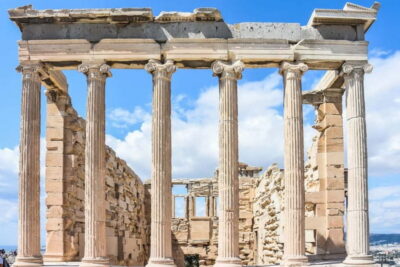
Acropolis, Parthenon & Acropolis Museum Guided Tour
Read our review →

Acropolis: Acropolis and Parthenon Guided Walking Tour
Read our review →
Acropolis monuments & Parthenon Walking Tour with Optional Acropolis Museum
Read our review →Browse the lists this tour appears in