
Reviewed · ACROPOLIS MUSEUM TOURS
Ancient Athens tour: Acropolis, Parthenon and Acropolis Museum
The Acropolis is the big movie scene of Athens, but the magic is how the details fit together when you have a real guide and then move straight into the Acropolis Museum. I really like the mix of outdoor monuments plus time with the artifacts that explain what you just saw. The only real drawback is the walk and stairs on a hot day, so you’ll want comfortable shoes and a willingness to move at a moderate pace.
My favorite part is the way the guide keeps the group flowing without making it feel rushed. I also appreciate the small-group feel, since it makes it easier to hear the story and take photos at the right moments. If you hate crowds, you should still plan on some busy spots, just with better pacing than going it completely on your own.
Key highlights you should care about
- Licensed, often archaeology-trained guides who explain what you’re actually looking at, not just what the brochure says
- A smart pairing of the Acropolis with the New Acropolis Museum, so the marble and reliefs stop being random
- A 9:00am start that helps you get uphill before the worst heat
- Short, targeted stops for the Parthenon area, Theatre of Dionysus, Erectheion, and more, with chances to pause and look
- Water provided for the sun, plus plenty of practical comfort tips from the guide
- A small maximum group size (up to 20) that keeps the experience manageable
Entering Ancient Athens the smart way: Acropolis plus Museum
If you only do one thing in Athens, make it the Acropolis. But if you want it to feel like more than famous ruins, pair it with the Acropolis Museum. That’s where the stones start talking. You see sculptures, architectural fragments, and the kinds of details that would be almost impossible to spot and interpret on your own.
This tour is built for that exact payoff. You start with the big views and the main structures up on the rock, then you switch to indoor time where you can slow down and really see what was carved, painted, and used. That rhythm matters, because the Acropolis is bright, hot, and crowded in the best and worst ways. The museum gives your brain a rest and helps everything click.
More Acropolis Museum tours in Athens:
- Athens: Acropolis, Parthenon & Acropolis Museum Guided Tour
★ 4.8 · 9,316 reviews - Athens: Acropolis, Parthenon & Acropolis Museum Guided Tour
★ 4.8 · 3,579 reviews - Acropolis monuments & Parthenon Walking Tour with Optional Acropolis Museum
★ 5.0 · 2,678 reviews
Meeting at Porinou 5 and why a 9:00am start matters
The tour meets at Porinou 5 in Athens, and the start time is 9:00am. In practice, that means you’re already moving while the city is still shaking off the night. It’s a simple advantage, but it can be the difference between a tough climb and a manageable one.
You’ll get a mobile ticket, which keeps things easy. You’re also traveling in a group that maxes out at 20 people, so you’re not stuck in the slow-motion shuffle you sometimes get at major sites. The tour is in English, and you’ll usually have a way to hear your guide even in busier sections, like audio devices or ear pieces.
Because the Acropolis is a hillside, plan for moderate walking and stairs. If you’re okay with that, you’re in good shape. If not, you might still enjoy the museum, but the outdoor part may feel demanding.
The Acropolis overview: how the guide helps you read the monuments
The Acropolis visit is built around brief, focused stops so you can look without getting lost. Instead of just drifting from one photo spot to another, you’ll get context for each structure, and you’ll know what to notice when you’re standing right there.
I like tours like this because they keep your attention where it counts. The Acropolis can look like a jumble from far away, but up close it becomes a sequence: entrances, temples, theaters, and the spaces where Athenians actually gathered. With a licensed guide, that sequence becomes clear fast.
In the reviews, guides named Giannas, Selena, Bernardos, and Lydia come up again and again. More importantly, the consistent pattern is that guides don’t just recite facts. They guide you to good stopping points, help you maneuver through crowds, and give you practical “look here” moments.
Propylaea, the Parthenon area, and the stops that anchor your photos
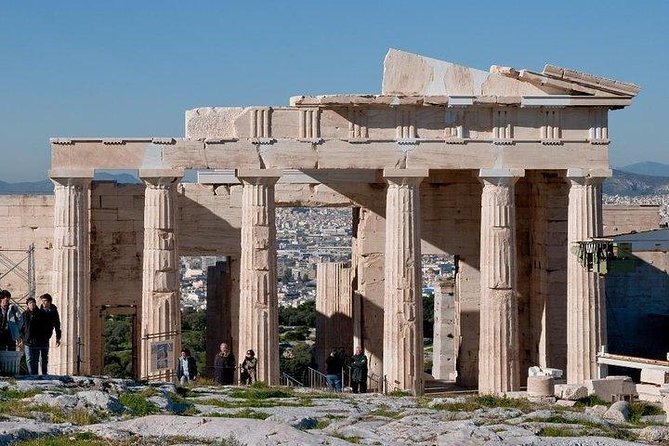
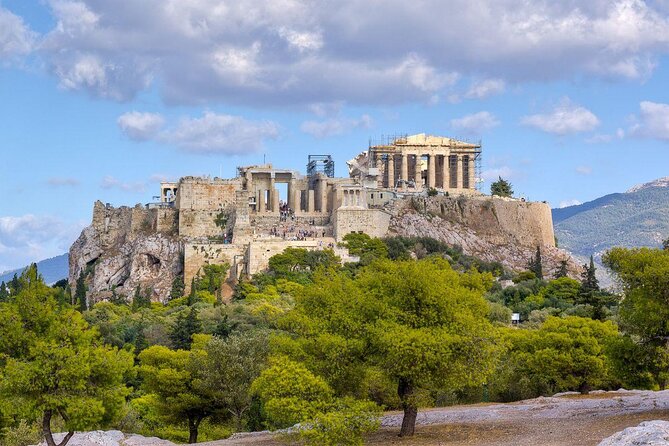
You’ll start up on the rock and spend time at the Acropolis area itself, then you’ll reach the core monument views. The big one is the Parthenon area, and this tour gives it the right kind of attention, even if your time there is short.
More Acropolis tours in Athens:
- Athens: Acropolis & up to 5 Archaeological Sites Combo Pass
★ 4.4 · 12,619 reviews - Athens: Acropolis and Parthenon Guided Walking Tour
★ 4.6 · 5,882 reviews - Athens: Acropolis Ticket with Audio Guide
★ 4.0 · 3,575 reviews - Acropolis: Acropolis and Parthenon Guided Walking Tour
★ 4.7 · 3,442 reviews
Propylaea
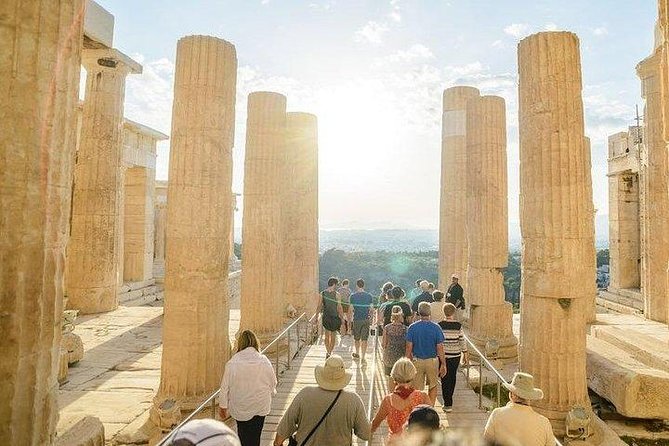
Propylaea are the gates of the Acropolis, and they matter because they tell you how the site was approached. When you stand at the gates, you get a sense of ceremony and control, not just sightseeing.
The Parthenon and the Temple of Athena
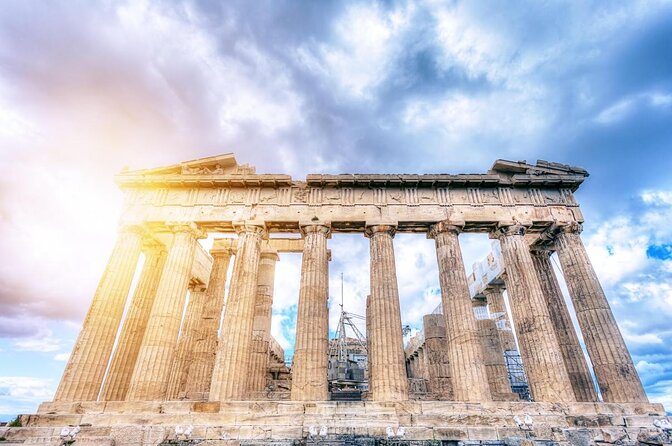
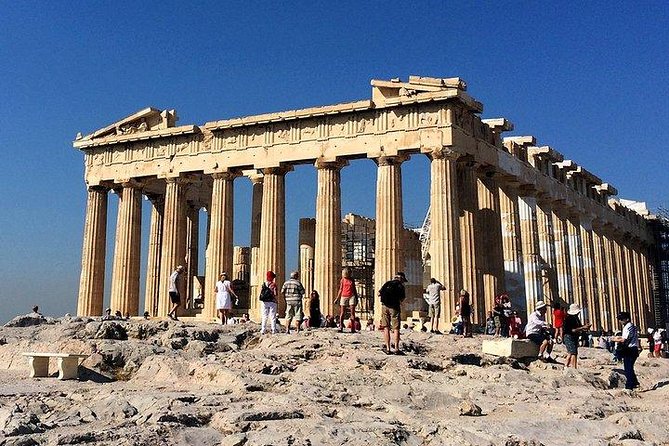
Standing near the Parthenon is one of those experiences that sounds dramatic until you actually feel it. Your guide helps you connect what you’re seeing to why it was built and what it symbolized. You may notice how the structures sit, how the light hits the stone, and how the site’s layout creates sightlines.
Even with a brisk pace, you get breathing room to look and take photos. People often say the Parthenon is beautiful even without history, but with history it turns into an actual story. That’s the difference your guide helps you make.
A practical note: the terrain can be uneven. In sunny weather, it can also be slick in spots, so watch your footing and move deliberately.
Theatre of Dionysus: where Athens watched stories
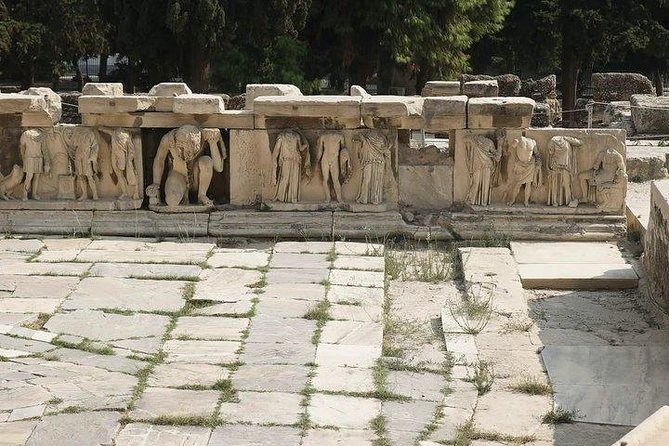
One of my favorite stops on this kind of route is the Theatre of Dionysus. It’s not just “another old building.” It’s one of the major theaters of the ancient world, and that changes how you see it.
When you pause there, you can imagine the scale and the social function. Athens wasn’t only a city of temples. It was also a city of performances and public culture, and the theater is proof. Your guide will help frame it, so you’re not just staring at stone steps.
This tour’s theater time is brief, but it’s timed as a key waypoint on the route. You move past the most famous pieces without losing the chance to understand what made the society tick.
Erectheion and the Caryatids: the sculpture moment
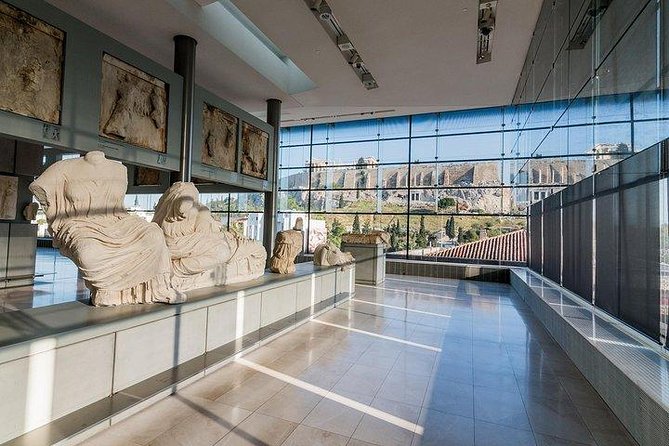
Then comes the Erectheion stop, with its famous Caryatid figures. This is the moment where the Acropolis shifts from architecture to people’s creativity. The Caryatids are a strong visual hook, but what makes them better on a guided tour is that you’ll learn what they represent and why this particular place mattered.
You get enough time to look closely and orient yourself in the space. That matters because Erectheion details can be easy to miss if you’re rushing. A short guided stop helps you avoid the common mistake of only taking one quick glance and moving on.
If you like art details, this is one of the better moments to slow down inside the tour pace. I’d focus on the figures themselves first, then circle your attention back to the surrounding architecture so it all connects.
Herod Atticus Odeon and the feeling of continuity
Along the route you also see Herod Atticus Odeon, an ancient Roman structure that still operates. That detail changes your perspective. You’re not only looking at ruins that time swallowed. You’re standing in a space that has been used and reused across eras.
Even if you only get a brief moment, the guide helps you understand what that continuity means. It’s a reminder that Athens doesn’t only preserve the past. It also layers it.
This stop is a good one for photos too, but do yourself a favor and look up from your phone for a second. The scale is part of why it’s so striking.
The Acropolis Museum: your inside track to understanding the carvings
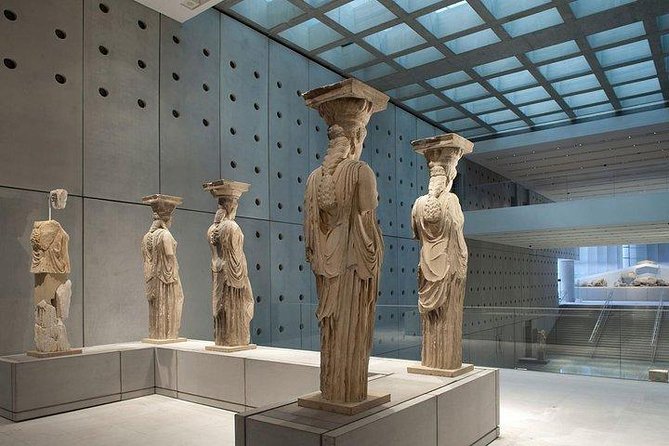
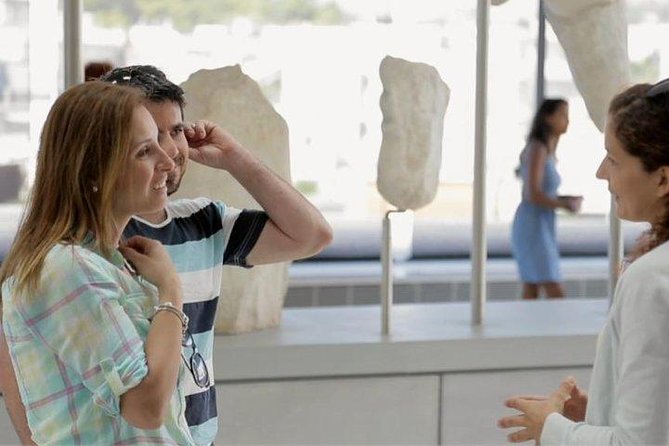
The museum visit is included, and it’s where the tour really pays you back. The New Acropolis Museum is designed around archaeology, and it focuses on findings from the Acropolis rock and the surrounding slopes, from early periods through later Greek history.
What you get here is a translation layer. Up on the Acropolis, you see buildings and fragments in their outdoor context. In the museum, you see the same kinds of objects as objects: sculptures, architectural pieces, and details that are hard to appreciate outside.
The museum also sits over portions of older ruins, including parts tied to Roman and early Byzantine Athens. That makes the museum feel like more than a box for artifacts. It’s part archaeology site, part interpretation space.
You spend about an hour with the guide, then you can continue on your own to maximize your time. That two-stage approach is smart. The guide helps you pick out what matters most, then you can linger on what grabs you.
What to look for in the museum
You’ll get the most out of your hour if you think in layers:
- First layer: materials and form. Look at how pieces fit together and how designs repeat across buildings.
- Second layer: function. Notice how objects relate to temples, public spaces, and decoration meant for real viewers.
- Third layer: story. Ask yourself what audience would have cared about these details and what message they carried.
If you’re coming from the Parthenon area, try to connect what you saw outside to what you’re seeing indoors. That’s when the tour stops feeling like two separate stops and becomes one coherent experience.
In the reviews, people consistently call the museum a must see, mainly because so many art decorations have been preserved and displayed here. That’s the practical reason to include it, not just the marketing.
Comfort and crowd realities: what helps on a hot Acropolis day
Let’s be honest. Athens sun can be intense. This tour includes bottled drinking water, and that is a real kindness. In addition, your guide should give weather and comfort tips that make a difference for the climb and the waiting.
From the on-site experiences people described, bring sunscreen, and plan for slippery patches in some sections. Wear shoes with grip. You’ll also want water discipline, even with bottled water provided.
A small group helps, but the Acropolis is still a hotspot. The best part of guided pacing is that you’re not trapped in the same crowd flow the entire time. Your guide looks for moments to stop, explain, and then move before the worst congestion hits.
Audio can also help in crowded zones. Some guides use microphone devices or ear pieces, which keeps the narration clear when the site gets loud.
Price and value: what you are paying for
The tour price is listed at $72.59 per person, and the big value question is what you’re getting for that money.
The included piece is a licensed tour guide, plus the museum visit. Entrance fees are not included by default. The Acropolis entry is €30 per person, and the Acropolis Museum entry is €20 per person, unless you choose an option that includes tickets.
Here’s how I’d judge value:
- You’re paying for guided interpretation, which is the hardest part to DIY, especially if you want to connect Parthenon details with the museum collection.
- You’re also paying for time efficiency. With a good guide, you don’t burn your whole day trying to decode what you’re looking at.
If you can, choose the ticket option when offered, because it reduces friction on the day. If not, the information you have here says you can buy tickets in cash from the guide at the meeting point.
Who this tour fits best (and who should think twice)
This tour is a strong fit if you want a guided, structured way to see Athens’ top ancient sites in a half-day format. It’s especially good for first-time visitors who don’t want to piece together logic across multiple stops.
It also works well for people who care about art details and want the museum connection. The one-two punch of monuments plus artifacts is exactly where this tour shines.
If you have mobility limits or you know you struggle with stairs and uneven stone, you might find the Acropolis portion challenging. You can still enjoy the museum later on, but this specific tour is built around getting you up and around the rock.
Should you book this Ancient Athens tour?
If your goal is to see the Acropolis and Parthenon area and understand them, I think this is a smart booking. The museum component is not optional in meaning, and the guided format helps you avoid the empty-beauty trap where famous ruins stay just famous.
Book it if you like:
- a guided pace that still leaves time to look and photograph
- clear explanations from licensed guides, including guides such as Selena, Giannas, Lydia, and Bernardos
- a route that connects outdoor monuments with indoor context
Consider skipping or adapting your plan if:
- you dread walking uphill and stairs
- you want long, unstructured downtime on-site
FAQ
What time does the tour start?
The start time is 9:00am. The tour ends back at the same meeting point.
Where does the tour meet?
The meeting point is Porinou 5, Athina 117 42, Greece.
How long is the Ancient Athens tour?
It runs about 4 hours (approx.), including the Acropolis portion and the museum visit.
Is the tour offered in English?
Yes, the tour is offered in English.
Are entrance tickets included?
Not by default. Entrance fee for the Acropolis is €30 per person, and the Acropolis Museum entry is €20 per person unless you booked an option that includes tickets.
What is included in the tour price?
A licensed tour guide is included. The Acropolis Museum entry is included unless you did not book the option with entrance tickets.
What sites are covered during the walk?
You’ll visit the Acropolis area, the Parthenon area, the Theatre of Dionysus, Herod Atticus Odeon, Propylaea, Erectheion, and then the Acropolis Museum.
Is bottled water provided?
Yes. Bottled drinking water is provided because the sun and streets can get hot.
How big is the group?
The tour has a maximum of 20 people.
What about cancellation?
Free cancellation is available if you cancel up to 24 hours in advance for a full refund. If you cancel less than 24 hours before the start time, the amount you paid is not refunded.
More Museums in Athens
- Athens: Mythology of Delphi, Museum and Arachova Guided Tour
★ 4.6 · 4,008 reviews - Athens All Included: Acropolis and Museum Guided Tour with Ticket
★ 4.5 · 2,673 reviews - Athens: Acropolis Museum Ticket with optional Audio Guide
★ 4.4 · 2,652 reviews - From Athens: Small-Group Delphi, Museum & Arachova Day Trip
★ 4.8 · 2,476 reviews
Fresh options around Athens
- 3-Day Trip to Delphi and Meteora from Athens★ 4.0 · 53 reviews
- 3-Day Tour: Mycenae, Epidaurus, Nafplio, Delphi, Meteora With 4* Hotel Included★ 5.0 · 6 reviews
- 2 or 3-Day Private Tour: Ancient Olympia, Corinth, Mycenae, Epidaurus, Nafplion★ 5.0 · 11 reviews
- 4-Day Classical Tour Greece: Epidaurus, Mycenae, Olympia, Delphi, Meteora★ 4.5 · 4 reviews
- Hydra Island & Mythical Full Peloponnese Private 9-Day Tour★ 5.0 · 3 reviews
- 27 Day Grand Circle Tour of Mainland & Corfu, Mykonos, Santorini★ 5.0 · 4 reviews
- 20-Minutes Natural Pedicure with Exotic Fish★ 5.0 · 17 reviews
- Awe-inspiring 2-days private tour to Delphi and Olympia★ 4.0 · 4 reviews
Acropolis Museum Tours, compared.

Acropolis, Parthenon & Acropolis Museum Guided Tour
Read our review →Acropolis, Parthenon & Acropolis Museum Guided Tour
Read our review →
Acropolis monuments & Parthenon Walking Tour with Optional Acropolis Museum
Read our review →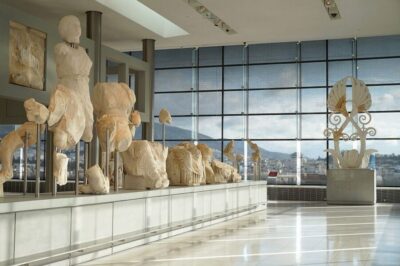
Acropolis Museum Ticket with optional Audio Guide
Read our review →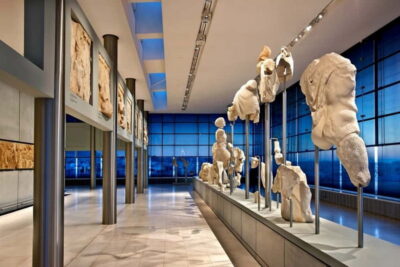
Parthenon & Acropolis Museum with Audio or Live Tour Option
Read our review →
Acropolis, Parthenon and Acropolis Museum Guided Tour
Read our review →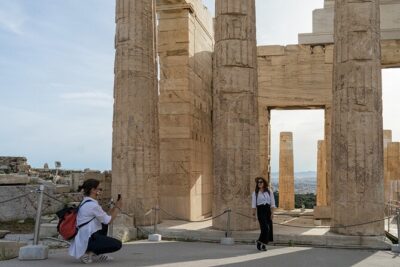

Browse the lists this tour appears in