
Reviewed · WALKING TOURS
Athens: History of Rebellion Walking Tour
Athens is usually pitched to you as a museum of ancient glory. This tour flips that idea by showing how rebellion has shaped the city, from Ottoman rule to today’s activism. You move through the same streets Athenians use now, so the past does not feel trapped in textbooks.
Two things I really like: first, the way the route connects past and present while still keeping it human and readable. Second, the guide style, often led by Maelle, with clear storytelling, humor, and discussion that helps you put modern Greece in order.
One thing to consider: this is a walking and standing experience (about 2.5 hours), and it is not suitable for mobility impairments. Also, if you want a quiet, purely sightseeing tour with zero political context, this may feel too direct for you.
Key highlights to look for
- Monastiraki to Syntagma: a fast shift from Ottoman-era tension to modern protest culture
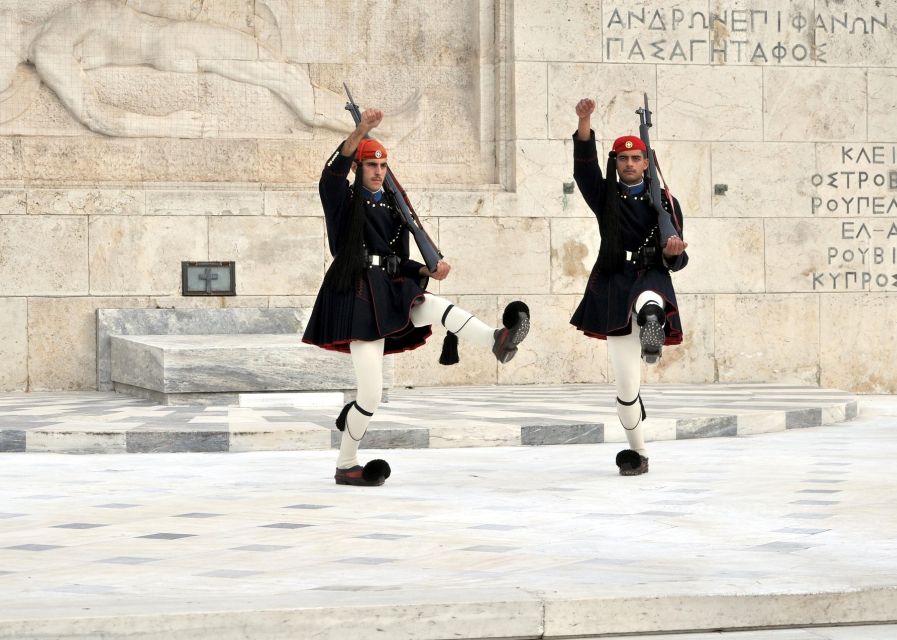
- Hellenic Parliament and the Tomb of the Unknown Soldier: state power and national sacrifice in the same walking radius
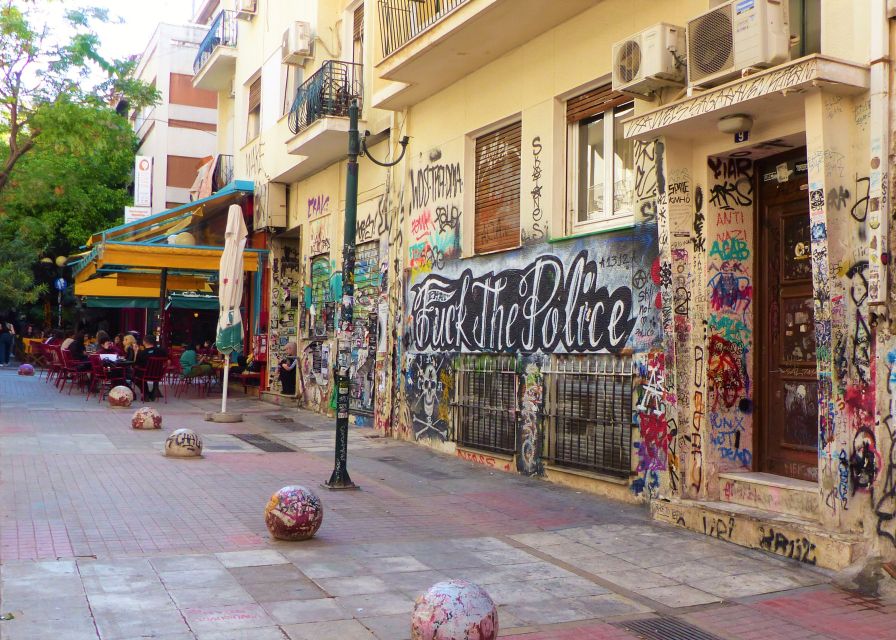
- Exarchia as a living resistance neighborhood where anarchists, refugees, the LGBT+ community, and artists show up in everyday life
- Street-level stories including talk about how street art can signal dissent, sometimes with references to artists like WD
- Small-group feel that makes it easier to ask questions and get honest answers
Where the tour starts, and why Monastiraki matters
You begin at Monastiraki Square, in front of Pantanassa Church, with your guide holding a sign that says Athens City of Rebellion. The address is Pl. Monastirakiou 2, and the whole point of the opening minutes is to get you thinking like a local, not like a tourist on autopilot.
Monastiraki is a good launch pad because it is the kind of place where history is layered. You get a short guided moment in the neighborhood, then you keep walking with the tour’s central theme in your head: resistance has a long memory here.
From the start, you are not just collecting facts. You are building a framework for how Athens developed its modern identity under pressure, and how that pressure still shows up in public spaces.
More walking tours in Athens:
- Athens: Acropolis and Parthenon Guided Walking Tour
★ 4.6 · 5,882 reviews - Greek Food Walking Tour in Athens
★ 5.0 · 4,740 reviews - Acropolis: Acropolis and Parthenon Guided Walking Tour
★ 4.7 · 3,442 reviews
Ottoman-era Athens to modern protest Athens, step by step
After the initial Monastiraki stop, the walk pushes you toward the core civic zone. Along the way, you pass the Metropolitan Church of Athens, which works as a visual marker for how the city’s religious and civic landscape sits on top of older eras.
Then you hit one of the tour’s short guided detours (labeled as a hidden gem and later repeated again elsewhere). These are typically your chance to slow down and connect a real place to the tour’s storyline, without the long lecture feel. You spend about 10 minutes at this kind of stop, which is long enough to ask a question and short enough that the walk stays lively.
Syntagma Square: the heartbeat of modern demonstrations
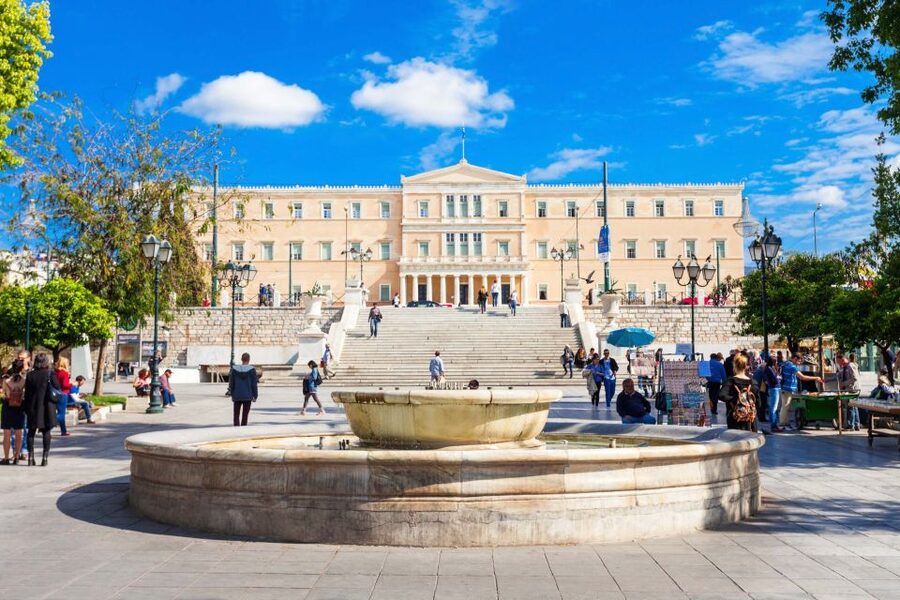
The tour’s pivot point is Syntagma Square. The theme here is explicit: this is where modern protest energy concentrates, the same public space people look toward when they want change.
You get around 10 minutes at Syntagma, guided, with the tour linking heroic individuals and large popular movements to the Greek Revolution and, later, to resistance under fascism, violence, and oppression. The result is not just a history timeline. It is a sense of how Athens treats collective action as part of civic identity.
If you have only seen Syntagma from the outside, this is the moment to pay attention to how the square functions as a stage. It helps you understand why the city’s political life does not stay in government buildings.
Parliament and the Tomb of the Unknown Soldier: state, symbol, sacrifice
From Syntagma you move to the Hellenic Parliament, still within a walkable flow. This stop runs about 10 minutes, and it fits the tour’s big idea that resistance and state power are always in conversation here.
A few minutes later you also visit the Tomb of the Unknown Soldier. This is about national symbolism, and how public memory gets built into a daily city routine. Even if you are not a history buff, you will likely feel the contrast between a place that honors sacrifice and the tour’s theme about ongoing struggle.
One practical note: these stops can mean standing around more than you expect, so comfortable shoes matter more than usual.
A few more Athens days worth comparing
- Historical Delphi One Day Tour with Arachova Stop & Expert Guide
★ 4.5 · 1,247 reviews - Historic Athens: Small Group Electric Bike Tour
★ 4.9 · 740 reviews - The History of Athens: Greek Mythology Private Tour
★ 5.0 · 138 reviews - Athens Highlights by E-Bike: Small-Group Historic Tour
★ 5.0 · 131 reviews
Kolonaki and the Academy of Athens: institutions on the same map
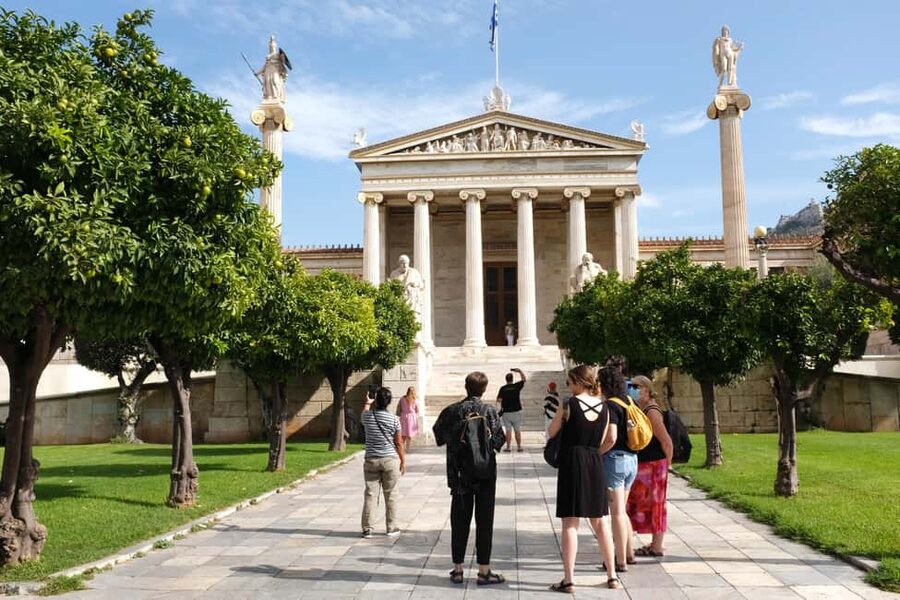
The route then passes through Kolonaki for about 5 minutes and continues to the Academy of Athens for a guided 10-minute stop.
Why include these? The tour is trying to show how resistance is not confined to one stereotype or neighborhood. Institutions, “official” Athens, and the city’s public respectability exist alongside protest culture and activist districts. By the time you reach Exarchia, the city will feel more connected, not more fragmented.
Even where you are only passing (Kolonaki), the walk helps you read the city’s geography differently. You start seeing how social and political forces sort themselves into districts, then spill into each other.
Exarchia: a real neighborhood of activism, art, and conflict
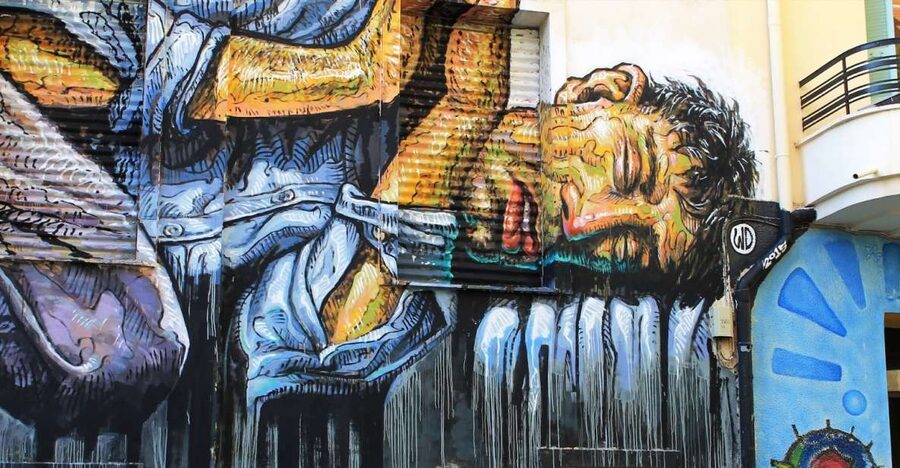
Now comes the part many people remember most: Exarchia. You get about 10 minutes for a guided visit here, and the tour makes the neighborhood’s meaning crystal clear.
Exarchia is presented as a hotbed of resistance and activism, with a community that welcomes anarchists, refugees, the LGBT+ community, and artists. That mix matters because it explains why the area feels creative and political at the same time, not like a one-note protest zone.
This part of the tour also connects to present-day tensions. In the most strongly positive feedback, people highlight how the guide talks about police repression and gentrification, and how those pressures affect attempts to keep collectivist culture alive.
Secret stops, hidden gems, and Exarchion Square

Between Exarchia and the finish, you get a secret stop and another hidden gem (about 10 minutes and 5 minutes). Since the route intentionally keeps some details non-specific in the basic description, the value for you is in how the guide uses the walk to explain the theme: each pause is meant to give a different lens on resistance, not just another photo spot.
Finally you reach Exarchion Square for about 10 minutes, and the tour ends at Plateia Exarcheion. Here, the goal is to let you look back at the whole route and see the city as a single story.
Small caution: the tour notes can conflict on whether the ending goes back to the starting square. The route description points to Plateia Exarcheion as the finish. When you book, check the exact end point shown for your start time, so you are not surprised by where your feet stop.
The guide and the way the stories are told
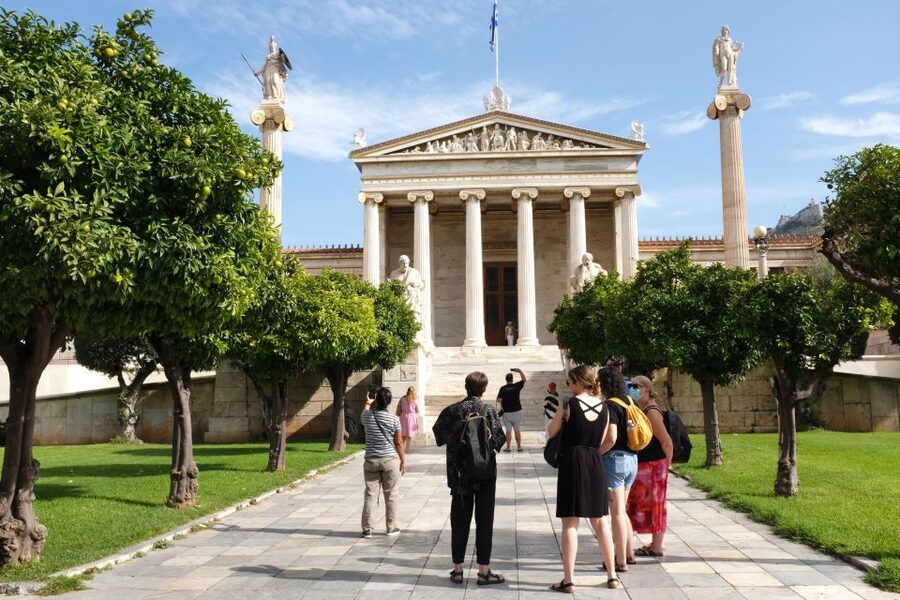
This tour lives and dies by the guide. The standout pattern in the strongest feedback is how the guide (Maelle is repeatedly mentioned) keeps the material clear, organizes modern Greek history into a timeline you can actually hold, and mixes seriousness with humor.
You also get a more conversational format than typical city tours. Several people specifically praised how discussion stays active, with the guide asking questions that help you connect street-level details to bigger social movements. That is how Athens stops feeling like an outline and starts feeling like a place with causes and consequences.
The tour also seems to respect the neighborhood you are visiting. The tone is not about turning Exarchia into an exhibit. Instead, it frames lived experiences with care, so the learning feels grounded rather than extractive.
What you learn, beyond dates and names
This is not a tour that ends at the Greek Revolution 200 years ago and calls it done. The structure is designed to show you why modern Greece looks the way it does, including how unresolved tensions show up in daily life.
The big lesson is that resistance is not a single event. It shows up in different forms across time: from people facing oppression in earlier eras, to today’s social justice struggles, to the neighborhood networks that keep culture alive under pressure.
You also get a skill that pays off after the tour: you learn how to read Athens as a city of symbols. Public squares, institutions, and street art all become clues to what people feel and what they are fighting for.
If you like history that connects to present-day debates, this tour should give you language to talk about what you see.
Price and what makes it feel worth $44.04
At $44.04 per person for about 2.5 hours, you should think of this as a guided lesson built into a city walk. The cost is not just for moving you between landmarks. You are paying for interpretation, context, and Q and A, plus a route that touches both political flashpoints and a neighborhood many visitors skip.
Good value usually means you do not feel rushed, and the guide can keep the narrative coherent across stops. The feedback emphasizes small groups and space for deeper insights, which is a key reason this price can feel fair.
Also, you get practical support that helps after the tour, like recommendations for what to do next and where to eat. That matters because Athens has enough choices that a clear shortlist saves you time and energy.
Practical stuff: what to bring and how to pace your day
Plan on comfortable shoes and be ready for standing as part of the experience. Bring a sun hat, sunscreen, and water, especially if your start time is during warm hours.
This is also a good first-weekday or first-trip-to-the-city type of tour. It helps you connect the dots fast, so your later sightseeing feels more personal and less like a list.
Finally, consider what kind of traveler you are. This tour is a fit if you want modern Greece, politics, and social justice in the same sentence as city walking. If you want ancient monuments only, you might find the tone too political.
Who should book this tour
Book it if you:
- Like history that connects to current life
- Want context for Exarchia and why it is talked about in terms of resistance and activism
- Enjoy walking routes that include discussion, not just checkpoints
- Are happy with a direct, sometimes emotional theme
Skip it if you:
- Need a low-argument, low-emotion tour style
- Have mobility limitations that make standing and walking hard
- Want only “classic Athens” without modern political framing
Should you book the Athens History of Rebellion Walking Tour?
I think you should book this tour if your goal in Athens is to understand the city as a living place, not just a set of ancient ruins. The walk is short enough to fit a busy schedule, but the storytelling is aimed at deeper context, especially around Syntagma and Exarchia.
If you are open-minded about politics and social struggle, and you are comfortable spending 2.5 hours on foot, this is one of the best ways to get Athens to click. If that sounds like your kind of trip, go for it.
FAQ
Where is the meeting point for the tour?
The meeting point is in Monastiraki Square in front of Pantanassa Church. Your guide will have a sign that says Athens City of Rebellion.
How long is the Athens History of Rebellion Walking Tour?
The duration is listed as 2.5 hours.
What language is the tour offered in?
The live tour guide is available in English and French.
What should I wear or bring?
Wear comfortable shoes, and bring a sun hat, sunscreen, and water.
Is this tour suitable for people with mobility impairments?
No, it is not suitable for people with mobility impairments.
Where does the tour finish?
The itinerary says it finishes at Plateia Exarcheion. The meeting-point notes say it ends back at the meeting point, so confirm the exact end location for your specific time slot.
What is the price per person?
The price is $44.04 per person.
Can I cancel and get a refund?
Free cancellation is available up to 24 hours in advance for a full refund.
Fresh options around Athens
- 3-Day Trip to Delphi and Meteora from Athens★ 4.0 · 53 reviews
- 3-Day Tour: Mycenae, Epidaurus, Nafplio, Delphi, Meteora With 4* Hotel Included★ 5.0 · 6 reviews
- 2 or 3-Day Private Tour: Ancient Olympia, Corinth, Mycenae, Epidaurus, Nafplion★ 5.0 · 11 reviews
- 4-Day Classical Tour Greece: Epidaurus, Mycenae, Olympia, Delphi, Meteora★ 4.5 · 4 reviews
- Hydra Island & Mythical Full Peloponnese Private 9-Day Tour★ 5.0 · 3 reviews
- 27 Day Grand Circle Tour of Mainland & Corfu, Mykonos, Santorini★ 5.0 · 4 reviews
- 20-Minutes Natural Pedicure with Exotic Fish★ 5.0 · 17 reviews
- 2 Day Delphi, Meteora Iconic Sites Private Tour With 4* Hotel Included★ 5.0 · 3 reviews
Walking Tours, compared.


Acropolis: Acropolis and Parthenon Guided Walking Tour
Read our review →
Acropolis monuments & Parthenon Walking Tour with Optional Acropolis Museum
Read our review →

Athens Authentic Greek Food Walking Tour (Small Group)
Read our review →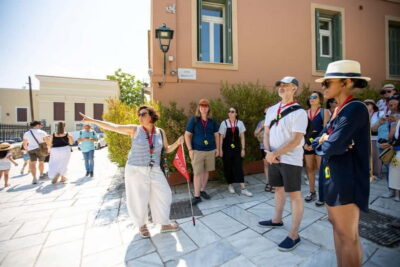
Early Morning Acropolis & Old Athens Guided Walking Tour
Read our review →
Browse the lists this tour appears in