
Reviewed · ATHENS
Athens Riverside: A Journey in Mythical Athens
Athens Riverside is interesting because you stop treating Athens as just a set of ruins on a map. You walk the same kind of logic ancient Athenians would recognize, by following ancient riverbeds that still shape the city above them. It is a myth-and-archaeology combo with a very human angle, waterlines, daily life, and legends braided together.
What I like most is how the story starts in Monastiraki Square, where the Heridanos (Eridanos) river was uncovered during metro construction in the 1990s. And I love the payoff, you get to mix big hitters like the Ancient Agora and the Acropolis with panoramic views from the hills around Pnyx and Philopappapos.
One thing to consider: this is a walking tour with outdoor hill paths, so plan for real sun and real heat if you go in summer. Also, food and drinks are not included, so you should bring your own water and a snack if you want one.
Key things that make this tour worth your time
- Follow rivers under the city on the Heridanos route and the mostly-subterranean Ilissos
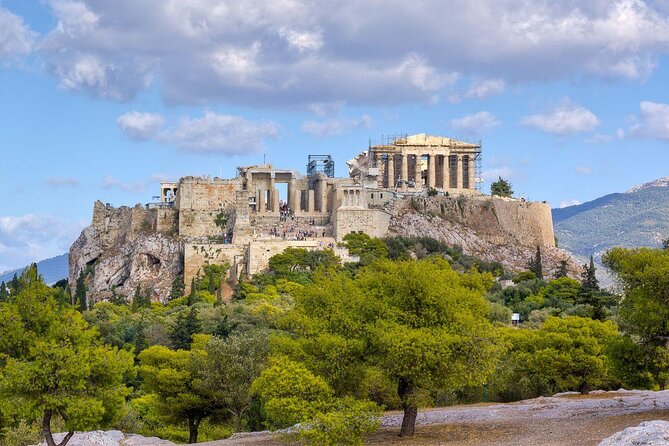
- See major archaeology like the Ancient Agora and Acropolis in one connected walk
- Spot layers of Athens as you pass sanctuaries, remnants of Christian churches, mystical caves, and Roman baths
- Get hilltop viewpoints from Pnyx and Philopappapos (timing can mean sunset)
- Hear myth tied to real places, including stops linked to Ares, nymphs, and the hill of Muses
- Expect a strong guide experience, with past leaders named Helena, Dionysus, Eleni, and Arthur
Getting started at Monastiraki, where old water meets modern streets
You meet in central Athens, at Ermou 111 (with the practical detail that your tour start area is Monastiraki Square). It is a good choice because this neighborhood is already a hub of movement. So you are not starting from a far-off bus stop and then wondering how you’ll get back.
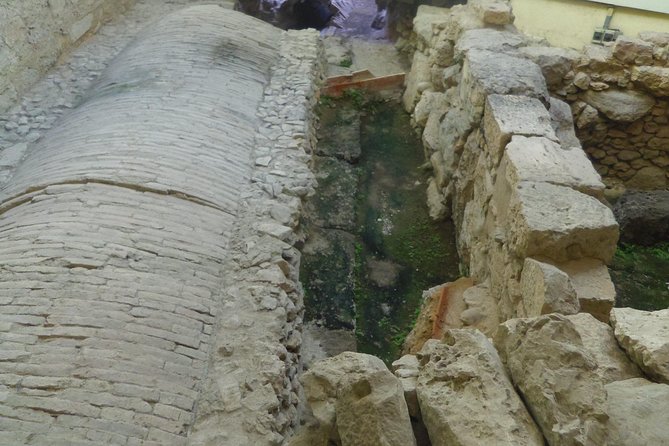
The hook right away is the Heridanos (Eridanos). A portion of the ancient river was uncovered during metro construction in the 1990s, and that visible trace becomes your first “anchor point” for the whole tour. You do not just hear that an ancient river existed. You get a sense of how it would have mattered, where it would have brought people, and why later generations built over it.
If you like Athens for the everyday texture, this start clicks. Monastiraki is full of shops, streets, and people. Then your guide layers in the older map: the river’s source in Mount Lycabettos, and the way it once flowed toward the Kerameikos archaeological site. That contrast, modern feet on top of ancient water logic, is the theme you keep feeling as you walk.
More of Athens worth an open tab:
- Athens: Acropolis & up to 5 Archaeological Sites Combo Pass
★ 4.4 · 12,619 reviews - Athens: Acropolis, Parthenon & Acropolis Museum Guided Tour
★ 4.8 · 9,316 reviews - Athens: Cape Sounion & Poseidon Temple Sunset Half-Day Trip
★ 4.8 · 8,241 reviews
Two ancient rivers, the Heridanos route and the Ilissos path underfoot
This tour’s brains come from its river focus. The Heridanos runs through Athens in a way you can trace as you move, and it gives you a spine for the whole afternoon. You follow the route that once carried water and names, shaped neighborhoods, and even fed the storytelling of the city.
Then you add the second big character: the Ilissos. This river runs mostly underground through modern Athens, but its banks show up in ancient mythology and writing. One detail I really like is the reference to Socrates using it as a teaching locale. It is a great reminder that in ancient cities, learning was not only inside formal buildings. Places with water and shade could become classrooms.
The practical magic for you is how this changes your walking experience. You are not wandering randomly between famous sites. You are moving along a logic line, a set of paths that still influence what you can see and where you end up next. Even on busy city streets, you start noticing “why here,” not just “what there.”
Guides named Helena, Dionysus, Eleni, and Arthur have all shown up in past departures, and the common thread in their approach is clearly mixing city evolution with story. That matters, because rivers can sound abstract until someone connects them to daily life.
From sanctuaries to Roman baths, how Athens layers time as you walk
Once you leave the river thread, the tour turns into a lesson on overlap. Athens is not one period frozen in place. It is classical foundations, Roman and later additions, and then Christian and modern layers stacked on top.
As you go, you pass:
- ancient sanctuaries built in honor of Greek gods
- remnants of Christian churches
- mystical caves
- ruins of Roman baths
Those are big categories, and you might wonder how much you truly see in a few hours. The answer is in the way the walk is structured. Your guide uses each passing place like a “caption.” You get enough context to understand what you are looking at, even if you cannot stop at every single stone.
This is also where the tour feels different from the usual, hit-the-top-sights circuit. You are still near famous archaeology, but you are also moving through neighborhoods where the ancient and modern weave together. In real terms, that means you get a sense of Athens as a living city, not only an open-air museum.
One older-sight bonus: some people who have visited Athens multiple times still find this tour interesting because it reaches archaeological parks and corners that do not always appear in the most standard routes. If you are thinking, I’ve seen the Acropolis photos, this is a way to see the city’s quieter bones.
Ancient Agora and the Acropolis area, with views from Pnyx and Philopappapos
Yes, you do get to hit major sites. The walk includes visits to the Ancient Agora and the Acropolis area, which gives the tour credibility if you still want the classic Athens moments.
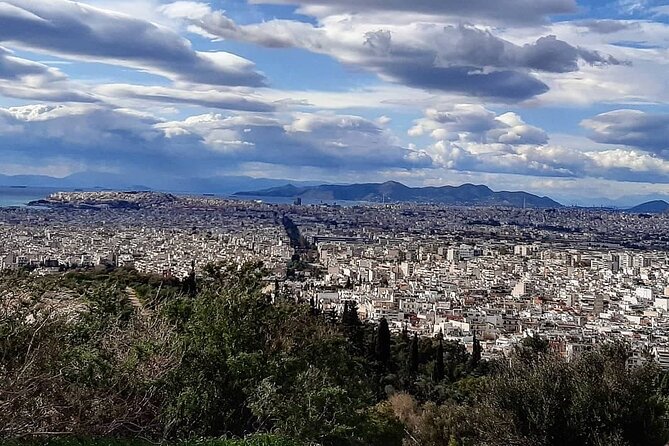
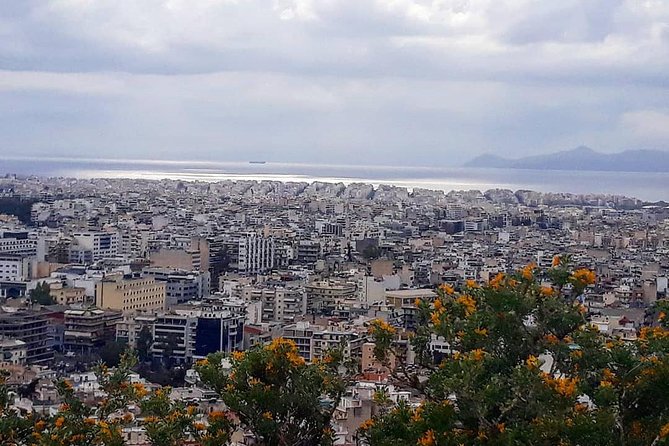
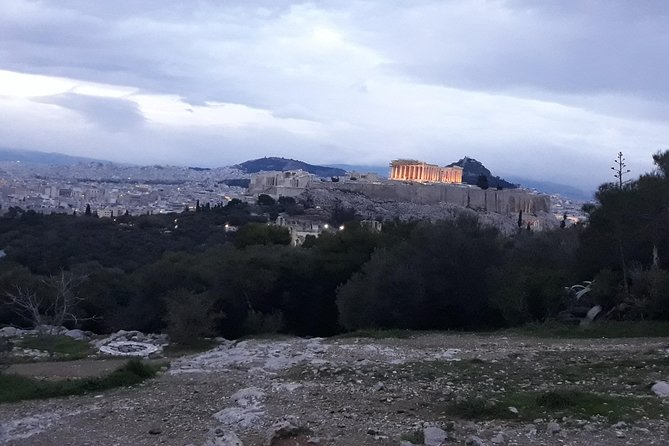
What I appreciate is how the route connects the Agora and Acropolis to the hills around them. You get panoramic city views from Pnyx and Philopappapos Hills. Those are not just pretty lookouts. They help you “read” the city’s layout. When you can see how the ground rises and where routes likely ran, myth and history stop feeling like disconnected chapters.
Depending on your departure time, you might also catch a sunset. If you are scheduling your day, sunset is the kind of payoff that turns a good walk into a memorable one. If you go earlier in the day, you can enjoy the views without the late-day crowds pressure.
One small realism check: it is outdoors, and the hills around Pnyx and Philopappapos involve real walking. If you go in summer, heat can be intense. In spring, it tends to feel nicer, with a more walkable temperature and even wildflowers in some seasons, which is one of the reasons this tour can feel extra special at that time of year.
Same corner of Greece, a different kind of day:
- Athens: Acropolis and Parthenon Guided Walking Tour
★ 4.6 · 5,882 reviews - All Day Cruise -3 Islands to Agistri,Moni, Aegina with lunch and drinks included
★ 5.0 · 4,958 reviews - Athens, Piraeus, and Coastline: Blue Hop-On Hop-Off Bus
★ 3.9 · 4,849 reviews - Greek Food Walking Tour in Athens
★ 5.0 · 4,740 reviews
The myth route on the hills, Ares, nymphs, the Assembly, and the hill of Muses
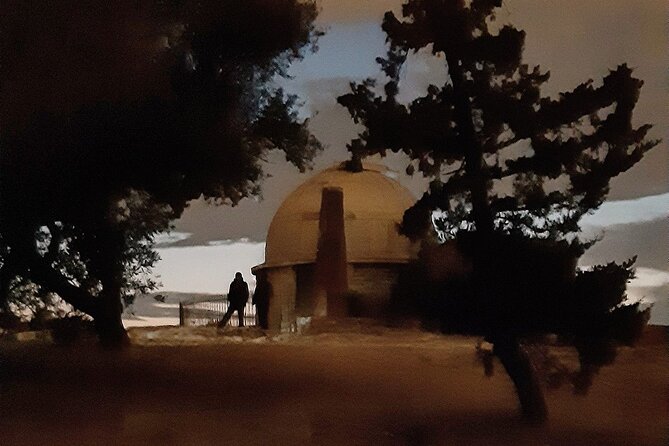
This tour earns its name because the guide does not treat myth like a separate category. They use it as a map tool.
You’ll move through hill stops tied to specific stories. The tour itinerary includes:
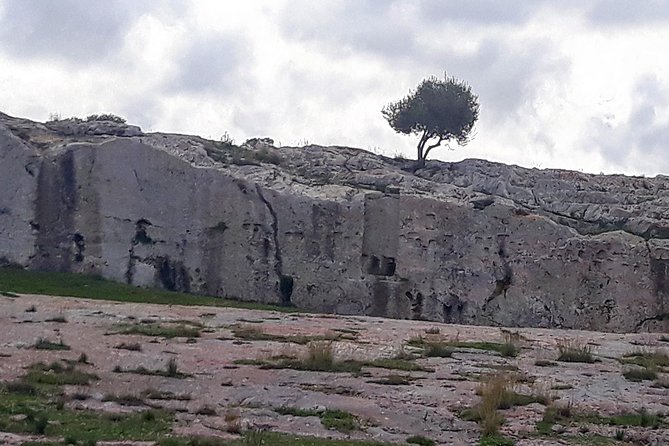
- a stop for the sacred hill and its slopes, with big viewpoint energy
- the small naked rock of Ares
- a walk through the mythical hill of Nymphs toward the Athenian Assembly
- a walk on the hill of Muses
- a pass by the Roman Conservatory of Athens
Here is what makes these moments work for you. When you stand where a myth is associated with real geography, the story gains weight. You can feel why ancient authors would anchor ideas to specific rocks, slopes, and meeting places.
The stop connected to Ares is especially fun if you like a bit of drama with your archaeology, because a “small naked rock” sounds almost too minor until you learn why it mattered. The Assembly link adds a civic angle too, it is not only gods and monsters. It is also politics and public life.
And if you travel with teens or students, this myth framing is often a plus. In at least one case where younger visitors were part of the group, the guide brought koulouri to help keep energy up. That is a small touch, but it tells you the guides think about how people experience the walk, not only what they can recite.
Passing key architectural landmarks, including the Roman Conservatory
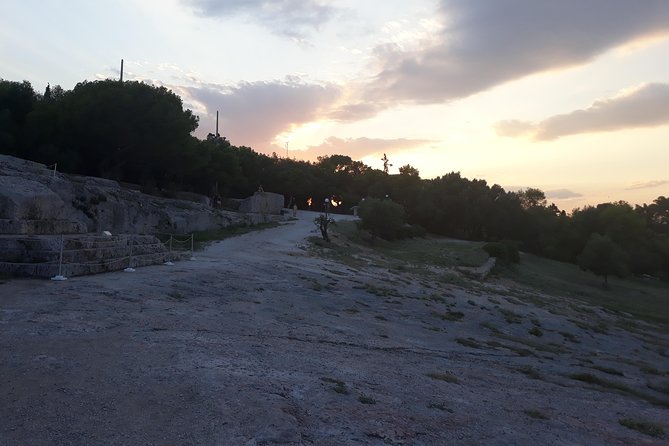
Near the end of the hill stretch, you pass the Roman Conservatory of Athens. Even if you do not go deep into a building interior, it is a satisfying marker in the story. The conservatory is a reminder that Athens kept evolving after the classical period, and that later empires still cared about performance, culture, and public gathering.
For me, the value here is pacing. The tour is not just “walk, look, walk, look.” It moves from river logic to layered city history, then up into myth and hill viewpoints. Architectural moments like the conservatory make the transition feel natural, like a thread being pulled through the fabric rather than a jump cut.
Your tour ends in front of the Acropolis Museum area (the end point is Str. Makryianni 1, and it is in front of the Acropolis Museum). That is a practical finish if you want to keep exploring right away, and it also helps you avoid the “where do we go now” stress.
Price and value for an Athens-wide story, not just checklists
The price is $83.77 per person, and the tour runs about 3 hours. On paper, that can sound like a lot for a walking experience. In value terms, though, you are paying for a guide plus a tightly connected route that covers multiple major areas and a distinctive theme.
You get:
- A local guide
- a guided walking route built around Heridanos and Ilissos
- stops that include Ancient Agora and the Acropolis area
- viewpoint time on Pnyx and Philopappapos
- myth-linked hill segments tied to places like Ares, nymphs, the Assembly, and the Muses
Also, it is a private tour/activity where only your group participates. That can increase value, especially if you are a small party that wants questions answered and prefers not to compete with other voices.
What is not included matters for your planning. Food and drinks are not part of the price. So if you expect to purchase something along the route, that is on you. I like planning one simple thing: buy water before you start and keep it accessible. It is the easiest way to avoid turning a scenic hill walk into a stressed one.
If you want to book value-smart, note that this tends to sell out or fill ahead, with average booking around 6 days in advance. If your dates are firm, I’d secure it earlier rather than later.
What to wear, how long it really takes, and how to time your day
This is a casual dress tour, and it operates in all weather conditions. That means you should come ready for rain or heat. Athens can change quickly, so think layers you can manage without slowing the group down too much.
It is also near public transportation, which helps you fit the tour into an overall Athens plan. Your start is around Ermou 111 in central Athens, and your finish is in front of the Acropolis Museum. In plain terms, you can combine this with museum time, a late snack, or an easy ride back after.
Most travelers can participate, so this is not framed as an extreme expedition. Still, it is a walking tour that includes hill paths. Your best move is comfortable walking shoes and a hat if the sun is out. In summer, heat is the main enemy, and you spend time outside.
Departure times are offered daily, and you can choose what works best for your schedule. If you want the sunset view potential, pick a later slot. If you want a calmer temperature, choose earlier in the day.
Who this tour suits best
This tour fits you best if:
- you already know the big Athens hits, but want a fresher way to understand the city
- you like connecting stories to geography, especially myth tied to real locations
- you want a mix of major sites like the Agora and Acropolis plus smaller, less predictable archaeological stops
- you appreciate city layers, Greek, Roman, and later changes all in one walking flow
It is also a smart choice for families and mixed-age groups if your goal is to keep everyone interested. The myth storytelling plus viewpoint payoff makes it easier to sustain attention than a pure museum day.
If you hate walking, or you want zero hills and zero stairs, then it might feel like too much. But if you can handle 3 hours outdoors, this is one of the more thoughtful Athens walks.
Should you book Athens Riverside?
Yes, I’d book it if you want Athens to feel less like a checklist and more like a living map. The biggest selling point is the river concept, Heridanos you can trace and Ilissos you understand as a mostly hidden thread. That theme makes the whole experience cohere, even when the stop variety gets wide.
Skip it if your only goal is quick access to the most famous monument photos with minimal walking. This tour is built for people who enjoy interpretation, hills, and story driven stops like Ares, nymphs, and the Assembly area.
If you do book, pick your departure time based on what you care about most, views or comfort. Bring water since food and drinks are not included. And arrive a few minutes early at the start so you can settle in and get your bearings fast.
FAQ
Where is the meeting point for the Athens Riverside tour?
You meet at Ermou 111, Athina 105 55, Greece, with the tour’s central meeting area at Monastiraki Square.
How long is the tour?
The experience is about 3 hours.
What does the tour cost?
It costs $83.77 per person.
Is the tour guided, and what is included?
A local guide is included. Food and drinks are not included.
What language is the tour offered in?
The tour is offered in English.
What is the end point of the tour?
The tour ends at Str. Makryianni 1, Athina 117 42, Greece, in front of the Acropolis Museum.
Does the tour operate in bad weather, and what should I wear?
It operates in all weather conditions, so dress appropriately. The dress code is casual.
Can I cancel and get a full refund?
Yes, you can cancel for free. You can cancel up to 24 hours in advance for a full refund.
Fresh options around Athens
- Classical Greece 3-Day Tour: Epidaurus, Mycenae, Olympia and Delphi from Athens★ 4.5 · 15 reviews
- 8-Day Classic Greece Tour: Athens, Epidaurus, Mycenae, Olympia, Delphi & Meteora★ 4.0 · 4 reviews
- 3-Hour Small Group Coasteering in Sounio★ 5.0 · 12 reviews
- Get Lost in Athens with an Insider★ 4.5 · 28 reviews
- Christmas food and walking tour in Athens★ 5.0 · 6 reviews
- Athens City Game: The Journey through Time★ 5.0 · 9 reviews
- Cruise into Athens?! Best of Athens Tour from Piraeus Cruise Port★ 4.5 · 5 reviews
- Electric Trikke Bike Athens Complete Tour★ 5.0 · 35 reviews