

Reviewed · WALKING TOURS
Athens Social and Political Walk
A walk like this is interesting because Athens does not hide its politics. You move past the buildings where power happens, then connect the dots between today’s debates and earlier decisions that still echo.
I especially like two things: the unbiased, documentary-style way the guide frames the story, and the chance to learn from Isaac, a political scientist who explains complicated topics with humor and clear examples. It feels more like an interactive lecture you can walk through than a canned sightseeing script.
One possible drawback: this is politics-first. If you came for ancient ruins only, you might find the modern social and political focus heavier than expected, even though it is kept approachable.
Key things that make this walk worth your time

- A politics guide who uses street-level storytelling so the big ideas land fast
- Coverage that spans the modern Greek state to current issues, including Europe, the economy, immigration, and gentrification
- Stops chosen for how power and society actually meet, from government buildings to memorial space
- A slideshow with photos and extra background, handy for remembering names and timelines
- Q&A-friendly explanations in English or Spanish, with the pace kept conversational
Athens politics, told where it happened
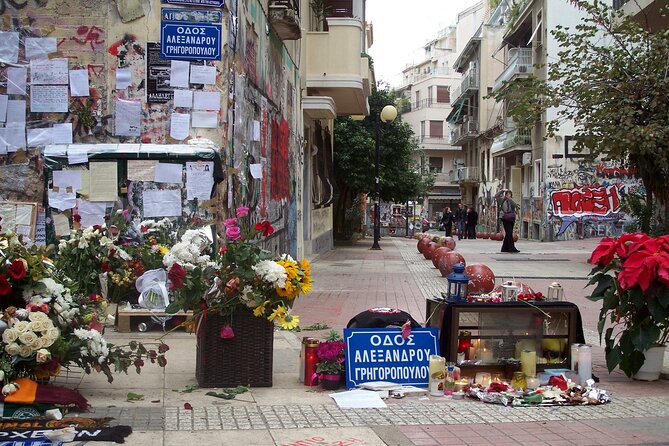
If you want Greece to feel more than a postcard, this is a smart way to do it. Athens has a habit of putting ideas in stone, metal, and street layouts. Once you start seeing government architecture and public space as part of the political story, the city stops being just scenic and starts acting like a textbook.
The tour’s hook is simple and blunt. It asks how the cradle of democracy became a symbol people overseas used for the financial crisis years after 2008. That framing can sound like a global slogan, but the real value is that you get context for why people argue that way, and how Greece itself experienced the shifts. You are not asked to pick a team. You are encouraged to form your own opinion with the facts laid out.
This is also built around interactivity. The guide does not just talk at you from a corner. Expect street exploration that keeps you moving, then short explanations that make the next stop click. When Isaac, the political scientist, connects religion, language, Europe, and the economy to what you are seeing outside, the city feels less random.
I also appreciate how the story is kept accessible. Several guides for this kind of thing use big academic language. Here, the goal seems to be clarity, plus that slightly dry humor that keeps the group relaxed while topics get serious.
More walking tours in Athens:
- Athens: Acropolis and Parthenon Guided Walking Tour
★ 4.6 · 5,882 reviews - Greek Food Walking Tour in Athens
★ 5.0 · 4,740 reviews - Acropolis: Acropolis and Parthenon Guided Walking Tour
★ 4.7 · 3,442 reviews
Where the walk starts, and how it sets your mental map
You begin at Athens Social and Political Walk, Planetwonk. Starting there matters because it signals the tone: this is not a route designed only for landmarks. It is a route designed to help you interpret the city as a living political space.
From the first minutes, the guide builds a timeline mindset. You start with the modern state and then connect forward. You will also hear how earlier periods shaped what later generations argued about, including major political tensions and identity questions that keep resurfacing in Greek public life.
One practical tip that will help you enjoy the tour: bring curiosity, not a checklist. Since the focus is on social and political change, you get more out of it if you listen for cause and effect. Why did a policy or a crisis matter socially? How did it change public trust, protest patterns, or the relationship between everyday people and institutions?
Maximos Mansion to the Presidential Palace: seeing the machinery of power
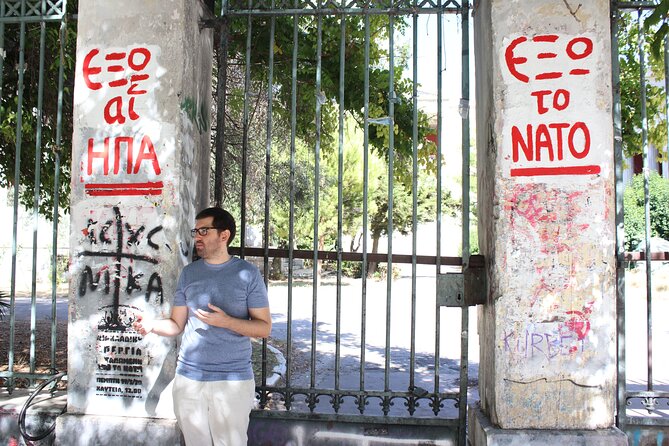
The walk quickly moves into government territory, starting with Maximos Mansion. This is the sort of place where you can almost feel the state’s weight. Even if you have never studied Greek politics, standing in the orbit of key institutions helps you understand why politics in Athens is not abstract.
Then you head toward the Presidential Palace. This stretch does more than show you where the top jobs sit. The guide uses the architecture and location to talk about legitimacy, state-building, and the gap between official narratives and public perceptions. It is the kind of conversation that helps you notice what people mean when they praise democracy, criticize it, or claim the system is broken.
What I like here is that the discussion does not stay stuck in one era. The route supports an argument that modern Greece keeps rewriting its relationship with authority. You hear how major historical milestones, including independence-era conflicts, World War II consequences, and post-war political structures, fed into later debates.
If you prefer politics in small doses, pace yourself during this section. It is not long, but the ideas are dense. A good rule: take one question into the next stop. If something feels confusing, ask. The guide is set up for that, and Isaac’s style is built for it.
National Garden and the idea of shared space in a contested city
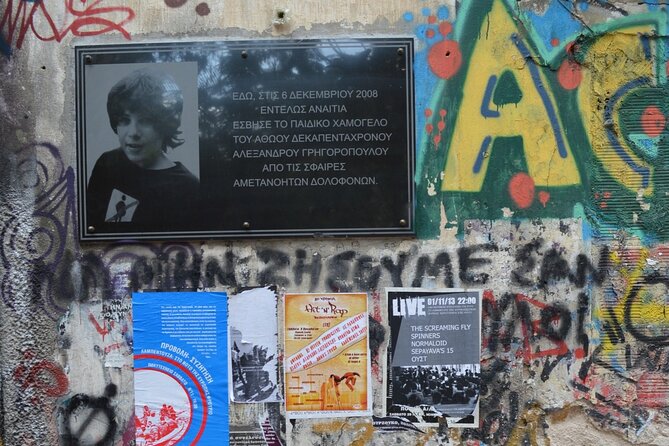
Next comes the National Garden. This stop is a useful change of pace. When people think of politics in Athens, they picture parties, parliaments, or protests. But a garden is still political. Public space shapes how people gather, rest, and talk.
In this part of the walk, the guide helps you connect institutions with everyday life. You start thinking about how social habits and political decisions affect each other. The garden becomes a reminder that power does not only show up in ceremonies. It also shows up in what the city gives people for daily living.
This is also where you can reset your attention. If you have been following the argument linearly, the garden acts like a visual pause button. It keeps the walk from becoming only heavy history and gives you a place to absorb the city as lived-in.
Same corner of Greece, a different kind of day:
- Athens: Acropolis & up to 5 Archaeological Sites Combo Pass
★ 4.4 · 12,619 reviews - Athens: Acropolis, Parthenon & Acropolis Museum Guided Tour
★ 4.8 · 9,316 reviews - Athens: Cape Sounion & Poseidon Temple Sunset Half-Day Trip
★ 4.8 · 8,241 reviews - All Day Cruise -3 Islands to Agistri,Moni, Aegina with lunch and drinks included
★ 5.0 · 4,958 reviews
Hellenic Parliament and the National Historical Museum: where debate becomes official
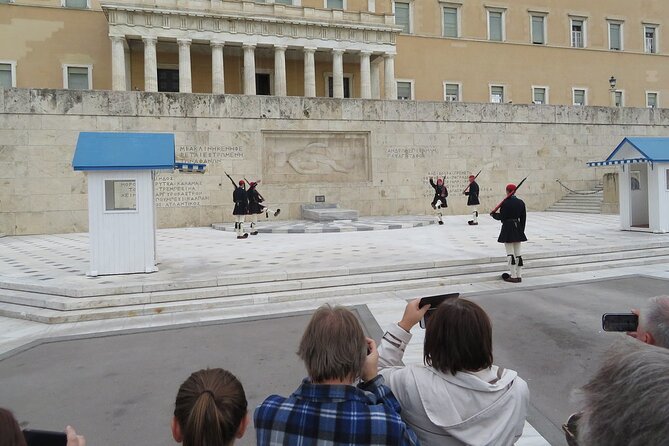
Then you reach the Hellenic Parliament. This is one of those places where you cannot help but feel the stakes. Even from outside, you see the difference between government as an idea and government as an institution with rules, procedures, and public visibility.
This stop ties strongly into the tour’s main theme: how Greece’s political identity changed from the early modern state to the present. The guide’s style is documentary-like, meaning you get explanations that sound structured and sourced, not just opinions. That structure helps you follow how political tensions repeat in new forms.
After that, you move to the National Historical Museum. This stop is valuable because it bridges the street story to how people remember. Museums, even when you do not go inside, signal which narratives a country chooses to preserve. The guide uses that idea to talk about memory, identity, and how history gets used in current debates.
If you are worried this will become purely theoretical, the guide keeps pulling back to real social consequences. You hear about how religion, language, and connections to Europe sit alongside economics. You also hear about how the financial crisis years shifted public expectations and how those shifts played out in daily life.
A couple of quieter stops that turn the volume down, then up
Between the headline institutions, the walk includes several smaller, lesser-known pauses. The tour uses these stops to keep the narrative grounded. Big buildings can dominate your attention, but smaller corners often show how political life touches the street level.
Here is what works for me in this pacing: the guide lets you keep the larger argument in your head, then shows you micro-level evidence in the city. Those moments help you understand how people absorb politics, not just how policies are made.
I would treat these stops like short storytelling checkpoints. If you are paying attention, you will start connecting themes like neoliberalism, student activism, protest energy, and later social changes to the same underlying questions: who has power, who gets listened to, and what people think democracy should deliver.
The humor and accessibility matter here too. When topics become heavy, the guide’s tone helps you stay engaged instead of shutting down.
Korai 4 memorial: when history stops being abstract

One of the most affecting parts of the route is Korai 4 | Memorial Site 1941-1944. Even if you know little about the specifics, memorial space has a way of demanding attention. This stop helps the tour avoid the common problem of modern politics walks: telling the present without consequences.
Here, the guide ties events from the World War II era to later patterns of public memory and political identity. You start to see how a country’s political culture can be shaped by trauma and by what gets commemorated. It is not just a lesson in dates. It is a lesson in how political meaning gets handed down.
If you are the kind of traveler who likes to feel the human stakes behind policy talk, this is a highlight. It gives the tour moral weight without turning it into a lecture. The guide’s approach stays interactive, so you are not only receiving information. You are also processing it.
A simple tip: slow down here. Take a breath and let the context land before you move on to the next stretch. You will get more out of the later university-focused stops if this section clicks first.
Panepistimiou and the university corridor: politics as a young person’s language
Next comes Panepistimiou, a street tied to academic life. In Athens, universities are not just campuses. They have historically acted like political engines, where ideas spread and debates become visible.
This section helps explain why student movements and youth activism show up so often in modern Greek political history. You hear how the education world connects to broader fights over democracy, rights, and social direction. The guide frames activism as part of the political ecosystem, not a side story.
One reason I like this part of the tour is that it connects past and present in a way that makes sense. Instead of just listing events, the guide shows how political energy can shift forms over time. That same political logic can show up during economic crises, then later show up through different social issues.
If you enjoy understanding how politics operates in real life, this is where the tour really earns its 2.5 hours.
National Metsovio Polythechnic and the closing loop at 28is Oktovriou
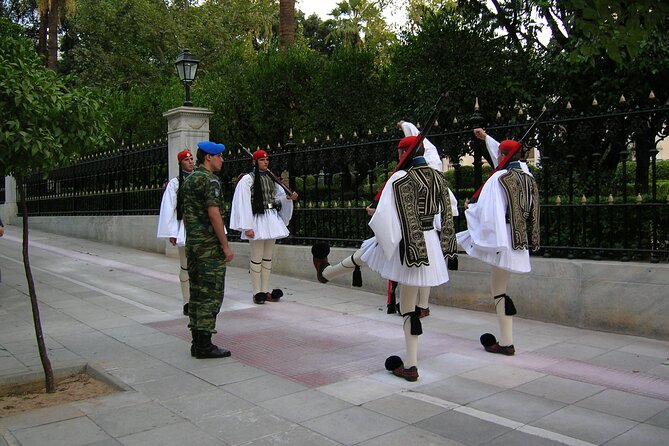
The route ends near National Metsovio Polythechnic, which adds another layer to the story. Like other university-linked spaces, it supports the theme that politics in Greece has often been shaped by institutions where young people meet ideas, arguments, and organized activism.
This ending matters because it gives you a final interpretive lens. You do not walk away thinking politics is only something that happens at the top of government. You walk away thinking politics is also something that grows in public, through learning and confrontation.
The finish point is 28is Oktovriou 42, Athina 106 82, Greece. Ending at a specific address is helpful because it anchors you back in the city, so you can keep exploring afterward with a clearer sense of what you are seeing.
Also, remember the tour includes a slideshow with photos and extra info on the issues discussed. That is a practical add-on. It helps you recheck names and timeline points when you are back at your hotel, instead of relying on memory.
Price and value: is $47 worth it for 2.5 hours?
For $47 per person, you are buying something that usually costs more than a basic walking tour. You get a live guide who is a political scientist, plus an intentionally structured documentary-style narrative, plus a slideshow afterward. That combo matters because it turns walking time into learning time.
You also get a format that is hard to replicate on your own. Sure, you could read about Greek political history. But you would not naturally connect it to government buildings, memorial space, and university corridors while someone explains the social logic behind each stop.
The duration is 2.5 hours, which is a sweet spot. It is long enough to build a coherent argument and still short enough to keep your energy. Athens is not short on distractions, so a clearly bounded experience keeps you from wandering off-topic.
The best way to judge value is to ask what you want from your time in Athens. If you want history with a point of view and a chance to ask questions, this feels like strong value. If you want only archaeology and classic monuments, you might feel it pulls your day off the main course.
Who this walk is best for
This fits you if you like politics, history, and ideas, but you do not want to spend your whole trip reading thick books. It also works if you have been to Greece before and want a fresher way to interpret what you are seeing.
I would also recommend it if you are the type who asks why people care about certain topics. The tour covers big themes like Europe’s role in Greek public life, the economy, immigration, and gentrification. It also touches religion and language as social forces, not just cultural trivia.
If you are traveling with someone who thinks politics is boring, this can still help. The guide’s humor and street-level approach make it less stiff. You are not stuck in a classroom.
Should you book this Athens Social and Political Walk?
Book it if you want your Athens to make sense. This is not about collecting monuments. It is about understanding why Greek politics feels personal, why people argue so intensely, and how historic events keep shaping what people expect from democracy today.
Skip it if you want a low-effort sightseeing day with minimal discussion. This walk is intentionally about social and political evolution, from the modern state’s inception to present issues. You need a bit of attention and patience for explanations that sometimes get intense.
If you do book, go in with one goal: learn how to form your own opinion. With Isaac’s approach, you will leave with more than facts. You will leave with better questions.
FAQ
How long is the Athens Social and Political Walk?
The walk lasts 2.5 hours.
How much does it cost?
It costs $47 per person.
What language is the live guide?
The live guide is available in Spanish and English.
What will I do during the tour?
You join a political scientist for an interactive storytelling walk that combines documentary-style analysis with street exploration focused on Greece’s social and political aspects.
Is there anything included besides the walk?
Yes. It includes a slideshow with photos and extra information on the issues discussed.
Is the tour wheelchair accessible?
Yes, the experience is wheelchair accessible.
Where does the tour start and finish?
The tour starts at Athens Social and Political Walk – Planetwonk and finishes at 28is Oktovriou 42, Athina 106 82, Greece.
Can I cancel for a refund or pay later?
You can cancel up to 24 hours in advance for a full refund. You can also reserve now and pay later.
Fresh options around Athens
- 3-Day Trip to Delphi and Meteora from Athens★ 4.0 · 53 reviews
- 3-Day Tour: Mycenae, Epidaurus, Nafplio, Delphi, Meteora With 4* Hotel Included★ 5.0 · 6 reviews
- 2 or 3-Day Private Tour: Ancient Olympia, Corinth, Mycenae, Epidaurus, Nafplion★ 5.0 · 11 reviews
- 4-Day Classical Tour Greece: Epidaurus, Mycenae, Olympia, Delphi, Meteora★ 4.5 · 4 reviews
- Hydra Island & Mythical Full Peloponnese Private 9-Day Tour★ 5.0 · 3 reviews
- 27 Day Grand Circle Tour of Mainland & Corfu, Mykonos, Santorini★ 5.0 · 4 reviews
- 20-Minutes Natural Pedicure with Exotic Fish★ 5.0 · 17 reviews
- 2 Day Delphi, Meteora Iconic Sites Private Tour With 4* Hotel Included★ 5.0 · 3 reviews
Walking Tours, compared.


Acropolis: Acropolis and Parthenon Guided Walking Tour
Read our review →
Acropolis monuments & Parthenon Walking Tour with Optional Acropolis Museum
Read our review →

Athens Authentic Greek Food Walking Tour (Small Group)
Read our review →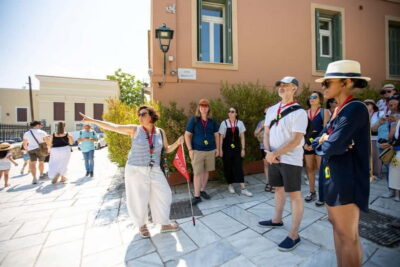
Early Morning Acropolis & Old Athens Guided Walking Tour
Read our review →
Browse the lists this tour appears in