Reviewed · TOURS
Biblical Tour Letters ToThe Corinthians St Paul’s Footsteps 6Hour
This St Paul’s Footsteps tour is interesting because it turns the Bible story into a route you can actually walk, from Areopagus Hill to Corinth’s Agora and Bema. I like that you ride in comfort in a private, air-conditioned vehicle with Wi-Fi and bottled water. I also like that the focus stays on Paul, not just random ruins, so the day feels connected instead of chopped up.
One thing to plan for: not every site is included in the standard price. Some archaeological entrances cost extra, and the driver cannot escort you inside sites, though a licensed guide can be arranged if you want to go that extra step.
Key things that make this tour worth your time
- A Paul-centered route that links Athens to Corinth and the nearby ports mentioned in the New Testament
- Comfort perks in the van, including air-conditioning, Wi-Fi, and bottled water
- Small-group feel designed so you can ask questions and move at a human pace
- Real landmark variety across ancient, Byzantine, and early Christian connections
- Flexible pickup and drop-off, including cruise port timing for day-limited visits
- Optional licensed guides inside sites if you want someone to guide you at the doorways
St Paul’s Footsteps in one half-day that actually feels efficient
This tour works because it respects how day trips behave in Greece. You get picked up and dropped back at your start point, and the schedule is built around key stops tied to Paul’s story in Athens and Corinth. Instead of you piecing together buses and taxis, your driver handles the movement, while you focus on the meaning of the places.
The best part is that the story stays in order. You start with Athens, where Paul spoke about the Unknown God, then you head to Corinth and the areas where Paul taught, reasoned, and wrote to the churches. Along the way, you also get a crash course in why Corinth mattered, not just what Paul said there.
More of Athens worth an open tab:
- Athens: Acropolis & up to 5 Archaeological Sites Combo Pass
★ 4.4 · 12,619 reviews - Athens: Acropolis, Parthenon & Acropolis Museum Guided Tour
★ 4.8 · 9,316 reviews - Athens: Cape Sounion & Poseidon Temple Sunset Half-Day Trip
★ 4.8 · 8,241 reviews
Price and value: why $170.50 can work for cruise days
At $170.50 per person for about 6 hours 15 minutes, this is priced like a comfort-first private day. That can sound steep until you compare it with what you usually pay when you add taxis, missed connections, and last-minute ticketing stress.
Here is what you are paying for:
- Private vehicle comfort for the full ride, with A/C and bottled water
- Pickup and drop-off at your hotel, Airbnb, or cruise port
- A small group setup, so the day does not feel crowded or rushed
- Paul-focused commentary during the drive, not just at stops
If you are on a cruise, this value jumps. The itinerary is designed for efficient time management and a return that fits a ship schedule, which is exactly what you want when you have limited hours on land.
The ride: private luxury mini van, Wi-Fi, and a driver who keeps the story moving
You travel in a premium, luxury mini van sized for small parties (the tour is set up as an intimate group, commonly 2 to 4 people). The vehicle includes Wi-Fi and bottled water, and it stays air-conditioned, which matters in Greek heat, even in shoulder seasons.
Your driver is English-speaking and focuses on ancient Greek history, but the standout goal is Paul’s story. The day is framed from Paul’s background through his missionary journeys, then tied to what you see at each stop. I like this approach because it prevents the common problem of Bible tours becoming photo stops. You are learning while you ride.
Also, you can store luggage in the car during the tour depending on how much you bring. That is useful if you are traveling light between lodging and the port.
Stop by stop: where Paul’s footsteps show up in the real world
Same corner of Greece, a different kind of day:
- Athens: Acropolis and Parthenon Guided Walking Tour
★ 4.6 · 5,882 reviews - All Day Cruise -3 Islands to Agistri,Moni, Aegina with lunch and drinks included
★ 5.0 · 4,958 reviews - Athens, Piraeus, and Coastline: Blue Hop-On Hop-Off Bus
★ 3.9 · 4,849 reviews - Greek Food Walking Tour in Athens
★ 5.0 · 4,740 reviews
Areopagus Hill and the Unknown God
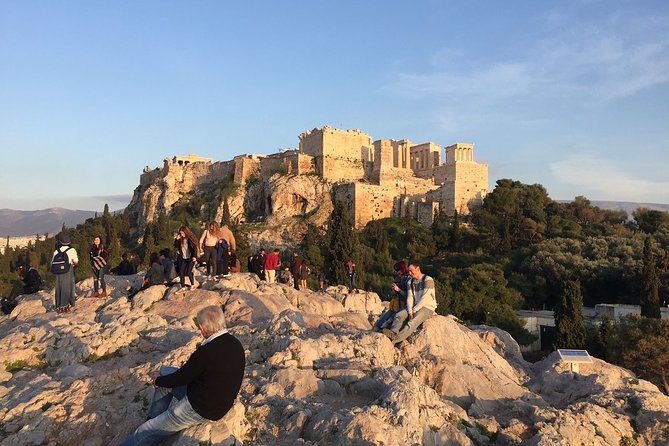
Your day starts with pickup from your hotel, Airbnb, or cruise ship. Then you head to Areopagus Hill, also tied to the Holy Rock of the Acropolis area.
This is where Paul gave one of his most dramatic speeches to the Athenians about the Unknown God. Even if you know the passage, seeing the setting helps you understand why his message landed. Athens was a place that loved ideas, debates, and public speaking, so Paul’s approach makes sense in the context of the city.
You get about 15 minutes here, and admission is included. The time is short, so you should use it to look outward and absorb the city position, not to try to read every stone.
Practical note: bring sunglasses and water. This first stop is outside, and the rest of the day will keep you in open-air areas.
Daphni Monastery: Byzantine mosaics with ancient roots
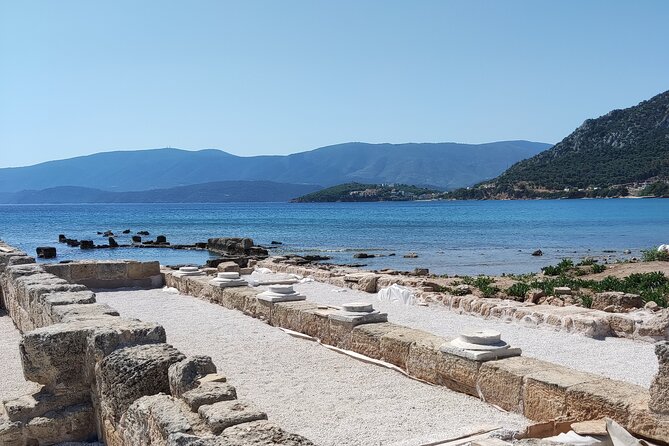
Next you visit the Monastery of Daphni, perched on the slopes of Mount Aigaleo. This place is a major Byzantine monument, built on the site of an ancient temple of Apollo, connected to the likely sanctuary of Daphneion Apollo.
What makes this stop fun is the layered history. Over the centuries, it was used by Cistercian monks during the Frankish period, then returned to Orthodox control after the Ottoman conquest. Earthquakes caused severe damage, but restoration efforts, especially of the mosaics, keep the site’s artistic and spiritual legacy alive.
You will have about 20 minutes, and admission is included. In a tour like this, the monastery is a good palate cleanser from ancient politics and city life. It also adds a visual reminder that Christianity did not appear in a vacuum. It grew inside older traditions and places that were already sacred to communities.
Corinth Canal: the shortcut that took centuries to become real
Then you hit the Corinth Canal. The canal links the Gulf of Corinth and the Saronic Gulf, slicing Greece’s mainland from the Peloponnese like a practical idea made stone.
You get about 20 minutes here, and admission is free. Even at a quick stop, you can feel why this matters for travel and trade. Long before the canal existed, ships had to sail around the Peloponnese, adding a big extra distance. The canal fulfilled a 2,000-year dream, including earlier concepts like the diolkos, a stone road used to transfer ships over land.
Why this matters for a Paul tour: Corinth was a key port and crossroads. When travel routes change, the movement of people and ideas changes too.
Archaeological Museum of Isthmia: artifacts that show everyday religious life
You then visit the Archaeological Museum of Isthmia for around 20 minutes. Admission is not included.
This museum stop is not just about looking at objects. It gives context for what you later see outdoors. The collection includes:
- Archaic marble features from the entrance area of an early Temple of Poseidon
- Colored glass glazing found submerged near a Temple of Isis on the south pier, with scenes like harbor panoramas, animals, plants, philosophers, ships, and decorative bands
- An imperial statue in the type of Zeus
- A variety of offerings and items connected to cult life and games
- Artifacts from Mycenaean and Roman cemeteries around the Isthmia area
If you want a day that stays grounded in material culture, the museum helps. If you prefer outdoor walking over indoor viewing, you might treat this as a quick orientation before the main site.
Isthmia: the sports grounds where Paul’s Christian witness shows up
Next comes Isthmia, with about 1 hour of time. Admission is free for this stop in the tour info, but other parts of the archaeological complex later may have separate tickets.
Isthmia was tied to major ancient athletic competitions, second only to the Olympics in Ancient Olympia. It also sits in a strategic location where the Peloponnese meets Central Greece.
Here is where the Bible connection becomes specific. Paul’s presence in the Isthmian region is considered important, including a reference to the games and a connection that he worked as a tent maker for athletes and visitors. In practical terms, it puts Paul in the flow of a huge seasonal event, not in isolation. The message spread through ordinary networks: lodging, work, public gatherings, and conversation.
This stop also reminds you that faith traveled along with economics and culture.
The Isthmia archaeological grounds: Poseidon, the stadium, and Palaimon
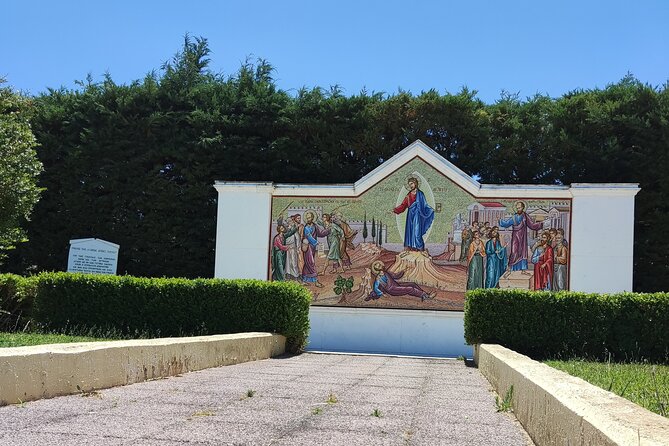
After the main Isthmia stop, you move to the Archaeological Site of Isthmia and spend time on the outdoor landmarks. Here, admission is not included for the temple and the rest of this site area, and the tour lists an entrance fee for Isthmia of €5 per person.
The highlight structures include:
Temple of Poseidon and Amphitrite
The temple was built between 690 and 650 BC, then damaged and rebuilt after fires in later centuries. You also hear about later Roman damage and reconstruction, and it mentions operations stopping after the Visigoth invasion of Alaric in the 4th century. It is one of those places where you can see the pattern of destruction and rebuilding across centuries.
The stadium
The stadium was originally built around 550 BC. The “ysplex” triangular release area is preserved, which is a unique feature in Greece. It is a reminder that ancient athletic events had serious engineering and rules.
Sanctuary of Palaimon
Palaimon was tied to Melikertis, associated with sailors, and the site included nocturnal services in Roman times and bull sacrifices.
Conference and meeting space plus monuments
Isthmia also functioned like a gathering center for Greek political life, ceremonies, and declarations across the ancient world, including events involving the Persians and leaders such as Philip II and Alexander the Great.
If you like the big picture, this section helps you see the setting as a social machine. Games, politics, worship, and travel all fed each other.
Ancient Corinth and the Agora: where letters meet the street-level details
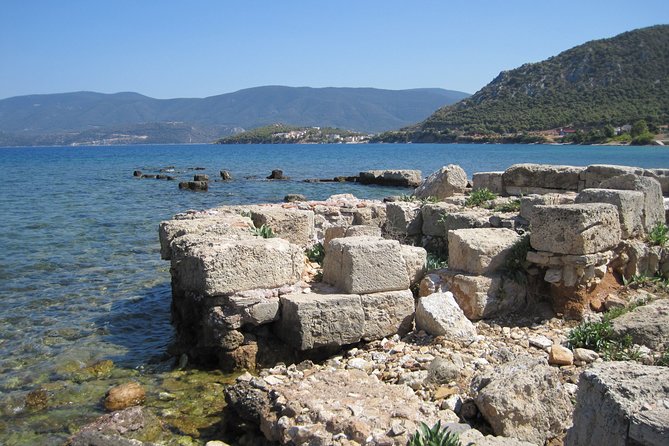
Now you reach Ancient Corinth for about 1 hour. Admission is not included, and the tour lists €15 per person for the archaeological site.
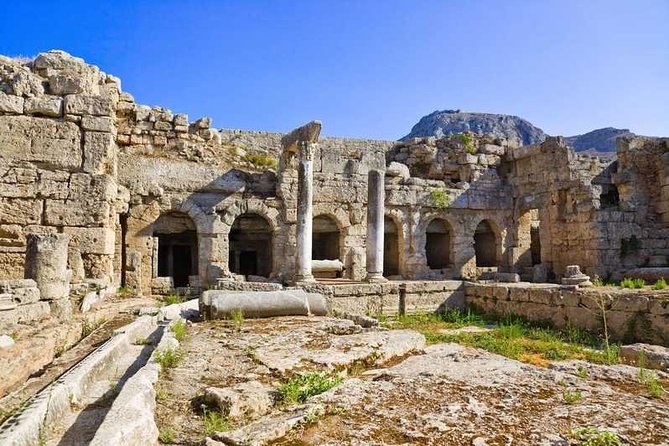
Corinth was a powerful city-state on the narrow isthmus between the Peloponnese and the mainland. It was one of the biggest cities of ancient Greece, with a population often cited around 90,000 in 400 BC. The Romans destroyed Corinth in 146 BC, then later built a new city in 44 BC and made it a provincial capital.
For Christians, Corinth matters for Paul’s letters. The city also appears in Acts as part of his travels. That is why this stop is the center of the day.
You also connect Paul’s story to the Agora, including a key element tied to his public address: the podium or Bema. This elevated rostrum is described as where Paul addressed the Corinthians in 52 AD. Tradition links Paul’s trial before Gallio to the Bema area, with the idea that officials addressed the public from a prominent point in the forum. The site later gained Christian layers in Byzantine times.
Even if you keep your expectations realistic about what is exactly where, the Agora and Bema area give you a feel for scale. This was not a private conversation. It was public life, and Paul wrote from inside that public world.
Museum time to mix with outdoor walking: what you should expect pacing-wise
A common reason people feel satisfied with this tour is pacing. You are not sprinting from spot to spot. You have real time blocks at each stop, like 15 minutes for Areopagus, about 20 minutes at Daphni and the canal, about 20 minutes at the Isthmia museum, then a longer stretch at Isthmia and Ancient Corinth.
Still, it is a lot to pack into one day, especially because the itinerary mixes:
- outdoor viewpoints
- indoor museum time
- archaeological grounds that need careful walking
I recommend you wear supportive shoes. Bring a hat if you burn easily. This is a day where you will look down and up constantly, and your feet do the heavy lifting.
Kenchreai (Cenchreae): Phoebe’s connection and Paul’s vow in the port life
Next you visit Kenchreai, a village tied to the ancient port town Kenchreai or Cenchreae. The tour notes a Bible connection from Acts: Paul stopped here during his second missionary journey. He cut his hair to fulfill a vow, likely connected to a Nazirite-style promise.
This stop also ties to Romans through a woman named Phoebe mentioned in the local assembly, tying port networks to early Christian leadership and communication.
You get about 30 minutes, and admission is listed as free here. This is a great stop if you like “Bible detail” moments, because it connects a specific place to a specific person and act, not just a general region.
Temple of Apollo at Corinth: a quick look at a rare architectural clue
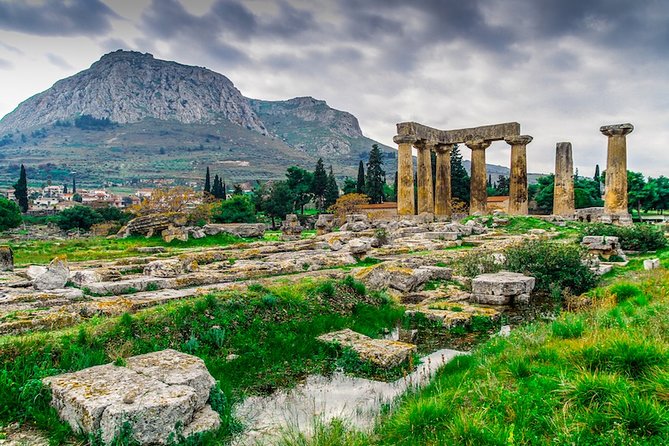
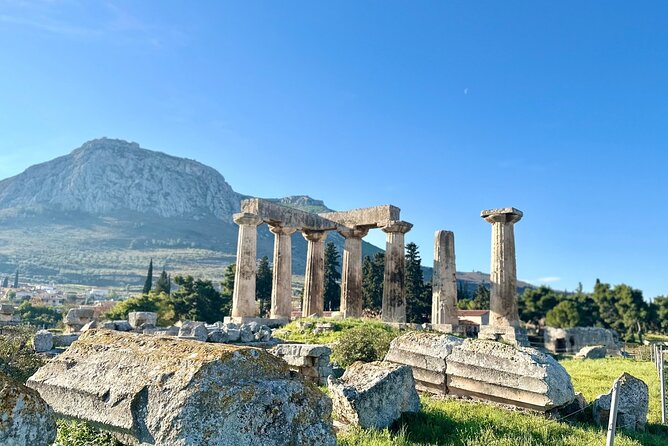
You also visit the Temple of Apollo at Ancient Corinth. The tour notes it was constructed around 550 BC and describes it as one of the earlier Doric temples in the Peloponnese and Greek mainland, with monolithic columns that are rare.
Admission for this is not included in the tour price. Because the stop is short (around 10 minutes), treat it as a visual anchor. It helps you feel the “before Christianity” layer, right inside the same Corinth area where Paul later preached.
The church of St Paul in Corinth: the modern layer
Finally, you visit Apostolou Pavlou, the Church of St Paul in Corinth. Admission is listed as free.
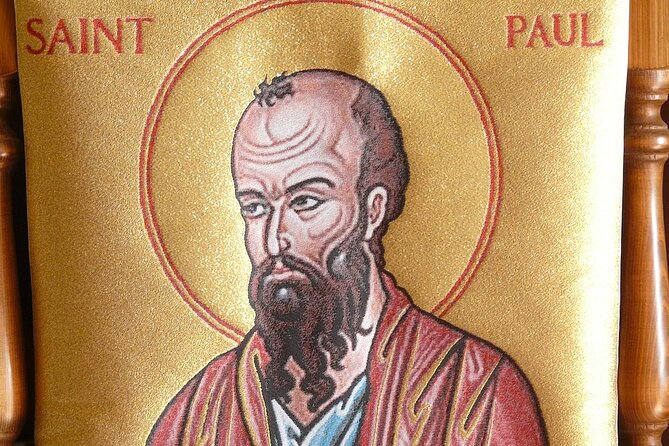
The tour notes that during Paul’s stay, he stayed about one and a half years in 51 to 52 AD and founded the metropolitan church there, connected to Acts and the two letters to the Corinthians.
This modern church stop is a good way to close the day. You have walked through a city that shaped Paul’s work, and then you get a contemporary place of worship linked to that memory.
Licensed guide inside sites: what your driver can and cannot do
One important detail: in Greece, only officially licensed tour guides can escort you inside archaeological sites. Your driver can explain everything from outside areas and provide background during the ride, but they cannot act as your in-site guide once you enter.
If you want a licensed guide inside the sites, the tour can arrange it on request for an additional cost of €160 per booking, depending on availability.
This matters because it changes what “personalized” means. You can still get a strong experience with your driver, but if you want inside-the-ropes guidance, plan for the extra option.
A real-world feel: why the guides make this tour work
The best part of this kind of tour is not just seeing places. It is how the day gets told while you are in motion.
In recent tours, guides such as Chris, Yiannis, Andreas, Panos, Alex, Ares, and Christof are praised for being personable, funny, and willing to work with your interests. People also highlight how the drive itself turns into learning time, especially on the way toward Corinth.
One practical perk that shows up in the guide style: some guides come prepared for the weather and comfort needs. In one case connected to Chris, small extras like bottled water and chocolates came along, plus umbrellas when rain started, and even a jacket offer. That is not something to assume every day, but it is a sign you are choosing a company where comfort and attention are part of the service, not just the vehicle.
Should you book this St Paul’s Footsteps tour?
If you want a Bible-focused day trip with comfort, pickup convenience, and a route that connects Athens to Corinth in a logical sequence, this is a strong choice.
Book it if:
- you have limited time, especially on a cruise day
- you like Christian history but also want real archaeology context
- you prefer learning during the ride, not only during short stopovers
- you want a small-group feel where you can ask questions
Skip it or add an extra licensed guide if:
- you expect every site to be deeply guided inside the boundaries
- you do not want to manage extra entrance fees (Ancient Corinth and Isthmia have listed fees)
- you dislike structured schedules and want total freedom
FAQ
How long is the St Paul’s Footsteps tour?
It runs about 6 hours 15 minutes (approx.).
Where do you get picked up and where do you end the tour?
You can be picked up from your Athens hotel, your Airbnb residence, or the cruise ship. After the tour ends, you are returned back to the meeting point or to your preferred drop-off point.
Is Wi-Fi and bottled water included?
Yes. The vehicles include complimentary Wi-Fi and bottled water.
What entrance fees should I expect?
Ancient Corinth has an entrance fee listed at €15 per person, and the Isthmia archaeological site has an entrance fee listed at €5 per person. Some other stops in the schedule list admission as included or free, while others list admission as not included.
Can my driver guide us inside archaeological sites?
No. In Greece, only officially licensed tour guides are permitted to accompany guests inside archaeological sites. Your driver can provide explanations, but not escort you inside. A licensed guide can be arranged on request for an additional €160 per booking, depending on availability.
Is this tour suitable for cruise passengers?
Yes. It is specifically designed for cruise passengers with limited time and includes a plan intended to return guests to the ship on time.
How big is the group?
The tour is private for your group, with a small-group setup described as intimate groups of 2 to 4 people, with the vehicle sized for small parties.
What happens if weather is bad?
The tour requires good weather. If it is canceled due to poor weather, you will be offered a different date or a full refund.
If you want, tell me your travel dates and whether you are on a cruise, and I will help you plan what to prioritize with your time at each stop.
Fresh options around Athens
- 3-Day Trip to Delphi and Meteora from Athens★ 4.0 · 53 reviews
- 3-Day Tour: Mycenae, Epidaurus, Nafplio, Delphi, Meteora With 4* Hotel Included★ 5.0 · 6 reviews
- 2 or 3-Day Private Tour: Ancient Olympia, Corinth, Mycenae, Epidaurus, Nafplion★ 5.0 · 11 reviews
- 4-Day Classical Tour Greece: Epidaurus, Mycenae, Olympia, Delphi, Meteora★ 4.5 · 4 reviews
- Hydra Island & Mythical Full Peloponnese Private 9-Day Tour★ 5.0 · 3 reviews
- 27 Day Grand Circle Tour of Mainland & Corfu, Mykonos, Santorini★ 5.0 · 4 reviews
- 20-Minutes Natural Pedicure with Exotic Fish★ 5.0 · 17 reviews
- 2 Day Delphi, Meteora Iconic Sites Private Tour With 4* Hotel Included★ 5.0 · 3 reviews
Tours, compared.
Acropolis, Parthenon & Acropolis Museum Guided Tour
Read our review →

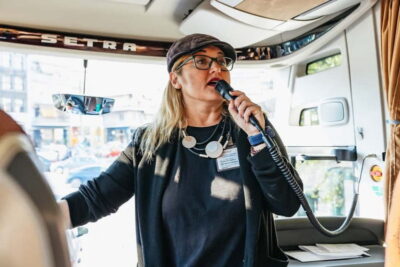
Mythology of Delphi, Museum and Arachova Guided Tour
Read our review →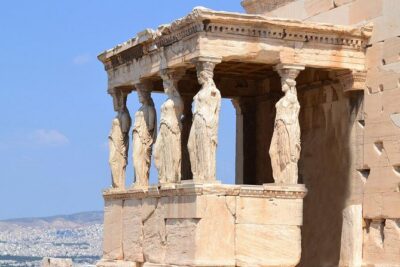
Acropolis, Parthenon & Acropolis Museum Guided Tour
Read our review →