
Reviewed · WALKING TOURS
Highlights and Hidden Gems of Athens Walking Tour
This Athens walking tour is interesting because you are not just looking at ruins. You are walking the same corridor of sights that ties together Athens’ top archaeology with everyday city life, and you do it with stories that connect myth, politics, and daily culture.
I particularly like the archaeology-focused explanations and the fact that the guide doesn’t stop at dates, but adds the myths behind what you see. I also like that you get practical guidance for what to do next, including food, bars, museums, and local trends, so the tour turns into a real game plan, not just photos.
One possible drawback is the pace. In just 2 hours you cover more than 15 monuments, so it is an overview packed with meaning, not a slow, stop-and-stay lecture at one site.
Key Points to Know Before You Go
- More than 15 monuments in a tight 2-hour route, starting near the Acropolis metro station.
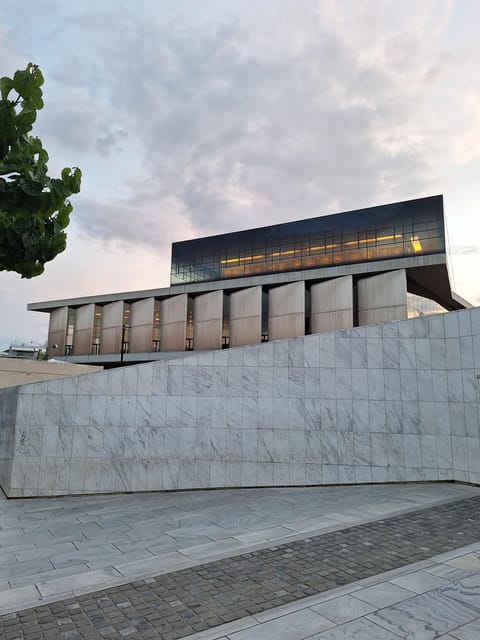
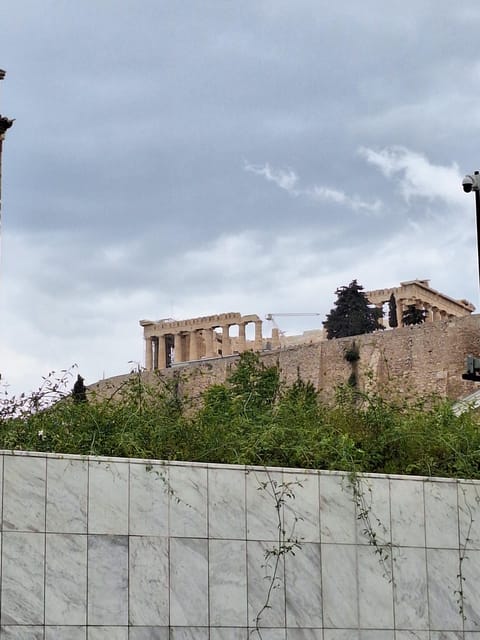
- Dionyssiou Areopagitou street is the main sightline, with major highlights like the Parthenon area, the Odeion of Herodes Atticus, and the new Acropolis Museum.
- Areopagus Hill gives you a classic photo angle and the story behind it, including its role as an ancient law court.
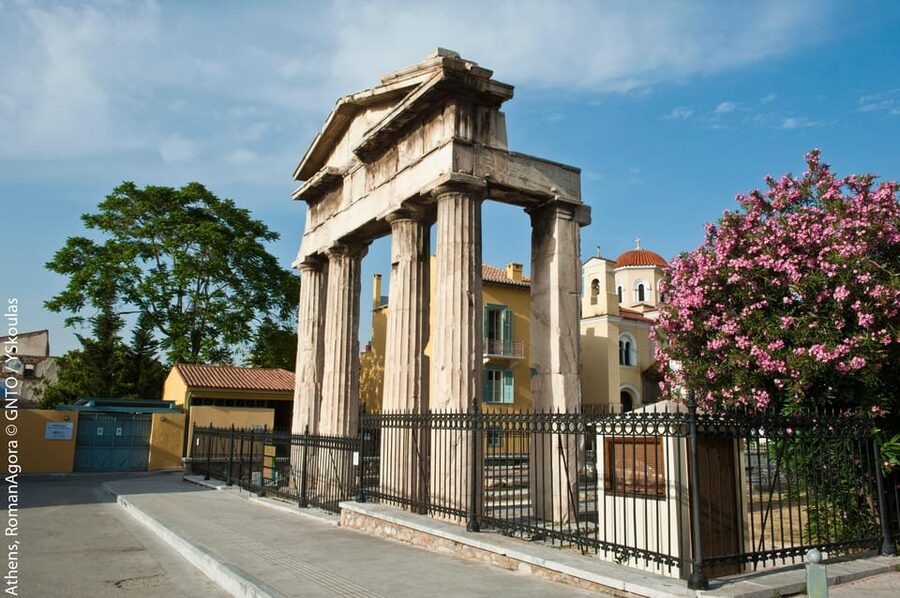
- Ancient Agora plus the Roman forum help you see how Athens evolved from Greek civic life into Roman form.
- Monastiraki and Plaka keep the walk grounded in neighborhoods you can actually enjoy after.
- The guide experience can be more or less talkative depending on the day, so if you want very granular archaeology at every step, go in expecting an overview packed with stories.
Starting Smart at Acropolis Metro and Makrigianni Street
The tour meets outside the Acropolis metro station in Makrigianni Street, on a pedestrian-friendly stretch lined with restaurants and cafes. That is a big deal because you can easily get there using public transit, then start your walk already surrounded by places you can return to later.
I like that the location is convenient but not buried in the most crowded pinch point. You are near the action, yet you still get a chance to settle into the route before Athens traffic and tour crowds fully take over your senses.
Wear comfortable shoes. This is a walking tour, and the day is about moving between viewpoints and archaeological areas. If you plan to take lots of photos, bring a camera strap or something you can manage on the move, since the route includes a climb to Areopagus Hill.
More walking tours in Athens:
- Athens: Acropolis and Parthenon Guided Walking Tour
★ 4.6 · 5,882 reviews - Greek Food Walking Tour in Athens
★ 5.0 · 4,740 reviews - Acropolis: Acropolis and Parthenon Guided Walking Tour
★ 4.7 · 3,442 reviews
Walking the Monument Corridor on Dionyssiou Areopagitou
A huge part of why this works is the street choice: Dionyssiou Areopagitou. It is described as one of the most impressive streets in Athens, and for good reason. This is where you get that feeling that the city itself is layered, with big classical landmarks sitting alongside museums and surviving structures.
You walk through an area where several major sights connect visually and historically. You are set up to see how Athens’ most iconic symbols, including the Parthenon, relate to the nearby museum and performance spaces such as the Odeion of Herodes Atticus.
What I’d watch for as you walk is the way the guide ties three things together:
1) what the site was for,
2) how it fits into Athens’ political and myth world,
3) what you should notice with your eyes right now.
The best part is that the tour is not just “look at this, it is old.” You get facts and interesting myths behind the monuments. That myth layer matters because it changes the feeling from archaeology-as-a-museum-object into archaeology-as-story, which is what keeps a 2-hour route from feeling like a checklist.
Also, this is where the new Acropolis Museum comes into the picture. Even if you are not entering during the walk, it helps you understand the modern context: what Athens chooses to display, how it interprets ancient life, and why objects matter when they are placed in a modern frame.
Areopagus Hill: Ancient Law Court Views and Better Photos
From the street corridor, you climb up to Areopagus Hill, described as the most ancient law court of the world. That phrase is dramatic, but the practical value is simple. A climb like this gives you a viewpoint you cannot easily get from ground level, and the guide’s story turns the view into something you can read.
When you reach the hill, focus on what you can photograph and what you can understand. From up there, you are better positioned to connect the big monument zone with the surrounding city layout. Even if you have seen pictures online, standing there helps you register scale and placement.
The tour also leans into the theme that Athens was not only about temples. It was also about civic life, courts, and public decision-making. That is why the Areopagus story is more than a fun fact. It gives you a lens for thinking about everything else you will see on the walk, including the civic spaces of the Agora that come next.
Bring your phone or camera ready, but do not treat every photo like a race. The storytelling is part of the experience, and it is usually easiest to understand what you are seeing when you slow down for a minute at each viewpoint.
Ancient Agora and Roman Forum: From Greek Civic Life to Roman Order

After the hill, the route heads toward the ancient Agora and the Roman forum. This stretch is valuable because it shows Athens as a living city across time, not a single frozen moment.
The Agora is where you expect civic activity, debate, and daily life to concentrate. The Roman forum is where you can see how later rulers reshaped Greek spaces for their own systems, symbols, and movement. If you only visit monuments without this “then and now” feel, Athens can blur into one long wall of stone. Here, it is broken into chapters.
I like that the guide connects the mythology and the facts. You are not just learning what happened, but also why stories grew up around what happened. That myth layer often explains how people in antiquity made sense of power and meaning. And when you understand that, you start noticing more in the ruins than just shape and material.
One practical thought: wear your patience. This is a walking tour, and Agora and forum areas can feel spacious. Let the guide set the direction. If you wander off on your own, you might miss the best explanations that make the space click.
Same corner of Greece, a different kind of day:
- Athens: Acropolis & up to 5 Archaeological Sites Combo Pass
★ 4.4 · 12,619 reviews - Athens: Acropolis, Parthenon & Acropolis Museum Guided Tour
★ 4.8 · 9,316 reviews - Athens: Cape Sounion & Poseidon Temple Sunset Half-Day Trip
★ 4.8 · 8,241 reviews - All Day Cruise -3 Islands to Agistri,Moni, Aegina with lunch and drinks included
★ 5.0 · 4,958 reviews
Monastiraki Square to Plaka: Getting the City Vibe, Not Just Ruins

Once the walk moves into Monastiraki square and the Plaka neighborhood (often associated with the neighborhood of Gods), the tour shifts from archaeology-first to city-feel-first. That balance matters. Athens is both an ancient showpiece and a place where people shop, talk, snack, and meet.
This is also where the guide’s local knowledge can really pay off. The tour explicitly includes talk about city trends and places to eat and drink like a local. I treat this part like a cheat code. You are learning where the city’s “real day” happens, and you get guidance on how to spend your remaining time once the tour ends.
Plaka can be touristy in places, but it is still a great base if you want to be near sights and also want to wander. The tour helps you do both, without feeling like you are walking randomly.
If you are traveling with kids or just want a calmer rhythm after the climbs, this section is often where you breathe out. One of the strong themes in the guide feedback is a relaxed style, and that kind of pacing makes Monastiraki and Plaka more enjoyable.
Ending on Makrygiani Street: Your Built-In Plan for Food, Museums, and Bars
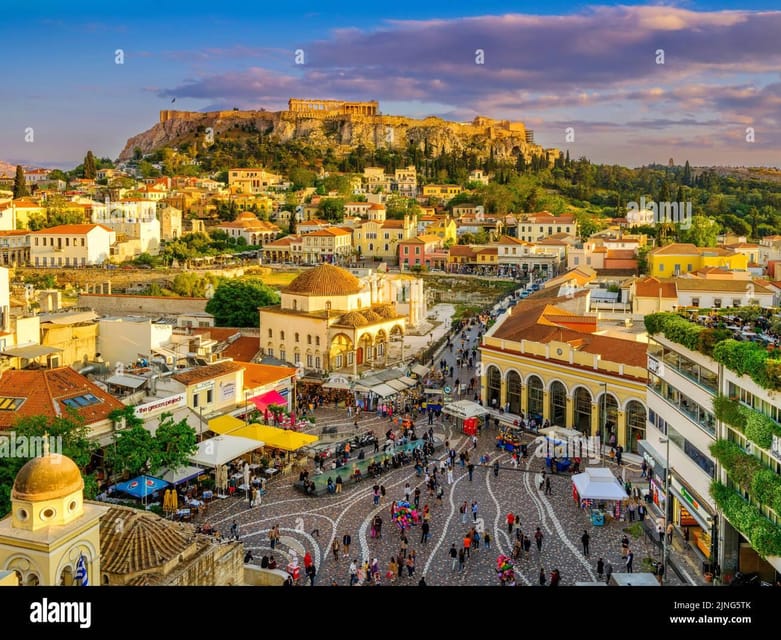
The tour concludes on Makrygiani Street, close to the Acropolis metro station. That matters because you are not sent off into the unknown. You finish near transport and near places you can actually use, including familiar restaurants and cafes.
This finish is one reason the tour can feel like good value. You are not just getting the “history tour.” You are also getting recommendations for what to do right after. The guide includes tips for sightseeing, museums, food, and bars.
Here is how I’d use that advice:
- Pick one museum to prioritize next, so you do not burn your energy on decision fatigue.
- Choose one meal plan recommendation based on what you want that night, quick and casual or sit-down and slow.
- If you plan to return to the Acropolis area, ask what to time and what to avoid, so you spend your energy wisely.
Since the route ends near metro, you can keep your schedule flexible. That is a practical advantage in Athens, where walking is great but heat and timing can change your mood fast.
Price and Value: Is $43 for a 2-Hour Athens Walk Worth It?
At $43 per person for a 2-hour walking tour, the value is mostly about what you get beyond walking between sights. You are paying for:
- a guide who shares archaeology expertise,
- myth and context attached to each stop,
- and practical local suggestions that help you plan your time after the tour.
If you only needed a route map and a list of landmarks, you could DIY with a phone and a guidebook. But if you want the story behind the stones, plus an informed opinion on where to eat and what to prioritize, this kind of guided structure can save you hours of guessing.
The main trade-off is depth versus coverage. With more than 15 monuments on the schedule, the tour has to move. That is great for first-time orientation. It is less ideal if you want extremely granular explanations at one single site for a long stretch.
Also, guide engagement can vary by day. The strongest feedback points to a friendly, professional guide style and a relaxed, educated explanation style. Still, if you are picky about being talked through every detail, go in prepared that this tour is built to give an overview with plenty of interesting facts, not to slow down for every single question.
Who This Tour Fits Best, and Who Might Skip It
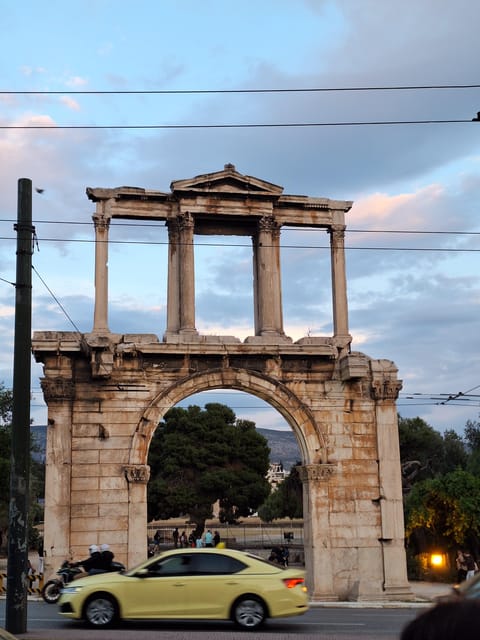
This tour fits best if you want a smart first pass through the Athens center. You get a clear arc: monument corridor on Dionyssiou Areopagitou, a climb with big views from Areopagus Hill, civic layers at the Agora and Roman forum, then city-life energy at Monastiraki and Plaka.
It also works well if you like learning through stories. The combination of myths and historical facts is a strong selling point, and it is the kind of approach that makes ruins easier to remember.
You might consider a different option if:
- you already know Athens well and want a slower, deep archaeological focus on fewer sites,
- or you prefer long stops where you can sit and absorb without moving much.
If you are traveling with a child or want a more relaxed pace, that is another reason this tour can be a good pick, since a calm guide style showed up in the strongest feedback.
Should You Book This Athens Walking Tour?
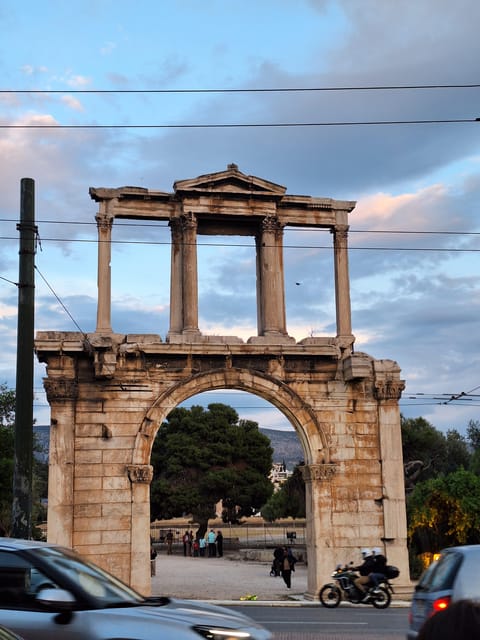
Yes, if your goal is orientation plus context. You will leave with a better mental map of Athens, and you’ll understand how the big monuments connect to the civic story and the modern neighborhood vibe. The route is compact but meaningful, and the guide’s mix of myths, facts, and practical recommendations is exactly what helps you make the rest of your trip run smoother.
Book it especially if:
- it is your first time in Athens,
- you want to connect the Acropolis area to areas like the Agora and Plaka on foot,
- you like getting restaurant and museum suggestions from someone who knows the city.
Hold off or compare options if you want ultra-deep detail at one site. This tour is designed for movement and an overview of more than 15 monuments in just 2 hours, so it is not built to satisfy a pure “one monument, one lecture” style.
If you want Athens in one efficient walk, with stories you can carry into your next museum visit, this is a solid choice at $43.
Fresh options around Athens
- 3-Day Trip to Delphi and Meteora from Athens★ 4.0 · 53 reviews
- 3-Day Tour: Mycenae, Epidaurus, Nafplio, Delphi, Meteora With 4* Hotel Included★ 5.0 · 6 reviews
- 2 or 3-Day Private Tour: Ancient Olympia, Corinth, Mycenae, Epidaurus, Nafplion★ 5.0 · 11 reviews
- 4-Day Classical Tour Greece: Epidaurus, Mycenae, Olympia, Delphi, Meteora★ 4.5 · 4 reviews
- Hydra Island & Mythical Full Peloponnese Private 9-Day Tour★ 5.0 · 3 reviews
- 27 Day Grand Circle Tour of Mainland & Corfu, Mykonos, Santorini★ 5.0 · 4 reviews
- 20-Minutes Natural Pedicure with Exotic Fish★ 5.0 · 17 reviews
- 2 Day Delphi, Meteora Iconic Sites Private Tour With 4* Hotel Included★ 5.0 · 3 reviews
Walking Tours, compared.
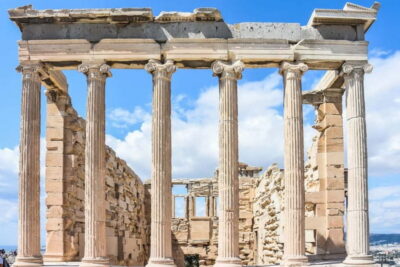


Acropolis: Acropolis and Parthenon Guided Walking Tour
Read our review →
Acropolis monuments & Parthenon Walking Tour with Optional Acropolis Museum
Read our review →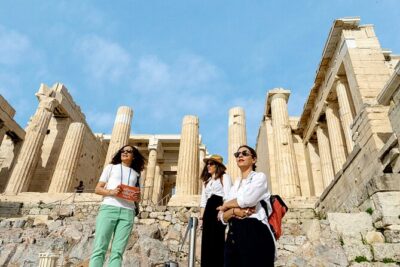

Athens Authentic Greek Food Walking Tour (Small Group)
Read our review →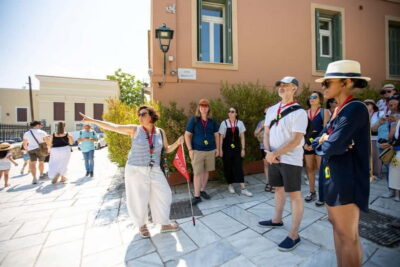
Early Morning Acropolis & Old Athens Guided Walking Tour
Read our review →
Browse the lists this tour appears in