
Reviewed · PRIVATE
Semi-Private Balkans Tour; From Athens to Sarajevo or Belgrade
This tour is interesting because you get a tight, cross-border loop through seven countries in just two weeks, with your days built around the big UNESCO hits and the human details in between. I especially like that it is small-group (max 10) and private transportation, so the trip feels guided instead of chaotic. I also like that breakfast and many major entry tickets are handled for you.
The main drawback to consider is the pace. This is a lot of driving time and site time, and since lunches and dinners are not included, you will want to plan your food budget and energy level in advance.
Key things I’d circle before you book
- Small-group focus (up to 10 travelers): easier questions, less waiting, and you can actually hear your guide.
- Private transport end to end: fewer hassles and smoother border-to-border days.
- UNESCO-heavy days: Delphi, Meteora, Ohrid, Kotor, Mostar, and more are built into the itinerary.
- Professional guiding with strong support: feedback calls out guides such as Ervin and Julian, tour guide Eri Veseli, and helpful team support from Sirma.
- Meals are mostly breakfast: you get control over lunch and dinner, but you carry the planning burden for those.
A Tight, Small-Group Loop Through Seven West Balkan Countries
If you want the Balkans experience without the logistics stress, this is a very direct way to do it. You start in Athens, then the route sweeps across Greece, North Macedonia, Kosovo, Albania, Montenegro, Bosnia and Herzegovina, and Serbia. It is a lot of countries for one trip, but the structure keeps it from feeling like a checklist.
What makes the semi-private format worth it is how the day stays coherent. With up to 10 people, you can shift your attention from one stop to the next, without getting lost in a big bus rhythm. You still move on schedule, but you get room for questions and small course corrections.
One practical note: start time is 9:00 am. That is good for sightseeing, but it means you should sleep early and treat your hotel breakfast seriously.
A few more Athens days worth comparing
- Best of Athens Half Day Private Tour
★ 5.0 · 3,714 reviews - Athens Full Day Private Tour
★ 5.0 · 2,903 reviews - Athens Airport Private Arrival Transfer with Meet & Greet
★ 4.5 · 1,495 reviews
Value Check: What the Price Covers (and What It Does Not)
This tour costs $5,142.79 per person for about 14 days, and the value comes from what is included. You get:
- 3-star hotels with breakfast for all overnights (13 breakfasts)
- Private transportation
- A professional tour guide
- Hotel pick up in Athens
- Airport drop-off in Sarajevo (free of charge on day 14) or hotel drop-off in Belgrade
- Entry tickets for the sites you visit
- Tourist taxes plus road costs like petrol and international car insurance
The “not included” list matters too. Lunches, dinners, drinks, and snacks are on you. Souvenirs and personal spending are also on you. That means your day-to-day budget depends on where you stop for food and how often you want drinks or coffee during walks.
From a traveler’s point of view, the big win here is that you are not paying separately for transportation logistics, daily transfers, or lots of site entrances. You are buying time saved and decisions off your plate. If you already love planning every detail yourself, the price might feel steep. If you want a guided, low-friction trip across borders, it starts to look fair.
Day 1 to 2: Delphi and Meteora, then Ioannina and the Road to Gjirokaster
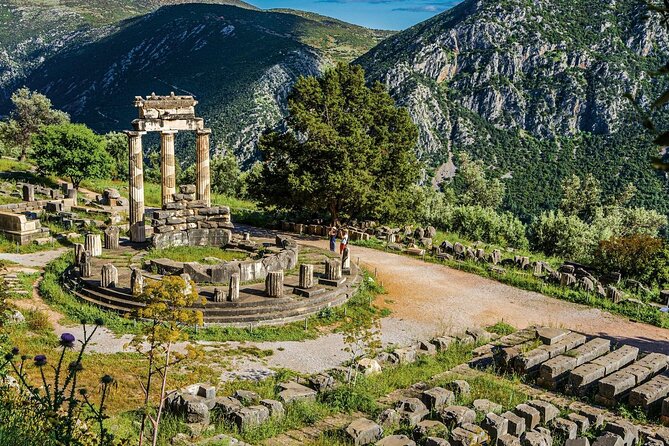
Your first day is pure classical Greece, with two UNESCO stops packed into a driving-heavy schedule. You start with Delphi, an archaeological site known for major monuments like the Temple of Apollo, the Castalian Fountain, and the Theatre. The museum and statues, including the famous Charioteer dated to 475 B.C., are part of the experience plan. This is the kind of place where you feel the scale once you are standing there, not just reading labels.
Then you roll into Meteora, where monasteries sit on towering rock formations. Even if you are not a religious-travel person, this works because the setting is dramatic and the timing is built around that unforgettable sunset angle. The itinerary also keeps the day realistic, with a planned block of time to see the view and soak it in.
Day 2 shifts from grand antiquity to Ottoman and Byzantine echoes in Ioannina in northwest Greece. You wander the old town streets, see the atmosphere of the castle area, and get free time to roam and eat at your own pace. Then you drive toward Gjirokaster, Albania’s “Stone City,” setting up the big medieval feeling of the next day.
What to watch for: with this kind of itinerary, you may be tempted to cram photos nonstop. Give yourself a few slower minutes at each stop so your brain does not feel like a camera.
Day 3 to 4: Gjirokaster’s Stone City and Berat’s 1001 Windows
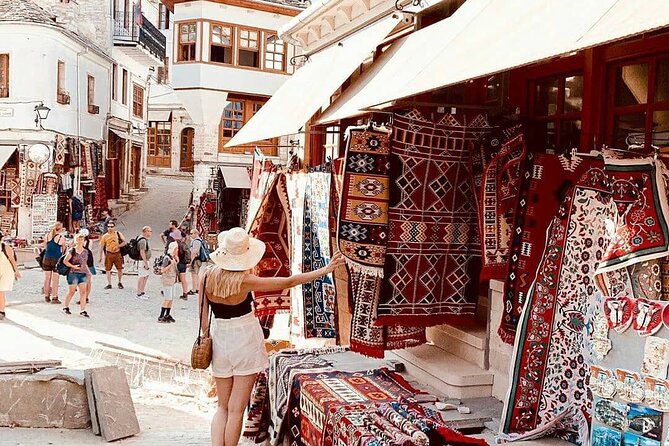
Gjirokaster is one of those places that rewards walking. The old town feels like a fortress, and the city layout makes the uphill views and narrow lanes part of the sightseeing. You get time to explore the UNESCO area, including the castle and the medieval bazaar corridor that funnels you toward the main viewpoints.
One highlight in the plan is a visit to Skenduli House, described as one of the best-preserved homes where the contents are original. That matters because it turns the city from scenery into lived experience. It also gives you a sense of domestic scale, which is easy to miss when you only focus on monuments.
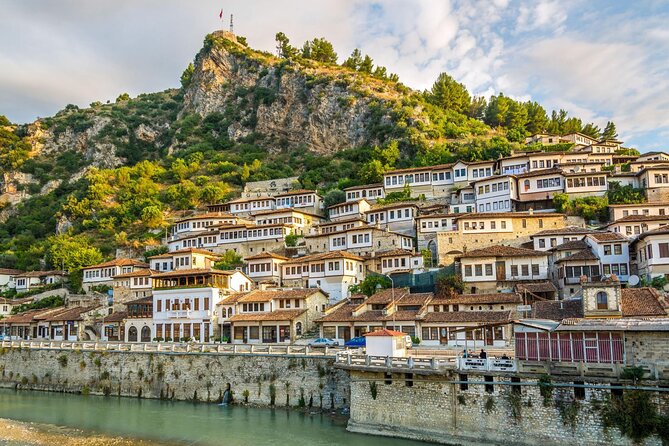
Then comes Berat, the UNESCO town often called the city of 1001 windows. The charm here is the way houses and windows stack up on steep hillsides. You do castle-time too, with Berat Castle, plus church and museum stops. The National Iconographic Museum Onufri is a nice change of pace because it connects local art to wider Orthodox traditions.
Practical tip: both Gjirokaster and Berat involve slopes and uneven streets. If you pack light shoes that grip, you will enjoy these days more and feel less “worn out” by day’s end.
Same corner of Greece, a different kind of day:
- Athens: Acropolis & up to 5 Archaeological Sites Combo Pass
★ 4.4 · 12,619 reviews - Athens: Acropolis, Parthenon & Acropolis Museum Guided Tour
★ 4.8 · 9,316 reviews - Athens: Cape Sounion & Poseidon Temple Sunset Half-Day Trip
★ 4.8 · 8,241 reviews - Athens: Acropolis and Parthenon Guided Walking Tour
★ 4.6 · 5,882 reviews
Day 5 to 6: Drilon Springs, St Naum, and UNESCO Ohrid
Day 5 starts with a nature breather at Drilon National Park and its spring-fed lake. This is a break from castles and city walls, and it is placed right before the cross-border day. You get a calm, walkable stop where the pace slows enough to reset.
Next you reach St Naum, a monastery complex at the source of River Crni Drim where the water meets Lake Ohrid. The setting is described as crystal clear, which makes sense once you see it. It is also part of the Galicica National Park area and is treated as a protected area, so the feeling is more restrained than a typical sightseeing stop.
Then you spend a longer block of time in Ohrid, a UNESCO site and one of Europe’s oldest human settlement areas. Here the itinerary focuses on religious landmarks and key sights, including the viewpoint around the Church of St. John, the Church of St. Nicolas, and the mosque Halveti Hayati Tekke. There is also the Orthodox angle, including the idea of many churches around the region.
Drawback to consider: Ohrid day is longer, and your time indoors and outdoors may vary with weather. If you are the type who hates tight schedules, plan to keep your own pace during free moments.
Day 7: Tirana with a Local Companion, food-first city walking
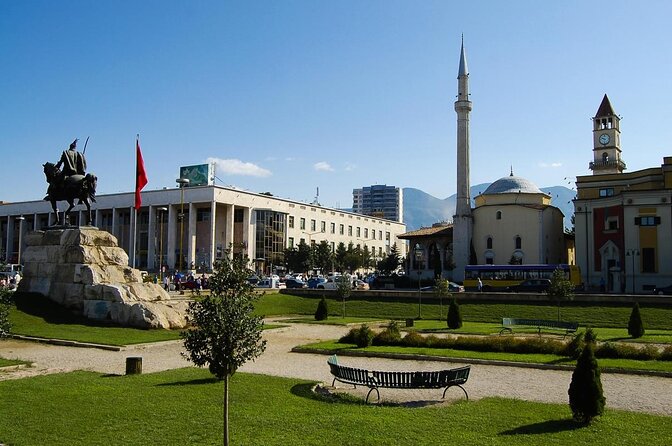
Tirana is where the tour slows down in a useful way: you get a guided city experience with a local companion, built around food and neighborhood life rather than only monuments. The plan includes breakfast-style stops for byrek at Tregu Çam and a walk through markets and café culture.
You also hit the Bunk’Art 2 museum, housed in a former nuclear bunker linked to Enver Hoxha’s communist-era regime. That shift, from pastries and streets to a hard historical setting, gives you contrast. It also helps you understand why Albania modern history is so present in everyday institutions and storytelling.
You finish the day with markets and tastes, including Qofte and raki as part of the included lunch experience described in the plan. Even if you do not drink alcohol, you can still watch how the meal fits into the social rhythm of the city.
If you like city travel more than museum travel, Tirana is one of the days I’d treat as a priority.
Day 8: Kruja Castle Views, then Prizren Mosques and Fortress Overlooks
Day 8 gives you Albania’s resistance story at Kruja, including Kruja Castle and the medieval bazaar lanes below. The old bazaar part is not only about shopping. It also helps you understand how the town was built for defense, trade, and survival. The castle walk includes mention of hidden paths locals used during enemy pressure, which adds a human layer to the stone.
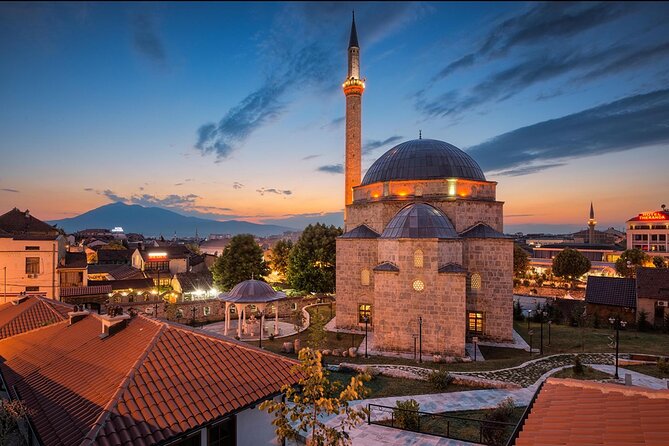
Then the route crosses into Prizren in Kosovo, introduced as a cultural capital with architecture shaped by both Byzantine and Ottoman eras. You visit Sinan Pasha Mosque for its interior style and pattern work. After that, you go up to Kalaja Fortress for the hilltop panorama over the town and river area.
Note the timing reality: you are stacking viewpoint moments. If you come with a high photo priority, you might spend too long at overlooks and less time walking streets. Balance it. The city feels different when you are down at street level.
Day 9: Gjakova Bazaar, Decan Monastery, and the Rahovec Wine Valley
This day is all about variety in one stretch. Gjakova centers on its bazaar, described as the oldest and largest in Kosovo, rebuilt after conflicts damaged it. It is the kind of place where you can eat, browse crafts, and learn how rebuilding becomes identity.
Then you visit the Monastery of Decan, part of UNESCO with frescoes and still active monastic life. The detail that monks make organic food onsite is important because it stops the place from feeling like a staged museum. You also get the artistic angle through mention of fresco styles linked to the Palaeologan renaissance.
The day ends in the Rahovec Valley, known for viticulture and long grape cultivation. You get context on how grapes have been grown for centuries and how the valley altitude supports production. If you travel in the right month, there may be a wine festival in September, but the itinerary does not require you to plan around it.
If you are someone who gets tired of long drives, this is a day that still holds interest because the stops feel emotionally different.
Day 10 to 11: Slow Food at Mrizi i Zanave, Shkodra’s Rozafa, and Montenegro’s Old Towns
Day 10 starts with an agro-tourism farm stop, Mrizi i Zanave – Restorant Agroturizëm. This is not just a lunch stop. The plan includes a tour of the farm and how it supports local bio products and jobs. It also mentions adapting old communist-era buildings into storage. That kind of detail is exactly what makes a place feel real.
You then head to Shkodra, a thousand-year habitation city linked with Rozafa Castle. You visit Rozafa castle for scenery where lake and river systems meet. The tour also points out Venetian influence in architecture, plus a possibility of carnival timing if you happen to travel in February. The castle area gives you that wide view that makes a city location click.
Day 11 moves to Montenegro with a coastal viewpoint near Sveti Stefan. The island itself is described as no longer visitable because it has become an exclusive resort, but the view is still worth a quick stop and photo.
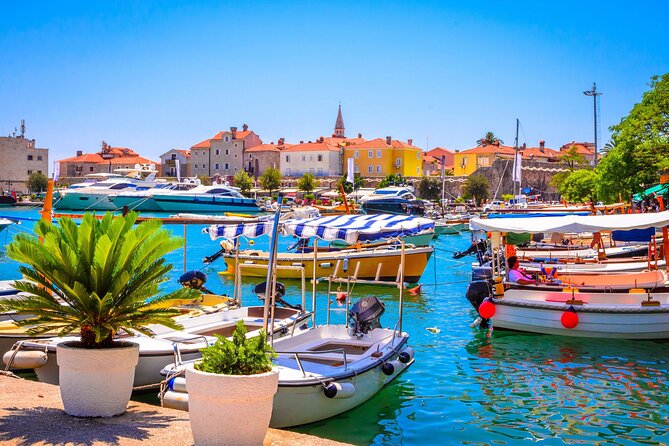
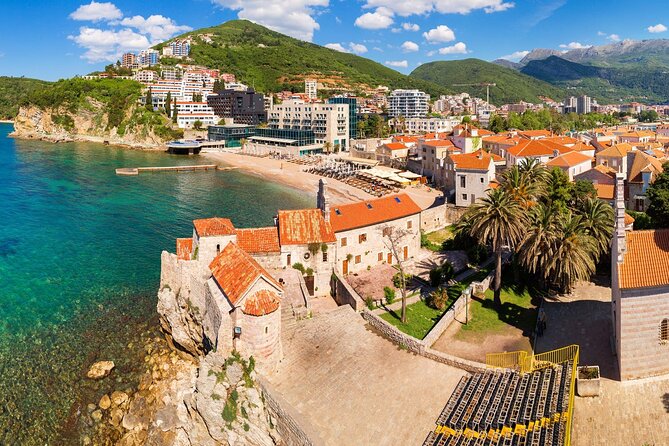
Then you reach Budva and split it into old and new areas. You focus on Old Budva, including sights like St. Ivan church and the medieval old town feel. The next stop is Kotor, a UNESCO city where narrow cobblestone streets and old churches guide you through a maze-like center. You visit Saint Luke’s church because it holds local significance.
A consideration here: Montenegro days can feel more touristy than earlier stops, just because of where the route lands. If you want “quiet corners,” take your time away from the biggest pedestrian areas and use your guide to point out the calmer lanes.
Day 12 to 13: Mostar’s Old Bridge, Blagaj Tekija, and Sarajevo’s Layers of Conflict
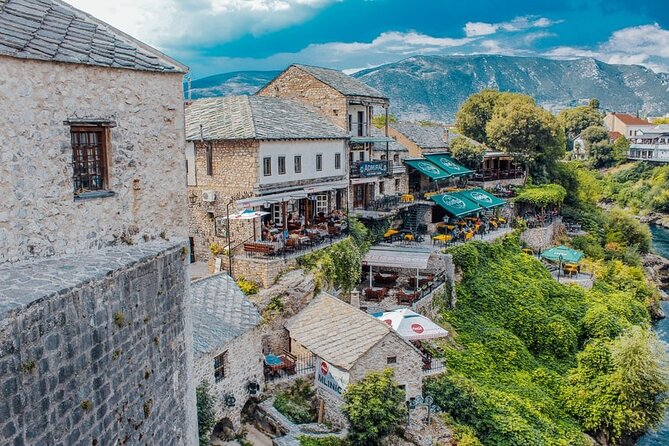
From Montenegro you cross into Bosnia and Herzegovina for Mostar. You get the icon: the Old Bridge, Stari Most, UNESCO-protected and built in the 16th century in Islamic architectural style. You do not just pass it, you also spend time in the Old Bazaar, with time for the colorful streets and the commemorative “Don’t Forget” stones described around town.
Then you move to Blagaj tekija, outside Mostar. The plan places it at the foot of a cliff with blue waters and describes it as a small Ottoman medieval town feel, with the spring of River Buna shaping the setting. This is one of the calmer, more nature-linked stops in the latter half of the tour.
Day 13 brings you to Sarajevo, where the itinerary includes walking on uneven terrain and visiting ruins that show reminders of the Yugoslav War, including bullet holes and cannon marks. You also cover both Ottoman and Austria-Hungarian parts of the city, with markets, bazaars, mosques, churches, and synagogues as part of the overview.
You then visit Latin Bridge and learn how WWI is tied to the event that unfolded here. That is followed by free time in the old town to eat meat dishes and try desserts at your own pace.
If you are sensitive to war-related visuals, Sarajevo is the day to plan your own pace. You can stay present for the facts your guide covers, but you do not have to force nonstop intensity.
Day 14: Sarajevo Airport Transfer or Belgrade Drop-Off
Your final day ends with a transfer choice. After breakfast, you are transferred to either Sarajevo Airport or Belgrade depending on preference.
The plan notes that airport drop-off in Sarajevo is free of charge only on day 14. If you want a different airport transfer, you need to contact the provider for a quotation.
This is practical, not glamorous, but it matters. A good end transfer means you avoid stress when you are already tired from two weeks of movement.
Who This Tour Suits Best
This tour fits you best if you want a guided, organized way to see the Balkans across many countries without the burden of planning. It is also a good match if you care about UNESCO sites and want enough time in each place to feel like you learned something, not just took a photo.
It is less ideal if you need lots of free afternoons to wander alone for hours, because the schedule is full. Also, if you hate driving days, be aware that your itinerary includes multiple long stretches between cities.
For comfort, you get 3-star hotels and breakfast each morning, plus private transportation. For flexibility, you have control over lunches and dinners since those are not included.
Should You Book This Semi-Private Balkans Tour?
Book it if you want a high-density Balkans intro with private transport, small-group attention, and major UNESCO stops handled for you. The price feels high on paper, but it is supported by what you do not have to manage daily: transport, entrances for visited sites, taxes, and most of the daily operational details.
Think twice if you are traveling on a tight meal budget or if your ideal pace is slow. This itinerary is built to move, and you will feel that in your feet and your schedule.
If you do book, pack sensible shoes, plan a realistic food budget, and use your guide’s time wisely. Ask questions early in the day. You will get more out of each stop when you know what you are looking at.
FAQ
How many people are on this tour?
The tour has a maximum of 10 travelers.
Where does the tour start and when?
It starts in Athens, with meeting time at 9:00 am.
What is included in the price?
Included are 3-star hotel stays with breakfast, private transportation, a professional tour guide, hotel pick-up in Athens, airport drop-off in Sarajevo or hotel drop-off in Belgrade, entry tickets for visited sites, tourist taxes, and road costs like petrol and international car insurance.
Are meals besides breakfast included?
No. Lunches, dinners, drinks, and snacks are not included.
What happens on the last day?
After breakfast on day 14, you are transferred to either Sarajevo Airport or Belgrade based on your preference.
Is Sarajevo airport drop-off always free?
Airport drop-off in Sarajevo is free of charge only on the last day of the tour, day 14. Other transfer arrangements require contacting the provider for a quotation.
What kind of hotels will I stay in?
You will stay in 3-star hotels for the included nights.
Is the itinerary very packed?
Yes. It is designed for 14 days with multiple cities and several UNESCO stops, so you should expect a structured, full schedule rather than long unscheduled downtime.
Fresh options around Athens
- Classical Greece 3-Day Tour: Epidaurus, Mycenae, Olympia and Delphi from Athens★ 4.5 · 15 reviews
- 8-Day Classic Greece Tour: Athens, Epidaurus, Mycenae, Olympia, Delphi & Meteora★ 4.0 · 4 reviews
- 3-Hour Small Group Coasteering in Sounio★ 5.0 · 12 reviews
- Get Lost in Athens with an Insider★ 4.5 · 28 reviews
- Christmas food and walking tour in Athens★ 5.0 · 6 reviews
- Cruise into Athens?! Best of Athens Tour from Piraeus Cruise Port★ 4.5 · 5 reviews
- Electric Trikke Bike Athens Complete Tour★ 5.0 · 35 reviews
- Athens City Game: The Journey through Time★ 5.0 · 9 reviews
Private, compared.


Athens Airport Private Arrival Transfer with Meet & Greet
Read our review →
Athens Airport to Athens Hotels Private Arrival Transfer
Read our review →
Private Biblical Tour Ancient Corinth & Isthmus Canal from Athens
Read our review →
4 Hours – Athens & Acropolis Highlights Private Tour
Read our review →