Reviewed · TOURS
Unexpected Athens Orientation Tour
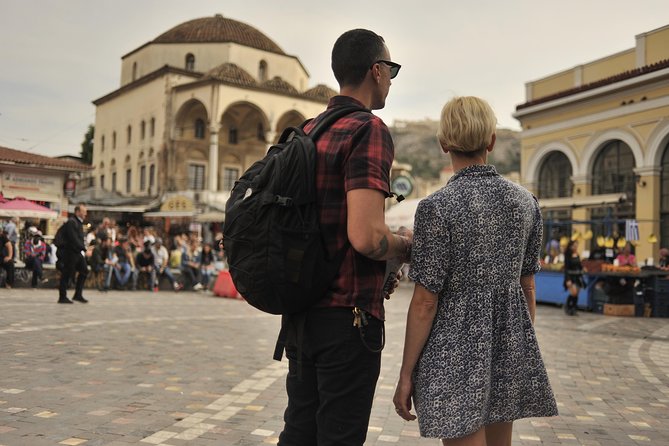
This alternative Athens orientation tour is interesting because it turns the city into a moving timeline, letting you connect ancient and modern Athens block by block. It’s built to help you understand why the capital looks the way it does, and how different powers left fingerprints you can still see.
I love the mix of 19th-century landmark buildings with the Ottoman-era neighborhoods that feel closer to everyday life. I also like the way your guide uses a map that covers 2,500 years of city change, so you’re not just collecting sights, you’re collecting context.
One possible drawback to plan around: the stop at a World War II prison is closed on Mondays and Tuesdays, so your route will feel different depending on the day you book.
Key things that make this tour worth your time
- A true orientation walk that connects central squares, markets, and neighborhoods into one story
- Neoclassical “European capital” landmarks like the Parliament, Academy, University, and National Library
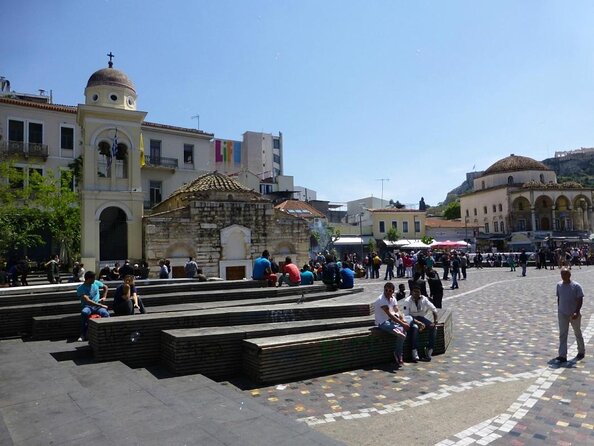
- Ottoman neighborhoods in Psiri and Monastiraki, where old and new Athens rub shoulders
- A WWII prison visit that changes the tone of the walk, when it’s open
- Underground and riverside moments that point out surviving traces of older Athens
How “unexpected” Athens actually works on your feet

Athens can feel like two cities at once. You have the postcard ancient sites everyone plans around, and then you have the living modern city with its markets, squares, and immigrant histories. This tour leans hard into that second side, with stops that help you see Athens as an East-West crossroads that keeps rewriting itself.
The best part is the way the walk is structured for understanding, not just photo taking. Your guide keeps pulling the thread: Why this building here? Why did that neighborhood look different? How did the ancient city make room for later powers? You end up with a mental map that lasts long after the 4 hours are over.
This is also where the guide quality matters. In the experiences I looked at, guides such as Simos and Andreas were praised for attentive, engaged guiding and good pacing. Antigoni and Christina were also singled out for clear explanations and an easy, friendly style. That mix of information plus momentum is what makes a half-day walk feel like it was worth planning your schedule around.
More of Athens worth an open tab:
- Athens: Acropolis & up to 5 Archaeological Sites Combo Pass
★ 4.4 · 12,619 reviews - Athens: Acropolis, Parthenon & Acropolis Museum Guided Tour
★ 4.8 · 9,316 reviews - Athens: Cape Sounion & Poseidon Temple Sunset Half-Day Trip
★ 4.8 · 8,241 reviews
The 4-hour route: where you start, where you end, and how the day flows
You’ll spend about 4 hours walking, with a finish at Monastiraki Square. Starting points can be Syntagma Square or Kolonaki, depending on the option you choose. Meeting point details can vary, so expect the tour operator to guide you to the exact spot based on your booking.
The route moves through Athens at a good walking pace, with guided segments around:
- the Kolonaki area (about 1 hour),
- Exarcheia (about 1 hour),
- Psiri (about 1 hour),
- and Monastiraki (about 30 minutes).
That timing is practical. You get enough time in the neighborhoods to understand their character, but you’re still fresh enough to enjoy the streets when you’re done. Bring comfortable shoes. This is not a quick shuffle with frequent stops to sit down.
Also keep in mind that the “story” is the product. Food is not included, so if you want a meal during the tour, plan to grab something after. If you like to keep moving and then reward yourself later, this fits nicely.
Syntagma and Kolonaki: the “modern capital” lesson
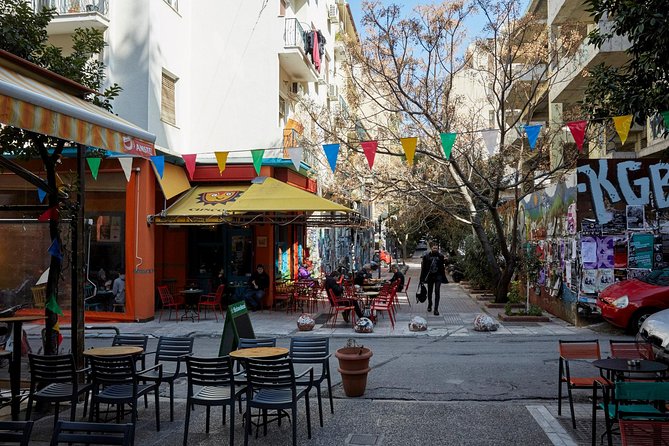
If you start around Syntagma Square, you’re stepping into the center of how modern Athens presents itself. Even when you’re standing still, the buildings around you explain a lot, because this is where the city shows its 19th-century ambitions.
One of the tour’s strong choices is that it connects royal palaces and 19th-century landmarks with the broader idea of Athens becoming a European capital. The Greek Parliament, along with the surrounding civic complex feeling, matters because it’s not just architecture. It’s a clue to how Greece chose to frame itself in the modern era.
If you start from Kolonaki, you’ll spend time in a different mood. Kolonaki tends to feel more polished and institutional, and that makes it a good starting lens for the tour. You see the city’s formal side early, so later, when you move into markets and Ottoman-influenced streets, the contrast becomes meaningful.
Either way, I like this approach because it helps you stop treating Athens as only ancient ruins plus museums. You start to see the city as a political and cultural project that kept evolving.
Exarcheia: local Athens with a sharp edge
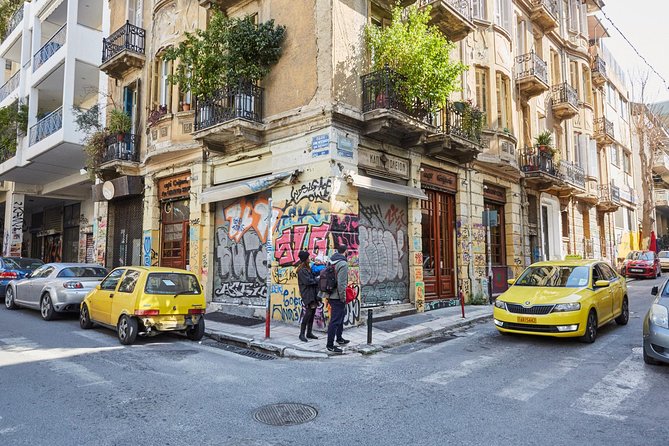
Exarcheia is a neighborhood many first-time visitors only pass through. On this tour, you get real guided time, which is the difference between guessing and understanding.
This is one of those stops where the guide’s role is extra important. Your guide helps you read what you see, not just what you’re told. You get context for why the area has its particular vibe, and how it fits into Athens as a whole, including the push and pull between different eras and values.
Even if you’re not the type to care about politics, this part helps you grasp how modern Athens carries tensions that have deep roots. That makes the rest of the walk feel less random, more like a chain of cause and effect.
Same corner of Greece, a different kind of day:
- Athens: Acropolis and Parthenon Guided Walking Tour
★ 4.6 · 5,882 reviews - All Day Cruise -3 Islands to Agistri,Moni, Aegina with lunch and drinks included
★ 5.0 · 4,958 reviews - Athens, Piraeus, and Coastline: Blue Hop-On Hop-Off Bus
★ 3.9 · 4,849 reviews - Greek Food Walking Tour in Athens
★ 5.0 · 4,740 reviews
Psiri: where Ottoman footprints and daily life intersect
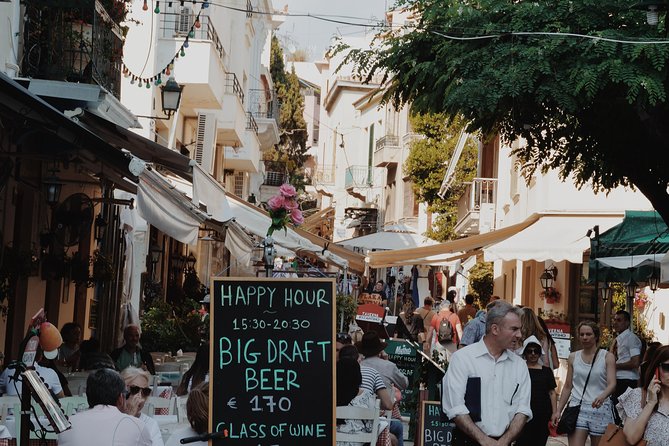
The walk shifts gears into more street-level Athens in Psiri. This is where the tour’s “East-West influences” theme becomes very physical. You’re not only seeing history behind glass. You’re walking through neighborhoods where older patterns are still recognizable.
A standout feature here is the focus on Ottoman neighborhoods. The tour specifically points you to how those footprints remain in Psiri and Monastiraki, and it treats this as more than a decoration. You learn how different systems of life mixed, or didn’t mix, with Western European ideas as Athens grew into a modern capital.
This neighborhood time also works well for pacing. After the civic feel of central Athens and the sharper atmosphere of Exarcheia, Psiri is a good middle. You can feel the city’s energy without it being overwhelming, and you get time to look at streets, buildings, and the way people move through space.
If you’re the kind of traveler who likes to understand why a neighborhood feels the way it does, you’ll appreciate this segment.
Monastiraki and the markets: the missing link you can actually feel

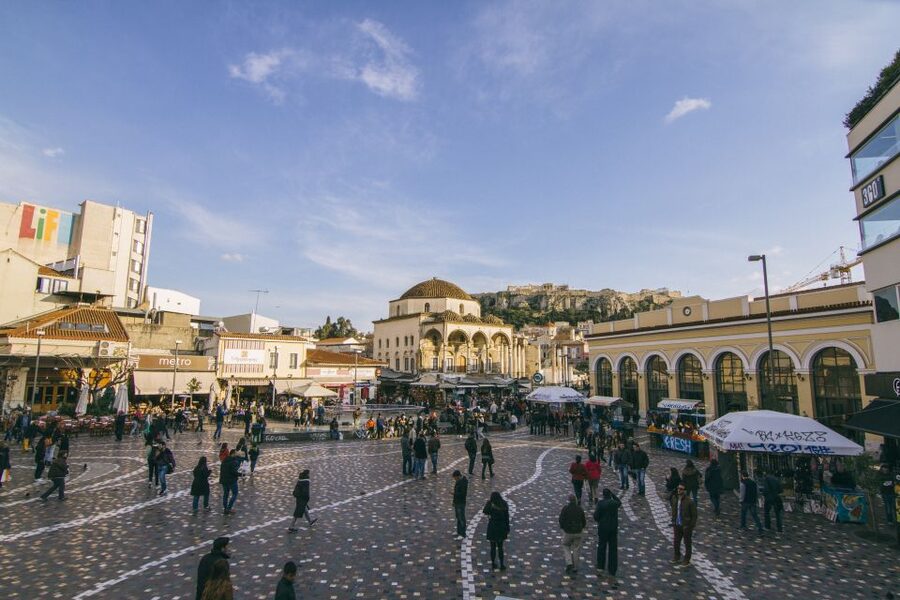
You finish at Monastiraki Square, with about 30 minutes of guided time there. It’s the right kind of ending. Monastiraki is famous enough to be recognizable, but it still offers plenty of smaller street corners where the older layers show.
The tour helps you connect the dots between:
- the ancient era you came for,
- the modern capital you’re standing in,
- and the everyday neighborhoods where history continues through street life.
The guide also brings in key central areas along the way, including Omonia Square and Kotzia Square, plus the central markets. Those are not just “passing stops.” They help you see how Athens works as a city, not only as a museum with sidewalks.
And yes, there’s a strong Ottoman thread here too. Seeing Monastiraki in the tour’s framework makes its look feel less like random layers and more like a readable timeline.
The WWII prison visit: the tour’s emotional pivot
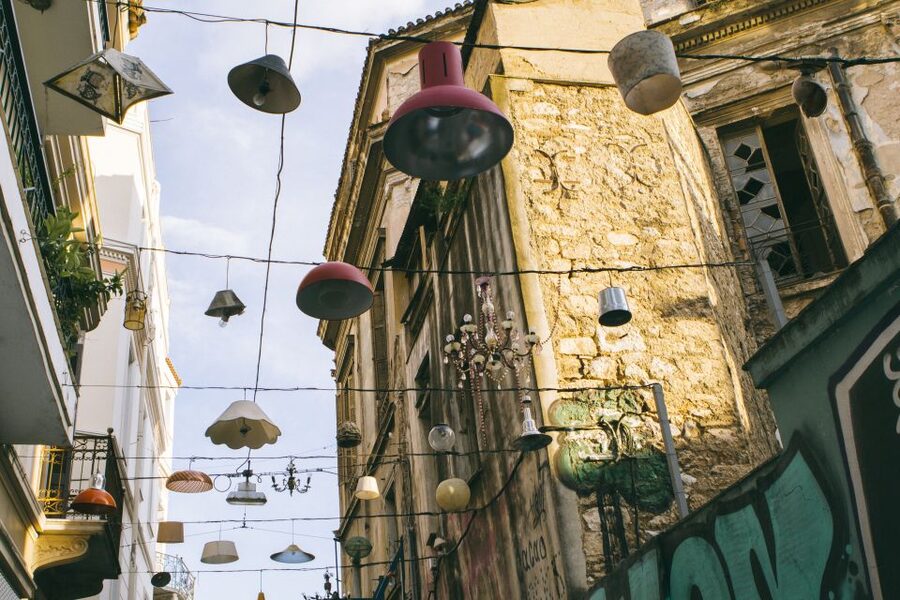
One of the most memorable stops is the World War II prison, where you descend underground. This part is not for everyone in the same way that a viewpoint is for everyone, because it changes the tone. But it’s also exactly the kind of “unexpected Athens” that makes the tour stand out from standard sightseeing loops.
Important detail: the prison is closed on Mondays and Tuesdays. If your dates fall on those days, expect the tour to adjust around it. If you’re strongly hoping for that stop, it’s worth choosing your day carefully.
I like this inclusion because it reminds you that Athens history is not only classical and then modern. The 20th century weighs on the city, and understanding that makes everything else feel more grounded.
Royal palaces, industrial-era landmarks, and international architecture

A lot of Athens tours focus on one era, maybe two. This one threads together multiple periods through architecture and the idea of influence.
Early on, you’ll encounter 19th-century landmarks tied to the industrial revolution and the royal palace era. The goal is not just to admire. It’s to explain the shift in how Athens presented itself, especially as it tried to build a new identity that could stand among European capitals.
The tour then highlights landmark buildings of international architectural interest, including:
- the Academy,
- University buildings,
- and the National Library.
This is where the walk becomes educational in a practical way. You start to notice common design logic and shared European tastes, and you understand that these buildings were part of an effort to shape Athens into something legible to the wider world.
If you’ve ever stood in front of a grand Greek building and wondered what it was saying, this part gives you the decoder ring.
Ancient rivers still flowing, plus tombs from a foregone era
The tour also includes moments that connect you to older Athens in a less obvious way. You’ll watch ancient rivers still flowing, and you’ll visit tombs from a different era.
Because the specific sites can vary by day and routing, don’t treat this as a checklist of names. Treat it as a concept: Athens didn’t stop evolving after antiquity. Waterways, burial grounds, and older landscape lines helped carry the city forward, even when power changed and styles changed.
These are the kinds of stops that make your photos less about monuments and more about atmosphere. You get a sense of time stretching, which is the whole point of doing an orientation tour instead of only a highlights tour.
What you get for $62: value that comes from time plus context
At about $62 per person for a 4-hour guided walk, the value is mostly about what you buy with your time: a guide who connects dots across centuries and neighborhoods.
Two things make this feel like more than an overpriced walk:
- The city map included, with a guide that traces transformations across 2,500 years. This helps you review what you learned later.
- A live guide in English or French, with a format designed for movement through multiple districts.
Food and drinks are not included, so plan on paying for your own meal. That’s normal for walking tours, but it’s part of the math. If you want drinks or a full meal inside the tour, you’ll need to add it yourself.
Gratuity is optional, so you can reward your guide if you felt it was worth it. The guides in the experiences I reviewed were repeatedly praised for attentiveness, engagement, and pacing, which is a big deal when you’re paying for guided time.
Who should book this tour, and who might skip it
This tour is a great fit if you:
- want an Athens orientation that goes beyond temples and museum tickets,
- like neighborhood walking with explanations,
- care about how different empires and cultures left lasting traces,
- and enjoy architecture and city planning as part of the story.
You might consider another option if you:
- strongly prefer purely ancient sites, with no WWII or Ottoman-era content,
- don’t want to walk for 4 hours,
- or need a food-included experience.
There’s also a private group option, which can be useful if you want more flexibility in pacing or questions. And since the guide language is English or French, it works well for mixed language groups too.
Should you book the Unexpected Athens Orientation Tour?
If you want to understand Athens as a living city, not just a list of attractions, I’d book it. The walk is short enough to fit into a first few days, and it’s structured around the connections that most people miss when they only chase “ancient must-dos.”
Choose based on your dates if you care about the underground WWII prison stop, since it’s closed on Mondays and Tuesdays. Otherwise, commit to the walking mindset, wear good shoes, and show up ready to look at the city like a timeline.
FAQ
How long is the tour?
The duration is 4 hours.
What is the meeting point for the tour?
The meeting point may vary depending on the option you booked.
Where does the tour end?
The tour finishes at Monastiraki Square.
Are there different starting locations?
Yes. You can start at Syntagma (Constitution) Square or at Kolonaki.
What languages are the guides available in?
The guide is available in English or French.
Is the World War II prison included?
Yes, the tour includes a descent to a notorious prison of World War II, but it is closed on Mondays and Tuesdays.
Is food included?
No. Food and drinks are not included.
What should I bring?
Wear comfortable shoes.
Is a private group available?
Yes, private group availability is offered.
Fresh options around Athens
- 3-Day Trip to Delphi and Meteora from Athens★ 4.0 · 53 reviews
- 3-Day Tour: Mycenae, Epidaurus, Nafplio, Delphi, Meteora With 4* Hotel Included★ 5.0 · 6 reviews
- 2 or 3-Day Private Tour: Ancient Olympia, Corinth, Mycenae, Epidaurus, Nafplion★ 5.0 · 11 reviews
- 4-Day Classical Tour Greece: Epidaurus, Mycenae, Olympia, Delphi, Meteora★ 4.5 · 4 reviews
- Hydra Island & Mythical Full Peloponnese Private 9-Day Tour★ 5.0 · 3 reviews
- 27 Day Grand Circle Tour of Mainland & Corfu, Mykonos, Santorini★ 5.0 · 4 reviews
- 20-Minutes Natural Pedicure with Exotic Fish★ 5.0 · 17 reviews
- 2 Day Delphi, Meteora Iconic Sites Private Tour With 4* Hotel Included★ 5.0 · 3 reviews
Tours, compared.

Acropolis, Parthenon & Acropolis Museum Guided Tour
Read our review →



Mythology of Delphi, Museum and Arachova Guided Tour
Read our review →
Acropolis, Parthenon & Acropolis Museum Guided Tour
Read our review →