
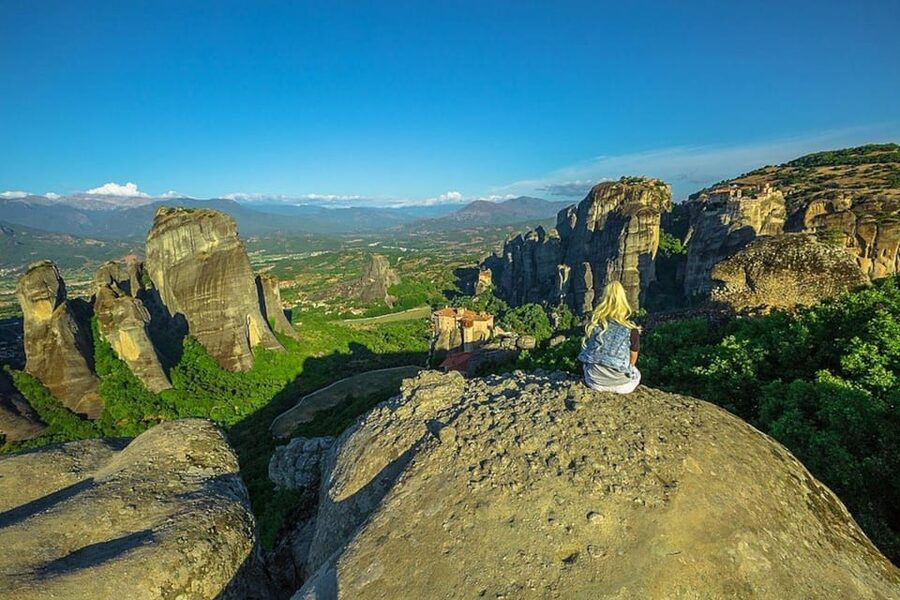
Reviewed · METEORA TOURS FROM ATHENS
Meteora Rocks and Religious Sites Tour with Photo Stops
Meteora is one of those places where the scenery feels instantly serious, but the story behind it is what really hooks you. I love how this tour mixes cave hermitages with monastery viewpoints, so you get the full religious arc, not just postcard rocks. I also like the way the route is paced for photos, with smart stops that keep the day moving. The main thing to consider is that it involves walking and uneven paths, so it is not a great fit if you have mobility limits.
This is a half-day minibus tour that starts outside Kalabaka Train Station and runs about 4 hours. You will cover Saint Antonios, the cave of St. George the Mandilas, three Meteora monasteries, plus a Byzantine church dedicated to the Virgin Mary. In the small-group spirit described by guests, it feels more like a focused outing than a big bus cattle call, but you will still want comfortable shoes and a camera ready.
Key Highlights You Will Actually Feel
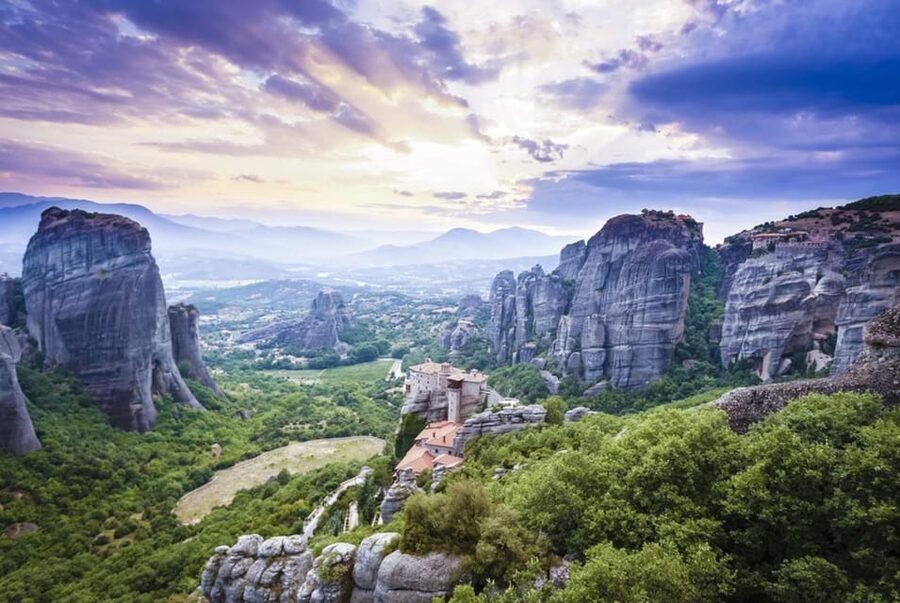
- Small-group minibus comfort for a 4-hour run, with air-conditioned ease for the scenic drives.
- Saint Antonios stop tied to the first hermits and the start of Meteora’s monastic pattern.
- Cave visits that make the story physical, not abstract, especially the cave of St. George the Mandilas.
- Three monastery photo stops, chosen for views, so you get the wow without racing through everything.
- A Byzantine church dedicated to the Virgin Mary, built about 300 years before the first monks arrived.
- English and Greek live guidance, with guides described as strong on history and practical sight-spotting.
Why Meteora Still Feels Different: Monks, Caves, and Cliff Monasteries
Meteora does not need extra hype. The rocks already do the talking, towering over the valley like they were planted there on purpose. But what makes this experience compelling is that it links the caves, the early hermits, and the monastery sites into one readable story.
You are not just looking up at monasteries. You are also learning how people lived with isolation in mind, first in caves and abandoned hermitages, and later through structured religious communities on the cliffs. That connection between place and purpose is what makes your photos feel more meaningful when you get back home.
More Meteora trips from Athens:
- Athens: Meteora Monasteries Day Trip with Caves and Lunch
★ 4.7 · 2,964 reviews - Athens: Meteora Monasteries Day Tour with Lunch
★ 4.8 · 2,196 reviews - Athens: Meteora Tour with Local Guide and Greek Lunch
★ 4.8 · 1,561 reviews
Quick Reality Check on Price and Time (and What You Actually See)
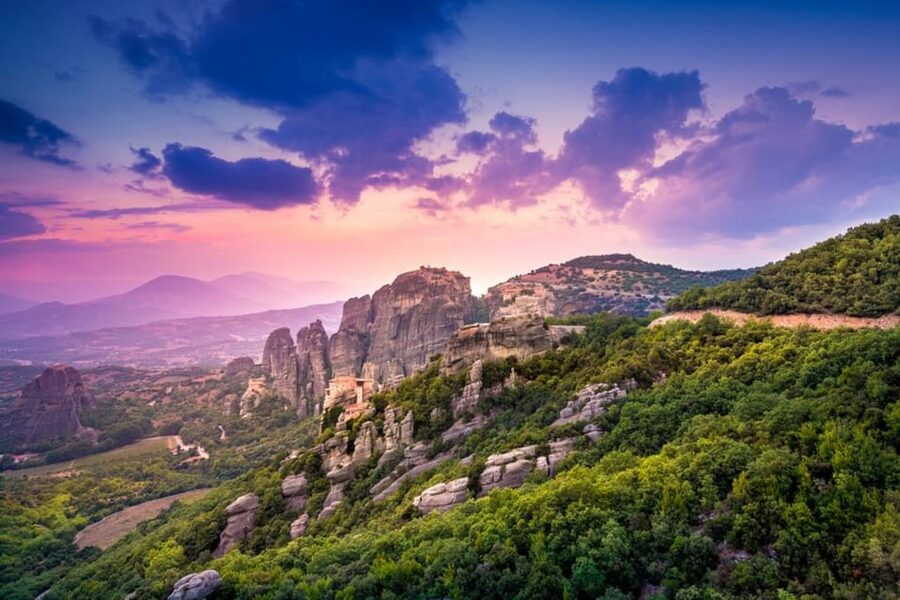
At $41 per person for about 4 hours, you are buying a lot of access for a short time. This is not one long hike and not a long museum-style crawl either. You get guided context plus multiple distinct stops: caves, a Byzantine church, and three monastery viewpoints.
The trade-off is simple. You cannot absorb every monastery detail at deep, slow speed in a half-day. Entrance fees are not included, and monastery time can be limited by the group pace. So think of this as a best-of sampling that gets you oriented, then lets you decide if you want a longer, more detailed visit on your own later.
Kalabaka Train Station Pickup and a Smooth Half-Day Flow
The tour begins outside Kalabaka Train Station. From there, you hop into a comfortable, air-conditioned mini-bus, which matters because Meteora drives can be scenic but also a bit slow and winding.
Your day follows a logical rhythm. You head first toward Saint Antonios, then you move into cave and religious-site stops. The middle of the tour is built around monastery photo opportunities and short visits, and it ends back at the train station.
This format is ideal when you have limited time, you want guidance to cut through the confusion of which sites to prioritize, or you simply do not want to spend your morning figuring out transportation between multiple hilltop viewpoints.
Saint Antonios: Where the First Hermits Set the Pattern
Your first major stop centers on Saint Antonios, described as the place where the earliest hermits arrived in Meteora. This is the part that turns Meteora from scenery into a timeline.
Here is the key idea I would carry with me: early religious life in Meteora started with isolation. People sought solitude in the area’s caves, and over time those caves accumulated abandoned hermitages connected to the first generations of monks. When your guide explains the 10-century history behind this phase, the cliff scenery starts to make sense in human terms.
What to watch for on this stop is not just the view. It is the way the place communicates a lifestyle, not a single event. Even if you are not a religious history specialist, you can feel the logic of why caves worked before monks moved communities to monasteries.
Same corner of Greece, a different kind of day:
- Athens: Acropolis & up to 5 Archaeological Sites Combo Pass
★ 4.4 · 12,619 reviews - Athens: Acropolis, Parthenon & Acropolis Museum Guided Tour
★ 4.8 · 9,316 reviews - Athens: Cape Sounion & Poseidon Temple Sunset Half-Day Trip
★ 4.8 · 8,241 reviews - Athens: Acropolis and Parthenon Guided Walking Tour
★ 4.6 · 5,882 reviews
The Cave of St. George the Mandilas, Plus the Photo-Stop Game Plan
After Saint Antonios, you travel to the cave of St. George the Mandilas. This stop is built for both understanding and photos, and it helps you see Meteora’s religious tradition as something grounded in specific sacred spaces, not just grand buildings on rocks.
A practical way to enjoy this segment is to treat the caves like a quiet classroom. Look at the setting first, then let your eyes adjust to the scale and details. Caves can look simple until you notice how they fit into the broader Meteora system of worship and isolation.
Also, plan your camera use. The tour is designed around photo stops at the most impressive angles, so you do not need to constantly snap while you are listening. I like to take one wide shot quickly, then one closer shot when the guide points out a particularly photogenic viewpoint. You end up with photos that actually reflect what you learned, not just a blur of rock.
Cave Visits and a Byzantine Church Built Before the Monks
One of the most interesting curveballs in this tour is the Byzantine church dedicated to the Virgin Mary, built about 300 years before the first monks arrived in Meteora. That detail matters, because it suggests the religious significance of the area did not begin with monastic life.
In other words, Meteora was already part of a wider spiritual geography, even before the caves and monasteries became the famous system you see today. That makes your time there feel less like a single-tradition origin story and more like a layered place shaped over centuries.
At this stage of the tour, you also tend to appreciate the “human scale” moments. Churches and caves both remind you these sites were built and used by real people, not just preserved scenery for modern visitors. When your guide ties the timing and purpose together, your photos start to look like evidence, not decoration.
Three Meteora Monasteries and the Art of Viewing Without Rushing
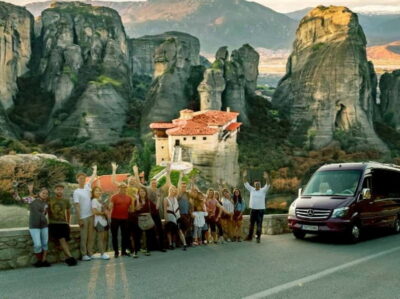
The centerpiece of the tour is three Meteora monasteries. The minibus stops so you can take photos of the stunning views, and you can also visit. In a place where everything is spectacular, having someone else choose the timing and vantage points saves energy and protects your attention.
Here is what I think makes the monastery stops work well in a half-day format:
- You get variety. You are not stuck at only one monastery viewpoint for hours.
- You get momentum. You keep moving, so the day does not drag.
- You get context. The guide’s explanations help your brain connect the buildings to the story you just heard at the caves.
A small consideration: monastery visits may require modest dress. You do not need to come dressed like a monk, but you should be prepared for shoulders and knees expectations. Comfortable shoes are also essential because even short visits can involve walking and uneven ground.
If you want the full feeling of Meteora, this is a great way to start. If you want the deepest monastery experience, you will still benefit from knowing which monastery left the strongest impression, since you can return later on your own time.
What the Guide Adds: Ioanna, Kostas, and Real-World Spotting
The difference between a “seeing sites” tour and a “getting it” tour is usually the guide. In this case, guests highlight the same pattern: a guide who blends history with smart sight-spotting and a friendly tone.
Names you may hear include Ioanna as a live guide and Kostas as the driver mentioned by visitors. The vibe described is practical and calm, with guidance that covers everything from history and archaeology to how Meteora’s geology relates to the monastic setting. That mix matters because Meteora is not only religious. It is also rock formation, human adaptation, and geography.
The small-group feel is another big plus. One guest described a flexible mini-bus setup that avoids the distraction of too many people. Even if your own group size varies, you can still expect a more personal pace than big bus tours, especially on the photo stops.
Transport, Walking, and Footwear: The Stuff That Determines Comfort
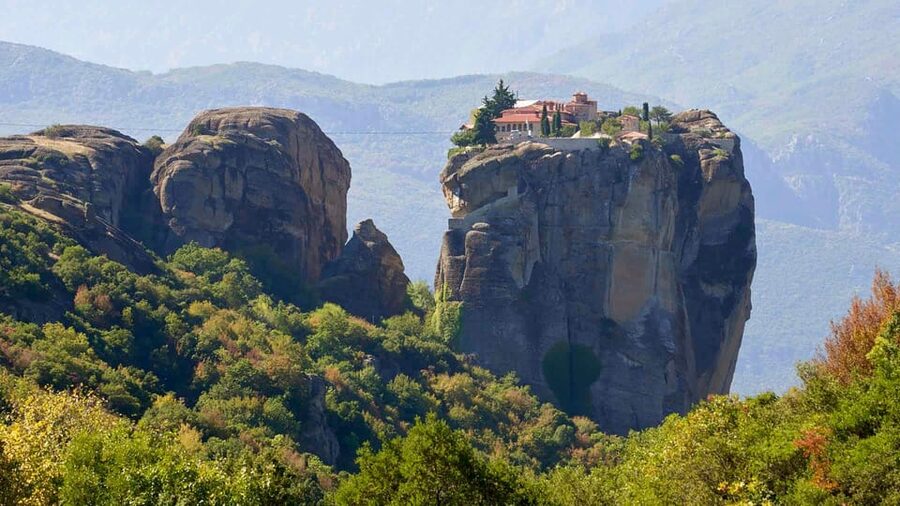
The tour includes scenic driving, short walks, and some time spent standing for views. The official “bring comfortable shoes” advice is not fluff. Meteora terrain can be slippery or uneven depending on conditions, and your legs will notice if you show up in sandals.
Also bring water. The tour is only 4 hours, but you are outdoors for viewpoints and you might be on slopes. I recommend a small bottle you can refill later in town.
Weather matters too. One guest described snow on the day of the tour. Even without snow, dress for temperature changes. Your minutes at a high viewpoint can feel colder than where you started.
Who This Tour Suits Best, and Who Should Skip It
This tour is a strong match if you want:
- A half-day introduction to Meteora’s key religious sites without the hassle of planning transport between them.
- Guided explanations that connect the caves, hermits, monasteries, and church history.
- A structured route with photo stops where you can focus on getting the shots you actually care about.
It is not suitable for people with mobility impairments or wheelchair users, based on the tour’s limitations.
If you are the type who loves religious history and wants the quick version, you will feel satisfied. If you prefer total freedom to linger at one monastery, you might feel constrained by the pace of multiple stops.
Price and Value: Is $41 Worth It?
At $41 per person, the value comes from how much variety you pack into 4 hours. You are not just getting one monastery and a photo. You also visit cave sites, including the cave of St. George the Mandilas, plus three monastery visits and a Byzantine Virgin Mary church.
Entrance fees are not included, so keep that in mind when you budget. But even with that, the guided routing saves time and reduces confusion. In Meteora, time lost to wrong turn decisions or missed opening hours can cost more than the entrance fees.
To me, the strongest argument for booking is this: the tour gives you a guided narrative. In a place like Meteora, that narrative is what turns “great views” into “I understand what I’m looking at.”
Should You Book This Meteora Tour or DIY It?
Book this tour if you want a clean, guided half-day that hits multiple sites in the Meteora system, with photo stops built into the schedule. It is especially worth it if you are staying near Kalabaka and want an efficient way to experience the most important cave and monastery themes.
Skip it, or at least consider a different option, if you know you want to spend long hours inside one monastery complex or you need a fully accessible route. In Meteora, a 4-hour format works best for first-timers who want orientation and guidance.
If you book, I suggest you go in with one simple goal: leave with a mental map of the early hermits story, so your later visits, whether guided or DIY, feel connected instead of random.
FAQ
Where does the Meteora tour pick up?
The meeting point is outside of Kalabaka’s Train Station.
How long is the tour?
The duration is 4 hours.
What sites are included in the tour?
The tour includes visits to three Meteora monasteries, the cave of St. George the Mandilas, a Byzantine church dedicated to the Virgin Mary, and a scenic drive with a stop at Saint Antonios.
Are monastery entrance fees included?
No. Monastery entrance fees are not included.
What language is the live guide?
The tour has live guidance in English and Greek.
Is the tour suitable for wheelchair users or limited mobility?
No. It is not suitable for people with mobility impairments or wheelchair users.
Fresh options around Athens
- 3-Day Trip to Delphi and Meteora from Athens★ 4.0 · 53 reviews
- 3-Day Tour: Mycenae, Epidaurus, Nafplio, Delphi, Meteora With 4* Hotel Included★ 5.0 · 6 reviews
- 2 or 3-Day Private Tour: Ancient Olympia, Corinth, Mycenae, Epidaurus, Nafplion★ 5.0 · 11 reviews
- 4-Day Classical Tour Greece: Epidaurus, Mycenae, Olympia, Delphi, Meteora★ 4.5 · 4 reviews
- Hydra Island & Mythical Full Peloponnese Private 9-Day Tour★ 5.0 · 3 reviews
- 27 Day Grand Circle Tour of Mainland & Corfu, Mykonos, Santorini★ 5.0 · 4 reviews
- 20-Minutes Natural Pedicure with Exotic Fish★ 5.0 · 17 reviews
- 2 Day Delphi, Meteora Iconic Sites Private Tour With 4* Hotel Included★ 5.0 · 3 reviews
Meteora Tours from Athens, compared.
Meteora Monasteries Day Trip with Caves and Lunch
Read our review →

Meteora Tour with Local Guide and Greek Lunch
Read our review →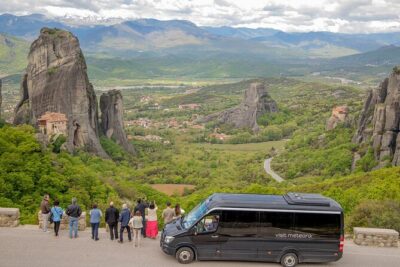
Meteora Monasteries, Caves & Coastal Stopovers with Lunch
Read our review →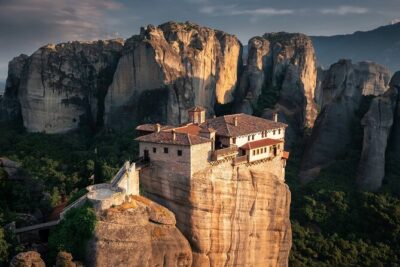
Meteora Monasteries & Caves DayTrip from Athens with Greek Lunch
Read our review →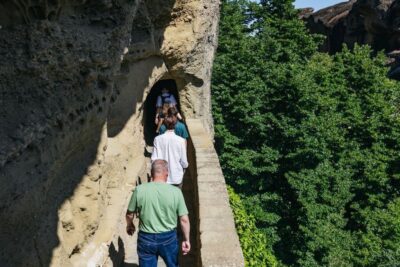
4-Day Classical Greece Tour: Epidaurus, Mycenae, Olympia, Delphi, Meteora
Read our review →
Meteora Monasteries, Hermit Caves Tour with Pickup
Read our review →Browse the lists this tour appears in