
Reviewed · DELPHI DAY TRIPS
4-Day Classical Greece Tour: Epidaurus, Mycenae, Olympia, Delphi, Meteora
This route is interesting because it strings together five UNESCO World Heritage Sites in four days, starting and ending in Athens. You get a professional guide, air-conditioned transport, entrance tickets to the major ruins and museums, and enough structure that you can focus on the stories instead of the logistics. The best part is the combination of famous sites plus a guide who can explain why they mattered, not just where to stand.
Two things I like a lot: the guided site time at Epidaurus, Mycenae, Olympia, Delphi, and Meteora, and the fact that breakfasts and three dinners are included in your hotel. One drawback to consider is that hotel quality can feel uneven depending on what you book, and this is still a classical-site tour with early starts and a fair amount of walking.
Key things to know before you go
- UNESCO-heavy itinerary: five World Heritage Sites across mainland Greece, plus the Leonidas Monument stop
- Early pickup and full days: departures start around 8:30 am and return around 7 pm, traffic-dependent
- Meals included, lunch not: breakfasts and dinners are in the hotels, lunch is pay-as-you-go
- Dress code rules are strict: shoulders and knees covered for worship sites and selected museums
- Language support is scheduled: English throughout, with French only on Mondays
Day 1 from Athens to Epidaurus and Mycenae, plus the Corinth Canal break
Day 1 is a classic Greece sprint. Your morning starts with hotel pickup in the 7:30 am to 8:15 am window, then the tour leaves at 8:30 am. From there, it is straight to the kind of ruins you dream about.
Your first main stop is the Ancient Theatre of Epidaurus, where you get about an hour on site with admission included. This is one of those places where the scale is hard to grasp until you’re there. Try to picture performances in real time, not as a museum scene, and take a few minutes to look back along the seating for how the space is designed.
Next comes Mycenae, with a mix of palace areas and the famous tomb sites tied to the stories around Agamemnon. You get around 90 minutes. The experience here feels more like a layered puzzle: fortification logic, elite life, and myth all sitting close together.
A short museum visit follows at the Epidaurus Archaeological Museum. It’s only 15 minutes, so treat it like a quick orientation, not a long free-roam museum day. The time is tight on purpose, so you’re not stuck in buildings while the rest of the day waits outside.
Then you get a breather at the Corinth Canal, a free stop for about 20 minutes. It is not the deep history stop of the day, but it breaks up the driving and gives you a geographic reset. You can get a few photos and stretch before you settle into the first-night hotel.
One practical note: your first overnight is usually near the sites, but the tour can sometimes place you in Olympia instead of Nauplion for that Day 1 night. So if you care a lot about your hotel location, plan to be flexible.
More Delphi day trips from Athens:
- Athens: Mythology of Delphi, Museum and Arachova Guided Tour
★ 4.6 · 4,008 reviews - From Athens: Delphi Full Day V.R. Audio Guided Tour
★ 4.6 · 3,028 reviews - From Athens: Small-Group Delphi, Museum & Arachova Day Trip
★ 4.8 · 2,476 reviews
Day 2 in Olympia: home of the ancient Olympic Games
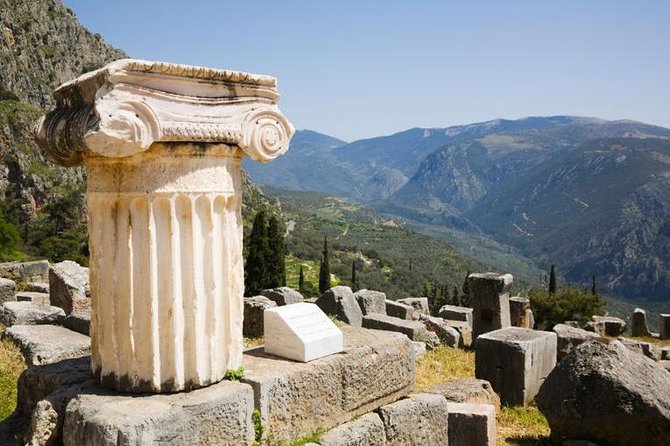
Day 2 is built around Olympia, another UNESCO World Heritage Site and the birthplace story behind the original Olympic Games. You’ll have about 90 minutes at the archaeological site with admission included. Expect wide open spaces, stone textures, and lots of “wait, this is where they held competitions” moments.
Olympia works best if you don’t just skim. Look for how the layout supports crowds and ceremonies, and try to connect what you see to the idea of athletic honor in the ancient Greek world. A guided explanation helps a lot here because the significance is not always obvious if you’ve only seen stadiums that are modern.
After that, you move to the Olympia Archaeological Museum for about an hour. This is where you can slow down. Museums are not just leftovers, they are the best place to understand objects in context, especially sculptures and artifacts connected to the site.
Food-wise, the day keeps you moving. Lunch is on your own, and dinner is included at your hotel. You’ll also cross a sea-bridge for an included stop before dinner. It’s a small change of pace that makes the long day feel less like a nonstop bus ride.
Day 3 in Delphi: prophecy at the Temple of Apollo
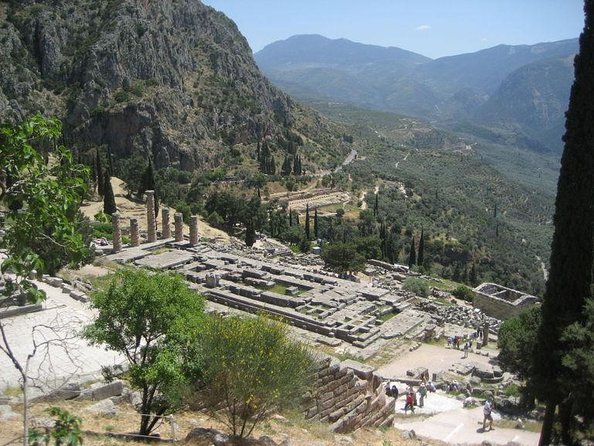
Day 3 is for anyone who likes prophecy, myth, and the idea that ancient people used mountains for more than scenery. Your guided focus begins at the Temple of Apollo at Delphi, with about 90 minutes on site and admission included.
Delphi is one of the easiest places to get emotional about if you let yourself. The setting adds drama, and the guided talk ties it to the role of prophecy in public life. I like treating it like a story set in three dimensions. You’re not just looking at ruins, you’re stepping into a system of beliefs that people truly lived by.
Next is the Delphi Archaeological Museum for about an hour. This is a good match for the time structure because you can see standout pieces without needing an entire afternoon. One detail to look out for is the bronze statue of Iniochos, plus famous dance-related exhibits. Even if you don’t know every name, you can read the design and craftsmanship, and the guide can connect it back to Delphi’s world.
You then get a short, free stop at the Tholos of Athena Pronaia for around 30 minutes. It’s brief, but it helps round out the larger Delphi picture and keeps you from leaving Delphi with only one impression.
Lunch is again pay-as-you-go, and dinner is at your hotel. In general, the tour builds in enough time to eat without derailing the schedule, but it does not try to turn lunch into a food vacation.
Day 4 in Meteora: monasteries on rock, then back to Athens
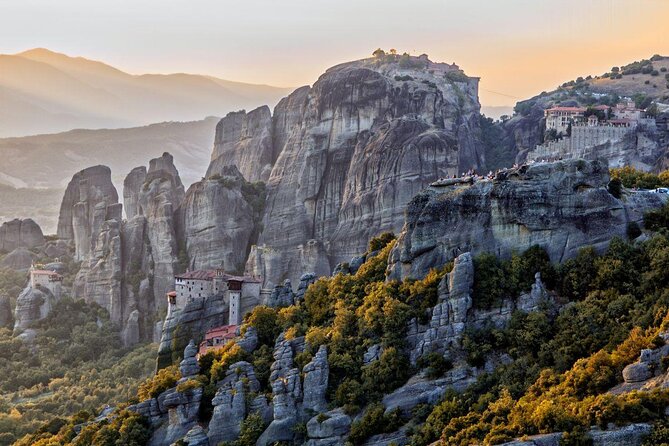
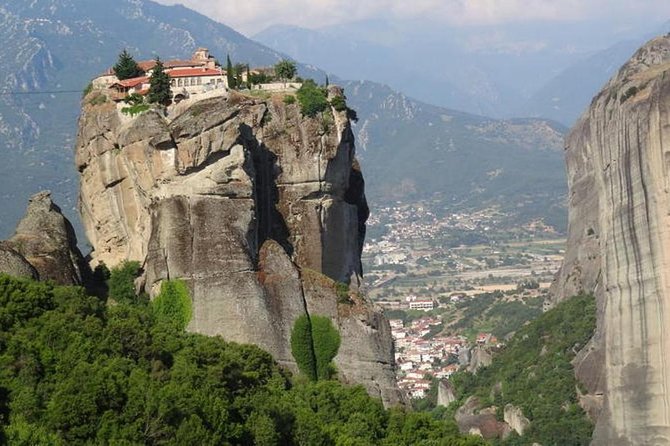
Day 4 is where the trip turns from ruins into dramatic views. After breakfast, you head to Meteora in the Kalambaka area, with about an hour there. Meteora is famous for the monasteries perched on tall rock formations, and the tour includes admission to two monasteries. That matters, because you’re not just driving past, you’re actually inside the places.
Plan for stairs and uneven stone surfaces. You don’t need mountaineering shoes, but you do need real comfort. The physical requirement is listed as moderate, and that is honest. If you’re the type who hates walking between viewpoints, this is not the day to skip the effort.
After Meteora, you take the scenic drive back to Athens with a brief stop at the Leonidas Monument in Thermopylae. It’s short, around 15 minutes, but it is a meaningful way to end the tour. Spartan history connects nicely with the ancient Greece theme, and it breaks the long drive before you reach Athens.
You should expect drop-off back at your Athens pickup location around 19:00, traffic dependent.
More Meteora trips from Athens:
- Athens: Meteora Monasteries Day Trip with Caves and Lunch
★ 4.7 · 2,964 reviews - Athens: Meteora Monasteries Day Tour with Lunch
★ 4.8 · 2,196 reviews - Athens: Meteora Tour with Local Guide and Greek Lunch
★ 4.8 · 1,561 reviews - Athens: Meteora Monasteries, Caves & Coastal Stopovers with Lunch
★ 4.5 · 1,432 reviews
Hotels and included meals: good value, but read the fine print on the star rating
This tour includes accommodation each night, with a choice between tourist-class and 4-star hotels depending on your booking option. Breakfasts and dinners are included, and they’re served at your hotels. That part is genuinely valuable, because it reduces decision fatigue and saves you money compared to buying three meals each day.
That said, hotel expectations are where you need to be careful. Some travelers felt their rooms did not match the 4-star label and described older, basic-feeling properties. Others were very happy with clean rooms, characterful Greek hotel vibes, and buffet spreads that offered plenty to choose from.
My practical takeaway: treat the accommodation as “functional and comfortable with a good breakfast and dinner setup,” not as luxury. If you want modern design, brand-new bathrooms, and North America-style 4-star standards, you may be disappointed. If your goal is to sleep, shower, eat, and wake up ready to tour UNESCO sites, you’ll likely be satisfied.
Also keep in mind the environmental fee of 10€ per room per night, paid at the hotel reception. This is separate from the tour price and shows up in the real world, so plan to have cash or card on hand.
Timing and getting your body through the days
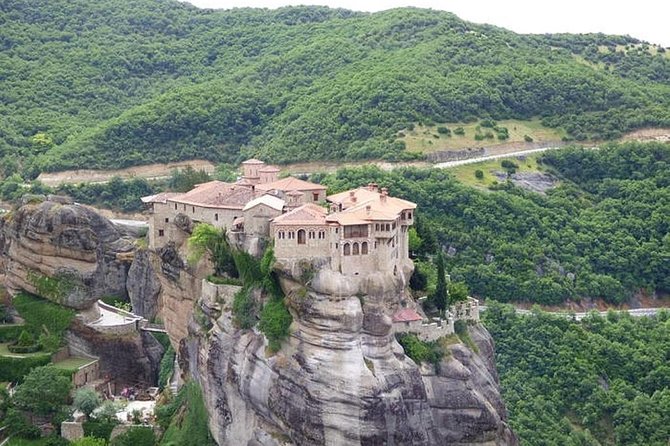
This is a full itinerary, and the schedule is tight in the best way. The payoff is that you visit major sites you’d struggle to string together solo in four days, especially without spending hours on routing and ticket planning.
Still, you should plan your body for:
- early departures around 8:30 am
- walking on uneven surfaces at ancient sites
- enough time pressure that you’ll want to use restroom breaks when offered
A helpful pattern in this type of tour is the balanced mix of guided talks and short ticketed stops. You typically get enough time to see the site, hear the story, and get photos, but you are not meant to wander for hours.
Bring practical items. If you’re going in warm months, hydration is non-negotiable. A hat helps. An umbrella can also help for shade on hot days. And if weather turns, remember that thunder and rain can happen, even near ruins where you expect sun.
Dress code and ticket handling, the two rules that prevent trip-stoppers
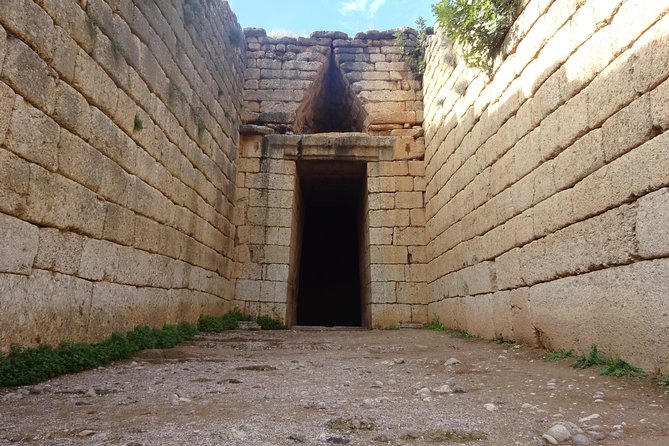
The tour has an explicit dress code for worship sites and selected museums. You need shoulders and knees covered. No shorts or sleeveless tops. If you show up the wrong way, you can be refused entry. It is the kind of rule that sounds simple until you’re standing outside in the heat.
Another helpful operational detail: your guide provides your entry tickets for the sites and museums. That reduces lines for you and helps the group keep moving.
So here’s your smart move: pack a lightweight layer that covers shoulders, and consider pants that reach at least to the knee. It is not about fashion, it is about avoiding the stress of last-minute fixes.
Group size, bus changes, and language expectations
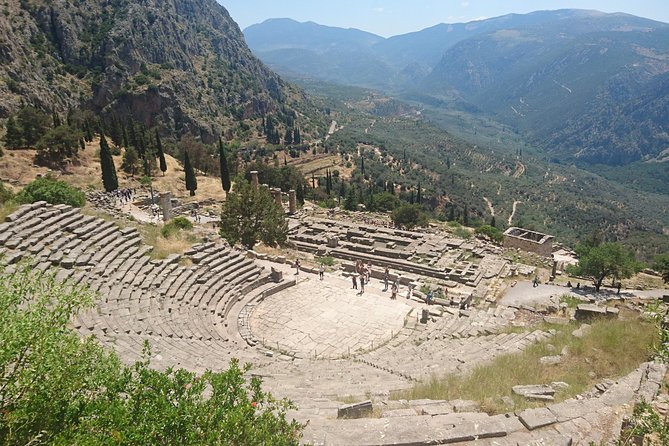
This tour runs with a maximum group size listed as 40 travelers, and the experience can feel like a small-group day when the bus is right-sized. Some groups have been around a dozen to under 20, while others have felt larger and more bus-like, especially if there’s a transition around Delphi for the onward Meteora segment.
Translation-wise, the tour is offered in English, and French is available only on Mondays. In winter season, the tour runs English only.
So if you care about language intensity, pay attention to the day of week and season. For English, you can expect plenty of narration from the guide on the bus and at stops, with a “walk and talk” rhythm in some places.
Is the price worth it for you? What you’re really paying for
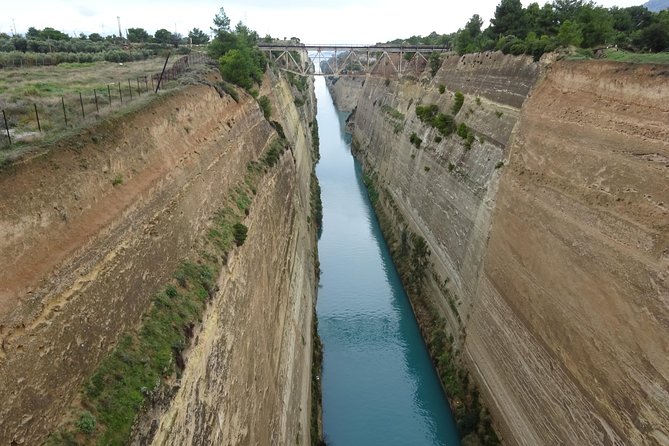
At $766.70 per person, you’re paying for more than entry tickets. You’re paying for:
- four days of guided time at UNESCO sites
- round-trip transport from Athens and hotel pickup and drop-off at selected hotels
- air-conditioned bus comfort between stops
- three included dinners and three included breakfasts
- included admission to major sites and two Meteora monasteries
If you were to build this trip yourself, you would spend a lot of time on scheduling, transportation, and ticket planning. This tour compresses that work into a structured plan with a guide doing the connecting.
Where the value can feel off is if you expected luxury hotels or a more premium dining standard. The best “value match” is someone who wants to see the big Greek classics fast and learns along the way.
Should you book this Classical Greece tour?
Book it if you want a guided UNESCO circuit with hotel convenience, included dinners, and a storyline that makes Epidaurus, Mycenae, Olympia, Delphi, and Meteora feel connected. This is a great fit for history and archaeology fans who don’t want to spend vacation days on planning.
Skip or modify your expectations if you want high-end hotel comfort or very free time at each stop. Also, if your travel style is picky about meal quality and hotel star levels, you may want to verify your hotel category carefully before paying for an upgrade.
If you do go, do one thing that pays off fast: dress correctly for the ruins, wear comfortable shoes, and keep lunch flexible. You’ll have the energy to enjoy the main event, which is standing in the places where Greek history was staged long before calendars were invented.
FAQ
What is included in the tour price?
You get a professional guide, an air-conditioned vehicle, hotel accommodation for your room category, hotel pickup and drop-off (selected hotels), entrance fees to Mycenae, Epidaurus, Olympia, Delphi, and admission to two Meteora monasteries, plus three breakfasts and three dinners.
Are lunch meals included?
No. Breakfast and dinner are included, but lunch is at your own expense each day.
What time does the tour start and when do you return?
Pickup begins around 7:30 am to 8:15 am, and the tour departs at 8:30 am. On the final day, return to Athens is approximately 7:00 pm, depending on traffic.
Do you get hotel pickup from Athens?
Yes, hotel pickup and drop-off are included for selected hotels. Pickup from ports, airports, or private apartments and Airbnbs is not available.
How many UNESCO World Heritage Sites are visited?
The itinerary includes visits to five UNESCO World Heritage Sites: Epidaurus, Mycenae, Olympia, Delphi, and Meteora.
What is the dress code for this tour?
For worship sites and selected museums, you must cover your knees and shoulders. Shorts or sleeveless tops are not allowed, and you may be refused entry if you do not comply.
Are the entry tickets provided?
Yes. Your guide provides the entry tickets for the sites and museums.
Is French available on the tour?
French speaking is available only on Mondays. English is offered as the standard language.
Is there an extra environmental fee at the hotel?
Yes. An environmental fee of 10€ per room per night is paid at the hotel reception.
What do children need to enter discounted tickets?
Children aged 5 to 12 years need a passport or ID to get discounted admission. Without it, they may need to pay the full entrance ticket at the archaeological sites or museums.
More Peloponnese Day Trips from Athens
- From Athens: Mycenae, Epidaurus & Nafplio Full Day Trip
★ 4.8 · 2,438 reviews - From Athens: Mycenae, Epidaurus & Nafplio Full-Day Tour
★ 4.5 · 1,580 reviews - Athens: Peloponnese Highlights Day Trip and V.R. Audio Guide
★ 4.5 · 1,425 reviews - Athens: Ancient Corinth & Nafplio Full Day Trip with Swim
★ 4.8 · 523 reviews
Fresh options around Athens
- 3-Day Trip to Delphi and Meteora from Athens★ 4.0 · 53 reviews
- 3-Day Tour: Mycenae, Epidaurus, Nafplio, Delphi, Meteora With 4* Hotel Included★ 5.0 · 6 reviews
- 2 or 3-Day Private Tour: Ancient Olympia, Corinth, Mycenae, Epidaurus, Nafplion★ 5.0 · 11 reviews
- 4-Day Classical Tour Greece: Epidaurus, Mycenae, Olympia, Delphi, Meteora★ 4.5 · 4 reviews
- Hydra Island & Mythical Full Peloponnese Private 9-Day Tour★ 5.0 · 3 reviews
- 27 Day Grand Circle Tour of Mainland & Corfu, Mykonos, Santorini★ 5.0 · 4 reviews
- 20-Minutes Natural Pedicure with Exotic Fish★ 5.0 · 17 reviews
- 2 Day Delphi, Meteora Iconic Sites Private Tour With 4* Hotel Included★ 5.0 · 3 reviews
Delphi Day Trips, compared.

Mythology of Delphi, Museum and Arachova Guided Tour
Read our review →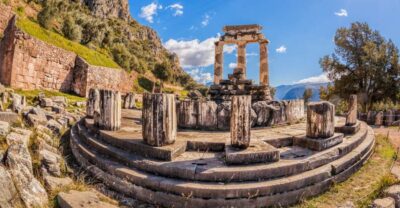
Small-Group Delphi, Museum & Arachova Day Trip
Read our review →
Delphi English Day Trip from Athens with Official Guide
Read our review →
Delphi Guided Trip with Optional Lunch and Entry
Read our review →
Historical Delphi One Day Tour with Arachova Stop & Expert Guide
Read our review →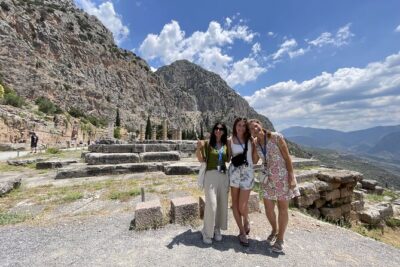
Premium Delphi Day Trip with an Expert Guide, Museum & Lunch
Read our review →
Browse the lists this tour appears in