
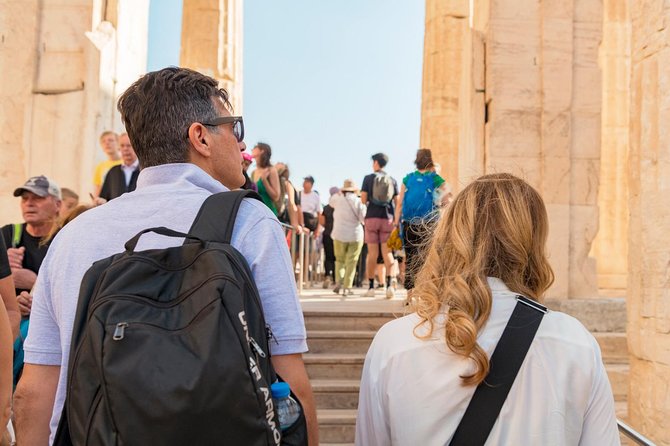
Reviewed · DELPHI DAY TRIPS
BEST 7-Day CLASSICAL GREECE: Corinth Olympia Delphi Meteora more!
This tour is interesting because it strings together Greece’s heaviest hitters in one smooth loop, so you spend less time figuring out logistics and more time looking closely. I like the private driver in a luxury vehicle setup, and I especially like the way it builds in flexibility (you can explore on your own or add a licensed guide at key stops). One thing to consider up front: entrance fees are not included, so your total day-by-day costs will depend on what you choose to see.
My second big love is the pacing across eras. You bounce from the Acropolis and its museum, to the Peloponnese powerhouses like Mycenae and Olympia, then finish on the sky-high drama of Meteora. It also feels thoughtfully organized, with David and Yiannis coordinating the kind of planning that makes a working trip feel easier.
Key highlights at a glance
- Acropolis + New Acropolis Museum in one day, plus nearby landmarks like Panathenaic Stadium and the Temple of Zeus Olimpio
- Corinth, Mycenae, and Nafplio as your Peloponnese foundation, with time to actually stroll
- Epidaurus and Asklepios sanctuary plus the world-famous theatre setting for acoustics
- Olympia and the tunnel-to-stadium moment tied to the ancient Olympic tradition
- Delphi, its Apollo complex, and the archaeological museum for deeper context
- Meteora monasteries visited by ascending to at least two sites on those famous sandstone pillars
Athens to Meteora, built for real pacing
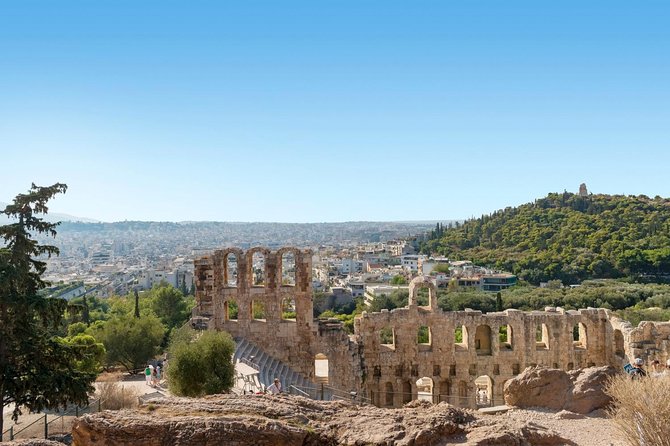
This is the kind of route that works because it respects distances. You leave Athens early, but you also get built-in breaks and evening choices that keep the days from turning into a blur. The big promise is a “classical Greece” sampler platter, but done in a way that lets you breathe between monuments.
The tour is also set up as a private experience. Only your group travels together, with a professional English-speaking driver guiding the day. That matters. In places like Delphi or Meteora, timing and getting to the right viewpoint at the right moment can make the difference between great photos and frustration.
Value-wise, the headline price is not small at $4,144.61 per person. What you are really paying for is time protection. You get luxury transport, daily organization, and hotel stays handled for you, while major entries are left to you (since entrance fees vary and you may want different guide add-ons).
More Ancient Corinth tours from Athens:
- From Athens: Ancient Corinth Day Trip with Canal & VR Guide
★ 4.6 · 1,073 reviews - Private Biblical Tour Ancient Corinth & Isthmus Canal from Athens
★ 5.0 · 762 reviews - Athens: Ancient Corinth & Nafplio Full Day Trip with Swim
★ 4.8 · 523 reviews
Your ride, your space: Sedan, Mercedes upgrade, and private logistics

You pick a package level, and it affects comfort and what you get. The standard setup uses a Superior class sedan, Mercedes minivan, or Sprinter depending on group size. The Gold and Platinum options move you into a more premium Mercedes EClass sedan style vehicle when possible, and Platinum can include a 3-course lunch.
For most people, the practical win is simple: your travel days are easier when you are not wrangling multiple buses, taxis, and ticket lines across regions. A private driver also helps when you want to stop for a quick photo moment or build in small breaks when crowds get thick.
One caution that is worth saying plainly: your driver can inform you en-route, but the tour notes that they cannot enter archaeological sites. If you want a real site-by-site expert inside the key ruins and museums, you’ll need to request a licensed archaeological guide add-on for one or more locations.
Day 1 Athens: Acropolis power, then coast at the end
Athens can feel like sensory overload. This schedule gives you a clean opening, then spreads the sights so the day does not become one long queue.
Acropolis and temples, plus the theatre area
You start with the Acropolis and its major temples, including the Parthenon, the Temple of Nike, and the Erechtheion. You also stop at Herodes Atticus Theatre, which helps you connect the classical city with the way performances continued in later centuries.
The Acropolis is where people get their first shock of how much stone survived. The best way to enjoy it is not to rush. Even without a guide, you will likely recognize why the Parthenon still sets the standard for Greek architecture.
More Delphi day trips from Athens:
- Athens: Mythology of Delphi, Museum and Arachova Guided Tour
★ 4.6 · 4,008 reviews - From Athens: Delphi Full Day V.R. Audio Guided Tour
★ 4.6 · 3,028 reviews - From Athens: Small-Group Delphi, Museum & Arachova Day Trip
★ 4.8 · 2,476 reviews - Delphi English Day Trip from Athens with Official Guide
★ 4.5 · 2,199 reviews
The New Acropolis Museum
You then move to the New Acropolis Museum right next to the Acropolis. This is one of the rare stops that improves the ruins experience. Instead of only seeing broken bits in place, you can see masterpieces tied to the site in a museum setting.
If you care about what survives versus what was lost, this museum is one of the most “worth it” parts of any Athens day.
Syntagma, the Parliament guards, and the marble stadium
You also get a stop at Syntagma Square, where you can watch the changing of the guard at the tomb of the unknown soldier with the Evzone guards in traditional uniform. It is short, but it gives you a modern Athens beat.
Then you pass by the Academy of Athens and the Athenian “trilogy” of University, Academy, and Library. After that comes the Panathenaic Stadium, the famous marble stadium where the Marathon ends, and which is built entirely of marble.
If you are hoping for a day that mixes iconic ancient stops with “how the city feels now,” this order helps.
Zeus, Hadrian’s arch, and Poseidon at sunset
You finish Athens with big-signal stops: Temple of Zeus Olimpio and Arco di Adriano. Both are reminders that Athens became a layered city, not a one-time snapshot.
Then you reach the Temple of Poseidon on the clifftop at the end of the Athens peninsula. The tour highlights it as especially beautiful at sunset, and it’s easy to see why. It is also a fitting “bookend” after the Acropolis, because Poseidon’s temple reads like the last thing sailors see leaving port, and the first thing they see returning.
Day 2 Corinth, Ancient Corinth, Mycenae, and Nafplio
The Peloponnese starts strong on day two, with engineering history, classical power, and a port town that feels made for walking.
Corinth Canal and the engineering pause
A brief stop at the Corinth Canal gives you context for how Greece connects by land and water. Even if you only get a short visit, it is a useful mental map reset before you head into the ancient sites.
Ancient Corinth: streets, temples, and Paul’s footsteps
At Ancient Corinth (Archaia Korinthos), you get around an hour to stroll through the preserved remains. This stop is special because it overlaps a lot of layers: classical Greeks, Roman influence, and references connected to St. Paul.
A good habit here is to keep one thought in mind: the ruins are not just stone. Corinth was a working city with markets and movement, so try to imagine the daily flow as you walk.
Mycenae and Agamemnon country
Next is Ancient Mycenae, a major site in the development of Ancient Greece. You pass through the huge city walls and go toward Lion’s Gate and the throne room area associated with Agamemnon. There is time set aside for the nearby treasury of Atreus and the on-site museum with artifacts.
Even if you love myths more than archaeology, Mycenae is where myth starts to feel grounded. The scale of the fortifications is the best argument for why people took this place seriously.
Nafplio for lunch and evening strolling
Finally, you land in Nafplio, a medieval, historical port city. You get lunch time and later evening time to stroll the old town, browse craft shops and boutiques, and enjoy dinner by the sea with views to the Venetian castle of Bourtzi.
This part is where the tour becomes more enjoyable than “just visiting sites.” Nafplio is a chance to slow down, not just to rotate through monuments.
Day 3 Epidaurus, Mystras, and Sparta: healing, Byzantium, and grit
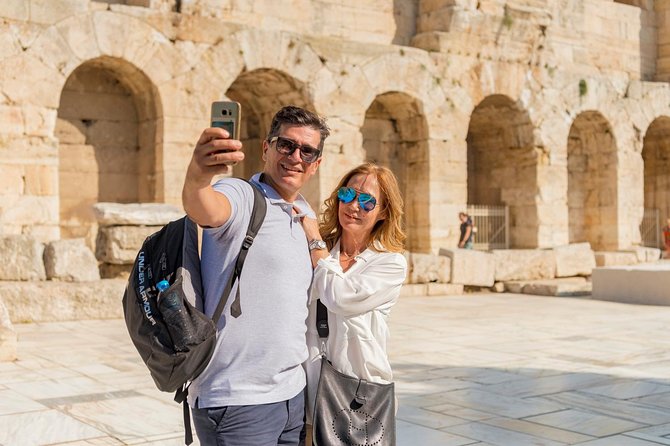
Day three is a full day of big themes, and that makes it one of the most rewarding stretches of the trip.
Epidaurus: Asklepios and the theatre for real acoustics
You visit the Sanctuary of Asklepios, described as the first healing center of the ancient world, then the Theatre of Epidaurus. The schedule calls out that people often test its famous acoustics by speaking or singing.
This is where you can get more than visuals. If you enjoy the way architecture affects sound and space, Epidaurus can feel like a living machine, not just ruins.
Mystras: 800-year-old Byzantine power
Then you go to Mystras, an UNESCO-listed site and once a seat of Byzantine power. The ruins span everything from palaces and churches to monasteries and fortifications.
Mystras is not a quick photo stop. It rewards you for moving carefully and noticing transitions. You see how religious life, defense, and daily living got packed into a hillside.
Sparta stop for lunch and small-museum context
You spend time in Sparta, with lunch and time to explore ancient ruins plus a museum and an olive oil museum. That olive-oil element is a great reminder that even when cities are famous for wars or athletes, life still depended on agriculture and production.
After this, the day continues toward Olympia for the evening.
Day 4 Olympia and the engineering-to-sea route
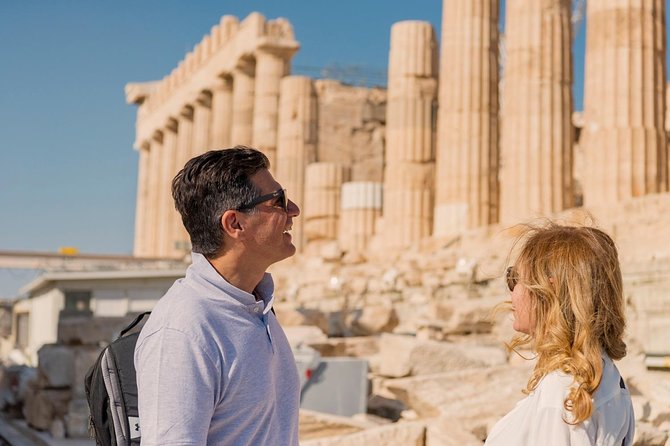
This is a day built on contrast, from the sacred athletic world of Olympia to bridge views and a coastal evening.
Ancient Olympia: training, tunnel, and the flame setting
You start with Ancient Olympia, tied to the Olympic Games of antiquity. You see where athletes trained and learned, plus the place where they went through a tunnel to emerge into the stadium.
You also visit important structures including the Temple of Zeus and the Temple of Hera, plus the Olympic flame setting area, the workshop of Phidias, and a museum with significant masterpieces.
Olympia is one of Greece’s most “emotionally recognizable” archaeological sites. Even without a guide, the stadium layout helps your brain understand how competition worked here.
Rion-Antirion Bridge, then a Venetian-feel lunch
After Olympia you cross the Rion-Antirion Bridge, highlighted as a long suspension bridge with engineering impact. It’s a nice breather between ruins.
Then you stop at the Nafpaktos Old Port for lunch time, with the note that it looks like a picture postcard and carries a Venetian port vibe.
Galaxidi evening: sea views and a calmer pace
You finish day four at Galaxidi, near the ancient port of Delphi. The schedule frames it as more relaxed and more authentic in feel than the more crowded Delphi area.
The practical advantage for you is simple: you get a coastal town dinner without spending all your energy inside a big attraction zone.
Day 5 Delphi: the oracle ground, plus the museum deepens it

Delphi is the name that keeps showing up in Greek myth, and here you get both the ruins and the museum context, which is the right way to do it.
Delphi ruins: Apollo, the theatre, and treasuries
You spend about two hours at Delphi, focused on terraces along the hillside. The tour emphasizes what survived, including the 4th century BC Temple of Apollo, where the Oracle delivered prophecies, along with the Castalian spring and major structures like the theatre and treasury buildings.
You also see temples of Athena and the Gymnasium, where athletes gathered before the Pythian games. If you like links between myth and real civic rituals, Delphi is where that comes together.
Optional Hosios Loukas: Byzantine monastery beauty
Then comes Monastery of Hosios Loukas, UNESCO listed and described as one of the best-preserved Byzantine monasteries. You explore architecture and frescoes, and the tour notes it is optional if you prefer to skip.
This choice is useful if you are museum-ed out by midweek. Delphi can be intense, so keeping Hosios Loukas optional helps you tailor the day.
Arachova for lunch, then the Delphi Archaeological Museum
You stop in Arachova for lunch, with craft shops and views over the olive-filled Pleistos river valley. Then you visit the Delphi Archaeological Museum, which the tour describes as dedicated to finds going back to at least 1500 BC, including standout pieces like the Naxos Sphinx, twin Kouroi, and the Bronze Charioteer.
If you have only visited ruins before, this museum can change how you look at what you just saw outside.
Day 6 Meteora monasteries: the height is the whole point
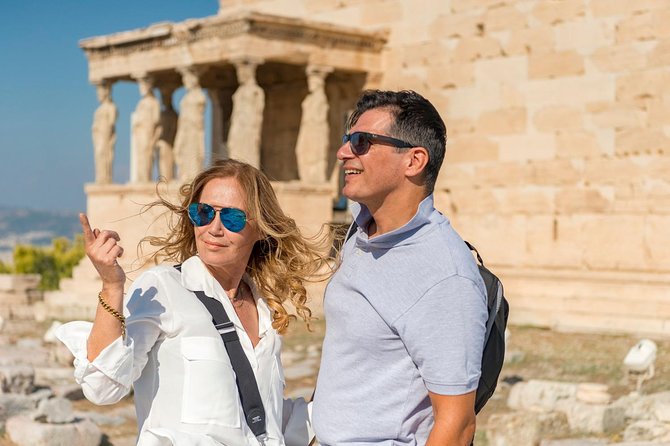
Day six is built around Meteora, where the setting does half the work. You ascend toward monasteries perched on sandstone rock pillars up to about 1,312 feet high, dating from the 14th century.
Visit at least two monasteries
The tour visits at least two monasteries, typically including Grand Meteora Monastery and then Varlaam or Agiou Stefanou. This is a smart approach because Meteora can feel repetitive if you only see one site. With two, you get different viewpoints and different church interiors.
Practically, you’ll want comfortable shoes and a willingness to look upward and outward constantly. The big advantage of visiting with a driver is that you do not have to coordinate the roads between points on your own.
Kalambaka lunch in the main square
You pause for lunch in Kalambaka, described as time to refresh in a town main square before the tour continues. This is not just a break. It also helps you reset your legs after hours of stairs and stone pathways.
Day 7 Thermopylae and the return to Athens
You finish with a classic “meaningful stopping points” day, then head back to Athens.
Veroia morning stop
You visit Veroia in the morning before turning south toward Thermopylae. The schedule does not give specifics of what you focus on there, but it signals a planned cultural break rather than nonstop driving.
Thermopylae visitor center and Leonidas
At Thermopylae, you stop at the monument and enter the newly built visitor’s center that recreates the ancient battle, tied to King Leonidas and the 300 Spartans in 480 BC.
This is a good stop for anyone who wants a clearer story behind the place. Even if you know the basics, the visitor center format can make the site easier to follow.
Kamena Vourla for lunch or a sea break
Finally, at Kamena Vourla, you have a chance for lunch or a break along the sea, with options in local villages, before returning to Athens.
Price and value: what you are paying for, and what you still need
Let’s be honest about money. At roughly $4,144.61 per person for 7 days, this is aimed at travelers who want convenience and comfort more than DIY cost-cutting.
Here is what you do get:
- Private transportation daily in sedan, minivan, or Sprinter style vehicles
- A professional English-speaking tour driver throughout the day
- 4-star or boutique hotel stays with breakfast
- Options for independent sightseeing or upgrades that can include guided visits
- Inclusions can include a 3-course lunch for the Platinum package
- A mobile ticket approach, plus group discount support depending on package
And here is what is not included:
- Entrance fees
- Expert licensed archaeological guides inside the sites, unless you add them
- Some pickup needs may require a supplement, especially if you are outside Athens
So the value question becomes: if you can afford the extra comfort and you want the “done for you” routing, this can be a good deal. If your style is strict budget travel and you love independent planning, you may prefer building your own route and only using a driver for parts of it.
Who this tour fits best
This route suits you best if:
- You want to cover Athens, multiple UNESCO sites, and the Peloponnese highlights without driving yourself
- You care about comfort and a private pace
- You want flexibility, including the option to add guides at specific sites
- You prefer a plan that includes both big monuments and calmer town time, like Nafplio and Galaxidi
It may be less ideal if:
- You hate paying extra on top of an initial price for site entries
- You are the type who gets restless with a fixed daily structure, even if it is private
Should you book this classic Greece 7-day route?
If your main goal is a smooth, high-impact “greatest hits” Greece trip with less stress, I would lean toward booking. The strongest pull for me is the combination of private luxury transport, hotel handling, and a routing that connects Athens to the Peloponnese to Delphi to Meteora without making you piece everything together yourself.
The biggest reason to pause is the cost of entrance fees and the fact that the driver cannot enter archaeological sites. If you care about deep interpretation inside the ruins, plan to add licensed guides at your top priorities, like Acropolis and Delphi.
If you want a classic Greece experience that feels managed, not chaotic, this one is built for you.
FAQ
Are entrance fees included in this tour?
No. Entrance fees are listed as not included.
Do I get a guide included at archaeological sites?
Your driver can inform you en-route, but they cannot enter archaeological sites. Expert licensed archaeological guides are available on request for one or more sites, or you can choose options that include a guide.
What kind of hotels are included?
You get minimum 4-star or boutique style hotels with breakfast.
What transport is included?
Depending on the package and group size, you travel by Superior class sedan, Mercedes minivan, or Sprinter. Gold and Platinum packages use higher-end Mercedes options such as EClass, and vehicle choice can vary by group size.
Is pickup from the airport included?
Pickup from the airport and areas outside Athens is available on request and may require a supplement.
Is lunch included?
Lunch can be added later on request, or included depending on booking options. The Platinum package includes a 3-course lunch.
Is this tour private?
Yes. It is a private tour/activity, and only your group participates.
Do I receive mobile tickets?
Yes. The tour includes mobile ticket information.
Is this tour designed for independent exploring?
Yes. You can explore sights independently, or upgrade to see them with a guide.
More Meteora Trips from Athens
- Athens: Meteora Monasteries Day Trip with Caves and Lunch
★ 4.7 · 2,964 reviews - Athens: Meteora Monasteries Day Tour with Lunch
★ 4.8 · 2,196 reviews - Athens: Meteora Tour with Local Guide and Greek Lunch
★ 4.8 · 1,561 reviews - Athens: Meteora Monasteries, Caves & Coastal Stopovers with Lunch
★ 4.5 · 1,432 reviews
Fresh options around Athens
- Classical Greece 3-Day Tour: Epidaurus, Mycenae, Olympia and Delphi from Athens★ 4.5 · 15 reviews
- 8-Day Classic Greece Tour: Athens, Epidaurus, Mycenae, Olympia, Delphi & Meteora★ 4.0 · 4 reviews
- 3-Hour Small Group Coasteering in Sounio★ 5.0 · 12 reviews
- Get Lost in Athens with an Insider★ 4.5 · 28 reviews
- Christmas food and walking tour in Athens★ 5.0 · 6 reviews
- Cruise into Athens?! Best of Athens Tour from Piraeus Cruise Port★ 4.5 · 5 reviews
- Electric Trikke Bike Athens Complete Tour★ 5.0 · 35 reviews
- Athens City Game: The Journey through Time★ 5.0 · 9 reviews
Delphi Day Trips, compared.

Mythology of Delphi, Museum and Arachova Guided Tour
Read our review →
Small-Group Delphi, Museum & Arachova Day Trip
Read our review →
Delphi English Day Trip from Athens with Official Guide
Read our review →
Delphi Guided Trip with Optional Lunch and Entry
Read our review →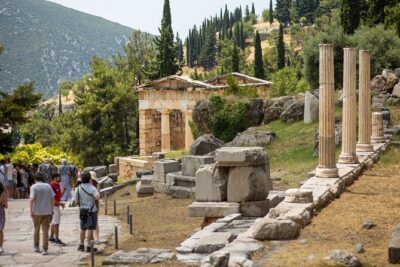
Historical Delphi One Day Tour with Arachova Stop & Expert Guide
Read our review →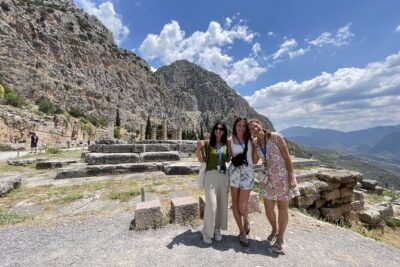
Premium Delphi Day Trip with an Expert Guide, Museum & Lunch
Read our review →
Browse the lists this tour appears in