
Reviewed · GREEK MYTHOLOGY TOURS
Athens & Acropolis Highlights: Greek Mythology Small-Group Tour
This Athens and Acropolis highlights tour is interesting because it turns famous ruins into a connected story of gods, civic life, and power. Instead of just taking in views, you follow a guided route that explains why Athena, Dionysus, and Hephaestus mattered to everyday ancient Greeks.
I really like two things here. First, the small group size (up to 15) keeps you moving without getting lost in the crowds, and guides such as Irene (Irini) and Michael are praised for clear explanations and lots of question time. Second, the walk is planned around contrasts, big monuments on the Acropolis and the more human scale of the Ancient Agora.
One consideration: expect a steep climb and uneven ground as you head up the Acropolis. Also, the Acropolis and Agora entrance fees are not included, so you need to budget for them before you arrive.
Key Highlights Worth Your Time
- Myths attached to the actual stones so the Parthenon, Athena Nike, and Erechtheion make sense fast
- Small-group pacing that works well in peak crowds and helps you stay together
- Route includes the Theatre of Dionysus and the Ancient Agora, not just the headline ruins
- One of the best-preserved temples at the end, the Temple of Hephaestus, with practical design and purpose notes
- Photo and visual aids are used by some guides, helpful when reconstructing what you are seeing today
- Built-in context for modern Athens, since the tour ties ancient worship and civic life to what you can still sense in the city
Why This Greek Myth Walking Tour Beats a Do-It-Yourself Day
If you have only a day or two in Athens, you can do the sights on your own. But the Acropolis and Agora are not just “pretty rocks.” They are places where religion, politics, and performance collided.
This tour earns its place because it links each stop to the myth that shaped it, and then connects that myth to the real-world function of the site. You will hear how the city used festivals, theater, and temple building as proof of identity. That makes the Parthenon and the Agora feel less like museum objects and more like active parts of a living society.
And yes, the views are still there. But you are not just collecting angles for photos. You are getting the “why,” which is what makes the ruins stick in your head.
More Greek mythology tours in Athens:
- Athens: Mythology of Delphi, Museum and Arachova Guided Tour
★ 4.6 · 4,008 reviews - Athens: Acropolis and Mythology Highlights Small Group Tour
★ 4.8 · 2,275 reviews - Athens: Mythology Tour for Families
★ 4.8 · 173 reviews
Meeting at the Arch of Hadrian and Starting with the Olympeion
You meet at the Arch of Hadrian area (Leof. Vasilisis Amalias 50, Athens). The start point is between the Acropolis and the Ilissos river, so you get an immediate sense of how the city layers itself over time.
Before you climb, you spend about 15 minutes at the Temple of Olympian Zeus from the outside. This matters because the Olympeion sets the stage for the whole myth theme. You see the scale of the project and hear the stories tied to Zeus, one of the big-name gods behind ancient authority.
Why I like this order: it keeps you from launching into the Acropolis with a brain full of unanswered questions. Instead, you start with context and then go upward with momentum.
Temple of Olympian Zeus: The Giant That Explains the Stakes
The Temple of Olympian Zeus, also called the Olympeion, was one of the greatest ancient temples of Zeus and a famous marble building in the ancient world. Even when you only see it from outside, the intent is obvious.
Your guide uses this first stop to frame Zeus as part of the larger Greek worldview, then connects that to what you will see later on the Acropolis. You are not just learning names. You are learning the role of worship in shaping power.
Drawback to plan for: this is an outside stop. If you expect ticketed interior moments at every stop, you may feel you move quickly here. Still, it is a smart warm-up.
Theatre of Dionysus Eleuthereus: Where Drama Was Civic Power
After the Zeus intro, the route moves toward the Acropolis area, with a stop at the Theatre of Dionysus Eleuthereus. You spend about 15 minutes there.
Dionysus was the god of wine and grape harvest, and this theater is famous because it was among the oldest theatrical venues in Athens. The big idea you take away is that theater was not just entertainment. It was tied to religion and civic identity, with major playwrights like Aeschylus, Sophocles, Euripides, and Aristophanes connected to the tradition of early performances.
This stop is short, but it changes how you interpret the other monuments. When you see the temple complex above, you can start thinking in terms of shared communal moments, not only sacred architecture.
More Acropolis tours in Athens:
- Athens: Acropolis & up to 5 Archaeological Sites Combo Pass
★ 4.4 · 12,619 reviews - Athens: Acropolis, Parthenon & Acropolis Museum Guided Tour
★ 4.8 · 9,316 reviews - Athens: Acropolis and Parthenon Guided Walking Tour
★ 4.6 · 5,882 reviews - Athens: Acropolis, Parthenon & Acropolis Museum Guided Tour
★ 4.8 · 3,579 reviews
Acropolis Highlights: Parthenon, Athena Nike, Erechtheion, and More
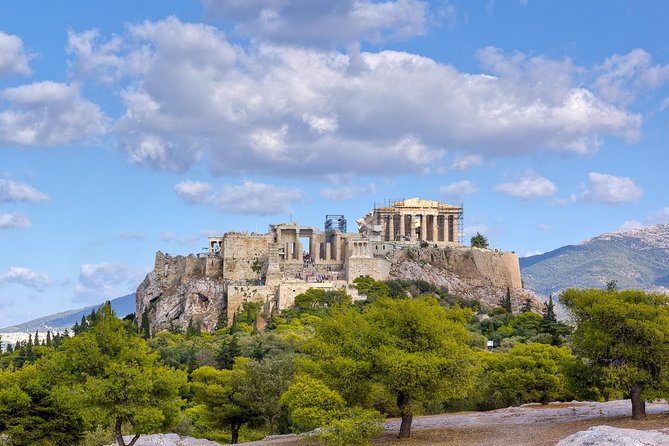
The main climb is to the Acropolis, and you get about 1 hour 30 minutes in this area. Admission to the Acropolis is required and not included.
Here is where the tour earns its “myth + history” reputation. You do not just look up at monuments, you learn what each one was for and how its symbolism worked.
Parthenon: Athena Parthenos and Doric Logic
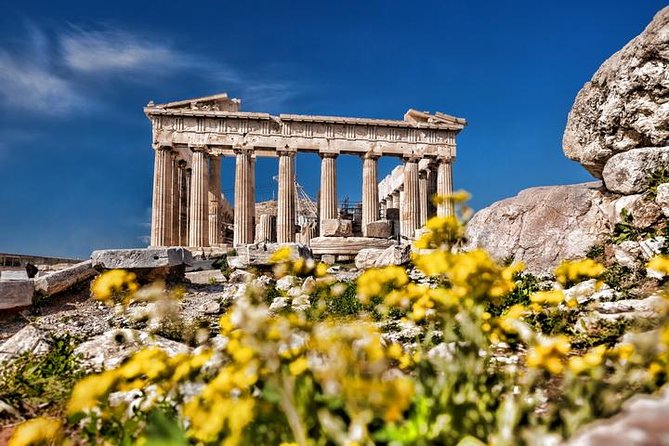
The Parthenon is the star of the hill, and you get a focused stop of about 20 minutes. It was built in the mid-5th century BCE and dedicated to Athena Parthenos, often translated as Athena the Virgin.
Your guide also ties the building to architecture. You will hear that the Parthenon represents the culmination of the Doric order, the simplest of the classical Greek orders. Even if you are not a design nerd, that “why this looks this way” explanation helps you read the building instead of just viewing it.
Temple of Athena Nike: Victory With Rules
Next is the Temple of Athena Nike for about 10 minutes. This small temple is a reminder that the Greeks treated war and victory as spiritual topics, not just battlefield events.
Nike is the goddess of victory, and Athena was worshipped in this form as a symbol of victory in war. You also hear a story connected to the cult statue design: it is said the statue had no wings, so it would never leave Athens. That kind of myth makes the architecture feel like public messaging.
Erechtheion: A Temple Shaped by Worship Needs
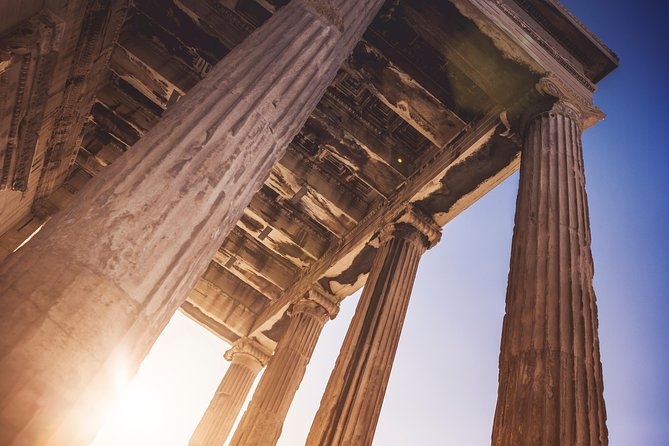
You then visit the Erechtheion for about 10 minutes. The big point here is what the temple was built to house: an ancient wooden cult statue of Athena.
The Erechtheion matters because it shows the Acropolis was not only one big “master plan.” It was also a functional home for specific religious objects and traditions. Your guide’s explanation helps you understand why this area looks different from the more uniform temple styles nearby.
Temple of Dionysus and the “Climb in Stages” Effect
A recurring theme in the experience is pacing. Some guides, named in people’s experiences, are careful about making the climb in small stages, stopping for shade when possible, and keeping the group together. That is not just comfort. It helps you actually hear the stories, which is what you came for.
Important practical note: the Acropolis area has uneven surfaces and stairs. One person’s warning is actually the best advice here, wear good walking shoes, carry water, and plan for a bit of uphill effort.
Ancient Agora of Athens: From Sacred Steps to City Justice
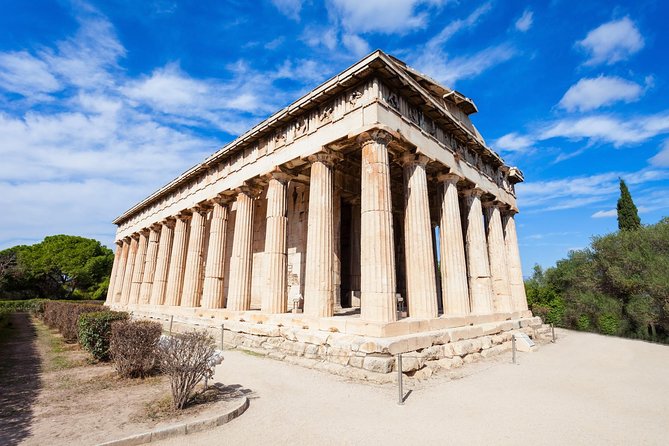
After the Acropolis, you transition to the Ancient Agora of Athens, about 1 hour. This is where the day becomes more grounded.
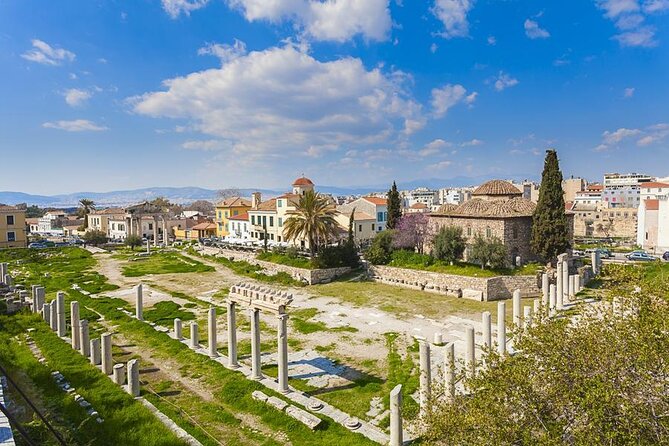
The Agora was the heart of ancient Athens, tied to politics, commerce, administration, social life, religion, and justice. When a guide walks you through this, you start to see the Acropolis as religious authority and the Agora as civic power.
This is also where the “myths meet modern life” feeling can click. Even though you are standing in ruins, the Agora’s role as a public space explains why Athens still feels like a place built for conversation and public gathering.
Temple of Hephaestus: Ending at One of the Best-Preserved Temples
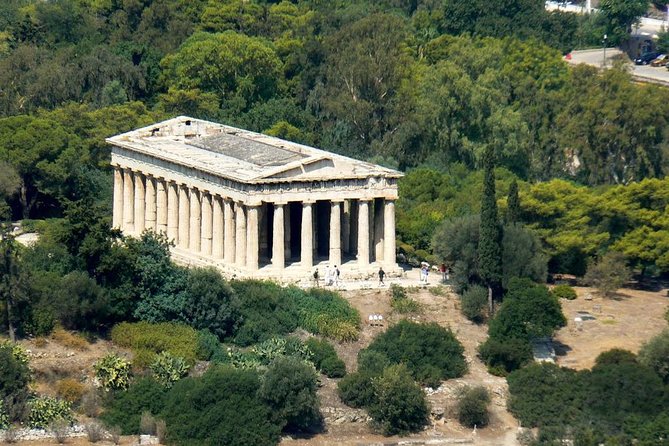
The tour finishes at the Temple of Hephaestus, also referred to as one of the best-preserved ancient temples in the world. You spend about 20 minutes here.
This stop is a strong closing act because Hephaestus is closely linked to craft and industry. Your guide explains that worship here served two important deities for many merchants and shop owners: Hephaestus, protector of metallurgists, and Athena Ergani, protector of potters and cottage industries.
That detail is more than trivia. It makes the temple feel linked to real work, not only elite politics. By the time you reach the end point at the Ancient Agora area (Athens 105 55), you have moved from mythic gods to the everyday economic engines that kept the city running.
What the Small-Group Format Really Changes
The tour caps at a maximum of 15 travelers, and that size affects everything.
First, it helps with timing. With a smaller group, guides can slow down or pause without losing control of the whole lineup. Second, it is easier to hear explanations because you are not spread thin across a wide crowd.
There is also a social side. A few guides named in people’s accounts are praised for actively answering niche questions and checking that everyone is doing okay. That means the experience can feel more like a focused walk with a teacher than a hurried check-list tour.
One caution: not every departure is perfect. In at least one account, someone had trouble staying together when the guide did not keep the group visible in the crowd. If you know you get disoriented in busy sites, stay near the front and make a habit of quick orientation checks before you move.
Tickets, Price, and What You Should Budget
The tour price is listed at $54.42 per person for the 4-hour experience, with mobile tickets included. The value depends on whether you already plan to buy site entries.
Here is the key budget math based on what is explicitly required:
- Acropolis of Athens admission is necessary for the 4-hour option and costs €30.00 per person
- Ancient Agora admission is necessary for the 4-hour option and costs €20.00 per person
So you should think of the $54.42 as the guided experience and story route, and the euros as the paid access to the archaeological sites.
Good to know: entrance fees are non-refundable and non-exchangeable. If you are booking, check the weather plan too. The experience requires good weather, and if it is canceled due to poor conditions, you should expect a different date or a full refund.
What to Bring, and How to Handle the Acropolis Climb
This is not a flat stroll. Expect uneven ground and a steep uphill to the Acropolis area. Even when the route is carefully paced, your legs will notice it.
I recommend you plan like this:
- Wear supportive shoes with grip for stone and stairs
- Bring water and consider a hat, especially in warmer months
- Use the breaks your guide offers, even short stops help you hear the stories and avoid overheating
Also keep in mind a strict rule: strollers, backpacks, and big bags are not allowed at the Acropolis. That can surprise people, so plan to travel light and use day-pack options only if you are sure they meet the site rules.
Who Should Book This Athens and Acropolis Highlights Tour
This tour fits you if you like:
- Greek mythology and want it connected to real buildings
- A guided day that prevents you from getting lost in crowds
- Seeing the big monuments plus the civic story of the Agora
It is also a good choice if you are the type who likes asking questions. A lot of praise centers on guides who answer everything from architecture details to myth connections without sounding impatient.
Who might choose something else: if you have very limited stamina or fear the stairs and uneven stone, you may find the Acropolis climb too demanding for your comfort level. The tour is “most travelers can participate,” but the real-world walking and climb are still real.
Should You Book It? My Practical Take
Book it if you want the Acropolis to feel understandable, not just impressive. The guided myth framework helps you connect the Parthenon, Athena Nike, Erechtheion, Dionysus theater, and the Agora into one story about what Athens believed and how it ran.
Skip it or look for an easier alternative if you hate uphill climbs, you travel with a stroller or large bag that will conflict with Acropolis rules, or you want a totally self-paced day. This works best when you are happy to walk, listen, and follow a plan.
If you do book, do one thing that pays off immediately: arrive ready for the entrance fees and show up with good shoes, water, and a light pack. Then let the guide do the heavy lifting of turning myth into a place you can actually picture.
FAQ
How long is the Athens and Acropolis Highlights tour?
It runs about 4 hours (approx.).
What is the price of the tour?
The tour is priced at $54.42 per person.
Are entrance fees included for the Acropolis and Ancient Agora?
No. Entrance fees are not included. You need an Acropolis admission ticket for the 4-hour option and an Ancient Agora admission ticket for the 4-hour option.
How much do the entrance fees cost?
Acropolis of Athens admission is €30.00 per person, and Ancient Agora admission is €20.00 per person.
Where do you meet, and where does the tour end?
You meet at the Arch of Hadrian (Leof. Vasilisis Amalias 50, Athens). The tour ends at the Ancient Agora of Athens (Athens 105 55).
Is it a small-group tour?
Yes. It is a small-group experience with a maximum of 15 travelers.
Are strollers and big bags allowed at the Acropolis?
No. Strollers, backpacks, and big bags are not allowed at the Acropolis, and you should not take them on the tour.
Can the operator help with pre-purchasing tickets?
Yes. You can request that entry tickets be pre-purchased, and it is helpful to let them know in advance.
Fresh options around Athens
- 3-Day Trip to Delphi and Meteora from Athens★ 4.0 · 53 reviews
- 3-Day Tour: Mycenae, Epidaurus, Nafplio, Delphi, Meteora With 4* Hotel Included★ 5.0 · 6 reviews
- 2 or 3-Day Private Tour: Ancient Olympia, Corinth, Mycenae, Epidaurus, Nafplion★ 5.0 · 11 reviews
- 4-Day Classical Tour Greece: Epidaurus, Mycenae, Olympia, Delphi, Meteora★ 4.5 · 4 reviews
- Hydra Island & Mythical Full Peloponnese Private 9-Day Tour★ 5.0 · 3 reviews
- 27 Day Grand Circle Tour of Mainland & Corfu, Mykonos, Santorini★ 5.0 · 4 reviews
- 20-Minutes Natural Pedicure with Exotic Fish★ 5.0 · 17 reviews
- 2 Day Delphi, Meteora Iconic Sites Private Tour With 4* Hotel Included★ 5.0 · 3 reviews
Greek Mythology Tours, compared.

Mythology of Delphi, Museum and Arachova Guided Tour
Read our review →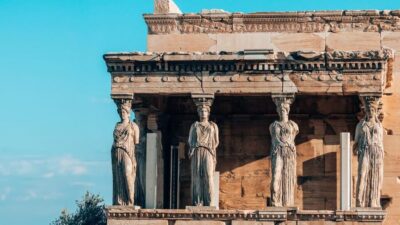
Acropolis and Mythology Highlights Small Group Tour
Read our review →

The History of Athens: Greek Mythology Private Tour
Read our review →

Athens Highlights: Myths & Philosophers Walking Tour
Read our review →
Greek Mythology Treasure Hunt for Kids – Athens Private Tour
Read our review →
Browse the lists this tour appears in