
Reviewed · GREEK MYTHOLOGY TOURS
Athens Highlights: Myths & Philosophers Walking Tour
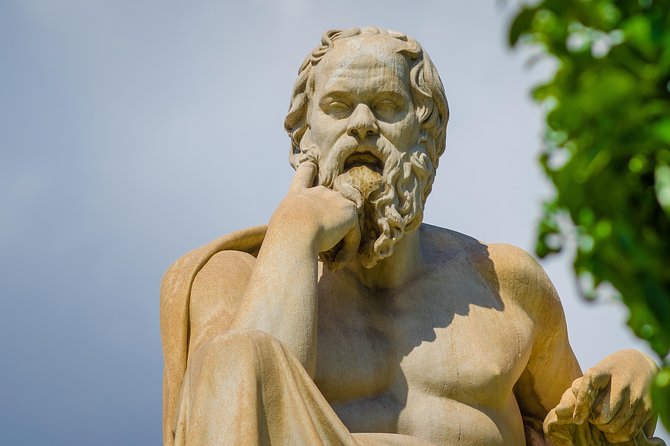
Athens is interesting because it never puts its ideas in a museum only. On this walking route, you track ancient thinkers and their myths across real streets, squares, and viewpoints, while your guide turns philosophy into something you can actually talk back to. Names that come up a lot include Bianca and John, plus other guides like Gianni and Effrosyni who bring the material to life with fast, human conversations.
Two things I really like about this tour are the private Q&A format (you ask questions as you go, not at the end) and the way the stops link concepts to places, from the Academy to the Areopagus view. One thing to consider: some sites along the way may require extra entrance tickets, and 4 hours walking can feel like a stretch if you want lots of sitting time.
Key highlights at a glance
- Private, question-friendly pacing that keeps the experience interactive
- A philosopher-themed route across the Academy, Agora, and Areopagus
- Public-spotlight moments like the Presidential Guard outside the Hellenic Parliament
- Free stops plus optional paid entries, so you can plan your budget
- Coffee or tea and bottled water included, handy on a city walk
- City views at the end, with myth stories tied to the skyline
A Brainy Stroll Through Athens, with Philosophers on the Sidewalk
If you only know Athens as monuments and marble photos, this tour nudges you to see a different side. It tracks how ancient Greeks tried to explain reality, ethics, nature, and society. And instead of treating that like a history lecture, it puts those ideas on street corners and near recognizable landmarks.
The route is built around a simple promise: you walk Athens while discussing the world’s early “intellectuals,” from pre-Socratic thinkers to the big names people still reference today. Expect your guide to connect myths and philosophy as part of the same cultural language, especially through places linked to old debates and stories.
This is also a smart tour format if you learn better by asking questions. It is private, meaning only your group is in the walking flow, so you do not have to fight for attention. That matters when you are trying to understand how ideas connect, like why stoicism is tied to a specific spot in the Ancient Agora.
More Greek mythology tours in Athens:
- Athens: Mythology of Delphi, Museum and Arachova Guided Tour
★ 4.6 · 4,008 reviews - Athens & Acropolis Highlights: Greek Mythology Small-Group Tour
★ 5.0 · 2,370 reviews - Athens: Acropolis and Mythology Highlights Small Group Tour
★ 4.8 · 2,275 reviews
Price and Value: What $102.80 Buys You
At about $102.80 per person for roughly 4 hours, you are paying for time, pacing, and interpretation. The “value” here is not just the sites. It is the guide’s ability to connect each stop to how Greeks thought, then translate that into plain talk so it sticks.
Good news for budgeting: coffee or tea and bottled water are included, which helps on a walk-based morning or afternoon. Group discounts are also mentioned, so if you are traveling with friends, check how pricing changes for your group size.
Now the part to plan for: entrance fees are not included for certain points of interest. That usually means you should expect optional or required tickets at a few stops, like the Academy of Athens, the Ancient Agora, and the Tower of the Winds. If you want to go “all in,” factor in extra entry costs on top of the tour price.
How the Private Format Changes the Experience
This tour is listed as private, meaning only your group participates. That changes the feel in a good way. You can ask why a story matters, or ask what a philosopher was actually trying to solve, without worrying about time for everyone else.
The style also seems built around conversation, not monologues. In the feedback, guides like Bianca and John are described as engaging people like they are part of the discussion. You can treat the tour like a walking study session, with a guide who adjusts to what your group cares about.
One practical tip: bring curiosity more than notes. If you show up wondering how myths and philosophy overlap, or how the Greeks approached ethics and nature, you will get a lot more out of each stop.
Starting and Ending: Panepistimio to Areopagus Views
Your walk starts near Panepistimio (Athens 106 79) and finishes at Areopagus Hill near Theorias 21. The end location matters because Areopagus is where you get a big, payoff view of the Acropolis area.
That structure is helpful. You start in areas tied to learning and institutions, then move through Parliament and everyday street life, and end on a hill where stories and sightlines come together. By the time you reach the final stop, you usually have enough context to understand why myths and philosophy were tied to the way people looked at the city.
Also, the meeting and ending points keep the tour aligned with central Athens. The tour is noted as near public transportation, which is useful if you are pairing it with other plans the same day.
More walking tours in Athens:
- Athens: Acropolis and Parthenon Guided Walking Tour
★ 4.6 · 5,882 reviews - Greek Food Walking Tour in Athens
★ 5.0 · 4,740 reviews - Acropolis: Acropolis and Parthenon Guided Walking Tour
★ 4.7 · 3,442 reviews - Acropolis monuments & Parthenon Walking Tour with Optional Acropolis Museum
★ 5.0 · 2,678 reviews
Stop by Stop: Academy of Athens to the Tower of the Winds
This is not a “race to the next landmark” kind of walking tour. Stops are timed, often around 15 to 20 minutes, which gives you room to look, listen, and ask questions without feeling rushed through each concept.
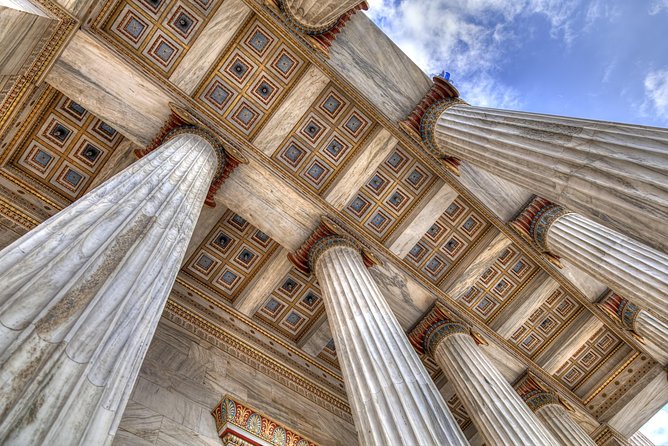
The Academy of Athens: Philosophers, Institutions, and Movements
The tour’s first stop is the Academy of Athens, with about 15 minutes on site. The emphasis is on moving through the philosophical movements of ancient Greece, framed through the idea of an academy as a place where thinking becomes organized.
It is also a reminder that Athens did not treat philosophy as random opinions. It built institutions, trained people, and debated ideas. If you like learning how systems form, this stop sets the tone.
One budget note: an admission ticket is not included here. So you may want to decide ahead of time whether you want to pay extra for entry, or focus on the areas your guide can cover without it.
Hellenic Parliament: Presidential Guard, Tradition, and Ritual
From there, you head to the Hellenic Parliament, with about 15 minutes outside. You will see the changing of the Presidential Guard, one of Greece’s older public traditions.
Why this fits a philosophy tour is the subtle link to how cultures use ritual and performance to communicate values. Philosophy was not just abstract. It lived in public life, civic identity, and ways people showed respect.
This stop is listed as free, so it is a good place for a quick breath and a photo without adding entry costs.
National Garden: Where Applied Science Meets Ethics
Next is a walk around the National Garden for about 15 minutes, again free. This is where the tour gets especially interesting if you think philosophy is only about arguing.
The tour connects Greek philosophy to practical domains like democracy, physics, astronomy, and ethics. That is a helpful way to see philosophy as an early toolkit for living, not just an intellectual hobby.
If your group likes science history or wants an angle beyond “great men and quotes,” this stop gives you that.
Ermou Street: Hermes and the Trickster Side of Myth
Then you move to Ermou Street, around 15 minutes, where the focus shifts to Hermes. Hermes, the messenger and trickster, is a strong myth choice because it represents communication, travel, and cleverness.
In a tour like this, myth characters are not just stories to memorize. They help explain how Greeks pictured human behavior, including motives, boundaries, and the rules behind daily life.
This stop is free, so it is low-cost entertainment and context, not another paid admission stop.
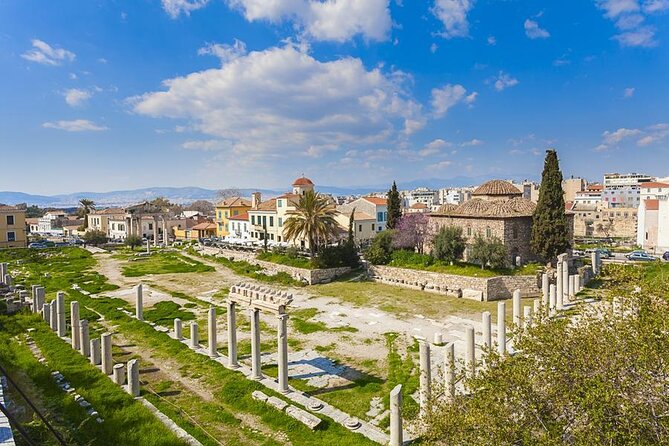
Ancient Agora: Where Stoicism Took Shape
The Ancient Agora of Athens is next, with around 15 minutes. Here, the emphasis includes the idea that stoic philosophy was born in the Poikile Stoa.
Even if you have never studied stoicism, this stop is meaningful because it grounds “how to live” ideas in a real civic space. The Agora is where public thought happened. It is easier to understand why stoicism emphasized self-control and reason when you are standing in an area built for debate and civic action.
Again, admission is noted as not included, so plan for potential extra ticket costs if you want to enter specific areas.
Tower of the Winds: Aiolos and the Physics of the Air
The walk continues to the Tower of the Winds for about 15 minutes, with admissions not included. This stop focuses on Aiolos, described here as the keeper of the winds.
This is one of those “myth plus science” moments. You see how ancient cultures tried to make sense of nature with stories, measurements, and built features. If you like astronomy and nature explanations, this is a satisfying link between myth and observation.
If you decide not to pay entry, you can still use the viewing time to understand why the tower exists where it does and how it fits into the city’s logic.
Anafiotika and the Areopagus: Cynics, Myths, and a Final Skyline Payoff
After the Tower of the Winds, the tour turns toward smaller, more local-feeling Athens before ending with the big vista.
Anafiotika: Cynic Philosophers in a Lovely Neighborhood
In Anafiotika (in the Plaka area near the Acropolis), you get about 20 minutes, free. The theme here is the Cynic philosophers.
This stop works because Anafiotika feels like a “side Athens” version of the city. It gives you a break from only monumental sites, and it fits the cynic theme of pushing back against comfort and convention. It also helps if your group likes atmosphere, winding streets, and a sense of everyday Athens rather than only iconic history.
Areopago: View the Acropolis and Hear the Olympian Myths
The tour ends on the Areopagus hill, with about 15 minutes. The focus includes a breathtaking view of the Acropolis and myths about the Olympian gods.
This is a strong finishing move. After hours of thinking about how Greeks tried to explain the world, you end in a viewpoint position, where the city’s symbols feel close enough to touch. Myths land differently when you can see what people were looking at.
If you want a souvenir memory beyond photos, this is often the part where the connections feel most clear.
What to Ask Your Guide During the Walk
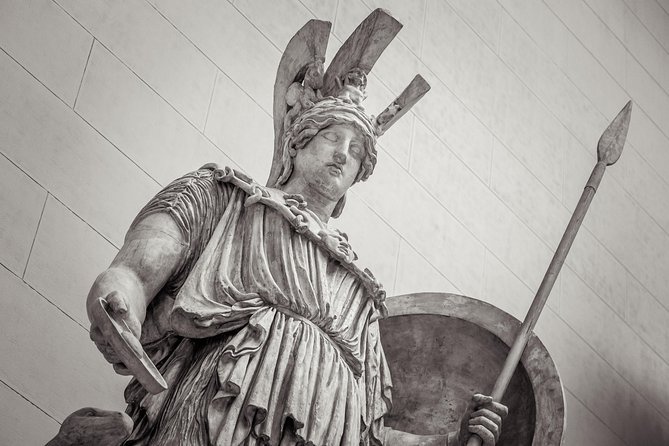
Because this is built for questions, you can make the tour feel tailor-made. Here are types of questions that match the themes mentioned in the tour and the way the guides teach.
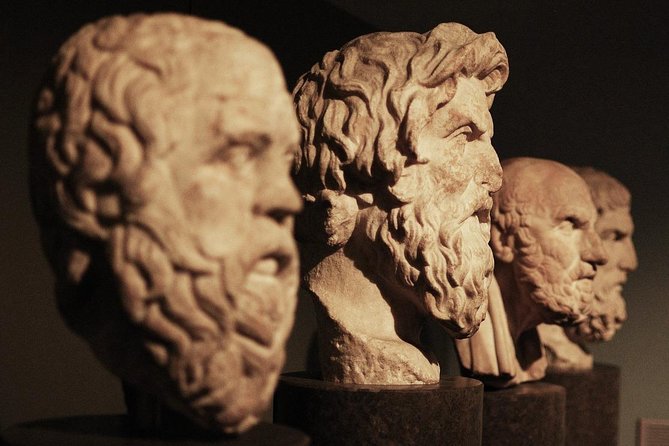
- Ask how Socrates, Plato, and Thales of Miletus fit together. It helps you see philosophy as a chain, not a set of unrelated names.
- Ask what stoicism tried to teach people in daily life. Then ask how that differs from ethics discussed in the National Garden stop.
- Ask how myth characters like Hermes and Aiolos functioned as explanations for human behavior and nature.
- Ask for a quick “real life translation.” Good guides can connect big ideas to normal choices without turning it into a lecture.
A practical tip: pace matters. If you want slower movement and more discussion, you can ask for it early. Some groups in the feedback noted that the tour ran longer when the conversation stayed lively, so do not be surprised if your guide keeps going when your questions are strong.
Is This the Right Tour for You?

This is a great fit if you want Athens in a thinking-person way. It is also family-friendly in the sense that it does not require formal schooling to enjoy the themes. If you are traveling with teenagers, young adults, or anyone who likes discussion, the question-based format can keep energy up.
It is especially good if you like:
- Philosophy, myths, or both
- A walk that connects places to ideas
- A private guide who can match your group’s interests
It may be less ideal if:
- You hate walking and want long museum-style sitting breaks
- You do not want to pay extra for entry at some sites
- You are visiting on a day with poor weather, since the experience is described as requiring good weather
If you are the type who enjoys learning but gets bored by rigid scripts, this is the kind of tour where the guide’s tone can matter as much as the facts. Guides like Bianca and John are repeatedly highlighted for turning the subject into conversation, with people actively participating.
Should You Book This Myths & Philosophers Walking Tour?
I would book it if you want Athens to feel more personal than postcard-perfect. This tour is not only about seeing famous spots. It teaches you how the ancient world reasoned, then shows you where those ideas “lived” in the city.
Book it especially if:
- You like asking questions and want a private format
- You care about the link between myth and philosophy
- You want a structured route that still leaves room to talk
Skip it or consider another style if:
- You strongly prefer sites with included entry fees everywhere
- You cannot handle 4 hours of walking even with short breaks
- You are traveling during a spell of iffy weather and cannot flex your schedule
FAQ
How long is the Athens Highlights: Myths & Philosophers walking tour?
The tour lasts about 4 hours.
Is this tour private?
Yes. It is a private tour, so only your group participates.
What’s included in the price?
Coffee and/or tea and bottled water are included.
Are entrance fees included for the stops?
No. Entrance fees are not included for some points of interest. Admission tickets may be needed at certain sites along the route.
What language is the tour offered in?
The tour is offered in English.
What if the weather is bad or I need to cancel?
The experience requires good weather. If it is canceled due to poor weather, you will be offered a different date or a full refund. You can cancel for a full refund up to 24 hours in advance.
Fresh options around Athens
- 3-Day Trip to Delphi and Meteora from Athens★ 4.0 · 53 reviews
- 3-Day Tour: Mycenae, Epidaurus, Nafplio, Delphi, Meteora With 4* Hotel Included★ 5.0 · 6 reviews
- 2 or 3-Day Private Tour: Ancient Olympia, Corinth, Mycenae, Epidaurus, Nafplion★ 5.0 · 11 reviews
- 4-Day Classical Tour Greece: Epidaurus, Mycenae, Olympia, Delphi, Meteora★ 4.5 · 4 reviews
- Hydra Island & Mythical Full Peloponnese Private 9-Day Tour★ 5.0 · 3 reviews
- 27 Day Grand Circle Tour of Mainland & Corfu, Mykonos, Santorini★ 5.0 · 4 reviews
- 20-Minutes Natural Pedicure with Exotic Fish★ 5.0 · 17 reviews
- 2 Day Delphi, Meteora Iconic Sites Private Tour With 4* Hotel Included★ 5.0 · 3 reviews
Greek Mythology Tours, compared.

Mythology of Delphi, Museum and Arachova Guided Tour
Read our review →
Athens & Acropolis Highlights: Greek Mythology Small-Group Tour
Read our review →
Acropolis and Mythology Highlights Small Group Tour
Read our review →

The History of Athens: Greek Mythology Private Tour
Read our review →

Greek Mythology Treasure Hunt for Kids – Athens Private Tour
Read our review →
Browse the lists this tour appears in