
Reviewed · GREEK MYTHOLOGY TOURS
Mythology, Philosophy and Democracy Tour
Athens can be a lot. Marble, crowds, and too many headlines that never connect. This tour works because it strings together mythology, philosophy, and democracy into one walk you can actually follow. You start with stories and values, then watch how they turn into public life.
Two things I really like: the way Panos teaches. His style is witty, energetic, and practical, and he keeps the ideas moving as you change locations. Second, the route hits the core political and intellectual spots, including Pericles’ funeral speech setting and the Pnyx, the place tied to the world’s early parliament.
One thing to consider: you are outside for about 3 hours, and the experience depends on good weather. If it is very hot or unpleasant, plan to slow down, drink water, and wear good shoes for uneven ground.
Key highlights you should know before you go
- Pericles’ funeral speech context at Kerameikos gives democracy a human starting point, not a textbook one
- Athenian thinkers in the Ancient Agora ties real names like Socrates and Plato to real civic space
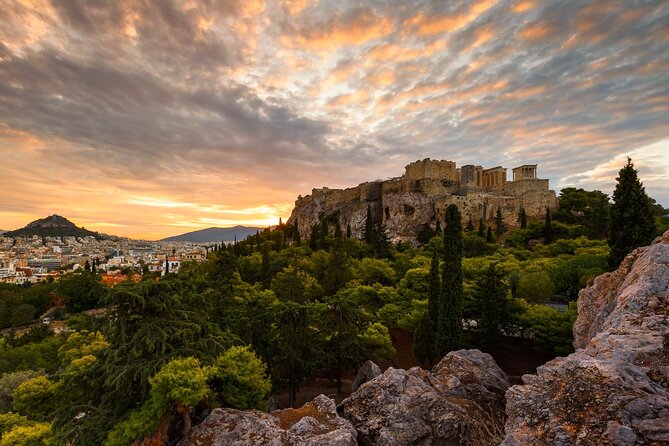
- Pnyx viewpoints make the idea of public debate feel physical, especially with Acropolis views
- Tower of the Winds and early science (wind, time, and even a sound mechanism) alongside politics
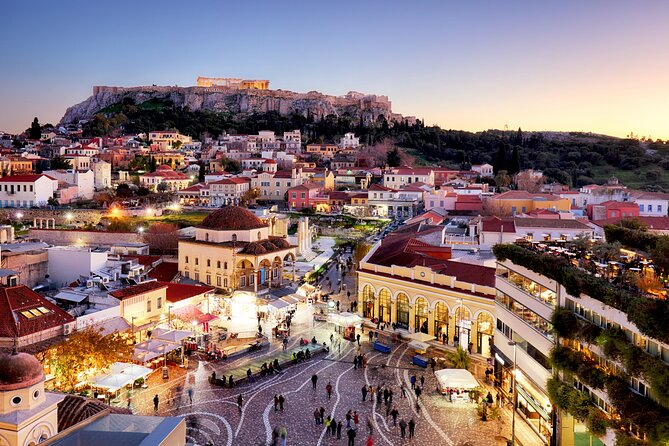
- Plaka and Monastiraki give you the everyday Athens layer between major monuments
- Small group size, up to 12 people makes it easier to ask questions and stay engaged
A 3-hour Athens walk that links ideas to places
This is not the usual Athens “see the sights” tour. It is more like a guided argument, politely delivered while you walk from one historic brain center to the next. In less than half a day, the tour’s theme moves from belief and myth toward early patterns of reasoning that look a lot like the start of science.
For you, the value is focus. Instead of 20 random stops, you get a connected storyline: how Athenians thought about gods, how philosophers questioned the world, and how democracy shaped daily public life. You also get two standout viewpoints of the Acropolis, not just one.
It also helps that this is a small group experience. With a maximum of 12 travelers, you are less likely to feel like you are being rushed past everything. And with an English tour, you can follow the ideas without gaps.
More Greek mythology tours in Athens:
- Athens: Mythology of Delphi, Museum and Arachova Guided Tour
★ 4.6 · 4,008 reviews - Athens & Acropolis Highlights: Greek Mythology Small-Group Tour
★ 5.0 · 2,370 reviews - Athens: Acropolis and Mythology Highlights Small Group Tour
★ 4.8 · 2,275 reviews
Getting the most out of Panos’ storytelling style
The reviews are consistent on one point: Panos knows his stuff, and he knows how to turn it into something you can think with while you are standing in the street. He weaves topics together, so mythology leads into philosophy, philosophy leads into civic debate, and democracy becomes the practical outcome.
What I like about that approach is how it changes your viewing. You stop treating sites like museum labels. Instead, you start asking what people wanted, what problems they faced, and why certain ideas caught on. One reviewer even noted how he pushes you to think critically and relate old problems to today.
Also, he is a good fit if you like conversation. Even when the tour is structured by stops and timing, the energy stays human, not lecture-only. If you join with teens or adults who want more than surface-level facts, this format tends to work well.
Stop 1: Kerameikos, Pericles’ funeral speech and the cemetery of Athens
Kerameikos is the kind of place you might walk past without a guide. That is exactly why it matters. It is named for the ceramics workshops that used to cluster here, and later it became Athens’ cemetery for many centuries. Standing in this area, you are in a spot where daily life, craft, and memory all overlapped.
Time on site: about 25 minutes.
The big historical anchor is Pericles. The tour connects this location to the setting of his famous funeral, where he praised the virtues behind Athenian democracy, tied to the first casualties of the Peloponnesian War. The effect is surprisingly concrete. Democracy is not just a political idea. It is a system people defend with real losses.
What you will likely feel here is the shift from abstract talk to civic meaning. If you are the kind of traveler who likes context, Kerameikos does the job early.
One small drawback: because it is less crowded than some headline sites, you may need the guide’s narrative to fully “activate” the space. If Panos’ teaching style clicks with you, this stop becomes a highlight.
Stop 2: Ancient Agora, where Socrates, Plato, and politicians walked and debated

Next you move into the Ancient Agora, the heart of Athens. This is where civic life happened, including arguments about justice, policy, education, and the world around them. The tour names a strong roster of Athenians associated with philosophy and public affairs, including Socrates, Plato, Solon, Themistocles, Pericles, Thucydides, Sophocles, and Aristophanes.
Time on site: about 10 minutes.
I like this stop because it gives you a mental map for how ideas traveled. In this area, philosophers were not isolated thinkers in a room. They were part of public space where citizens, leaders, and ordinary people interacted.
Even though the stop is short, the tour’s point is sharp: democracy needs debate, and debate needs shared space. When you connect the Agora to the philosophical names you have heard in school, the locations start to feel like living classrooms.
If you are hoping for tons of time inside ruins, you might want more. But for an idea-focused tour, this is the right length to keep momentum.
Same corner of Greece, a different kind of day:
- Athens: Acropolis & up to 5 Archaeological Sites Combo Pass
★ 4.4 · 12,619 reviews - Athens: Acropolis, Parthenon & Acropolis Museum Guided Tour
★ 4.8 · 9,316 reviews - Athens: Cape Sounion & Poseidon Temple Sunset Half-Day Trip
★ 4.8 · 8,241 reviews - Athens: Acropolis and Parthenon Guided Walking Tour
★ 4.6 · 5,882 reviews
Stop 3: Monastiraki Square, the flea market streets as a modern layer
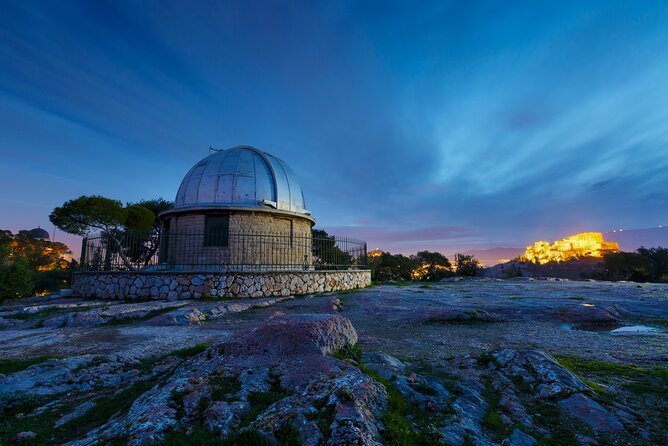
Then the tour shifts gears into a more casual Athens walk at Monastiraki Square, including time for an easy pace through the colorful flea market area.
Time on site: about 10 minutes.
This matters for two reasons. First, it keeps the tour from feeling like you are only in history-mode. Second, it reminds you that Athens is not a timeline display. It is still a place where commerce, curiosity, and street life keep happening.
If you like wandering just a little, this is a pleasant break. The key is staying present, noticing how the old city sits next to the current one.
Stop 4: Roman Agora, a change of era just north of the Acropolis
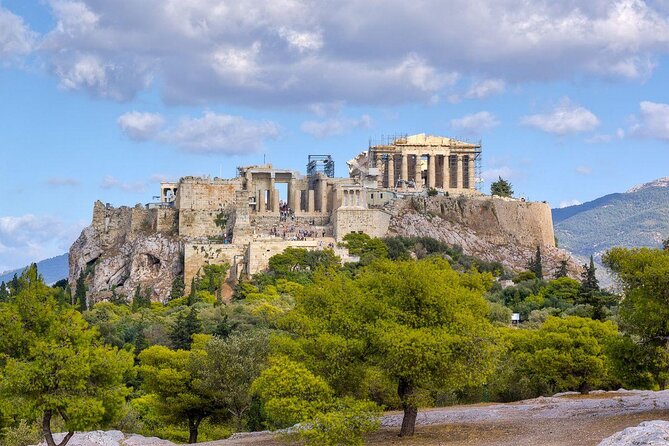
From there you reach the Roman Agora, located to the north of the Acropolis and to the east of the Ancient Agora.
Time on site: about 10 minutes.
This stop gives you a useful contrast. The tour has been centered on early Greek civic and philosophical culture. The Roman Agora helps you see continuity and change. You start to recognize how later powers reused older sacred and civic zones, shaping Athens again without erasing what came before.
If you are the type who likes “how it evolved” history, this stop helps you keep the city layered in your head, not frozen in a single age.
Stop 5: Tower of the Winds, Big Ben plus a meteorology lab
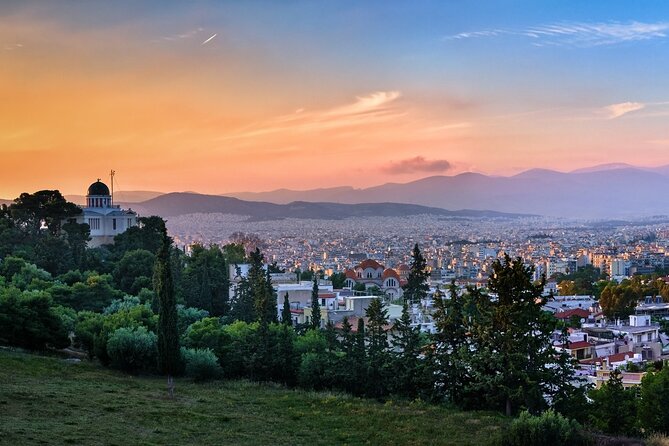
One of the more fascinating stops is the Tower of the Winds, an octagonal building tied to an astronomer named Andronicus of Kyrristos in the 1st century BC. The tour explains that the tower worked as both a wind indicator and a clock.
Time on site: about 10 minutes.
Here’s why this stop feels like part of the tour’s theme. The mechanism was practical. The clock was solar, and in cloudy days there was also a hydraulic mechanism that produced a sound every hour. That hourly sound detail is the kind of early-tech clue that makes the story of “from belief toward early science” feel real.
It is also easy to connect the dots with earlier discussion of thinking carefully about the natural world. In a short time, you get a sense of how measurement, observation, and civic needs met in one structure.
Stop 6: Hadrian’s Library, a Roman-era monument to learning

Next is Hadrian’s Library, created by Roman Emperor Hadrian in AD 132 on the north side of the Acropolis. The tour highlights that it was the second largest library in the world at the time.
Time on site: about 10 minutes.
This stop is a gentle reminder that knowledge was not just Greek. The Romans continued the investment in learning and public intellectual space, and they built in ways that kept ideas visible.
For me, this works well right before the tour becomes more overtly political again. You go from early measurement at the Tower of the Winds into a monument built around books and learning, then onward toward the place where the city staged debate.
Stop 7: Plaka, narrow streets and the Athens you can slow down in
Then you reach Plaka, described as a scenic neighborhood with small houses and narrow, picturesque streets.
Time on site: about 10 minutes.
This stop gives you a breather. You are still in the Athens story, but now you get a more emotional experience, the look and feel that makes visitors fall in love with the city. It also helps you recharge before the big finale spots with Acropolis views.
If you want photos, this is usually the time to stop and frame them. It is also a good place to buy a small snack if you need one, since you are about to spend time outdoors at viewpoints.
Stop 8: Pnyx Hill, the first parliament and the best Acropolis views
The tour heads to Pnyx, the site described as the first parliament of the world. This is one of the most important moments in the whole route because it ties the theme together: philosophy and public reason become politics.
Time on site: about 25 minutes.
The practical payoff is the setting. You are at the kind of place where people gathered to argue in public. When you look out over the area, you start to understand why location mattered. Debate needs visibility, shared direction, and a sense that the whole city is connected.
You also get the best viewpoint aspect, with great views over the Acropolis. The tour specifically points out sunset views here. Even if you are not there at the exact perfect hour, the outlook is a strong reason to choose this tour instead of doing just the Acropolis from the outside.
Stop 9: Philopappos Hill at night, Hill of the Muses ending with a feeling of ceremony
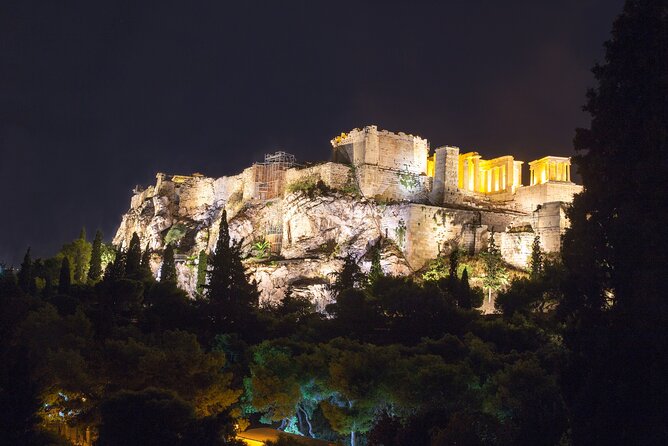
Finally, you end at Philopappos Hill, also described as the Hill of the Muses. The tour notes that it offers some of the best vistas over the Acropolis and Athens by night.
Time on site: about 45 minutes.
This is a smart way to close. Earlier you learned names, concepts, and historical context. Here, you can step back. The city lights, the skyline, and the long view do the job that classrooms usually cannot.
One more bonus from the overall experience: the tour includes an end-of-tour symposium feeling, a kind of wrap-up that functions like an introduction to Ancient Greek philosophy and beyond. That makes the ending feel like more than a final stop. It becomes a capstone, a chance to “talk with” the ideas you just walked through.
How the walking pace and 3-hour timing work for you
The whole route is about 3 hours and involves nine stops across Athens. With time split across each site, you get short, focused visits instead of long, exhausting stays at every location.
This is important. If you try to do this route on your own, you might spend half the day just figuring out where to stand and what you are looking at. On this tour, each stop is timed so you keep moving while still getting context.
The pacing is also set up for an easy pace walk at least during the market and neighborhood segments. That balance matters, because Athens history can become heavy if every moment is technical.
Also, with a maximum of 12 travelers, you usually have a better chance to hear clearly and ask questions. If you like to learn at your speed, that small-group structure helps.
Value check: free entry stops, a coherent theme, and a fair price
The price is $50.69 per person for a roughly 3-hour guided walk in central Athens. That can feel like a small decision or a big one depending on how many paid entrances you plan to buy on your trip. Here’s what makes it easier to justify.
First, the tour lists free admission tickets for multiple stops, including Kerameikos, Ancient Agora, and Pnyx. Even where you are mostly outside, knowing the entry costs are handled for those stops can make this feel more like a guided experience than a sightseeing add-on.
Second, you are paying for interpretation, not just access. The real “product” is the connection between mythology, philosophy, and democracy as you stand in the civic and intellectual spaces of Athens.
Third, you get Acropolis views from two of the best viewpoints in the route, Pnyx and Philopappos Hill. For many people, those sights alone are the reason they choose a tour that includes ending at a higher vantage point.
This kind of guided narrative also tends to save you energy. You spend less time hopping around and more time understanding what you are seeing.
Who this tour suits best, and who might want a different style
This tour is a strong fit if you want to understand the birth of democratic thinking and how philosophy shaped the way people reasoned about the world. It is also ideal if you like a story that connects names and concepts to specific locations, because the route was designed for exactly that.
It also works well for families and groups. One review notes that kids enjoyed it, and the guide handled hot weather graciously with water and ice cream breaks. That suggests the tone can be friendly and manageable for a range of ages.
You might want a different option if you are looking for a purely archaeological walk with long time in each site. This tour is idea-first, and some stops are short by design.
Should you book this Mythology, Philosophy and Democracy Tour?
Book it if you want Athens to make sense fast. This is one of those rare tours where the route is built around how ideas connect, not just where famous stones are located. The guide, Panos, is the main reason people keep calling it one of the best experiences in Athens, and the itinerary supports that with major civic and intellectual anchors like Kerameikos and Pnyx.
One practical tip: it is smart to reserve ahead. The tour is often booked about a month in advance on average, so earlier planning helps you get the day and time you want.
If the weather is good, wear comfortable shoes, and come ready to think a bit while you walk. You will leave with Athens feeling less like a collection of monuments and more like the birthplace of arguments that still matter today.
FAQ
How long is the Mythology, Philosophy and Democracy Tour in Athens?
The tour lasts about 3 hours.
Where does the tour start and where does it end?
It starts at the Statue of Theseus, Athens 105 55, Greece, and ends at Philopappos Hill, Φυλής 215, Athina 117 41, Greece.
What language is the tour offered in?
The tour is offered in English.
What sites are included during the tour?
The tour route includes Kerameikos, the Ancient Agora of Athens, Monastiraki Square, the Roman Agora, the Tower of the Winds, Hadrian’s Library, Plaka, Pnyx, and Philopappos Hill.
Is admission included for the stops?
The tour information states that admission tickets are free for the stops listed in the itinerary.
What is the group size?
The tour has a maximum of 12 travelers.
Is the tour outdoors, and does it depend on the weather?
Yes. The experience requires good weather.
Can I cancel for a refund?
Yes, free cancellation is available. You can cancel up to 24 hours in advance for a full refund.
Is the tour accessible for most people, and are service animals allowed?
Most travelers can participate, and service animals are allowed. The tour is also near public transportation.
Fresh options around Athens
- 3-Day Trip to Delphi and Meteora from Athens★ 4.0 · 53 reviews
- 3-Day Tour: Mycenae, Epidaurus, Nafplio, Delphi, Meteora With 4* Hotel Included★ 5.0 · 6 reviews
- 2 or 3-Day Private Tour: Ancient Olympia, Corinth, Mycenae, Epidaurus, Nafplion★ 5.0 · 11 reviews
- 4-Day Classical Tour Greece: Epidaurus, Mycenae, Olympia, Delphi, Meteora★ 4.5 · 4 reviews
- Hydra Island & Mythical Full Peloponnese Private 9-Day Tour★ 5.0 · 3 reviews
- 27 Day Grand Circle Tour of Mainland & Corfu, Mykonos, Santorini★ 5.0 · 4 reviews
- 20-Minutes Natural Pedicure with Exotic Fish★ 5.0 · 17 reviews
- 2 Day Delphi, Meteora Iconic Sites Private Tour With 4* Hotel Included★ 5.0 · 3 reviews
Greek Mythology Tours, compared.

Mythology of Delphi, Museum and Arachova Guided Tour
Read our review →
Athens & Acropolis Highlights: Greek Mythology Small-Group Tour
Read our review →
Acropolis and Mythology Highlights Small Group Tour
Read our review →

The History of Athens: Greek Mythology Private Tour
Read our review →

Athens Highlights: Myths & Philosophers Walking Tour
Read our review →
Greek Mythology Treasure Hunt for Kids – Athens Private Tour
Read our review →Browse the lists this tour appears in