

Reviewed · GREEK MYTHOLOGY TOURS
Athens Highlights: Myths & Philosophers Private Walking Tour
Athens can feel like a museum. This tour is different because you move through the city while the ideas move with you, from Greek philosophy to Thissio coffee. I like how it ties myths and thinkers to specific landmarks you can actually stand in front of, not just read about.
My other favorite part is the way the stops keep coming back to real questions: what gods like Apollo and Athena mean, and how each philosopher’s school shaped everyday talk. One thing to consider: this is a walking tour, and it is not set up for people with mobility impairments.
Key highlights to look for
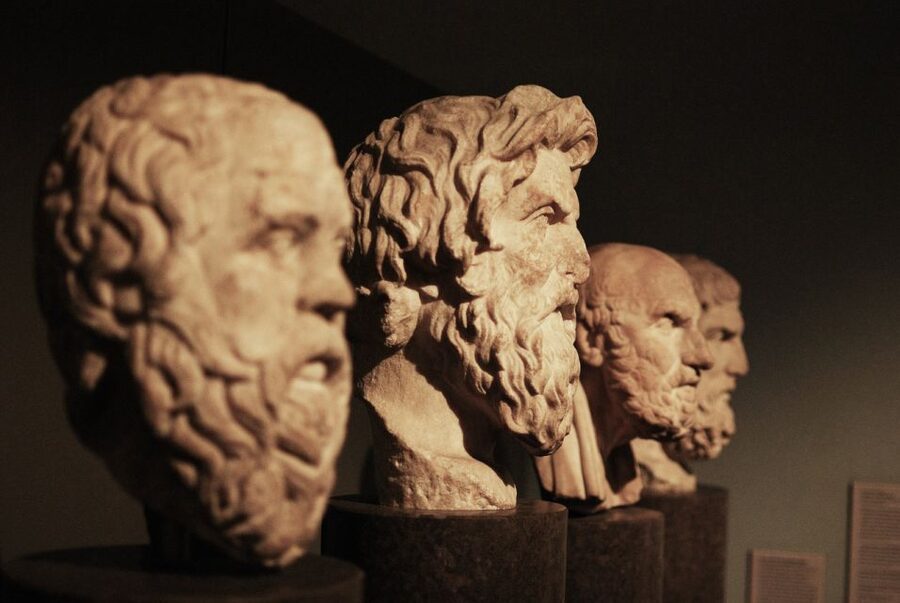
- Socrates and Plato explained as you see the city framing their world
- Trilogy of Athens architecture, including statues by notable 19th-century sculptors
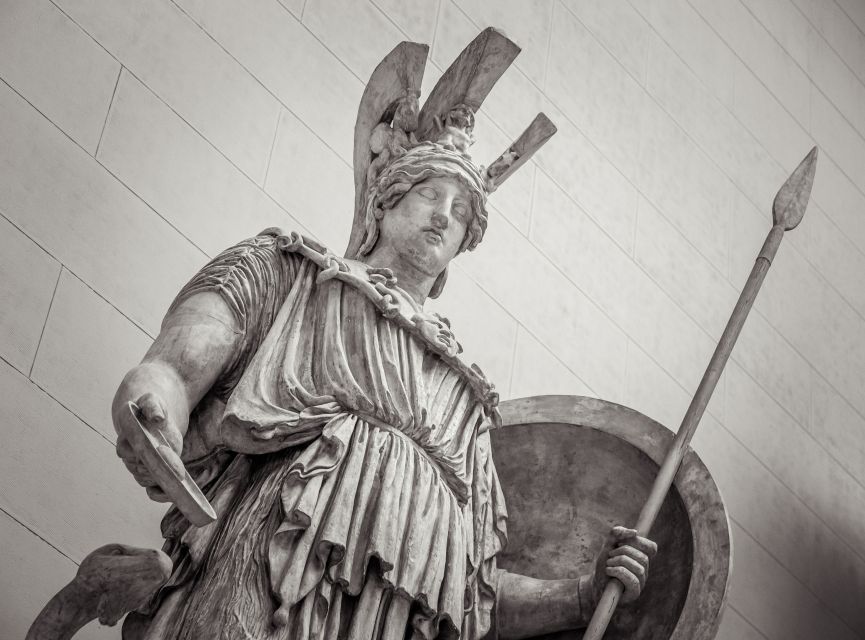
- Apollo and Athena compared through myth, not as generic trivia
- Epicurus and the Garden, plus Stoic philosophy connected to the Poikile Stoa
- Tower of Winds and Aiolos, ending with a major Acropolis view from Areopagus Hill
Turning Athens landmarks into philosophy class you can walk through
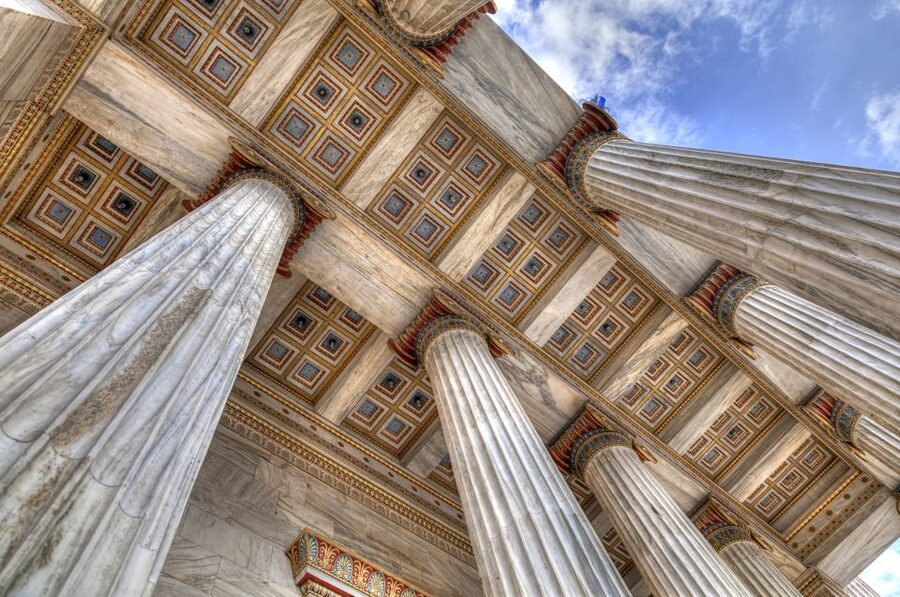
If you like Athens, you probably already have a few big-name stops on your list. What makes this experience worth your time is the angle: the city becomes a classroom for myths and philosophical movements that started shaping thought over 2,500 years ago.
You are not just ticking boxes. You are pairing stories with place. That means Socrates and Plato feel less like names and more like people arguing in real settings. It also means mythology does not sit in a separate category. Apollo and Athena show up as part of the same mental toolkit Greeks used to interpret the world.
And the best part for your trip, especially if this is your first visit, is how the route helps you get your bearings fast. You see central Athens landmarks in a logical flow, then end at a classic viewpoint over the Acropolis from Areopagus Hill. By the time you’re done, Athens feels less like an image and more like a map with a story.
More Greek mythology tours in Athens:
- Athens: Mythology of Delphi, Museum and Arachova Guided Tour
★ 4.6 · 4,008 reviews - Athens & Acropolis Highlights: Greek Mythology Small-Group Tour
★ 5.0 · 2,370 reviews - Athens: Acropolis and Mythology Highlights Small Group Tour
★ 4.8 · 2,275 reviews
Meeting point, private format, and what the 4 hours actually feel like
You meet your local guide outside Panepistimio Metro Station. Depending on what you book, you may also see a start option listed as Πανεπιστήμιο, University, but the key idea is that you’re starting in central Athens where the walk begins to make sense.
This is a private group tour with a live guide speaking English. That matters because the content is not a fixed script. You can ask questions as you go, and the conversation can shift to what you care about, whether that’s mythology, the philosophers, or how those ideas connect to daily life now.
It is also designed for a real walking pace, not a slow shuffle. Expect to keep moving through neighborhoods and landmark areas. Bring comfortable shoes and plan for outdoor time under the sun. If you know your limits, this is the kind of tour where you should be honest with yourself, because it is not built around frequent long indoor breaks.
Trilogy of Athens, Parliament area, and the Socrates and Plato lens
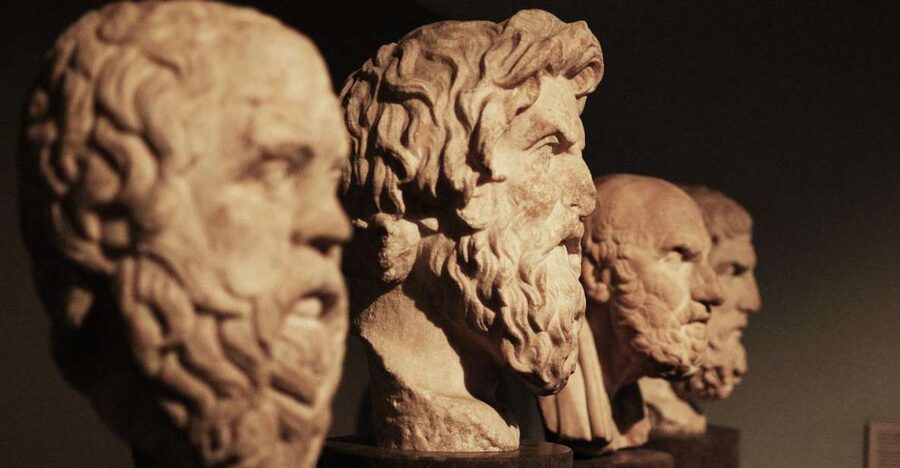
The tour kicks off around the famous Trilogy of Athens, designed by the architect Theofilus Hansen. This is a smart starting point because it pulls together architecture and meaning right away. You’re looking at 19th-century sculptors’ statues while your guide connects that visual world back to the thinkers whose questions shaped ancient Greek thought.
From there, you head through the city with stops that keep returning to the big names. Socrates and Plato come up early, and your guide uses the surrounding landmarks to explain context rather than just summarizing theories. You get a sense of where philosophical thinking started, and why it mattered so much that it echoes through history to this day.
Mythology gets treated as more than story time. Apollo and Athena are framed as very different gods, then compared through the common ground they share. That comparison sticks because you’re not memorizing lines. You’re watching the guide point at symbols and tying them back to how Athenians might have read the world around them.
You’ll also pass the Numismatic Museum area and then make your way toward the Hellenic Parliament. These stops are short walks in between longer story moments, so the route feels like steady progress instead of constant repositioning.
National Gardens and Epicurus: the philosophy you can breathe in
One of the best stretches of the tour is the section around the National Gardens. This is where you learn about Epicurus and his philosophical school called the Garden.
That matters because it changes the mood. Not all philosophy is presented as abstract argument. The Garden is connected to a way of living and thinking, and your guide uses the setting to help you understand what it might have meant to build a school around shared discussion and daily habits.
As you move from the Parliament area toward the Gardens, you also pick up a sense of Athens beyond the obvious ancient highlights. You see the city’s modern civic spaces and the green pocket they border, which makes the philosophical discussion feel less like a time machine and more like a human pattern that repeats.
After the Gardens, the route continues through Ermou Street, named after Hermes and closely tied to commerce. That street name is a small detail, but it’s exactly the kind of anchor you want on a philosophy tour. It’s a reminder that mythology and daily life were not separated in ancient Greece. Gods were present in language, streets, and trade.
More walking tours in Athens:
- Athens: Acropolis and Parthenon Guided Walking Tour
★ 4.6 · 5,882 reviews - Greek Food Walking Tour in Athens
★ 5.0 · 4,740 reviews - Acropolis: Acropolis and Parthenon Guided Walking Tour
★ 4.7 · 3,442 reviews - Acropolis monuments & Parthenon Walking Tour with Optional Acropolis Museum
★ 5.0 · 2,678 reviews
Kapnikarea, Aristotle, and the practical coffee break in Thissio
Next you’re in the area where you can see how Athens layers centuries. You’ll get a look at Kapnikarea, an 11th-century temple. Even if you’re not there to do a history deep dive, it’s a powerful stop because it shows continuity. The city keeps its religious and cultural symbols while new schools of thought and new ideas keep arriving.
Then Aristotle and his Lyceum school come into the conversation. Your guide connects the idea of a philosophical school to where people gathered and how learning became organized. The point is not just who said what, but how thinking formed communities.
The tour also includes a built-in reset: a Greek coffee at a cozy cafe in the Thissio area. This is one of the moments I’d actively plan my day around, because it’s timed as a conversation break, not a random refreshment stop. You can use this pause to ask questions and to connect the dots on Pre-Socratic philosophers, which your guide brings up during the coffee moment.
This is the kind of stop that makes the tour feel balanced. You get a real sit-down, you taste something local, and the discussion continues in a lighter, more human way.
Ancient Agora corners: Stoics in the Poikile Stoa
You move from Thissio toward the Ancient Agora area, and then you hit a key philosophical landmark: the Poikile Stoa, where Stoic philosophy was born.
This is a great example of why place matters. Saying Stoicism formed as an idea is one thing. Linking it to a physical gathering spot helps your brain hold onto it. It becomes easier to remember what kind of mindset Stoic thought supported, because you’re imagining people talking there, not just reading about it later.
From a traveler perspective, this section also helps you understand how central the Agora area is to Athens as a whole. Even if you do not go inside any buildings during the tour, you’re still seeing the city’s core logic. It’s where commerce, movement, and public life collide, which is exactly where philosophy would naturally spread.
After the Agora, the route transitions into the older, story-rich lanes around Plaka and Anafiotika. That shift is important. It slows down the pace visually, and it sets up the next myth and school discussion.
Plaka and Anafiotika with Cynics, Aiolos, and the Tower of Winds
Plaka and Anafiotika sit under the Acropolis, and this part of the walk has a special feel because you are working at street level while the Acropolis looms above. Your guide brings in Cinic philosophers close by, which gives the tour contrast. Different schools can feel like different personality types, and the route helps you see that as more than textbook differences.
Then comes a standout landmark: the Tower of Winds. You’ll learn about Aiolos, the keeper of the winds, and the stop ties mythology to the visible world. If you’ve ever wondered how ancient Greeks might have explained weather and movement, this is one of the concrete places to anchor that idea.
This is also where the tour keeps its energy. You are moving, but you’re not sprinting. Each stop adds a new layer, then the next one provides a callback. For example, myths about gods connect back to Apollo and Athena earlier, and the idea of meaning in daily life connects back to Hermes on Ermou Street.
If you like walking tours that feel like storytelling, this is the section where the story rhythm really clicks.
Areopagus Hill finish: myths over the Acropolis view
The tour ends at Areopagus Hill. This is not only a nice finale because it offers a breathtaking view of the Acropolis. It’s also a strong storytelling ending point.
Your guide wraps up with more myths about the Olympian gods, and the viewpoint makes the whole conversation feel larger than a checklist. It’s one thing to hear about Olympian figures as names. It’s another to watch the city open up under your feet while those myths are still being linked back to where you stood earlier.
From a practical standpoint, ending here also gives you an easy mental reset. You can use the view moment to decide what to do next in Athens, whether that’s grabbing dinner nearby or heading back to your hotel with the Acropolis as a constant reference point in your mind.
Price and value: what you get for about $100 per person
The price is $100 per person for a 4-hour private walking tour. That sounds straightforward, but the value comes from the combination.
You get an expert tour guide who works with you in real time. You also get one Greek coffee or other traditional refreshment per person included, plus taxes and fees. Entrance fees are not included, so if you choose to add museum time or paid sites on your own, you’ll want to budget separately.
For me, the best value signals are these:
- You’re paying for a guided lens, not just access to landmarks.
- The coffee stop is part of the experience, not an afterthought.
- The route is designed as a connected walk through Athens core areas, which saves you time figuring out what goes with what.
If you’re traveling with a small private group, this is often a smart spend because you avoid crowd management and you can ask questions without waiting your turn.
Who should book this philosophy walk, and who should skip it
This tour is a good match if you:
- Like history and myth, but want them tied to specific places
- Prefer conversation and questions rather than passive sightseeing
- Want a first day anchor to help you understand central Athens quickly
It is not a good fit if you need step-free routes or if mobility limits make extended walking hard. The tour specifically notes it is not suitable for people with mobility impairments.
Also, if you hate walking in the sun, plan for it. Bring sunscreen and sunglasses and wear shoes you trust. The tour is built on getting from stop to stop, so comfort matters.
From the guide side, the overall vibe is highly interactive. Guides like Bianca, John, and Effie are praised for storytelling and for making the content feel practical, even when the subject is ancient philosophy. You should expect a tone that is friendly, not like you’re being graded.
Should you book this Athens Highlights: Myths & Philosophers private walking tour?
Yes, if you want a way to see Athens that is not just ancient ruins photos. Booking this is especially smart when you like the idea of turning philosophers and myths into something you can actually place in the city. The route, the coffee pause, and the private guide format make it feel more like a guided conversation through Athens than a checklist.
Skip it only if long walking is a dealbreaker for you, or if you expect the tour to be centered on paid museum entrances. Entrance fees are not included, so think of this as guided walking, myths, and ideas, with optional add-ons on your own after.
FAQ
Where is the meeting point for the tour?
You meet your local guide outside Panepistimio Metro Station. Meeting point may vary depending on the option booked.
How long is the tour?
The tour lasts 4 hours.
Is this a private tour?
Yes, it is a private group tour.
What language is the guide?
The live tour guide speaks English.
What is included in the price?
Included are an expert tour guide, 1 Greek coffee or other traditional refreshment per person, and all taxes and fees.
Are entrance fees included for attractions?
No. Entrance fees to points of interest are not included.
What should I bring?
Bring comfortable shoes, sunglasses, and sunscreen.
Is the tour suitable for people with mobility impairments?
No, it is not suitable for people with mobility impairments.
Can I cancel and get a refund?
Yes. You can cancel up to 24 hours in advance for a full refund.
Fresh options around Athens
- 3-Day Trip to Delphi and Meteora from Athens★ 4.0 · 53 reviews
- 3-Day Tour: Mycenae, Epidaurus, Nafplio, Delphi, Meteora With 4* Hotel Included★ 5.0 · 6 reviews
- 2 or 3-Day Private Tour: Ancient Olympia, Corinth, Mycenae, Epidaurus, Nafplion★ 5.0 · 11 reviews
- 4-Day Classical Tour Greece: Epidaurus, Mycenae, Olympia, Delphi, Meteora★ 4.5 · 4 reviews
- Hydra Island & Mythical Full Peloponnese Private 9-Day Tour★ 5.0 · 3 reviews
- 27 Day Grand Circle Tour of Mainland & Corfu, Mykonos, Santorini★ 5.0 · 4 reviews
- 20-Minutes Natural Pedicure with Exotic Fish★ 5.0 · 17 reviews
- 2 Day Delphi, Meteora Iconic Sites Private Tour With 4* Hotel Included★ 5.0 · 3 reviews
Greek Mythology Tours, compared.

Mythology of Delphi, Museum and Arachova Guided Tour
Read our review →
Athens & Acropolis Highlights: Greek Mythology Small-Group Tour
Read our review →
Acropolis and Mythology Highlights Small Group Tour
Read our review →

The History of Athens: Greek Mythology Private Tour
Read our review →

Athens Highlights: Myths & Philosophers Walking Tour
Read our review →
Greek Mythology Treasure Hunt for Kids – Athens Private Tour
Read our review →Browse the lists this tour appears in