
Reviewed · METEORA TOURS FROM ATHENS
Kalabaka: Meteora Small-Group Hiking Tour w/ Monastery Visit
Meteora is interesting because you don’t just look at the monasteries, you walk right through the rocks that made them possible. I love the guided trail that takes you up close to the sandstone pillars, and I love that you get a real monastery visit choice at Great Meteoron or Varlaam. One drawback to plan around: the hike has steep, rocky sections and a demanding descent in places, so it is not the best fit if your mobility or stamina is limited.
From Kalabaka, you ride briefly to the start around Kastraki Square, then the day unfolds with a mix of viewpoints, hermit sites, monastery ruins, and a living Orthodox tradition at St. George the Madilas. Expect a route that feels calmer than the main tourist circuits, with guides who pace you and help you notice details you would otherwise miss.
If you go in expecting an easy stroll with sneakers-and-pictures only, you might get surprised. Bring proper walking shoes and plan for some uneven ground, even though the total time is only about 5 hours.
Key highlights I’d circle
- UNESCO Meteora walking route that shows you the geology behind the monasteries
- Varlaam and Great Meteoron time with helpful guidance on what to look for
- Stops at Ypapanti and monastery ruins, including St. Dimitrios (destroyed in 1808)
- St. George the Madilas tradition, where rope-climbing offerings are part of local life
- Mountain guide + map + water, so you can focus on the experience
Why Meteora by Foot Beats the Scenic Lookout Loop
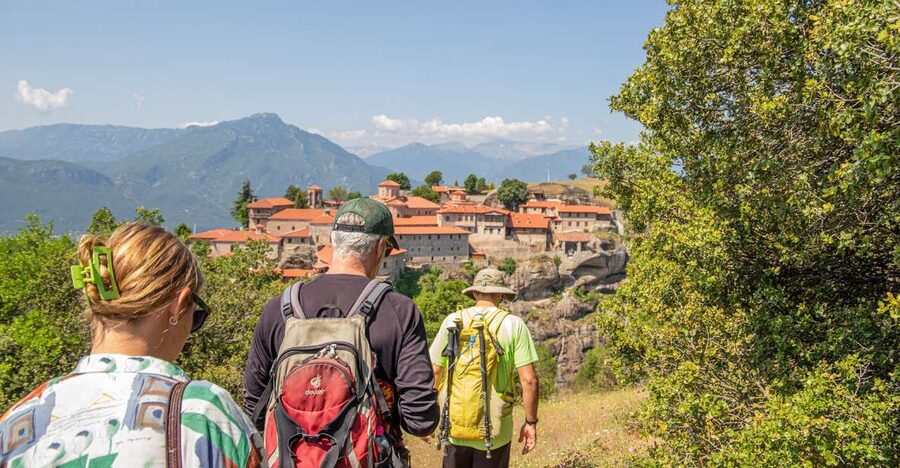
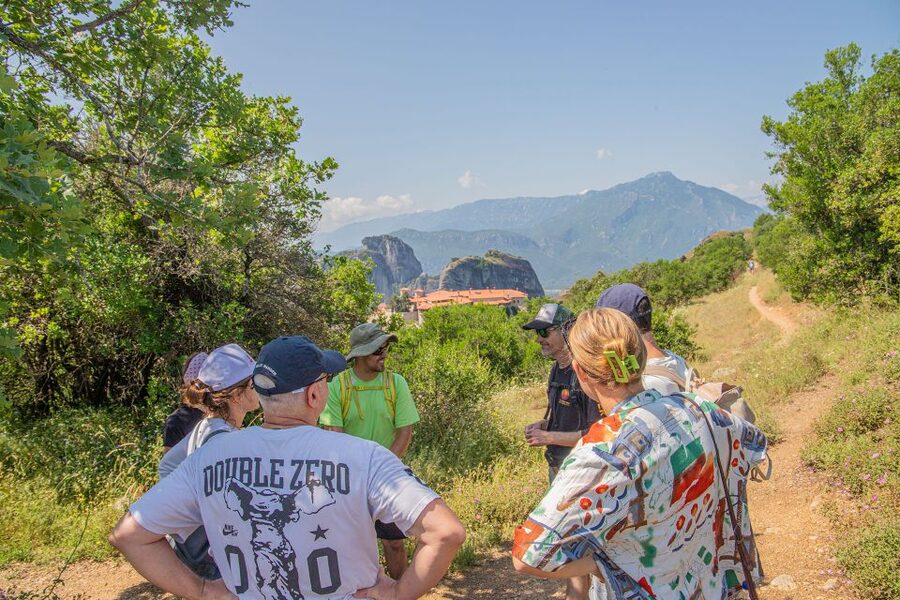
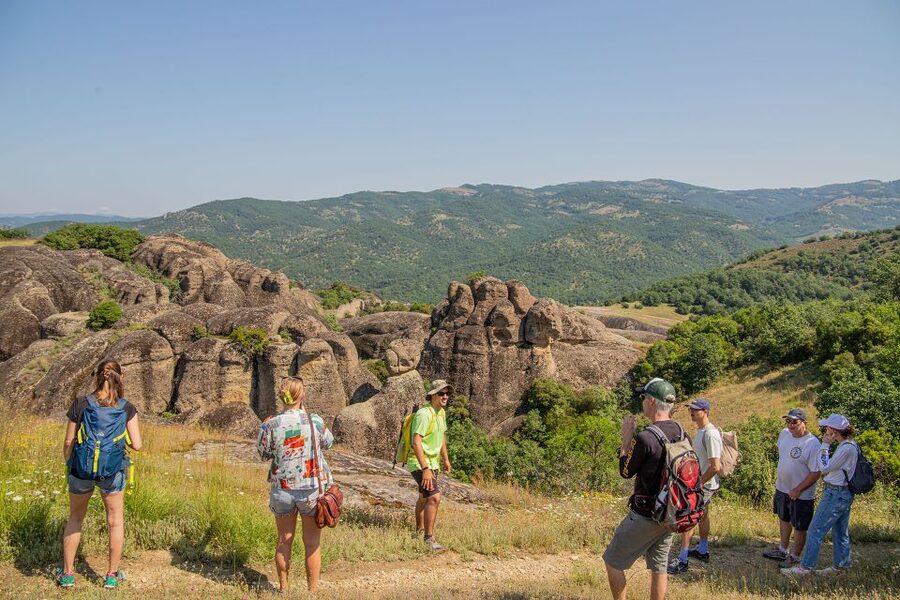
Meteora’s monasteries sit on top of towering sandstone pillars, like they were placed there by a patient hand. The catch is that from the parking areas, you mainly see the outside. On this hike, you get the middle view: the rock shapes, the narrow paths, the angles that tell you how people hauled supplies and built settlements in one of the most dramatic places in Greece.
I like that the tour is structured so you are never just walking without meaning. You move through the rocks and then you stop at specific sacred points. That pairing is what turns a scenic hike into a Meteora experience.
Also, this is the kind of day where you can feel the place. The air is fresher in the hills, and the stone stays cool in shaded sections. Then the sun hits the pillars and suddenly the whole area looks different.
A final note, Meteora is photogenic in every direction, but the best photos often require positioning. Walking helps you get those angles without sprinting between viewpoints.
More Meteora trips from Athens:
- Meteora: Morning Half Day Sightseeing and Monasteries Tour
★ 4.7 · 478 reviews - Meteora: Majestic Sunset Tour & Monasteries with Local Guide
★ 4.7 · 359 reviews - Meteora: Panoramic Morning Small Group Tour with Local Guide
★ 4.7 · 334 reviews
Meeting in Kalabaka, Then Rolling to Kastraki Square
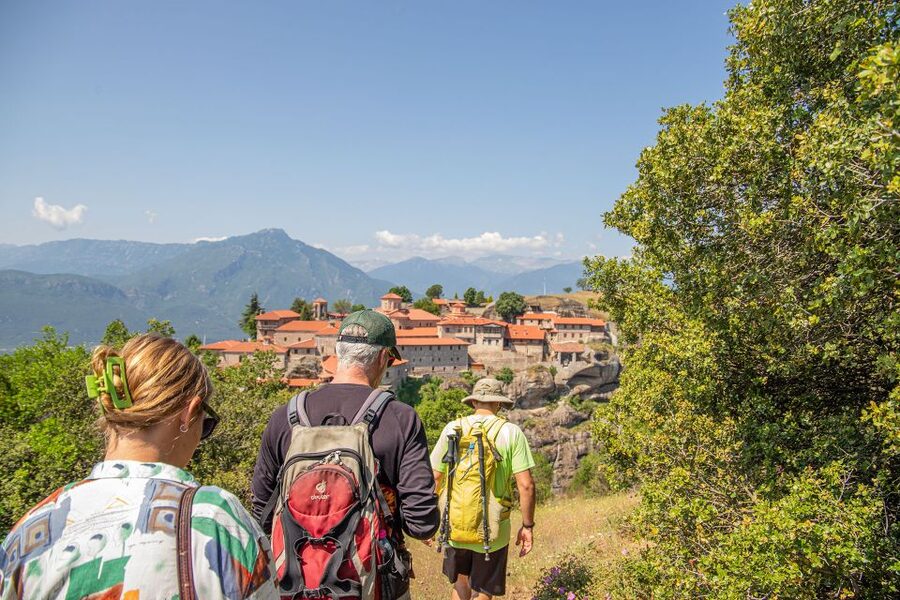
Your day starts in Kalabaka with pickup from designated hotels or guesthouses. The day moves quickly, with a short bus ride to the trailhead area around Kastraki Square. It is a simple start, and the benefit is that you do not burn time figuring out local access points.
Once you arrive at the starting zone, the hiking mode kicks in right away. This matters because Meteora tends to get crowded in waves. Your route is planned so you see key spots without spending the whole day in a queue.
You’ll also want to treat this like a real hike day, not a sightseeing stroll. Even if you are comfortable outdoors, you will likely step on uneven ground, with rocks and gravel that feel different from flat city sidewalks.
Dupiani Hermitage to the Ruined Pantokratoros Area: A Trail With Layers
The early hiking portion sets the tone by threading you through several Orthodox sites and rock formations. After pickup and transport, the route heads toward Dupiani Hermitage.
From there, you pass below the ruined Pantokratoros Monastery on the north side of Dupiani’s rock. This is one of those stops where you see how the monastery story is not only about what survived, but also about what got lost. The atmosphere changes when you look at ruins up close, because you can spot how people carved their lives into the stone.
You then move onward toward Ypapanti Monastery and the ruins of St. Dimitrios. This is the part I like for historical grounding. The ruins connect you to a specific chapter: St. Dimitrios was destroyed by the Ottomans in 1808 during a local uprising.
If you usually skip ruins, this is the one time I would not. Meteora’s story is bigger than the monasteries that still operate. Ruins show you how the landscape has always been tied to religion, power, and survival.
The Main Ascent to Great Meteoro and Varlaam
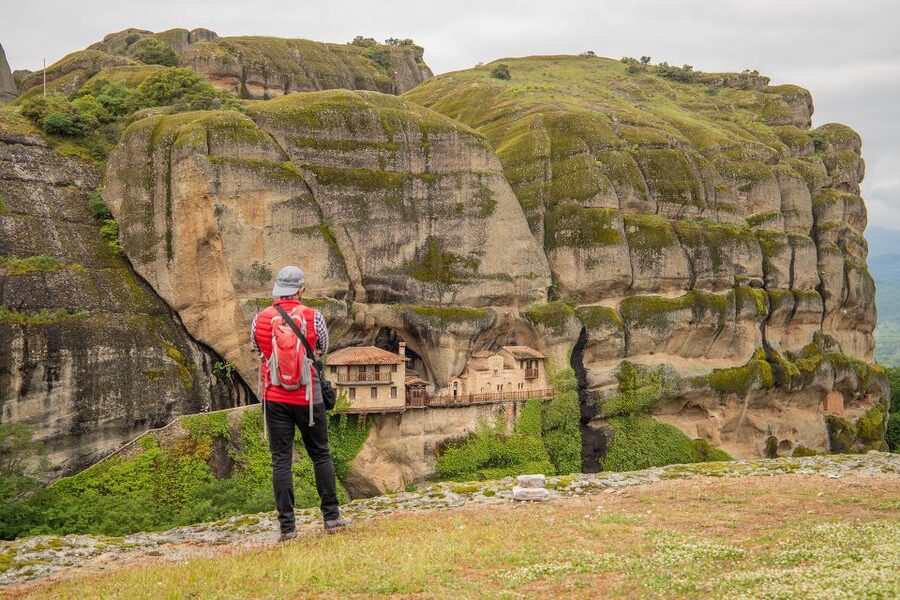
Then comes the upward work. The trail leads you all the way up to the Great Meteoro and Varlaam monasteries, both part of the UNESCO Meteora World Heritage area.
Here is what makes this segment feel special. The closer you get, the more the pillars dominate your view. From down low, the rocks look like big shapes. From closer, you notice textures, cracks, and the way trails cling to certain sides.
Time on top is also a practical win. You get a structured visit to the monastery grounds, with a guided portion outside the monasteries that helps you understand what you are looking at.
Expect the day to include photo stops while you walk. That is not just for convenience. It means the route breaks up the effort. You are not forced to keep your head down the whole way.
A few more Kalabaka days worth comparing
- Meteora: Sunset Hike to Secret Caves
★ 4.9 · 56 reviews - Meteora: Hiking Tour with Local Guide and Monastery Visit
★ 4.8 · 20 reviews - From Kalabaka: Authentic Meteora Hiking Tour – Local Agency
★ 5.0 · 20 reviews - Meteora: Easy Hiking Adventure
★ 4.9 · 16 reviews
Great Meteoron and Varlaam: What the Visit Feels Like
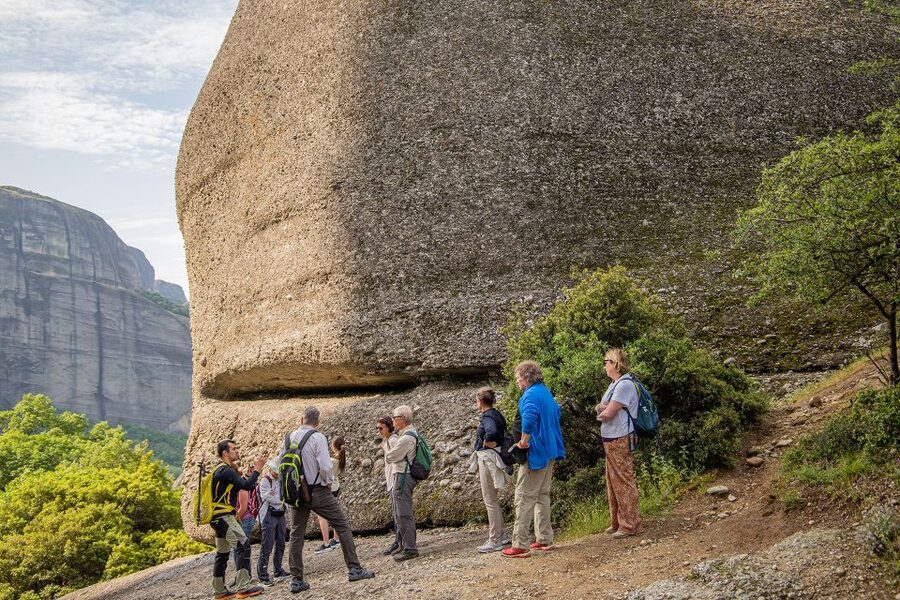
This tour is designed around a monastery visit that you can do at a comfortable pace, typically around an hour for the main stop. In most cases, you will be able to visit the areas connected to Great Meteoron and Varlaam, and you will have time to see what matters most once you are there.
Two important practical points:
- Monastery entry fees are extra if you go inside. The cost listed is €5 per person per monastery for Great Meteoron or Varlaam.
- You get guidance outside, but the guide inside the monasteries is not included. That means you’ll want to use your guide’s pre-visit tips well, then go explore on your own inside.
So what do you do when you are inside, and the guide steps back? Think of it like this: you use the outside explanations to pick out details. Then you move through at your own pace, focused on the parts that make sense after hearing about their role in Orthodox monastic life.
St. George the Madilas: A Living Tradition on the Descent
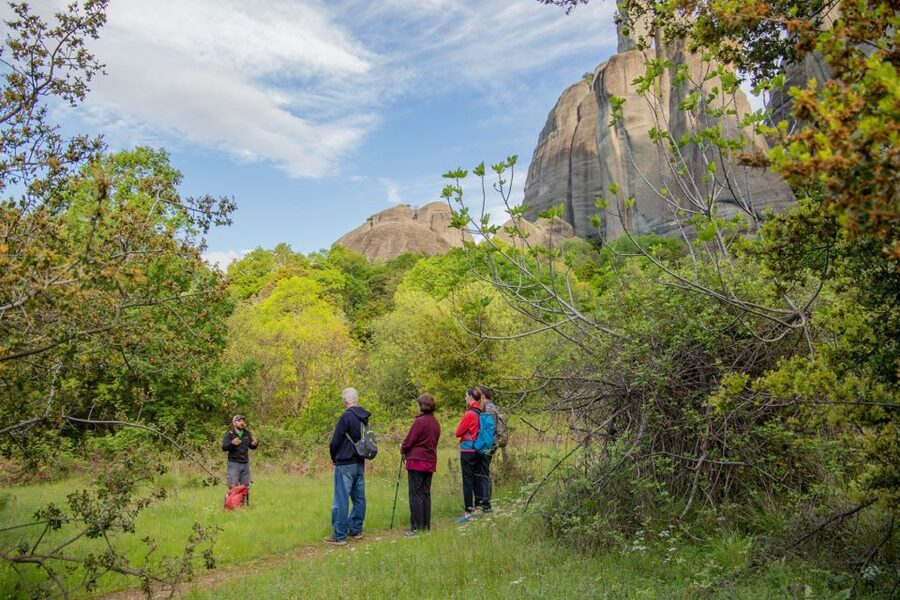
After the main monastery time, the route goes back down from Varlaam toward St. George the Madilas. This is where the tour turns from history into something more human and current.
You stop at the place where local children climb with only a rope to dedicate offerings to St. George. Even if you are not thinking about it as a “performance,” it is clearly a tradition built around faith and local identity.
This stop works well because it shifts your mindset. You are no longer staring at a distant religious site. You’re seeing a small part of how people keep Orthodox practices close to the present.
Also, it is a helpful emotional cap to the day. Meteora can feel huge and dramatic. A local ritual on the route keeps it grounded.
Guide Energy, Pacing, and the Small Stuff You Actually Want
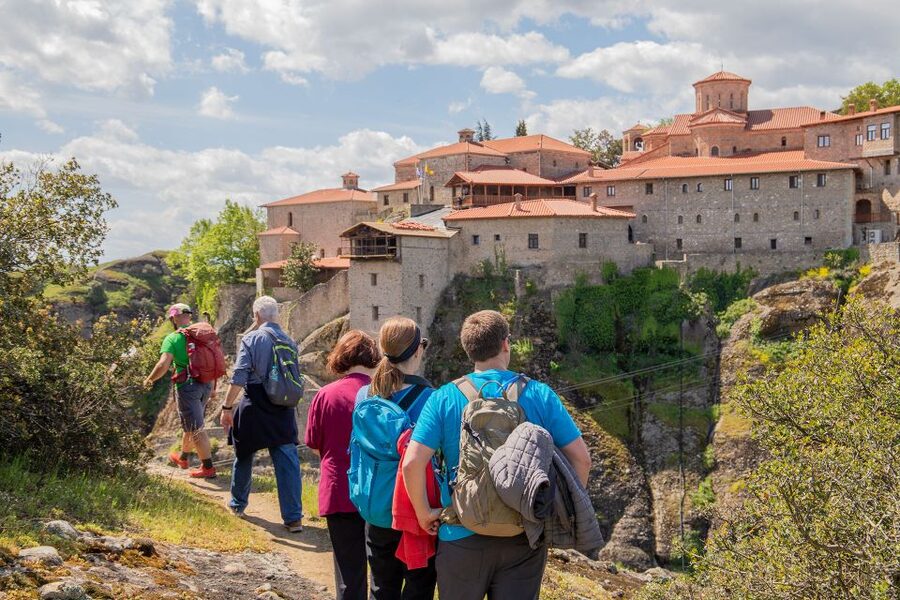
The biggest reason people love this kind of hike is not just the scenery. It’s how the day is taught.
Guides I saw named in the details include Christos and Evan, along with Dimitri, Dimitris, and Vangelis. The style is consistent across names: friendly, story-driven, and practical. The guide also helps you understand what to look for in monasteries, so your visit is more than a quick photo and exit.
One practical detail that comes up in multiple accounts is pacing. Guides set a pace that can work for different fitness levels, with rest stops and encouragement. If you ask for slower steps or quicker progress, you usually can.
Foot support also matters. Some accounts mention the availability of a walking stick if you need it. If you have sensitive feet or tend to get sore knees on descents, bring trekking poles if you own them. If you do not, you can still make it work, but you need confidence on rocky ground.
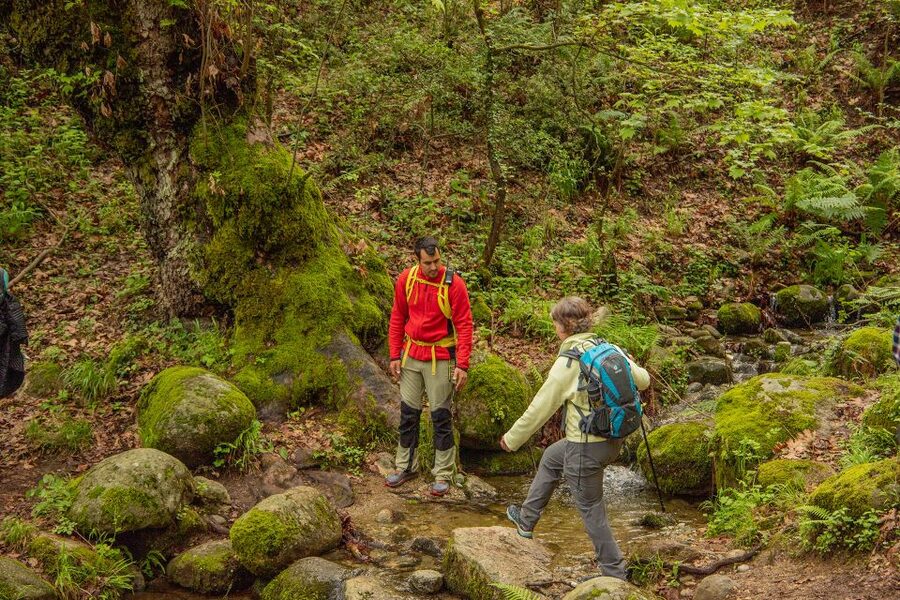
Another thing I really like about these hikes is that they include nature observations. You may get pointers on local fauna and small wildlife. One account mentions seeing turtles and a lizard while hiking. Even if you do not spot them, the guide’s approach nudges you to look down, not just up.
What to Wear and Bring for a 5-Hour Meteora Hike
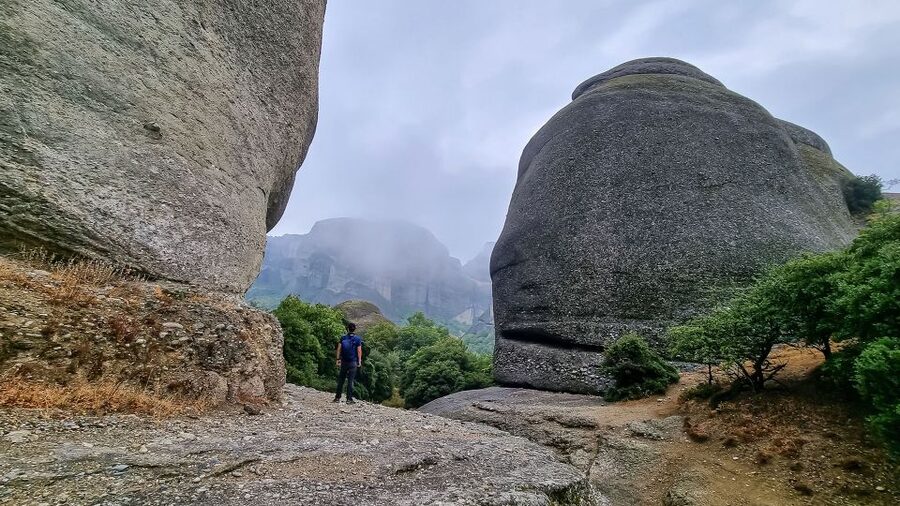
Plan your day around feet first. This tour requires comfortable shoes, and the rules are clear: no sandals or flip-flops. Closed-toe shoes with non-slip soles are the safe choice.
Bring:
- comfortable shoes (walking boots or solid sneakers)
- a hat
- snacks
- comfortable clothes
- cash
Also plan for the monastery dress rule: sleeveless shirts are not allowed. That is the kind of detail that can turn a smooth visit into a scramble, so wear a top with sleeves from the start.
Weather changes the feel of Meteora fast. One account described the tour going ahead during rain, and turning into a memorable experience rather than a disappointment. Rain does not ruin the monastery day, but it does make footing slicker. If there is any chance of rain, prioritize traction and take your time on descents.
And yes, even though some routes feel mostly shaded, it can still get warm. Pack water was provided on the tour, and you’ll still want your own snacks to keep energy steady.
Price and Value: Is $35 Worth It Here?
At about $35 per person for a half-day, this tour prices itself as an active, guided way to see Meteora without spending your whole day in transit. The value becomes clearer when you break down what’s included versus what’s extra.
Included:
- pickup and drop-off
- a mountain guide
- a map
- a bottle of water
Not included:
- monastery entry fees for Great Meteoron or Varlaam at €5 per person per monastery
- food and drinks not specified
- guide time inside monasteries
So the real question is whether you want a guided route through rock-and-steps terrain, plus one substantial monastery visit. If you are the type who likes understanding what you see, the guide time is the main value driver.
If you prefer to wander independently, you could always DIY Meteora with buses or taxis. But doing it that way tends to mean more time spent figuring out the best hiking line, and fewer explanations that help you pick out features in the ruins, hermit sites, and monastery grounds.
For most people, the sweet spot is this: you pay for a guided route that gets you to the viewpoints and sacred points, then you spend your own time looking around inside.
Who This Meteora Small-Group Hike Fits Best
This is a hike with enough effort that it is not ideal for everyone. It is not suitable for:
- children under 7
- people with heart problems
- people with low fitness
- people with mobility impairments
- people who are visually impaired
That might sound strict, but it matches the reality of Meteora trails. Expect steep steps and rocky footing at points.
On the positive side, it is also described as mostly approachable on certain sections, with a moderate effort level for people who hike a bit and wear the right shoes. Some accounts even frame it as beginner-friendly in places, with the main challenge being parts of the descent.
If you want a Meteora day that is:
- active enough to feel like exercise
- structured enough that you never wonder where to go
- educational without being boring
- calmer than the biggest crowd routes
Then this tour is a strong match.
Should You Book This Tour?
I’d book it if you want Meteora in the way it is meant to be experienced: on foot, guided, and focused on specific sacred stops. The combination of scenic panoramic views, a monastery visit at Great Meteoron or Varlaam, and the St. George the Madilas tradition makes it feel like more than a standard sightseeing package.
Skip it if you need flat ground, step-free access, or a purely car-based experience. Also skip it if rocky descents make you nervous, because you will be walking on uneven trails and steps.
If you do book, treat it like a hike day: wear proper shoes, bring a hat and snacks, and plan for a couple of tougher walking moments. Do that, and you’ll likely come away feeling like you saw Meteora instead of just standing near it.
FAQ
How long is the Kalabaka to Meteora hiking tour?
The tour duration is about 5 hours.
Where does pickup happen?
Pickup is in Kalabaka, from designated boutique hotels and guesthouses in the area. Drop-off is back at Kalabaka after the tour.
What monasteries will I visit?
The tour includes time at Great Meteoron and Varlaam monasteries, and you also visit the St. George the Madilas area. Not all entry is included.
Do I need to pay monastery entry fees?
Yes. Great Meteoron or Varlaam monastery entry fees are not included and are listed as €5 per person per monastery.
Will the guide go inside the monasteries with me?
No. The guide inside the monasteries is not included, but you do get guidance and help on what to look for before or around the visit.
What should I bring for the hike?
You should bring comfortable shoes, a hat, snacks, comfortable clothes, and cash.
Is this tour suitable for children or limited mobility?
It is not suitable for children under 7 and it is also not suitable for people with mobility impairments, low fitness, or heart problems.
Fresh options around Kalabaka
- From Kalabaka: Private Half-Day Meteora Tour – Local Agency★ 5.0 · 6 reviews
- Meteora: Natural History Museum and Mushroom Museum Tour★ 4.4 · 6 reviews
- Midday Tour in Meteora from Kalabaka’s trainstation★ 5.0 · 4 reviews
- Meteora Sunset with Photos Stops & to the Cave of St. George★ 4.9 · 10 reviews
- Meteora Sunset Tour on E-bikes★ 5.0 · 54 reviews
- Kalampaka: Meteora Private Customized Tour in English 6 hour★ 5.0 · 4 reviews
- Meteora Electric Bike Tour★ 5.0 · 61 reviews
- Meteora Private Full Day Tour from Athens & Free Audio Tour★ 5.0 · 3 reviews
Meteora Tours from Athens, compared.
Meteora Monasteries Day Trip with Caves and Lunch
Read our review →

Meteora Tour with Local Guide and Greek Lunch
Read our review →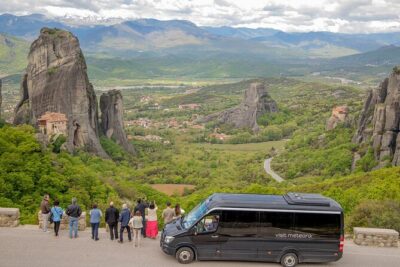
Meteora Monasteries, Caves & Coastal Stopovers with Lunch
Read our review →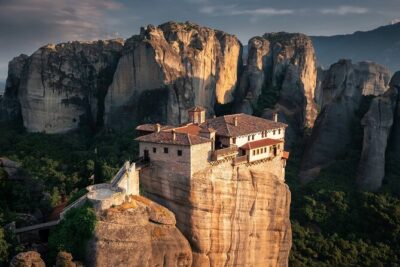
Meteora Monasteries & Caves DayTrip from Athens with Greek Lunch
Read our review →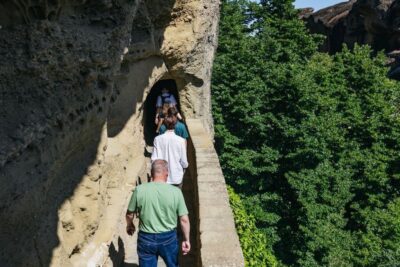
4-Day Classical Greece Tour: Epidaurus, Mycenae, Olympia, Delphi, Meteora
Read our review →
Meteora Monasteries, Hermit Caves Tour with Pickup
Read our review →Browse the lists this tour appears in